Water damage
8 servicesLeaks from pipes, fixtures, appliances, radiators and the unit upstairs.
Answering 24/7 from our West 100th Street office in Manhattan
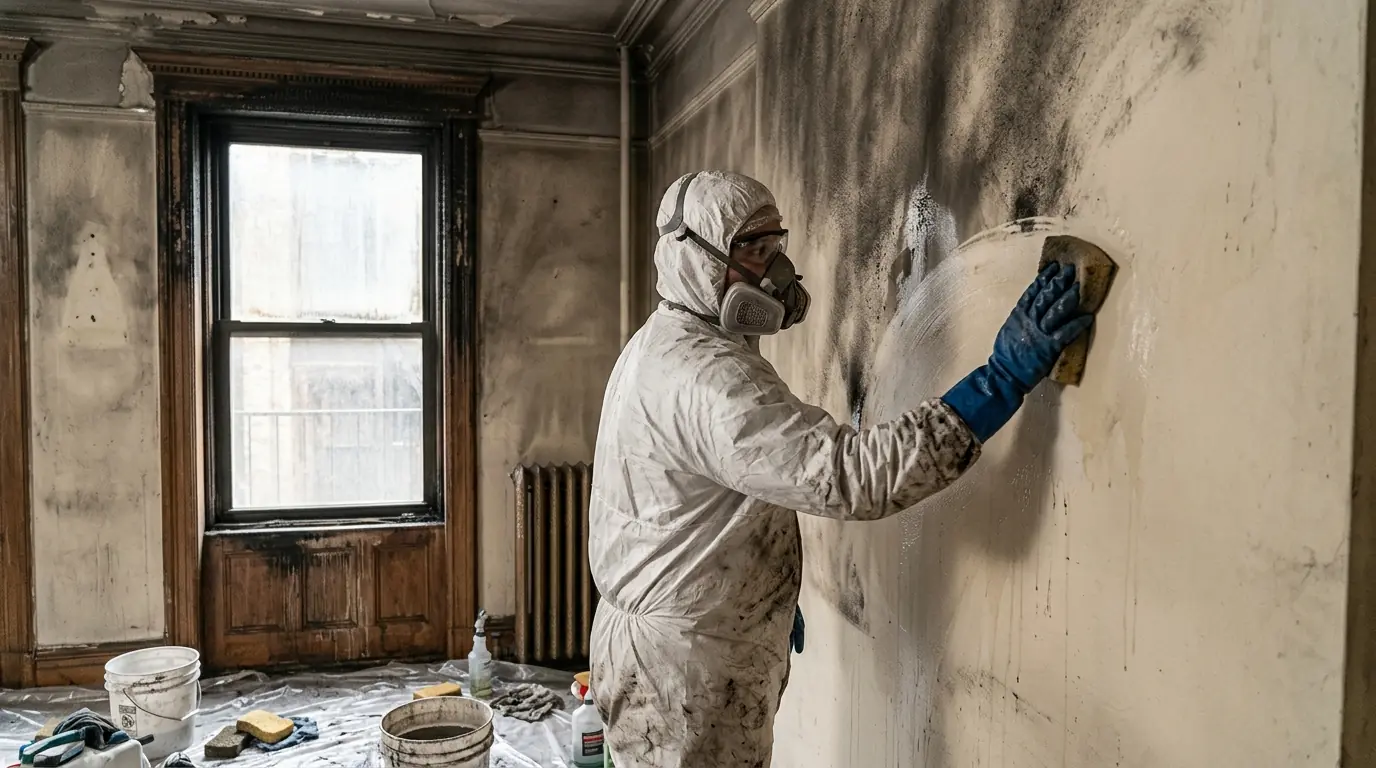
Water through the ceiling, soot on every wall, or a basement that filled overnight? We stop the source, clean and dry to a measured standard and rebuild, in Manhattan, the other boroughs and nearby counties.
What we handle
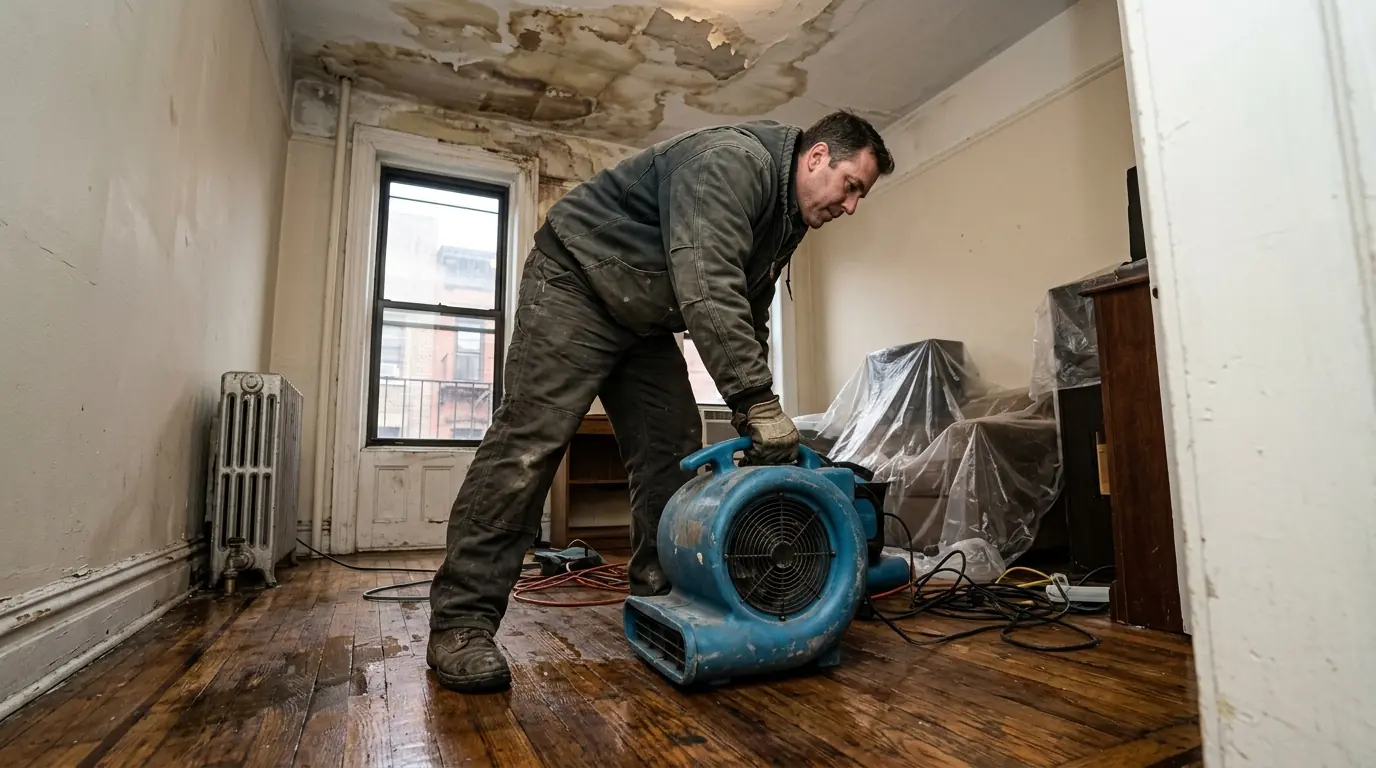
Most calls start with water where it should not be: a supply line under a sink, a stuck radiator vent, or a bathroom upstairs that finds your ceiling. The stain is the smaller part; water keeps soaking plaster until someone measures and dries it.
Fire is the reverse. Flames may stay in one room while soot reaches closets and ducts, and the hoses leave water behind. At Accurate WFR the person who answers at 3 a.m. asks what a technician would, so the first visit ends with equipment set, not a walk-through and a quote.
Short answer
Water damage in a New York apartment needs to be dried within 24 to 48 hours of the leak, before mold can take hold. We extract standing water, open wet cavities, set drying equipment and log moisture readings daily until walls and floors reach their dry standard. Fire jobs follow the same order: stop the damage, clean, rebuild.
Many water calls start with an appliance: a washer hose on a Whirlpool or LG, a Bosch dishwasher line, or a Rheem or Bradford White tank that gave out.
Services
Leaks from pipes, fixtures, appliances, radiators and the unit upstairs.
Equipment and daily readings until walls read dry.
Water from outside or the sewer, plus board-up and tarping.
Soot and smoke cleanup, battery fires and oil burner puff-backs.
Growth after a leak, lasting odors and dirty ducts.
Rebuilds, contents, claim paperwork, co-ops and commercial space.
First steps
Call first either way, and we walk you through it while the truck is on the way.
Warning signs
Water is sitting on the plaster, and the leak has run longer than it looks.
Moisture is under the boards. Fast drying often flattens them.
The pipe is dry but the wall cavity is not. Mold often follows.
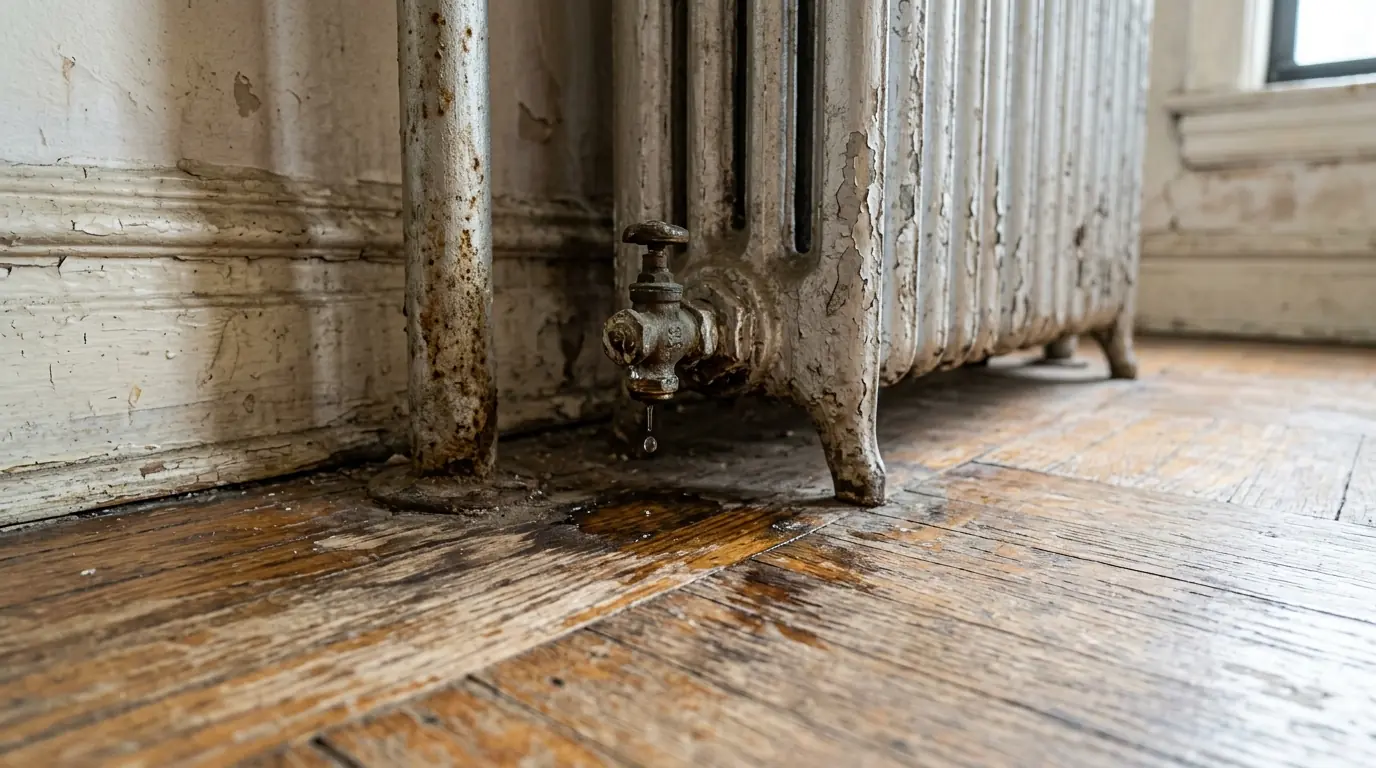
A spitting steam vent wets the floor and the ceiling below.
Smoke leaves shadow lines even in rooms the fire never reached.
A storm can push a combined sewer back up through the lowest drain.
Local conditions
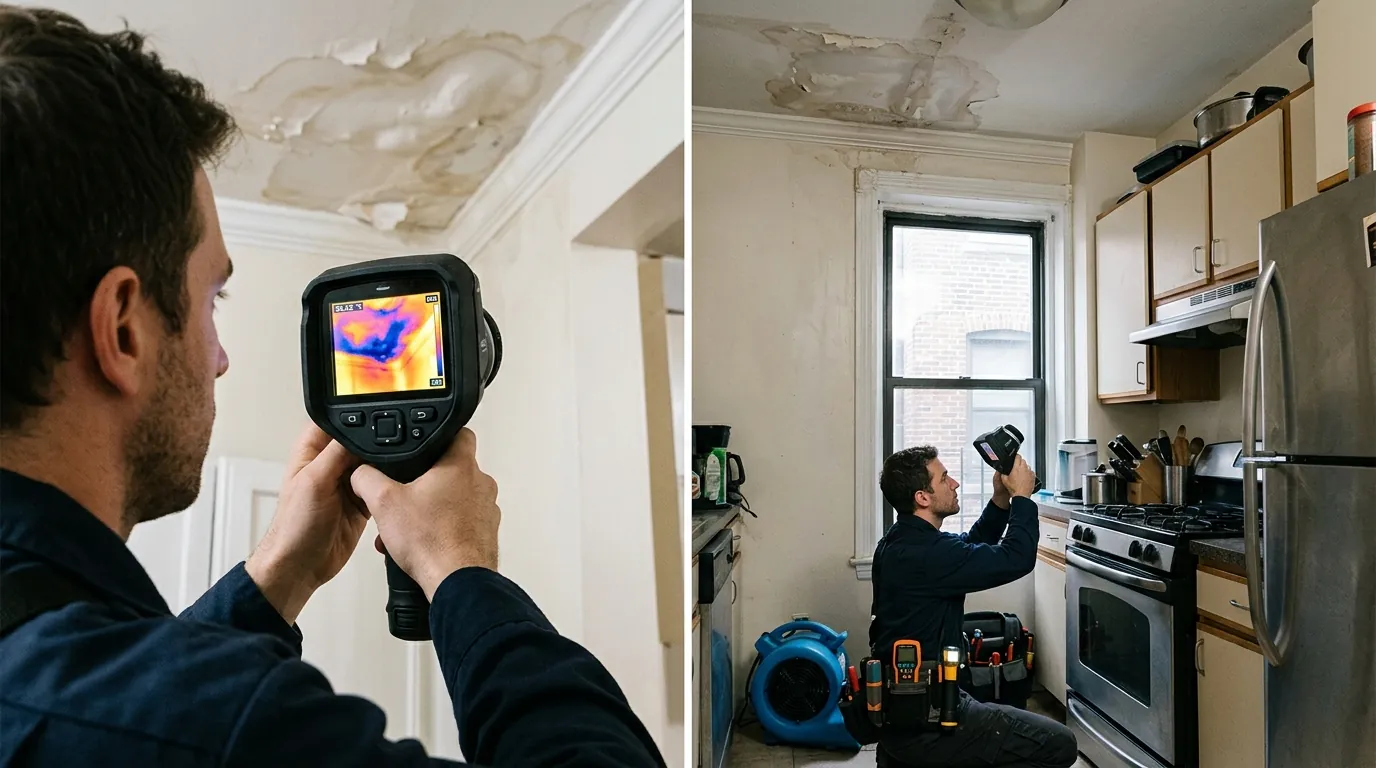
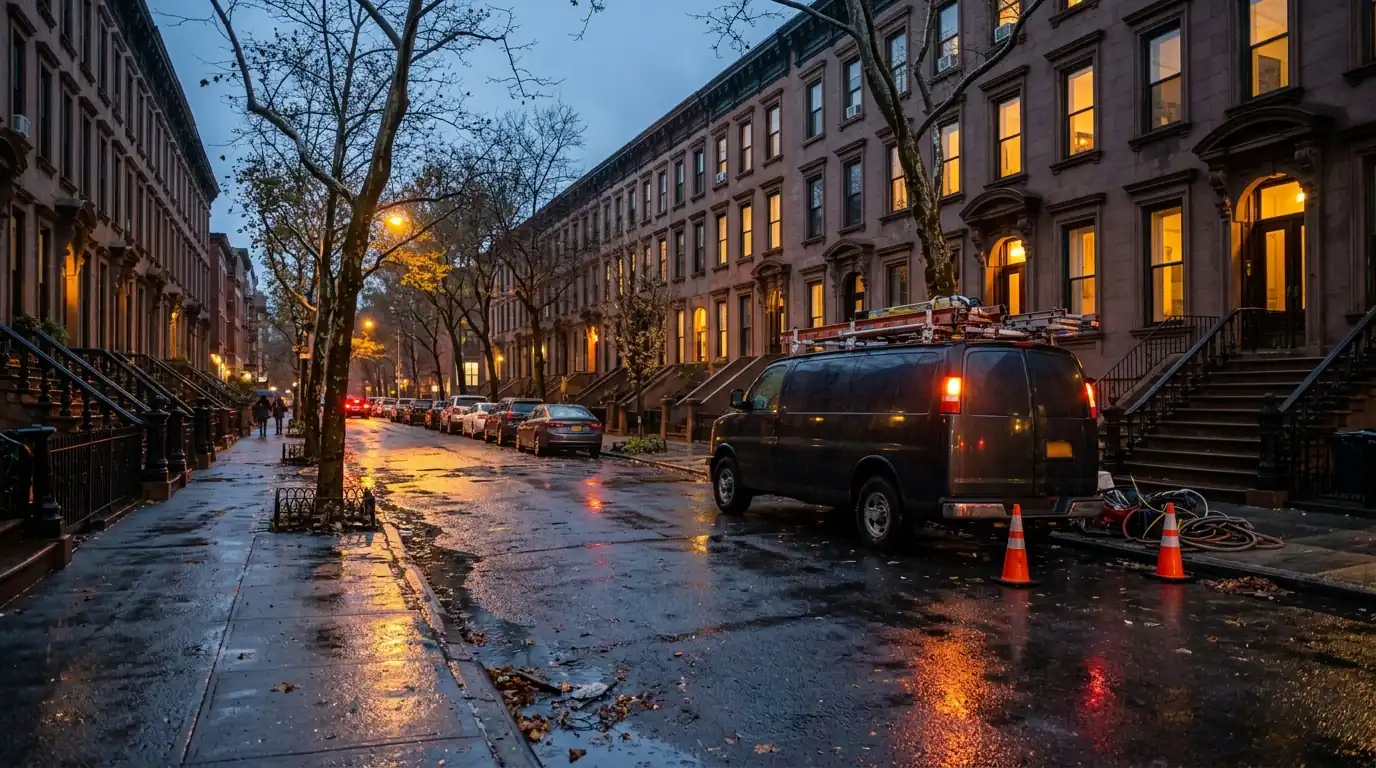
Much of the housing here is prewar, with plaster on lath and one-pipe steam heat. Plaster holds water longer than drywall and hides it, so we check it with meters and a thermal camera.
In stacked apartments, water follows the plumbing chase down two or three floors, and the job involves the super, the managing agent and more than one insurer. Below ground, storms overload combined sewers and push water up through basement drains, as Ida and the Sept. 29, 2023 storm showed.
Rain on Central Park in one hour during Ida, Sept. 1, 2021.
Source: Queens PostShare of city sewers that carry sewage and stormwater together.
Source: NYC DEPWater main breaks in fiscal year 2023.
Source: CBS New YorkLithium-ion battery fires the FDNY counted in 2024.
Source: GothamistHow a job runs
Each step has a part for us and a smaller part for you.
We ask where the water or smoke is and give you an arrival window.
The crew isolates the source and protects floors and hallways.
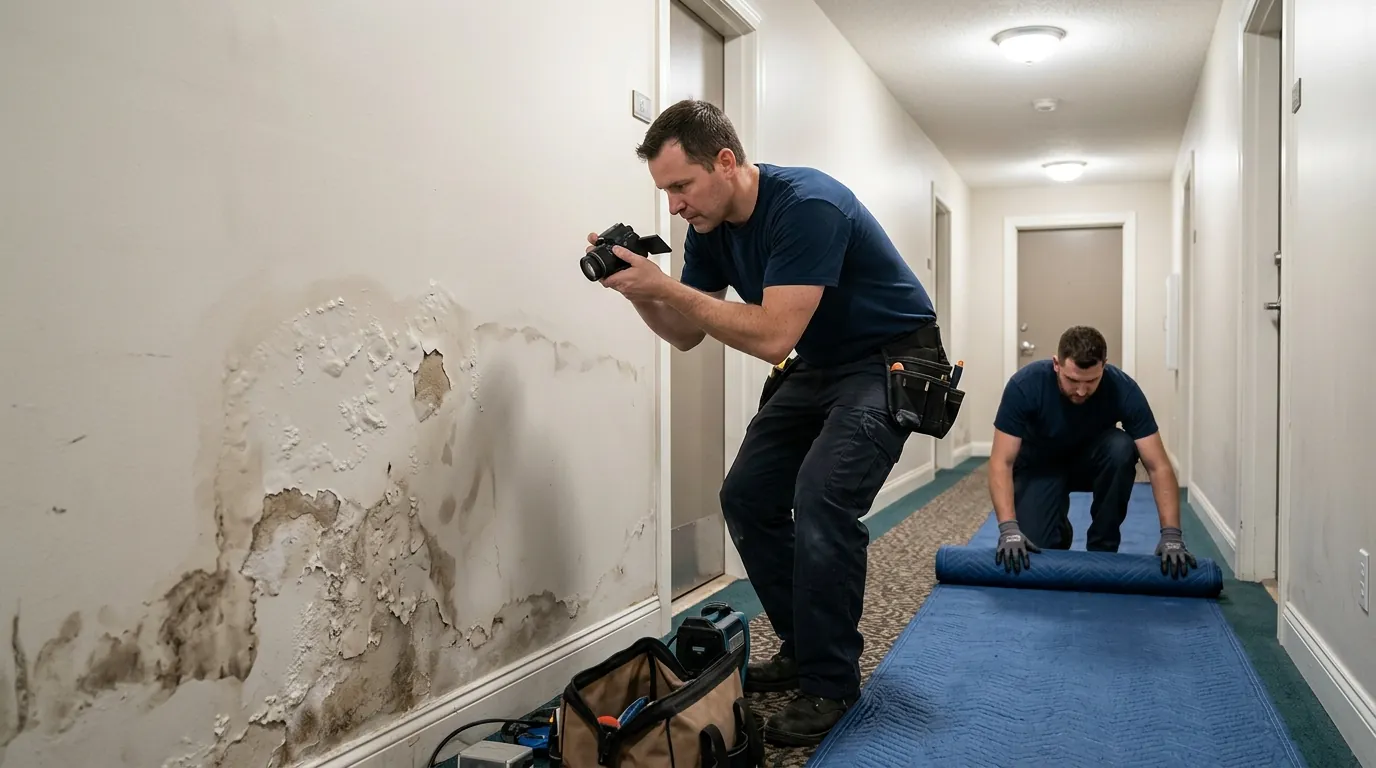
Rooms are photographed and moisture is mapped first.
Drying for water; soot removal for fire.
Materials that stayed wet too long come out, cut cleanly.
Finishes are matched so the repair does not show.
How we work
A photo record and readings start every job, so the claim rests on numbers.
Equipment stays until readings match a dry reference. Pulling it early is how mold starts.
Barriers and air scrubbers keep soot and spores out of hallways.
The same file follows the job from extraction to the last coat of paint.
Coverage
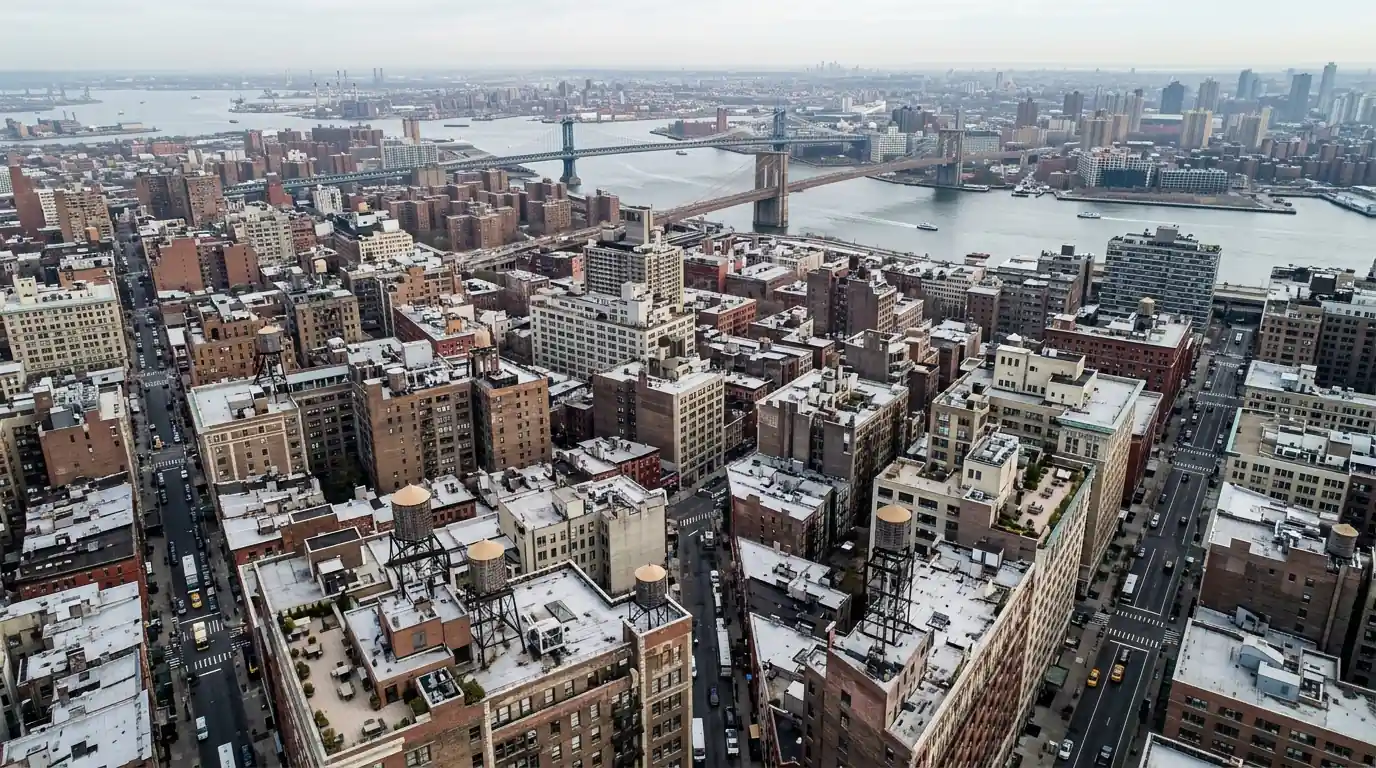
Our service office sits on West 100th Street, so Manhattan is the core of the work. Crews also cover the brownstones of Brooklyn, the basements of Queens, the prewar buildings of the Bronx and storm work along the shore on Staten Island.
North of the city we work across Westchester County, including Yonkers, New Rochelle, Mount Vernon and White Plains, and to the east in Nassau County. The NYC area overview explains where coverage ends.
Articles
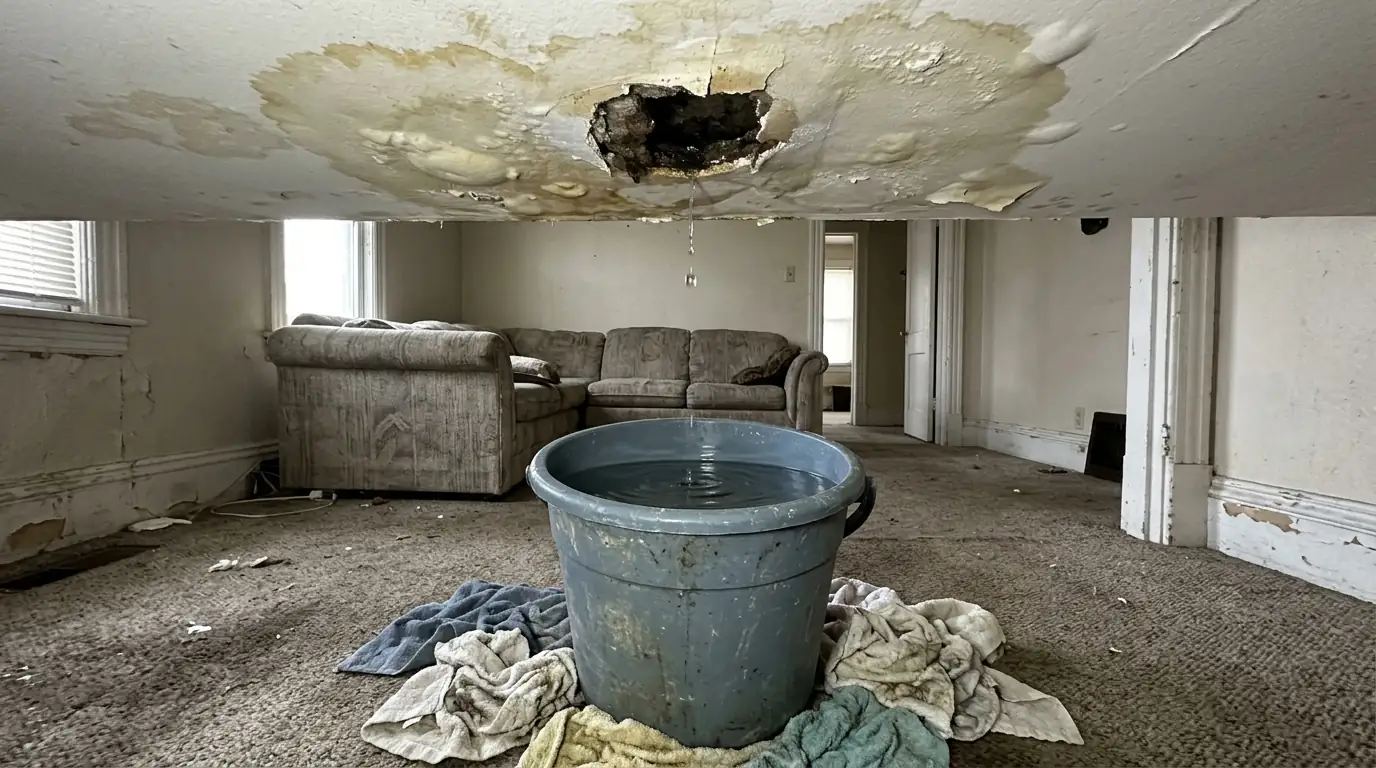
The first hour, who to call in the building and how to record the damage.
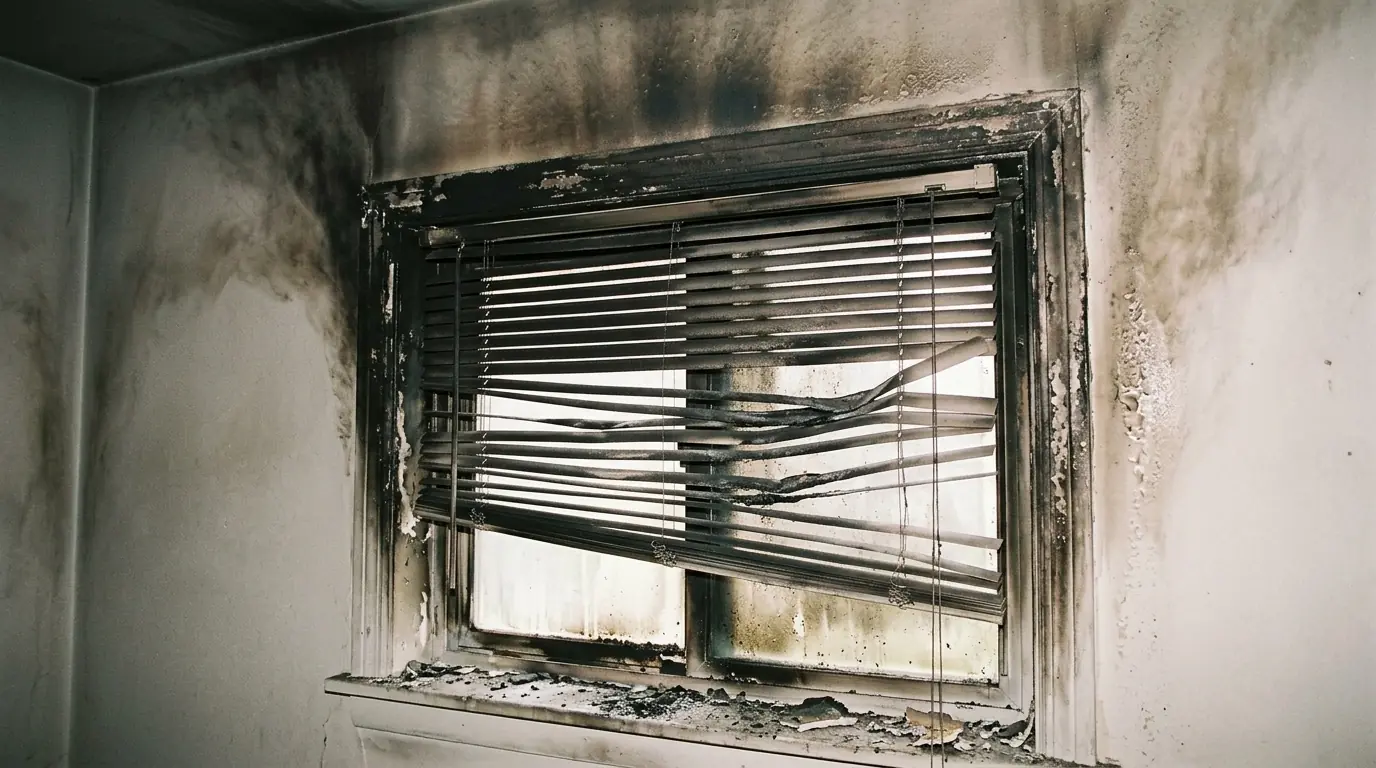
Why lithium battery fires leave a different residue, and what it takes to move back in.
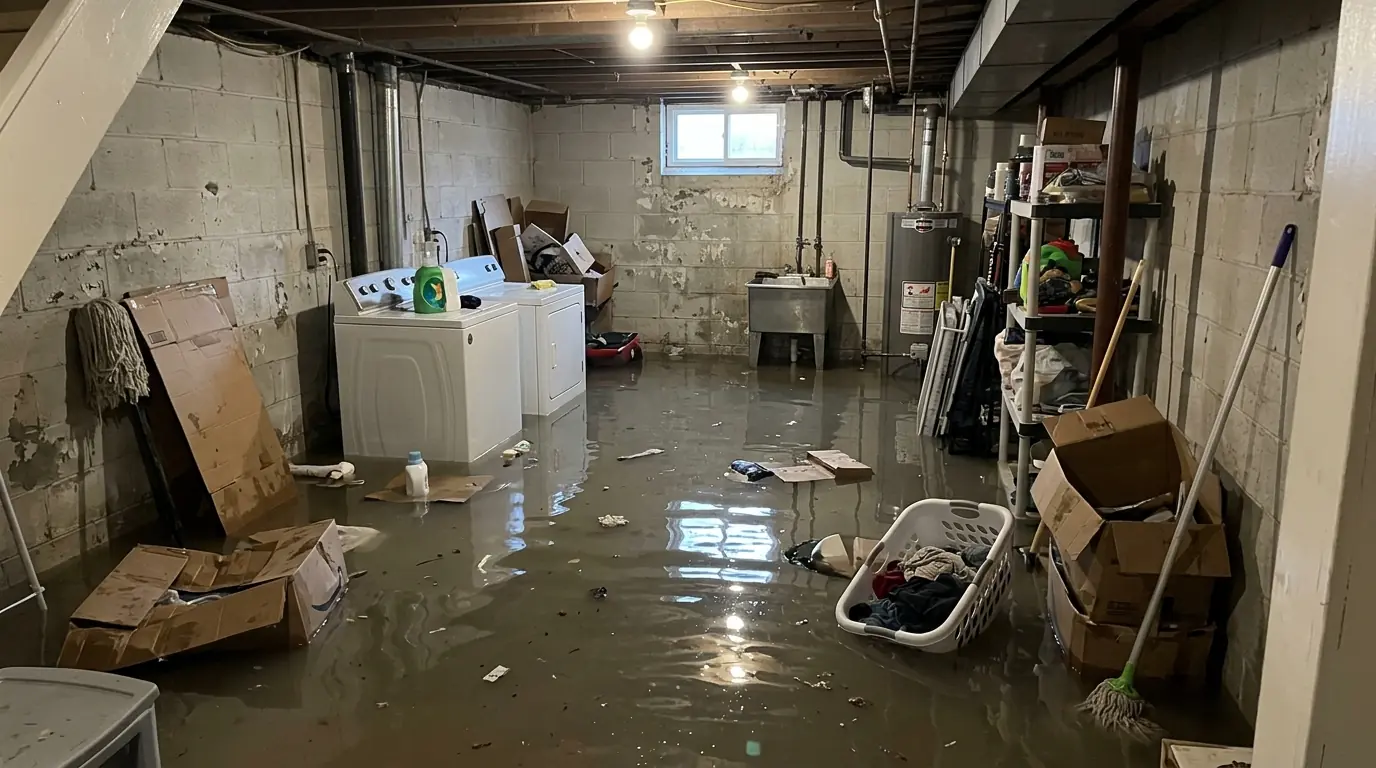
How combined sewers back up in heavy rain, and what a backwater valve does.
Questions
We answer around the clock and give you an arrival window on that call, based on where our crews are. If water is still running, we talk you through shutting it off.
Sudden water, like a burst supply line, is usually covered. Flood water and sewer backups often need their own coverage. Your policy decides it; we document the loss either way.
It depends on where the leak started; often several policies each cover part. We record the source and path so each adjuster can settle it.
For a clean leak in a room or two, most people stay. Sewage, heavy soot and mold containment are different, and we tell you plainly when to stay out.
All of it, since the jobs overlap. We handle mold remediation, smoke odor and the rebuild on the same job file.
Leave them in place; wiping drives soot deeper. Our contents pack-out team lists each item and sends cleanable pieces for contents cleaning.
One number for water, fire and mold
We answer day and night across New York City and nearby counties.
Tell us where the water or smoke is now, and we will tell you what to do next.