
Short answer
Wet documents and photos should be frozen within 48 hours if they cannot be air-dried right away. Freezing stops mold and ink bleeding and buys time. The paper is then freeze-dried, which turns the ice straight to vapor without the pages swelling or sticking. Photos are separated and dried face up, and prints stuck together are handled by specialists.
Why wet paper has to be frozen quickly
Wet paper grows mold within a couple of days, inks run, and coated pages in books and albums fuse together as they dry. Air-drying works for a few sheets but not for boxes of files or bound books.
Freezing halts all of that. We box and freeze wet paper as part of the pack-out, then send it for vacuum freeze-drying, which removes the water without the page ever being wet again.
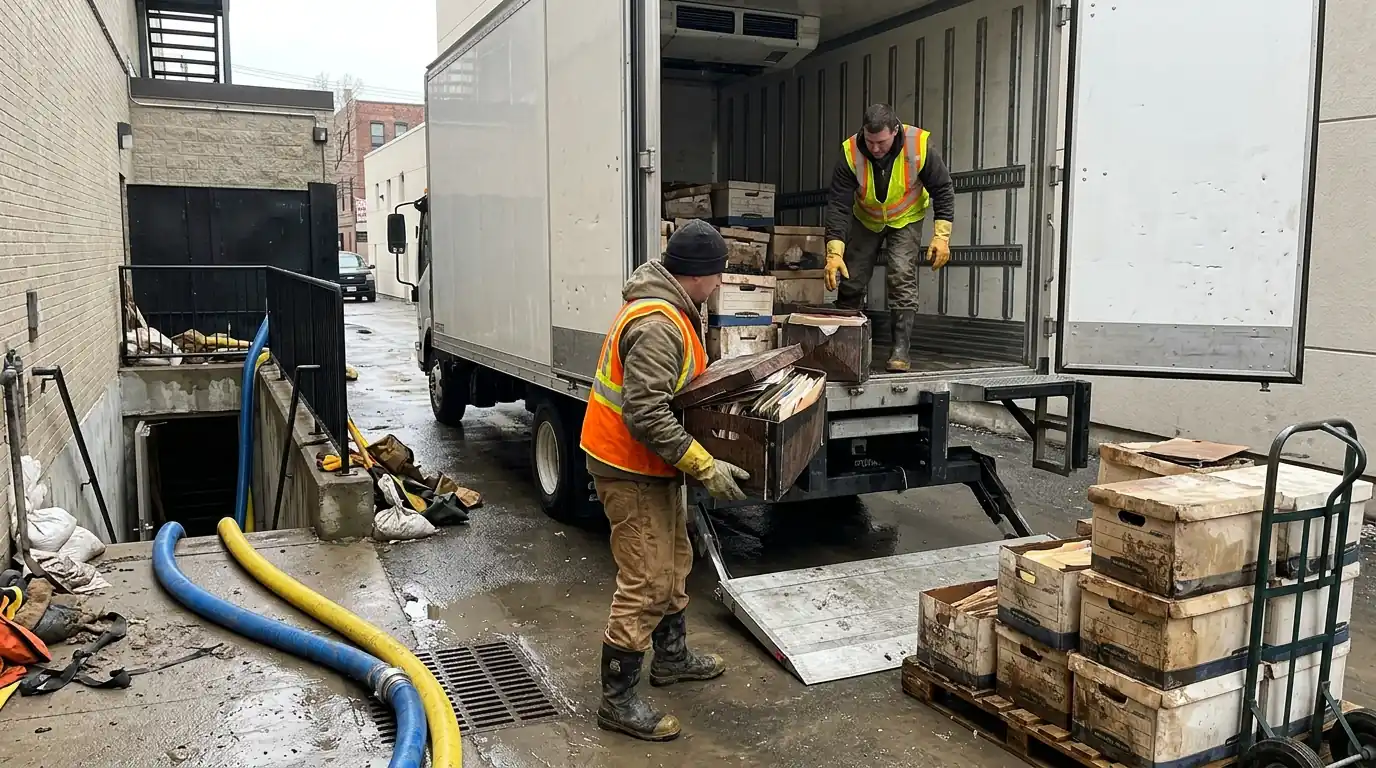
How we save wet documents
Triage
We sort what is wet, damp and dry.
Pack in order
Boxes are labeled by drawer and shelf.
Freeze
Wet material is frozen within the first day or two.
Freeze-dry
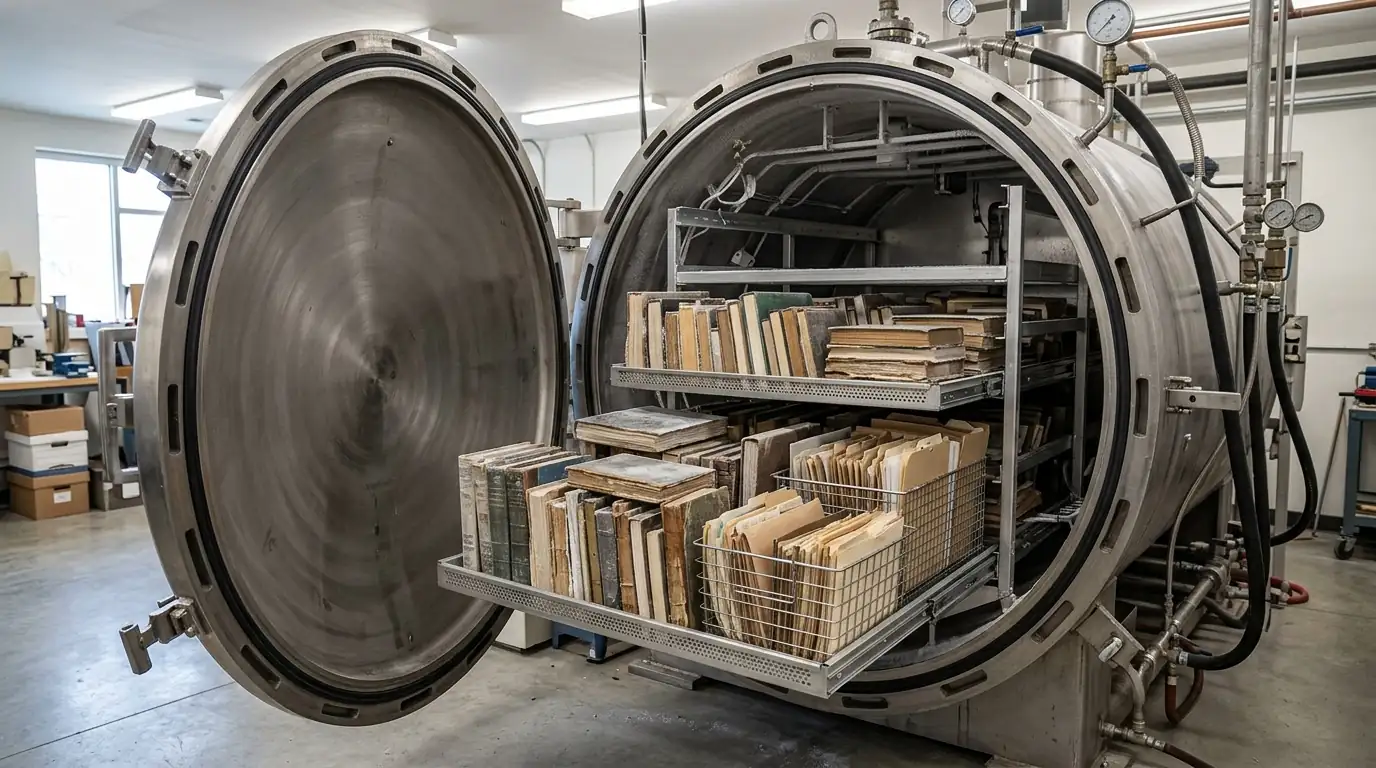
A vacuum chamber removes the water.
Clean and treat
Contaminated items are treated after drying.
Return
Documents come back in their original order.
Freeze-drying wet paper
Vacuum freeze-drying places frozen documents in a chamber where the ice sublimates, going straight from solid to vapor. The paper stays flat, inks stay put, and bound volumes keep their shape far better than air-dried ones.
It suits files, books, manuals and records soaked in clean or gray water. Documents soaked in sewage or flood water can also be freeze-dried and then treated, with the understanding that some will need copying rather than keeping. Wrinkling is normal, and the pages remain readable.
Photographs and albums
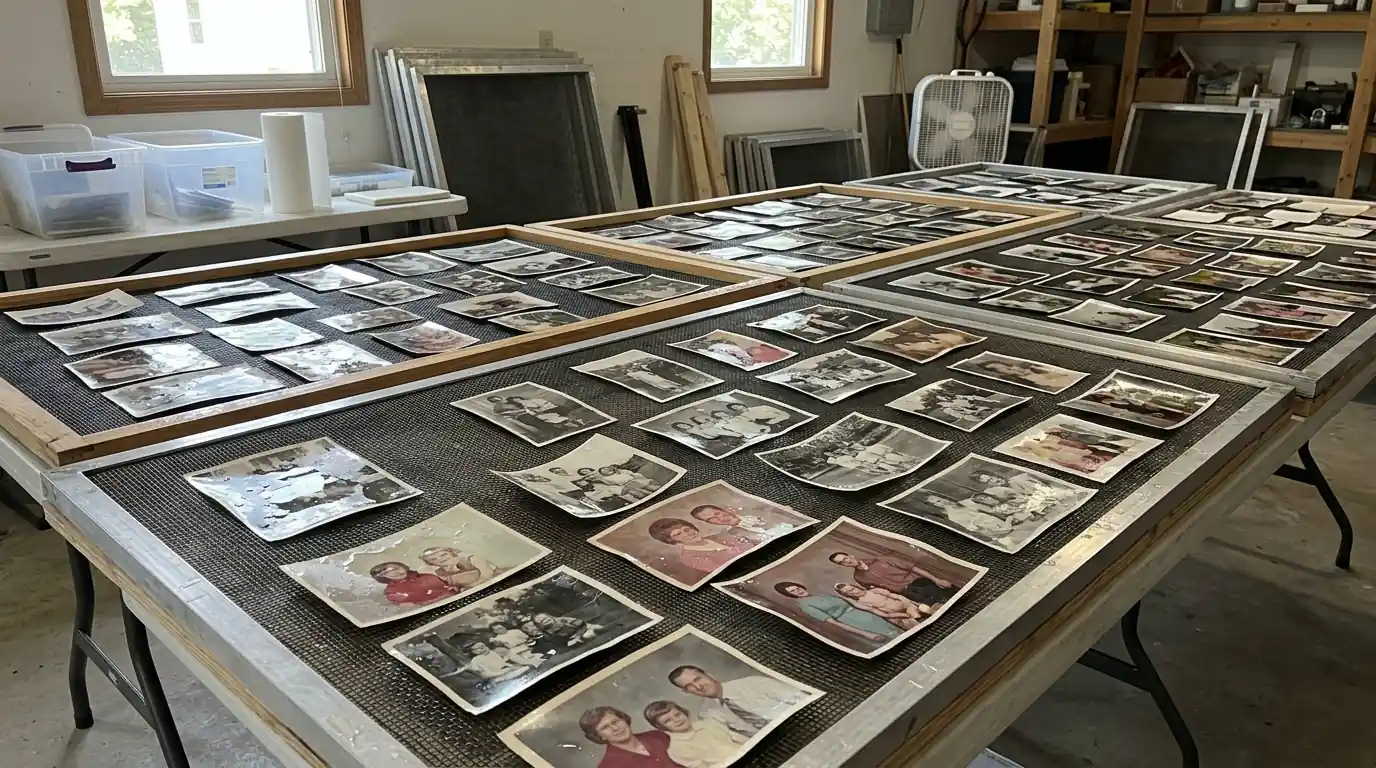
Photo emulsions soften when wet and stick to anything they touch, including each other and album sleeves. The longer they stay wet, the harder they are to separate.
Loose prints can often be rinsed in clean water and dried face up on a screen or towel. Albums, stuck stacks and old or valuable prints are frozen and passed to a photo conservator. Do not try to pull stuck prints apart yourself; that is how the image lifts off. Digital copies of any photo you can scan are the best backup.
Business records and files
For a business, wet files can mean lost client records, contracts and tax papers. Many have to be kept for years, and losing them costs more than the drying does.
We pack, label and freeze files by box and drawer so they come back in the same order they left, which matters for records that are indexed or filed by date. Where originals are needed only for their information, scanning after drying is often the practical end point for the job.
How long document drying takes
Freezing happens in the first day or two. Freeze-drying usually takes one to several weeks, depending on volume and how wet the material was.
Frozen documents can wait safely, so there is no rush once they are in the freezer.
Records lost to flood water
Ida put more than 10 feet of water into parts of Mamaroneck in September 2021. When water rises that fast, homes and businesses lose whatever was stored low: file cabinets, boxed records, photo albums in basement closets. In most of those losses, the documents that survived were the ones frozen within the first day or two, which is why we box wet paper into freezers as part of the first pack-out rather than leaving it for later.
What you can do for wet papers and photos
Safe to do yourself
- Move dry papers away from the water
- Put wet files in freezer bags and freeze them
- Rinse and dry a few loose prints face up
- Keep the order of files when boxing them
Leave to a crew
- Freeze-drying boxes of files or books
- Separating stuck photos
- Papers soaked in sewage or flood water
- Valuable or historic documents
What affects the cost of document drying
Cubic feet of paper to freeze and dry.
Contaminated water adds treatment.
Books and albums take more care.
Conservator work is priced by item.
Digitizing after drying is optional.
There is no sourced local range for document drying; it is priced by volume after we see the material.
Questions about document drying
Usually, if frozen quickly and freeze-dried. Air-drying warps them.
No. Heat can damage the emulsion. Dry them face up at room temperature.
Yes, in freezer bags, for a small number of files.
They can be freeze-dried and treated; some are better copied.
Often under contents coverage. Business records may fall under business policies.
Some wrinkling is normal. The information is what is saved.