Short answer
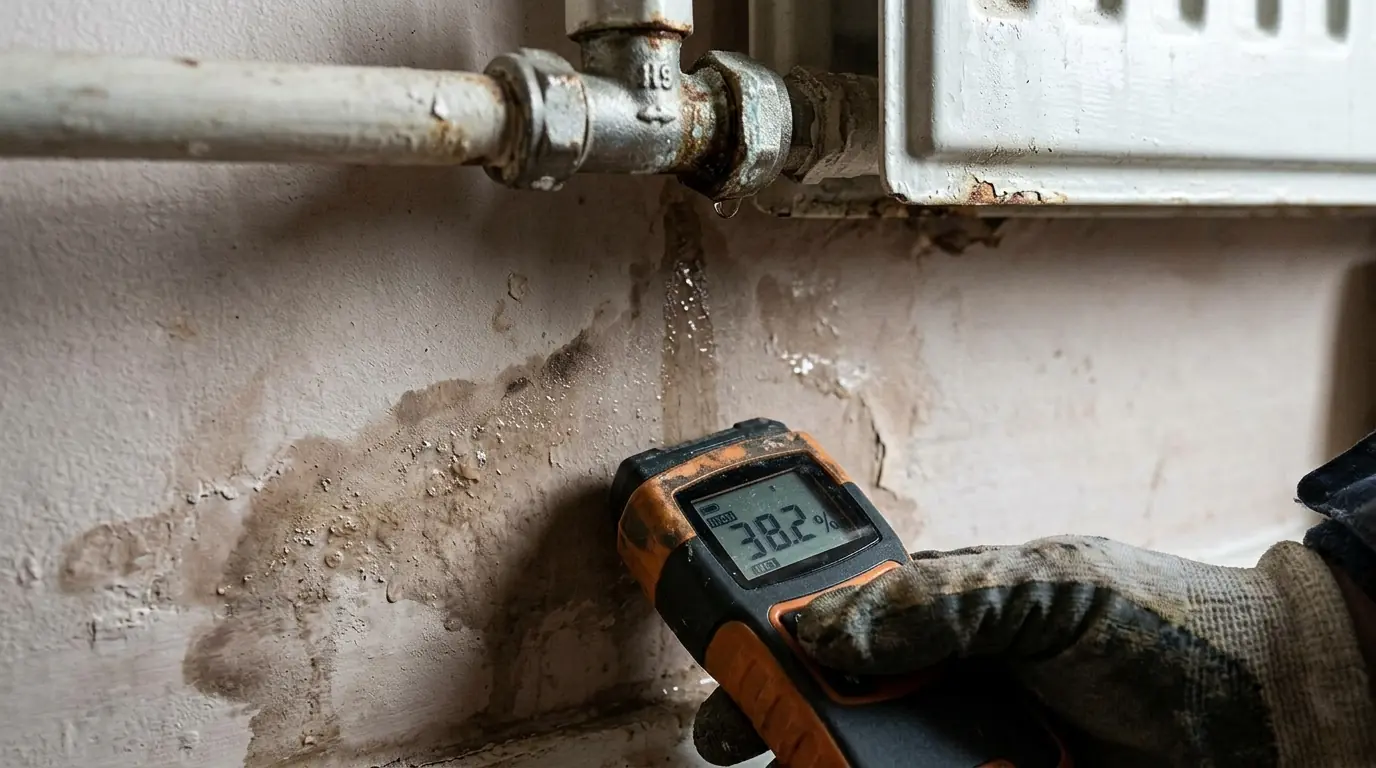
A leaking radiator is usually a stuck air vent, a failed valve packing or a cracked hot water baseboard line. The leak runs whenever the boiler fires, so damage builds through the heating season. Call the super to close the radiator valve, catch the water, and have the floor and the ceiling below checked for moisture.
How a radiator leak damages floors and ceilings
Steam leaks are small but constant. A vent that spits every cycle wets the same spot of floor several times a day, and hot water soaks into oak strip flooring and down to the ceiling below faster than cold water would.
We measure the floor and the ceiling underneath, dry them, and repair stained plaster once readings are dry. The radiator repair is the super’s or the heating contractor’s job.
Signs a radiator or steam pipe is leaking
Hissing or spitting vent
The air vent is not closing when steam arrives.
Dark ring on the floor
Water drops in the same spot every heating cycle.
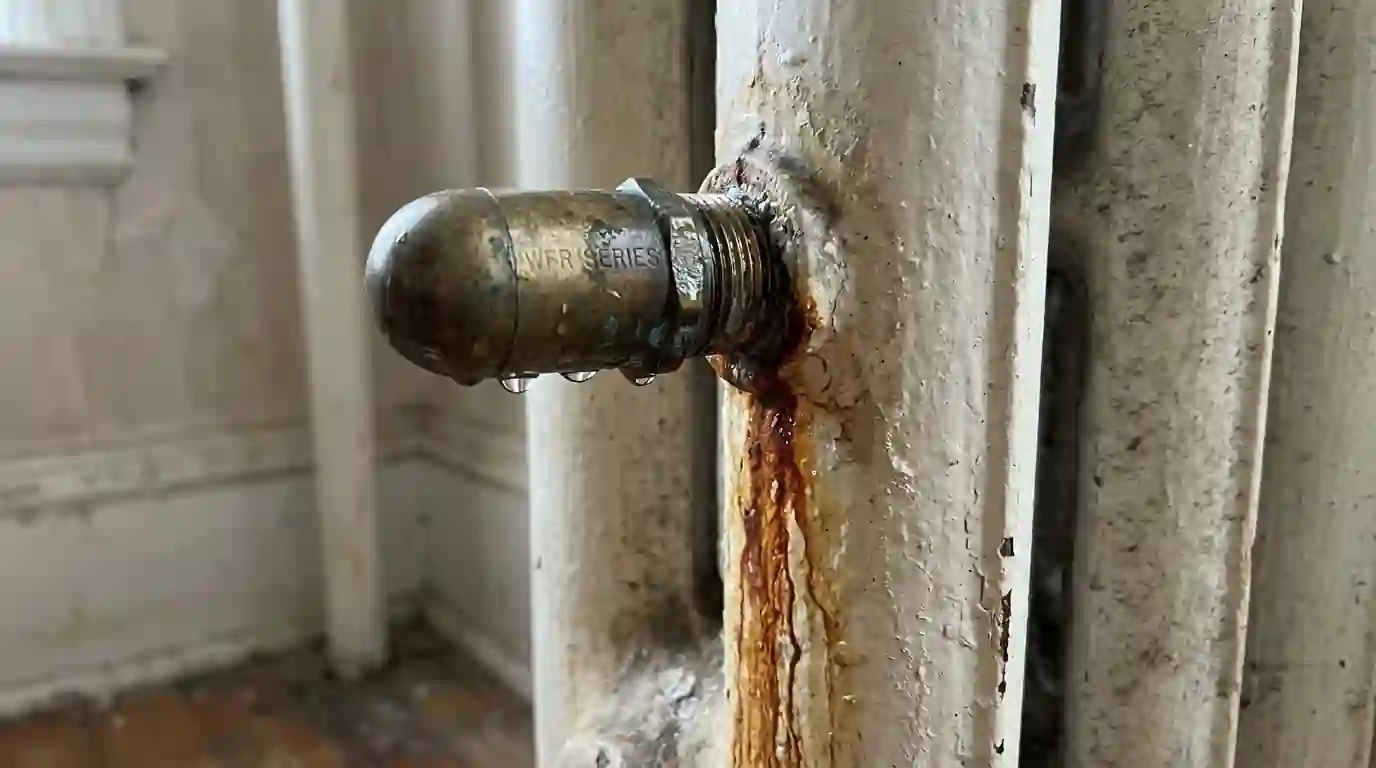
Rust streaks under the valve
The valve packing is weeping.
Stain on the ceiling below
Water is running down the riser sleeve.
Paint blistering at the baseboard
A hot water line is leaking behind it.
Loud banging with water
Water is trapped in the steam pipes.
How we handle radiator and steam leak damage
Close the valve
The super closes the radiator or riser valve and fixes the source.
Catch the water
Pans and towels go under the vent or valve until it is repaired.
Measure the damage
We read the floor, subfloor and ceiling below.
Dry
Drying mats or air movers work on the floor; the ceiling dries from below.
Replace rotted boards
Boards that stayed wet too long are cut out and replaced.
Repair plaster
Stained or soft plaster is patched and painted.
Leaking radiator air vents
On a one-pipe steam system, each radiator has an air vent that lets air out and closes when steam arrives. When a vent sticks open, it spits hot water and steam every time the heat comes up.
The damage is slow and repeated: a stained floor, a warped board, then a brown ring on the ceiling below. We dry the floor and ceiling and mark the vent for replacement, which is a quick fix for the super or a heating contractor.
Steam riser and supply valve leaks
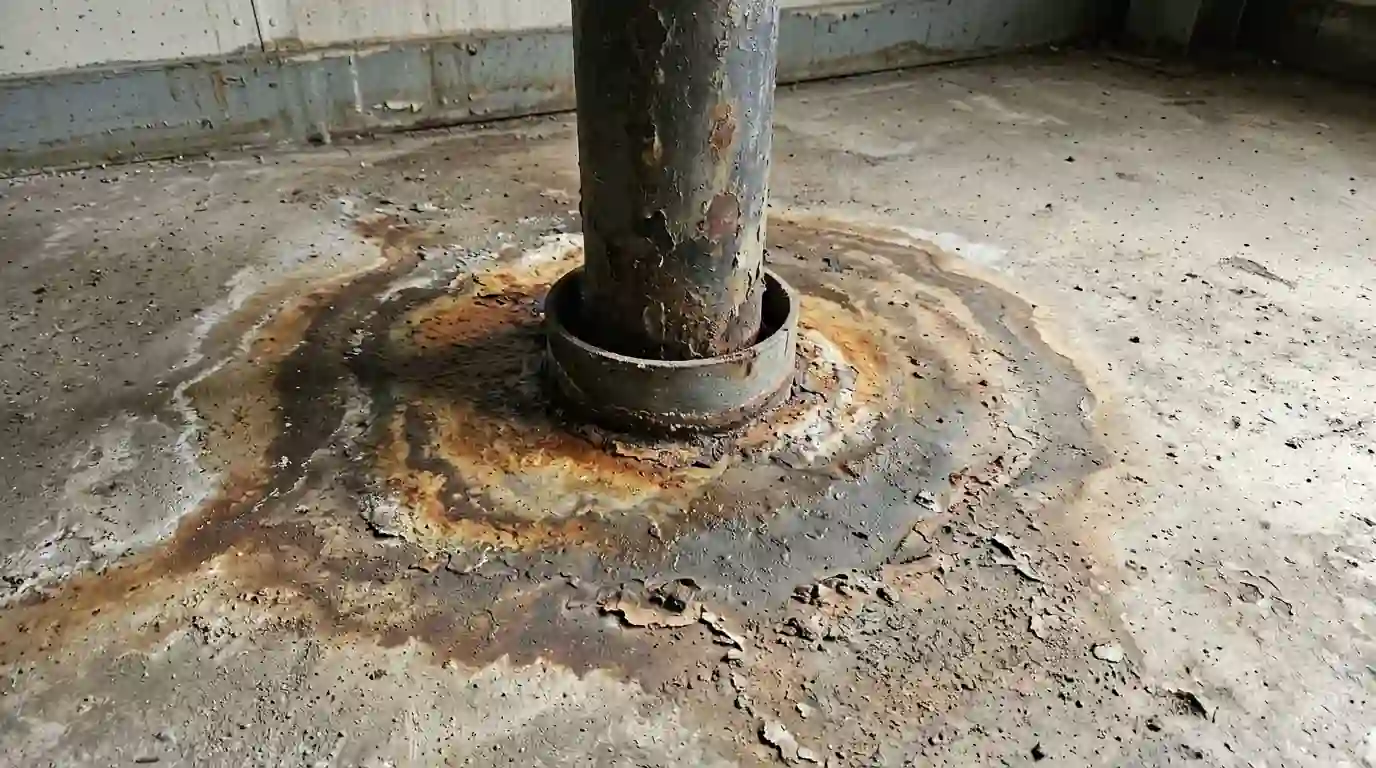
Risers carry steam up through every apartment on the line, and leaks show up at valve packing, unions and where the pipe passes through the floor. A leak at the floor sleeve usually shows as a stain on the ceiling of the unit below.
Because risers serve several apartments, these jobs involve the super and often more than one unit. We dry each affected space, check the plaster around the sleeve on each floor, and keep separate records for each.
Hot water baseboard leaks
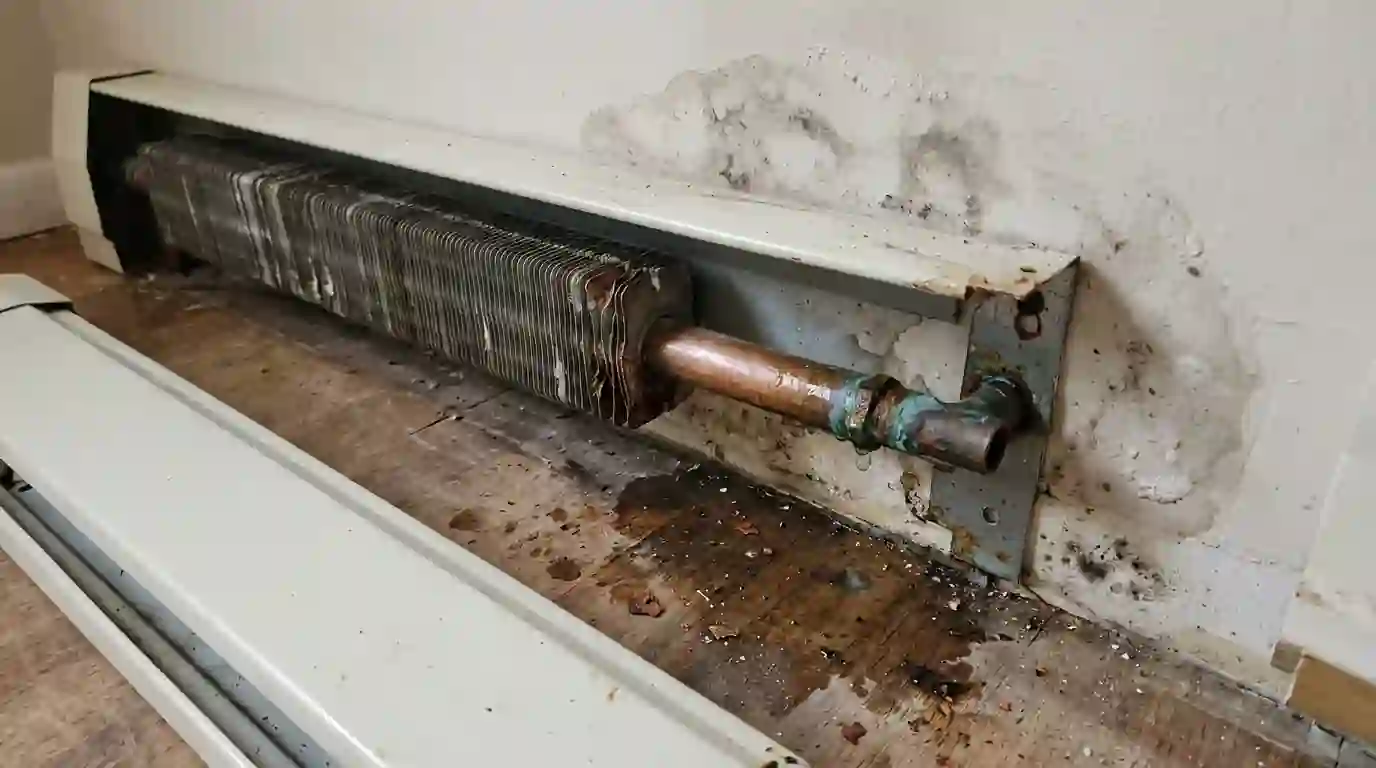
Hot water baseboard runs pipe along the floor behind a metal cover, so a pinhole or a cracked fitting leaks straight onto the floor and into the wall behind. It is hidden until the floor stains or the paint blisters.
We pull the cover, extract, and dry the wall base and subfloor. On older systems a leak often starts after a freeze during a shutdown, so we check the rest of the run while the covers are off and tell you what we find.
Radiator leaks and the city’s prewar heating
Rent control applies only to buildings finished before February 1947, and many of that era still run one-pipe steam with cast iron radiators in every room. The boilers run hard through the heating season, with a normal January low of 27.8°F in Central Park, so a stuck vent can spit water several times a day for months. We see most radiator damage between January and March, when floors and the plaster below have taken weeks of small, repeated wetting.
What you can do, and what the building should do
Safe to do yourself
- Put a pan or towel under the dripping vent
- Tell the super the radiator number and room
- Photograph the floor and the ceiling below
- Keep rugs and furniture off the wet spot
Leave to a crew
- Replacing vents, valves and packing
- Drying the subfloor and the ceiling below
- Moving cast iron radiators
- Repairing plaster and floors
What affects the cost of radiator leak damage
Typical US range for water damage restoration, of which radiator leaks are usually the smaller jobs. Source, 2026. A planning range, not a quote.
Weeks of repeated wetting mean rot, not just a stain.
Strip oak and parquet under a radiator may need boards replaced.
A stained plaster ceiling in the next unit adds repair.
Moving a cast iron radiator to reach the floor takes a crew.
Refinishing floors and ceilings is priced separately.
Questions about radiator and steam leaks
Usually not like a burst pipe, but it adds up every cycle. Get the vent or valve fixed and the floor checked soon.
The building, through the super. We handle the water damage to floors and ceilings.
Often, if it is dried and the boards have not rotted. Deep black stains usually mean replacement.
Water trapped in steam pipes. It often comes with leaks, so tell the super.
When we need the floor underneath, yes. Cast iron radiators are heavy, so we bring a crew.
Sudden damage often is. Long-running leaks are often treated as maintenance.