Short answer
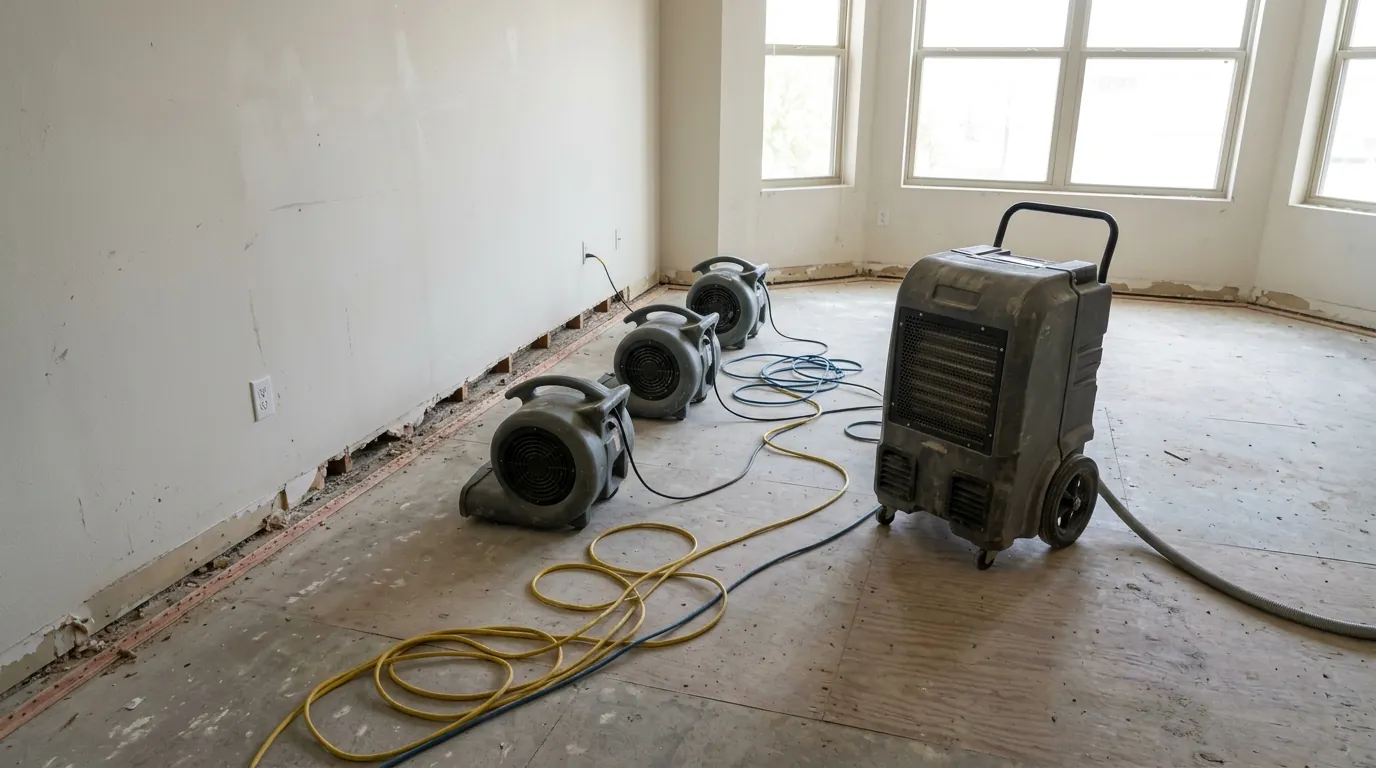
A wet hardwood floor can often be saved if drying starts within a day or two. Boards cup as water gets under them, and drying mats pull that moisture back out through the wood. Once the boards read dry, many flatten enough to sand and refinish. Floors that sat wet for days usually need boards replaced.
Why wet hardwood cups, and how it comes back
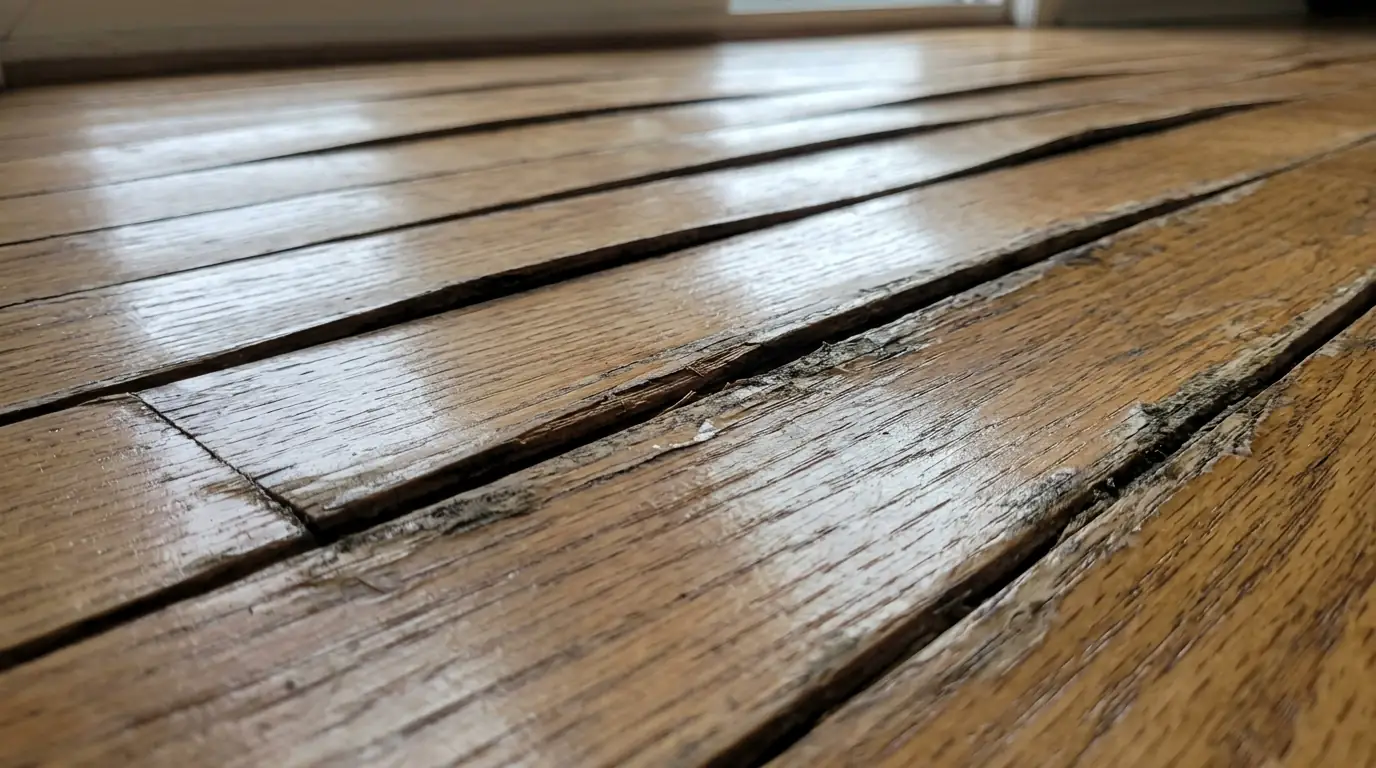
Wood absorbs water from below faster than it loses it from the top, so the bottom of each board swells and the edges rise. That is cupping. If the floor is dried slowly and evenly, the boards shrink back toward flat.
The mistake is sanding a cupped floor too early. Sanding flat a board that is still wet leaves it crowned when it dries. We wait for readings, then decide on refinishing or replacement.
How we dry a hardwood floor
Read the boards
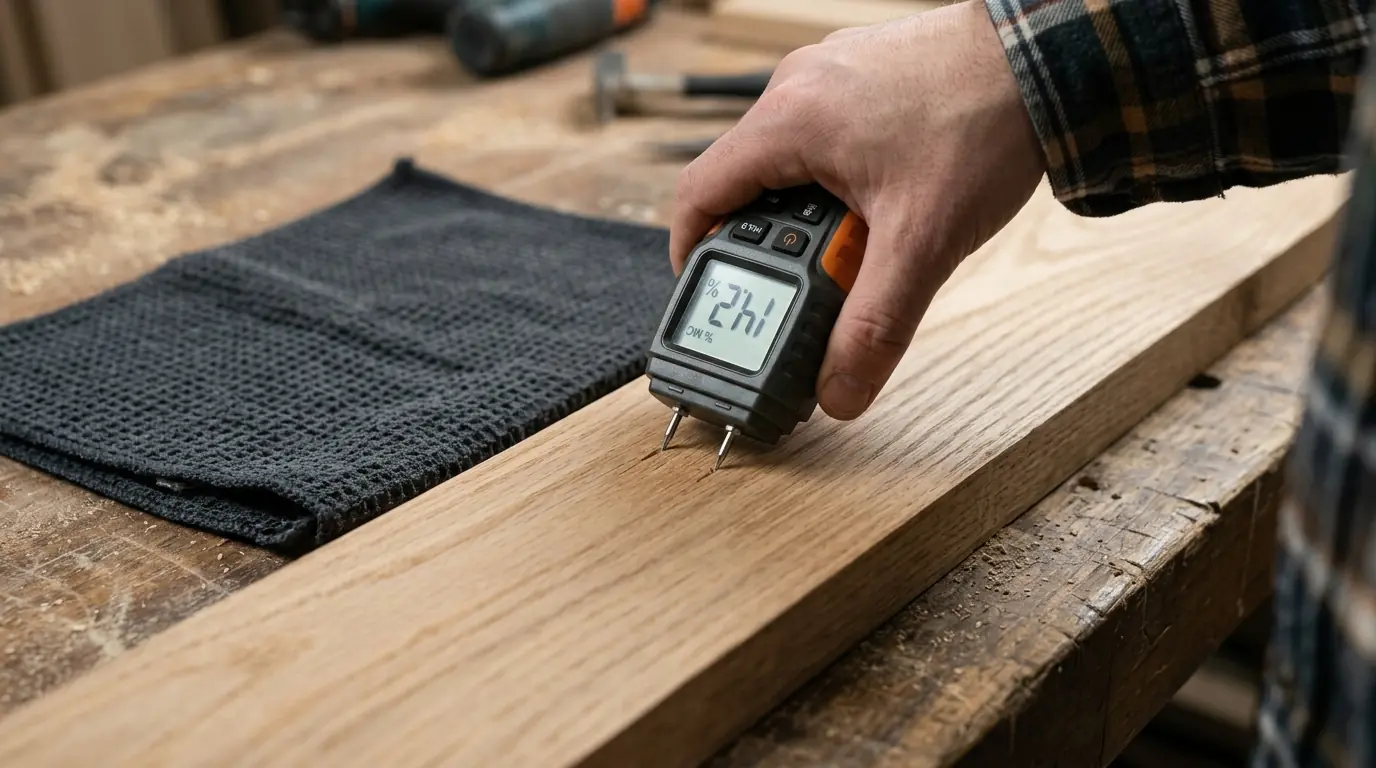
Moisture readings across the floor show how far water spread.
Extract the surface
Squeegee wands pull water off and out of the seams.
Lay drying mats
Mats connected to a vacuum pull moisture through the wood.
Dry the room
Dehumidifiers keep the air dry so the wood can release water.
Watch the boards
Daily readings track the floor as it flattens.
Refinish or replace
Sanding waits until the wood is dry.
Cupped strip oak floors
Narrow strip oak is the most common floor in older apartments, and it cups quickly because each board is thin and tightly packed. You feel the ridges underfoot before you see them.
We lay drying mats connected to a vacuum system that pulls moisture up through the boards, and we dry the subfloor from underneath where there is access. Many strip floors return close to flat and just need a light sand and refinish. The ones that do not are usually boards that sat wet the longest, near the source.
Parquet in prewar apartments
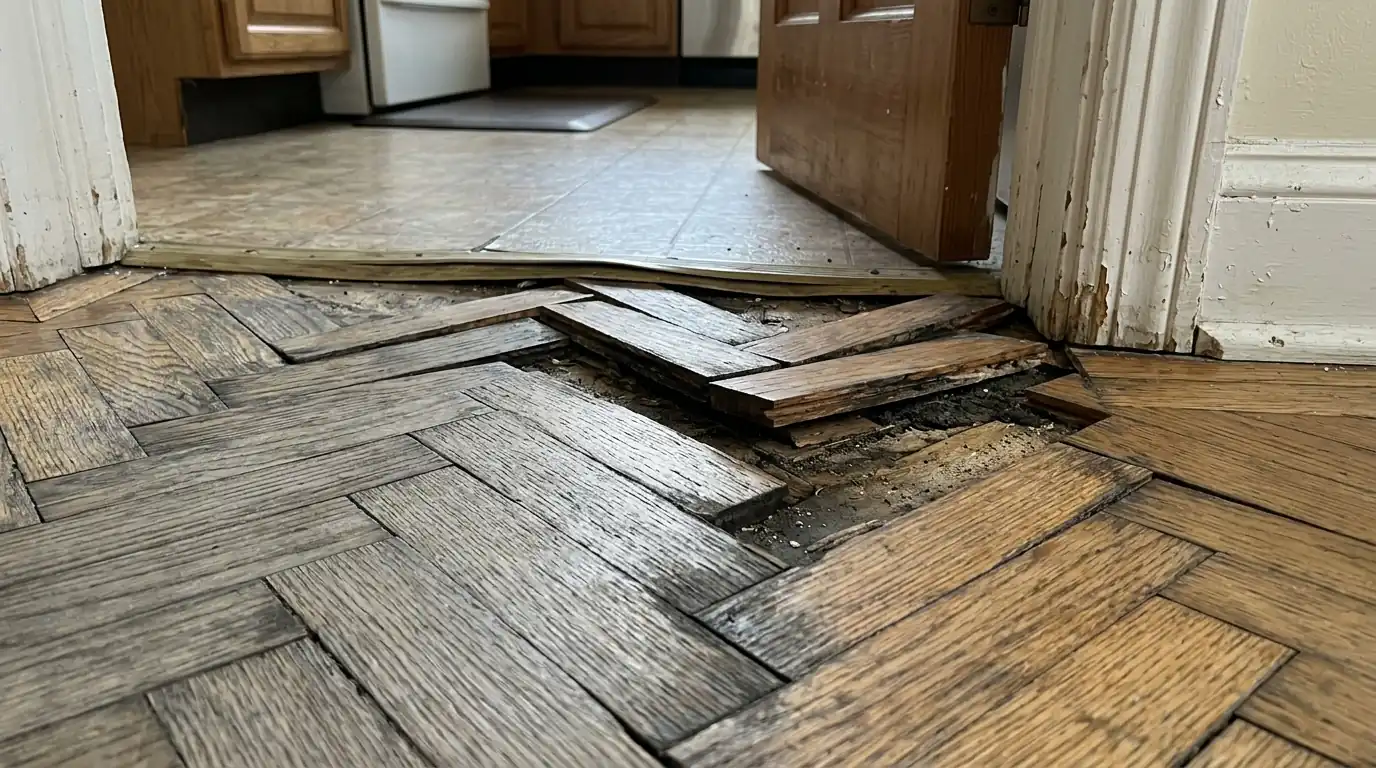
Parquet is made of small blocks glued to the subfloor, often with old mastic. Water loosens the glue, so blocks lift, rock or pop out, especially near kitchens and bathrooms.
We dry the area with mats and air movers, then re-glue loose blocks that are still sound. Blocks that warped or split are replaced, and matching old parquet patterns is often possible with salvaged blocks from a closet. The whole floor is then sanded together so the repair blends in with the rest.
Engineered floors over concrete
Engineered wood floated or glued over concrete is common in newer and renovated units. Water gets under it and sits on the slab, where it has nowhere to go.
Floating floors can sometimes be lifted, dried and reinstalled. Glued engineered floors usually cannot be dried from above if the slab is soaked, so we test the concrete and give you the honest answer on the first visit rather than running equipment on a floor that will not recover. That saves you days of noise.
How long a wet wood floor takes to dry
Most floors dry on mats in three to seven days. Heavy cupping, thick subfloors and older finishes can take up to two weeks.
Refinishing waits for dry readings plus time for the wood to settle.
Wood floors in New York apartments
A lot of New York apartments still have their original strip oak or parquet, often refinished several times over the decades, which leaves less wood above the tongue for another sanding. That changes the call on a wet floor. A board with plenty of wear layer can be dried, sanded and saved. One that has been sanded thin may not survive another refinish, so we check thickness at a floor vent or threshold before recommending a sand.
Dry, refinish or replace: how we decide
| Condition | Likely outcome | Why |
|---|---|---|
| Mild cupping, caught early | Dry and refinish | Boards usually return close to flat. |
| Heavy cupping, solid wood | Dry, then judge | Some boards may need replacing. |
| Black stains or rot | Replace those boards | The wood has decayed. |
| Glued engineered on wet slab | Usually replace | The slab holds the water. |
What decides the cost of drying a hardwood floor
Solid strip oak dries on mats; glued engineered floors may not.
Mats are set in sections, so larger floors need more of them.
Floors wet for days often need boards replaced.
Drying from below, where possible, shortens the job.
Sanding and finish are priced separately after drying.
We do not have a sourced local price range for floor drying alone, so we price it after reading the floor.
Questions about hardwood floor drying
Often, if it is dried slowly and evenly. Sanding it before it is dry is the usual mistake.
Fans on the surface help a little. Drying mats pull water up through the boards far better.
Many do, close enough to sand. Some stay slightly cupped.
Often, using salvaged blocks from a closet or under a built-in.
When the water damage is covered, drying the floor is part of that claim.
Tannins in oak react with water and iron. Deep stains usually mean replacing those boards.