Short answer
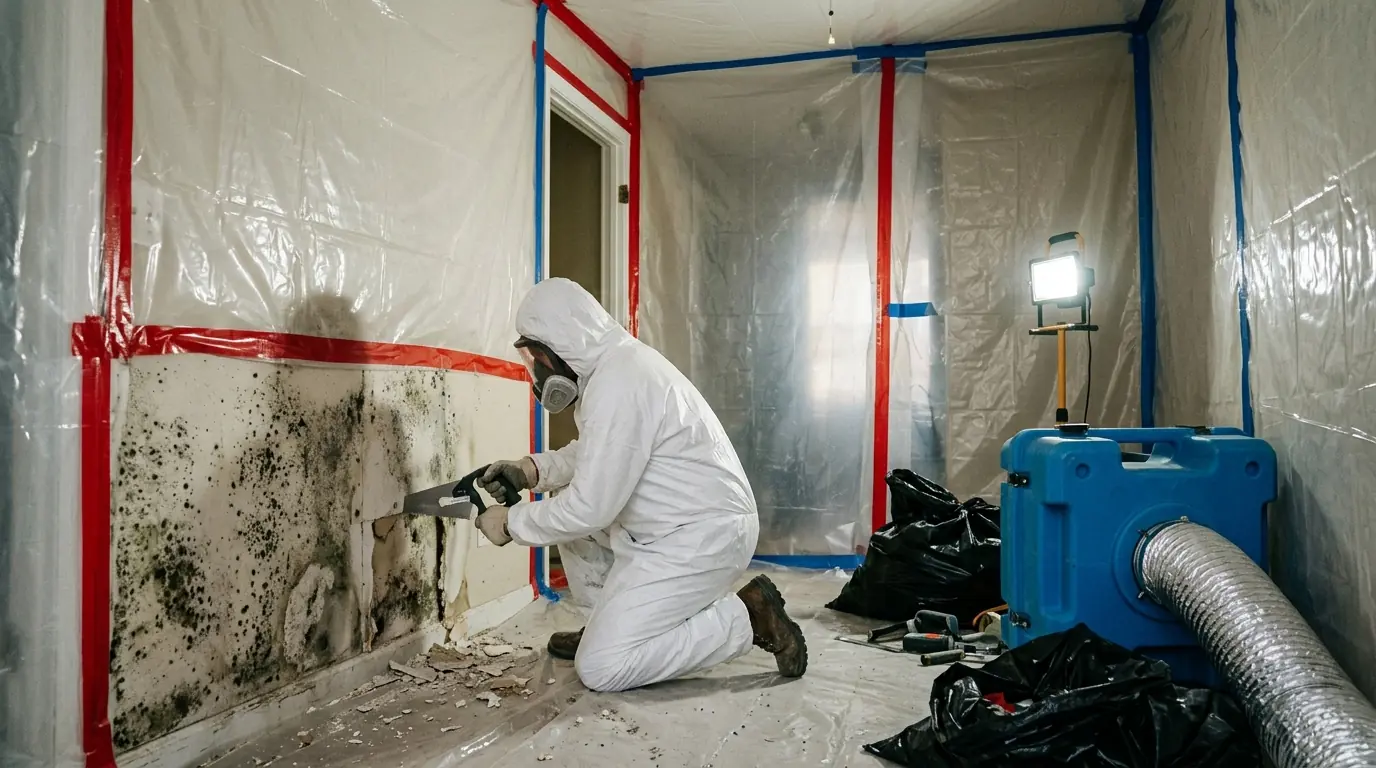
Mold usually starts on damp building materials within 24 to 48 hours. Preventing it means drying everything that got wet to a measured dry standard, removing wet insulation and padding that cannot dry in time, and applying an antimicrobial to cleaned framing. Closing walls or laying floors over damp materials is the most common way mold starts.
Why mold follows water damage
Mold spores are everywhere. What they need is moisture and something to eat, and wet drywall, wood and dust give them both. After a leak, the clock starts on every material that stayed wet.
Prevention is mostly drying done properly. We remove what cannot dry fast enough, dry the rest to a measured standard, and treat cleaned surfaces so that anything that landed during the wet period does not grow.
What mold prevention includes
- Extraction within hours of the call
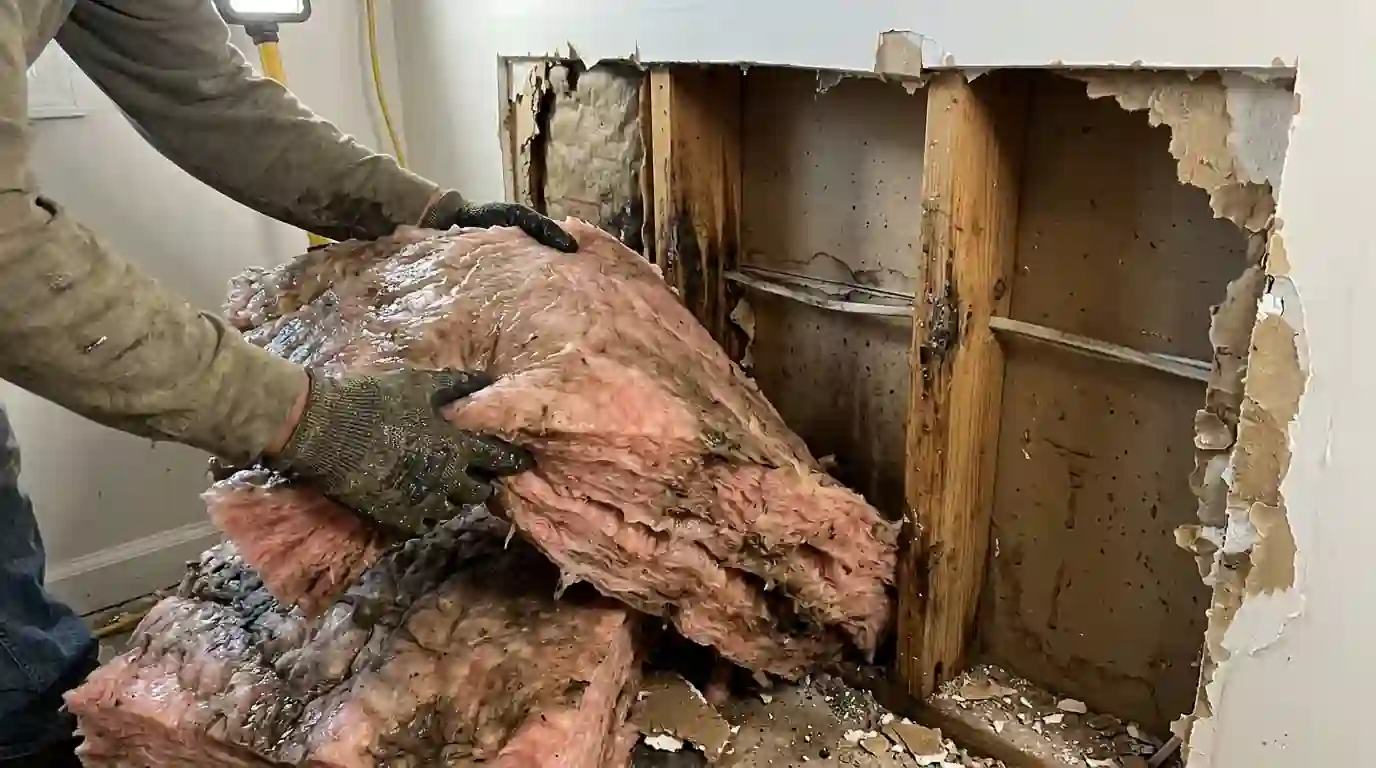
- Removal of wet insulation and pad
- Cleaning of affected framing
- Antimicrobial treatment
- Daily moisture readings
- Final dry readings with photos
- Advice before walls are closed
Antimicrobial treatment
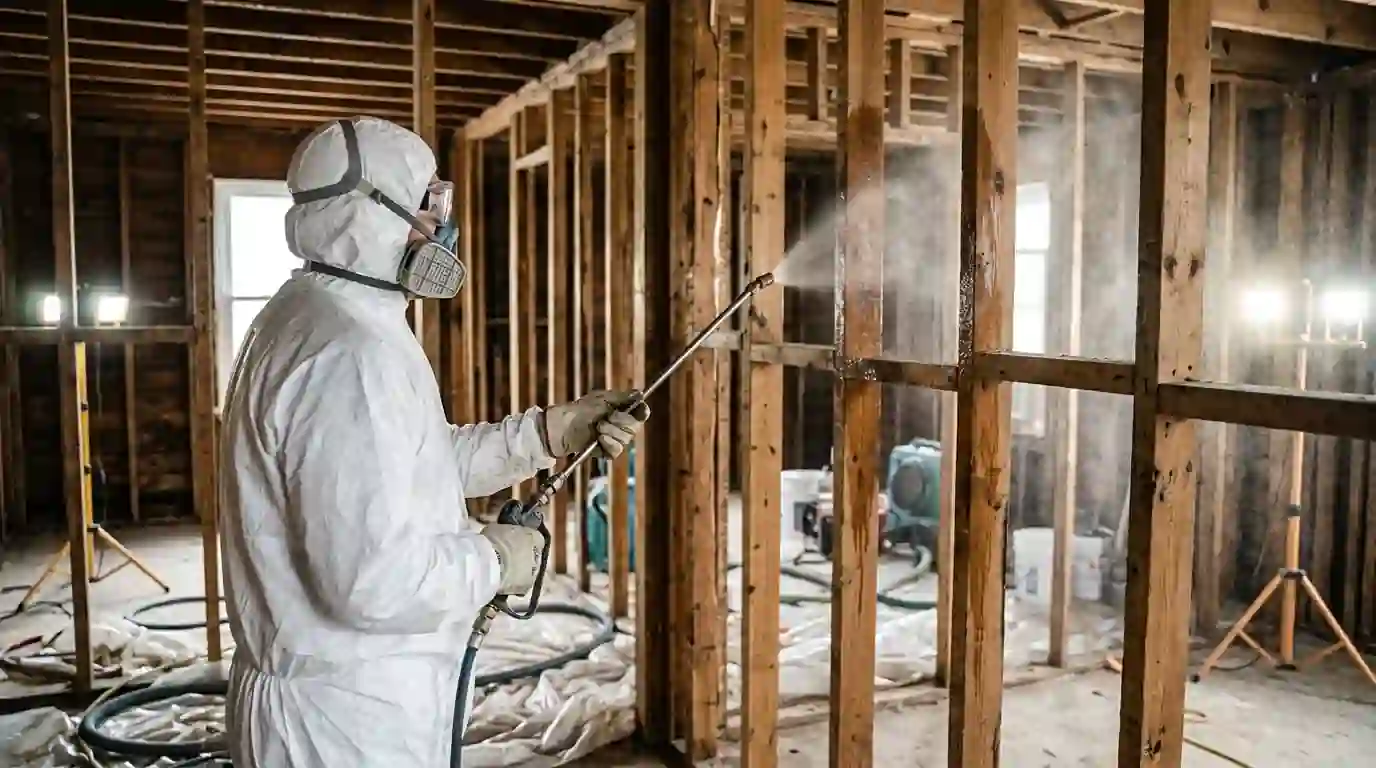
An antimicrobial applied to cleaned framing, subfloors and the back of materials that stay stops spores that landed during the wet period from growing while the structure dries.
We apply it after extraction and cleaning, not instead of them. A treatment sprayed over dirt or standing water does little. On contaminated water jobs it is part of disinfection; on clean water jobs it is a precaution for cavities that stayed wet for more than a day. It is photographed and logged for your file.
Drying to the dry standard
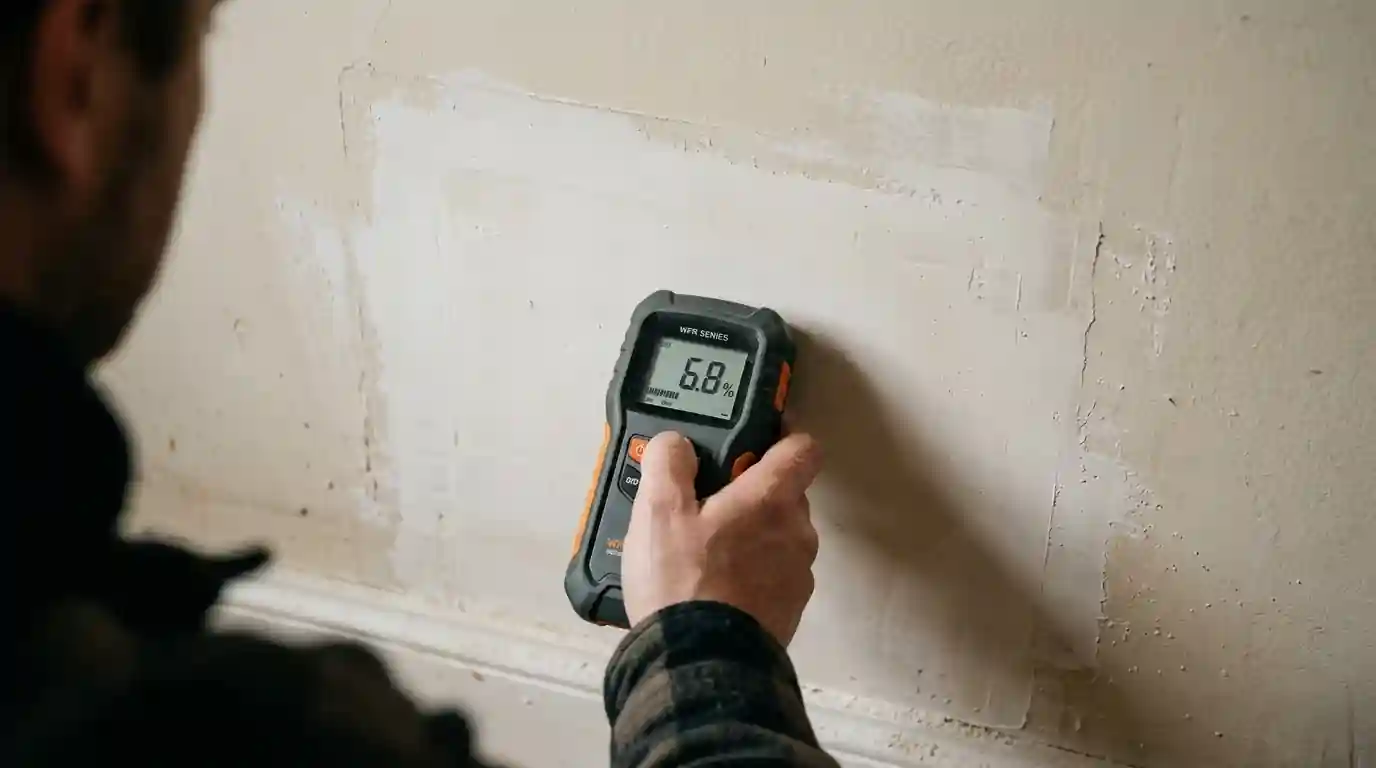
The dry standard is a reading, not a feeling. We take readings in the same materials in rooms that did not get wet, and the affected materials are dry when they match.
Equipment stays until they do. Walls that feel dry to the touch can still read wet inside, especially plaster, and that is where mold starts after a repair. Our final readings are recorded with photos so your contractor knows it is safe to close the walls and your adjuster can see why the equipment ran as long as it did.
Removing wet insulation
Fiberglass and cellulose insulation soak up water and hold it against the studs and the back of the drywall. They take far longer to dry than the materials around them, and they sag and lose value when wet.
We remove wet insulation from opened cavities, dry the cavity, and it is replaced during the rebuild. Leaving wet insulation in a closed wall is one of the surest ways to grow mold where nobody will see it until it smells, so this step is rarely one we skip.
What mold looks like weeks after a flood
Ida dropped about 8 inches of rain on Yonkers in 24 hours and flooded basements at the Loehr Court public housing complex. In the weeks after a flood like that, the damage that shows up is usually mold, in basements where water sat for a day or two and walls were closed before they dried. That is the pattern prevention is meant to break, and it is why we take final readings before anyone rebuilds.
Signs mold may be starting after a leak
Musty smell after a few days
Something is still wet.
Spots on baseboards
Growth is starting at the wet edge.
Paint bubbling again
Moisture is still behind the wall.
Condensation on windows
Humidity in the room is high.
Swollen trim
The wall behind it is still damp.
Wet readings after a week
Drying stopped too soon.
How we prevent mold after a leak
Extract
Standing water is removed as soon as possible.
Remove slow-drying materials
Wet insulation and pad come out.
Clean
Surfaces are cleaned before treatment.
Treat
An antimicrobial goes on cleaned framing.
Dry to standard
Equipment runs until readings match dry references.
Sign off
Final readings are recorded before rebuild.
What prevention costs compared with remediation
Typical US ranges for mold remediation, per This Old House. Prevention is part of the drying job and usually costs far less. Source, 2026. A planning range, not a quote.
Drying started within a day prevents most growth.
Removing wet insulation adds labor and replacement.
Treatment is a small line on most jobs.
Final dry readings are part of the drying work.
Waiting turns a drying job into remediation.
Questions about mold prevention
It can start within 24 to 48 hours on damp materials.
No. Drying is what prevents mold. Bleach on porous materials does little.
On cavities that stayed wet more than a day, it is a sensible precaution.
When readings match the dry reference readings.
Usually, as part of the covered water damage.
Then it is mold remediation, done inside containment.