Short answer
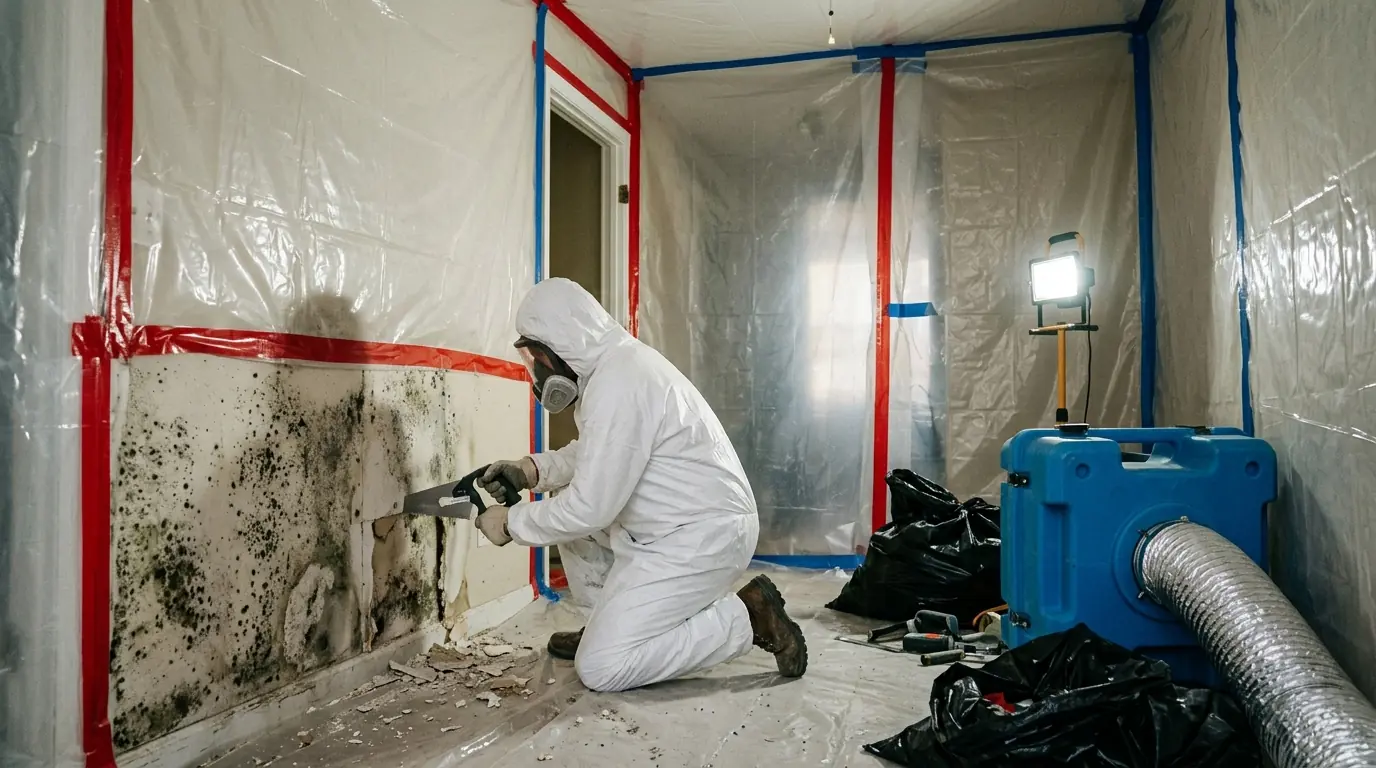
Lasting odors come from a source soaked into materials: sewage in a subfloor, urine in pad and wood, mildew in a wall, smoke residue on every surface. Removing the odor means finding and removing or cleaning that source, then treating the air and sealing what cannot be removed. Air fresheners and ozone alone only cover it for a while.
Why odors come back after cleaning
Smell comes from molecules released by a source. If the source is in the pad, the subfloor or a wall cavity, cleaning the surface and spraying the air only buys time. Humidity and heat bring it back.
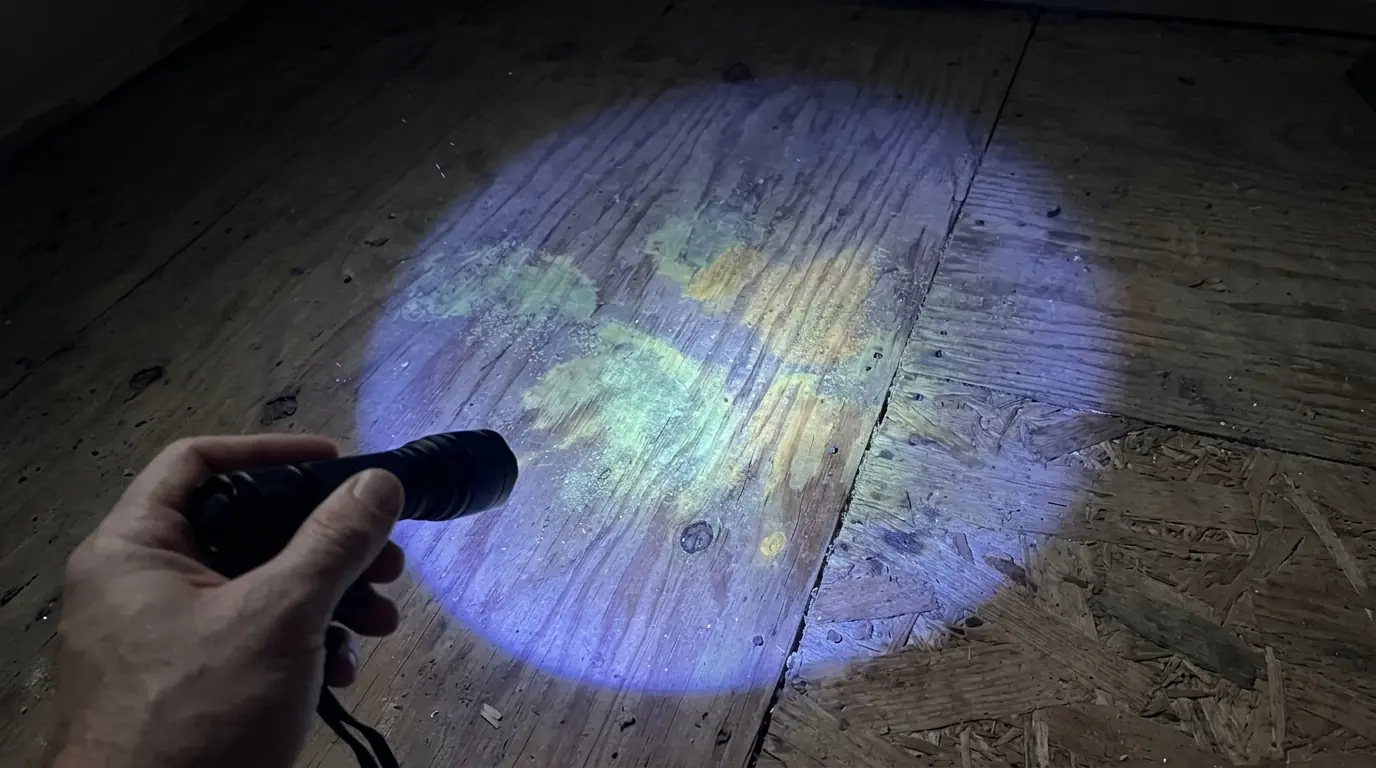
We trace the source with moisture readings, UV light for urine, and by smell, remove what cannot be cleaned, clean what can, seal wood and subfloors, and then treat the air.
Which treatment for which odor
| Odor | Source | Main fix |
|---|---|---|
| Sewage | Backup residue in materials | Remove, disinfect, dry |
| Mildew | Damp wall or floor | Find moisture, remove growth |
| Pet urine | Pad and subfloor | Remove, enzyme treat, seal |
| Smoke residue | Every surface | Wash, seal, repaint |
What affects the cost of odor removal
Sewage and urine mean removal; smoke means washing.
Pad and subfloor replacement add cost.
One room differs from a whole apartment.
Odor-blocking primer on walls and floors.
Hydroxyl or ozone time after the source is gone.
There is no single sourced range for odor removal; we price it once we have found the source.
Sewage and mildew odor
Sewage odor after a backup usually means contaminated material is still there: a pad, a subfloor edge, the bottom of a wall. Mildew odor means something is damp and growing.
For sewage, we remove remaining contaminated materials and disinfect before any deodorizing. For mildew, we find the moisture, remove growth, and dry. Only then does air treatment help, and it usually works quickly once the source is gone. If the smell is coming from a floor drain trap that has dried out, a little water in the drain may be all it needs.
Pet urine in subfloors
Urine soaks through carpet and pad into the subfloor and the edges of the wood strips, and it crystallizes there. Every humid day brings the smell back.
We find the spots with UV light and moisture readings, remove affected pad and carpet sections, treat the subfloor with enzyme cleaners, and seal it with an odor-blocking primer before new flooring goes down. Heavily soaked subfloor sections are replaced. Hardwood that took urine can often be cleaned and refinished, but dark stains usually mean the boards are replaced.
Cigarette and cannabis smoke residue
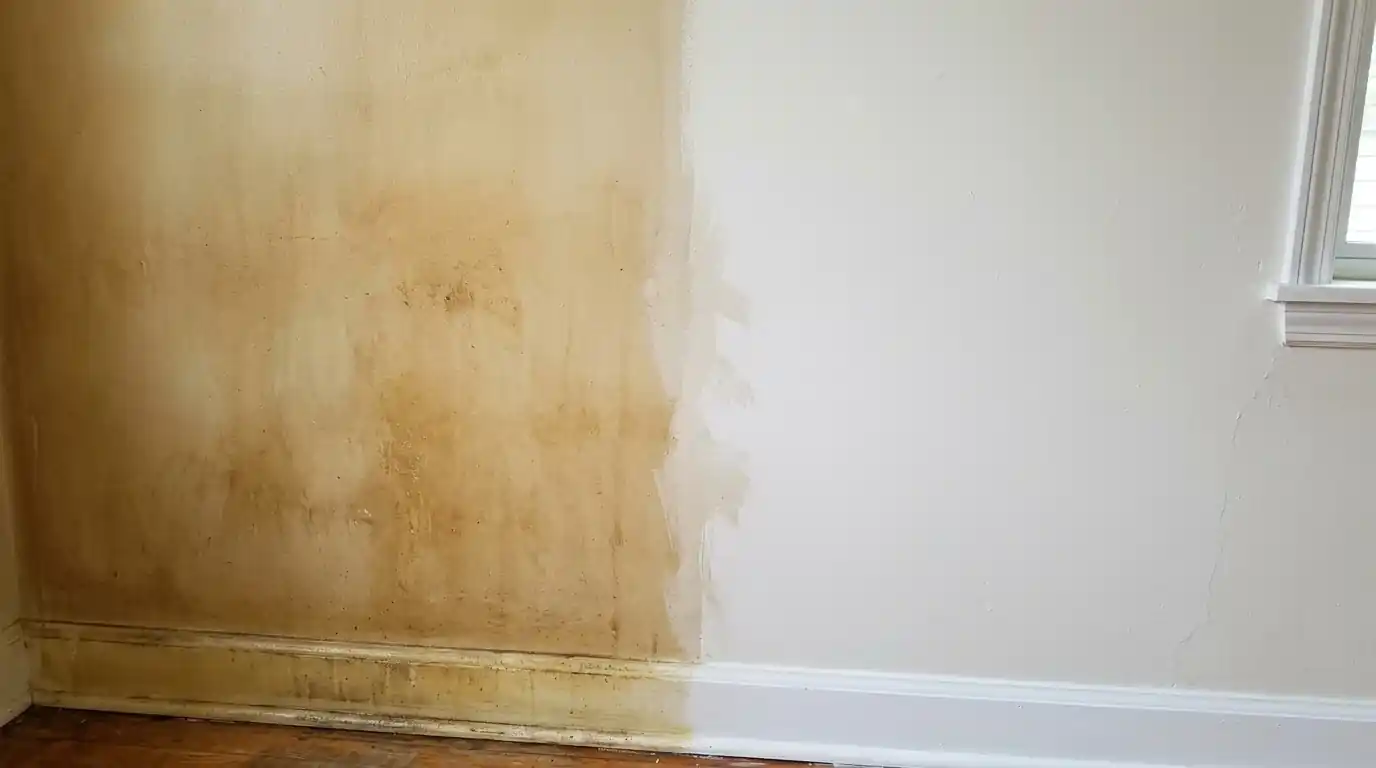
Years of indoor smoking leave a sticky yellow-brown residue on walls, ceilings, windows, cabinets and inside closets and ducts. It releases odor constantly, and new paint alone will not hold it.
We wash every surface with degreasing cleaners, clean ducts and vents, replace carpet and pad where needed, and seal walls and ceilings with an odor-blocking primer before painting. This is common work between tenants or before a sale, and it turns a unit that smells of smoke into one that does not.
Odors after the city’s storm backups
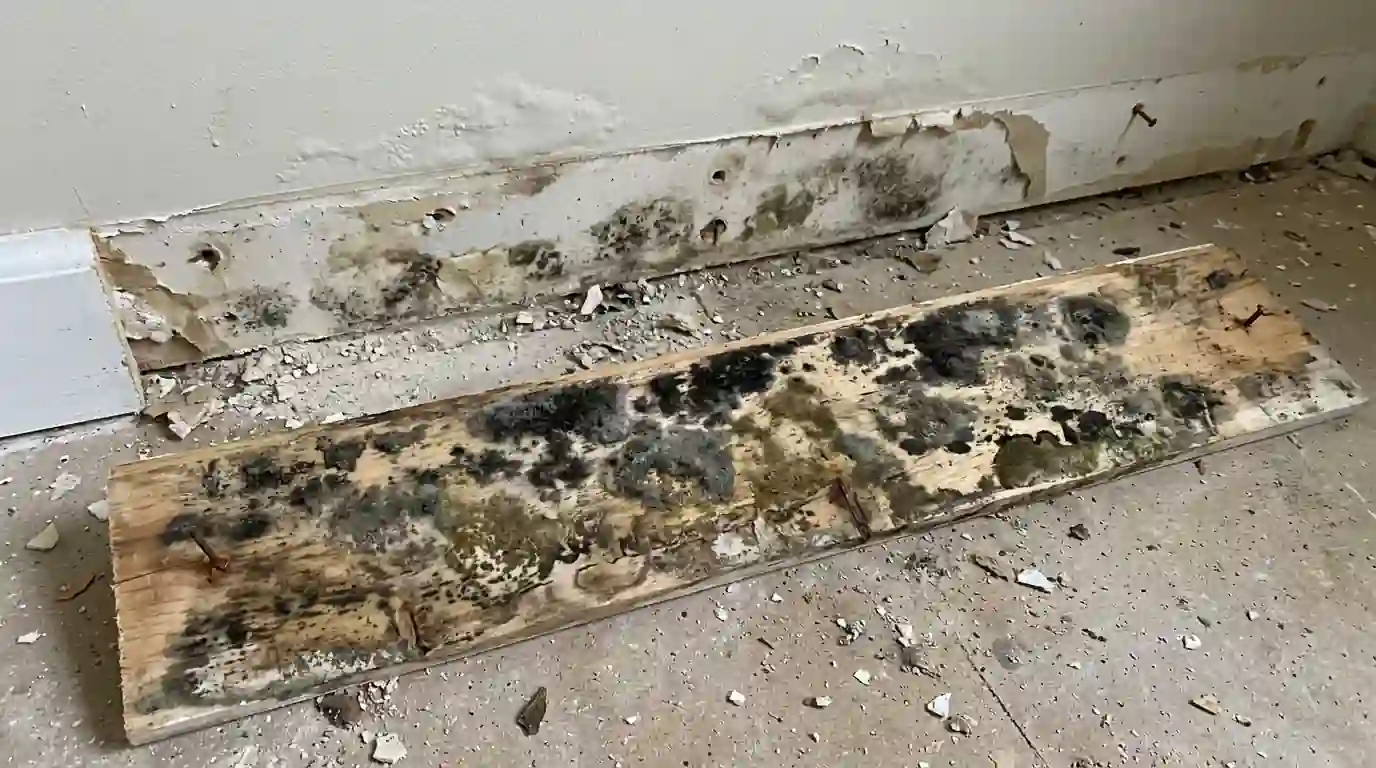
DEP reports that wet weather sewer backups, driven by extreme rain like Ida and the storm of Sept. 29, 2023, are now the most common kind in New York City. Many of the odor calls we get come weeks after one of those storms, from basements that were mopped and bleached but never had the pad or the bottom of the drywall removed. The smell is the sign that the backup is not finished.
How we remove an odor for good
Find the source
Readings, UV light and inspection.
Remove
Materials that hold the odor come out.
Clean
Surfaces that stay are washed and treated.
Seal
Odor-blocking primer on subfloors and walls.
Treat the air
Hydroxyl or ozone after the source is gone.
Check
We return to confirm it has not come back.
What you can try, and what needs a crew
Safe to do yourself
- Pour water into dry floor drains
- Wash hard surfaces with detergent
- Run a dehumidifier in damp rooms
- Replace HVAC filters
Leave to a crew
- Removing pad and subfloor sections
- Sealing subfloors and walls
- Sewage residue in materials
- Ozone treatment
Questions about odor removal
Heat and humidity release odor from the source. Remove or seal the source.
It helps after the source is removed. On its own it only covers the smell.
Light spots often clean. Dark stains usually mean replacing boards.
Only after washing and with an odor-blocking primer.
Yes. Smoke and pet odor work between tenancies is common.
A dry floor drain trap is a common cause. Pour water in it.