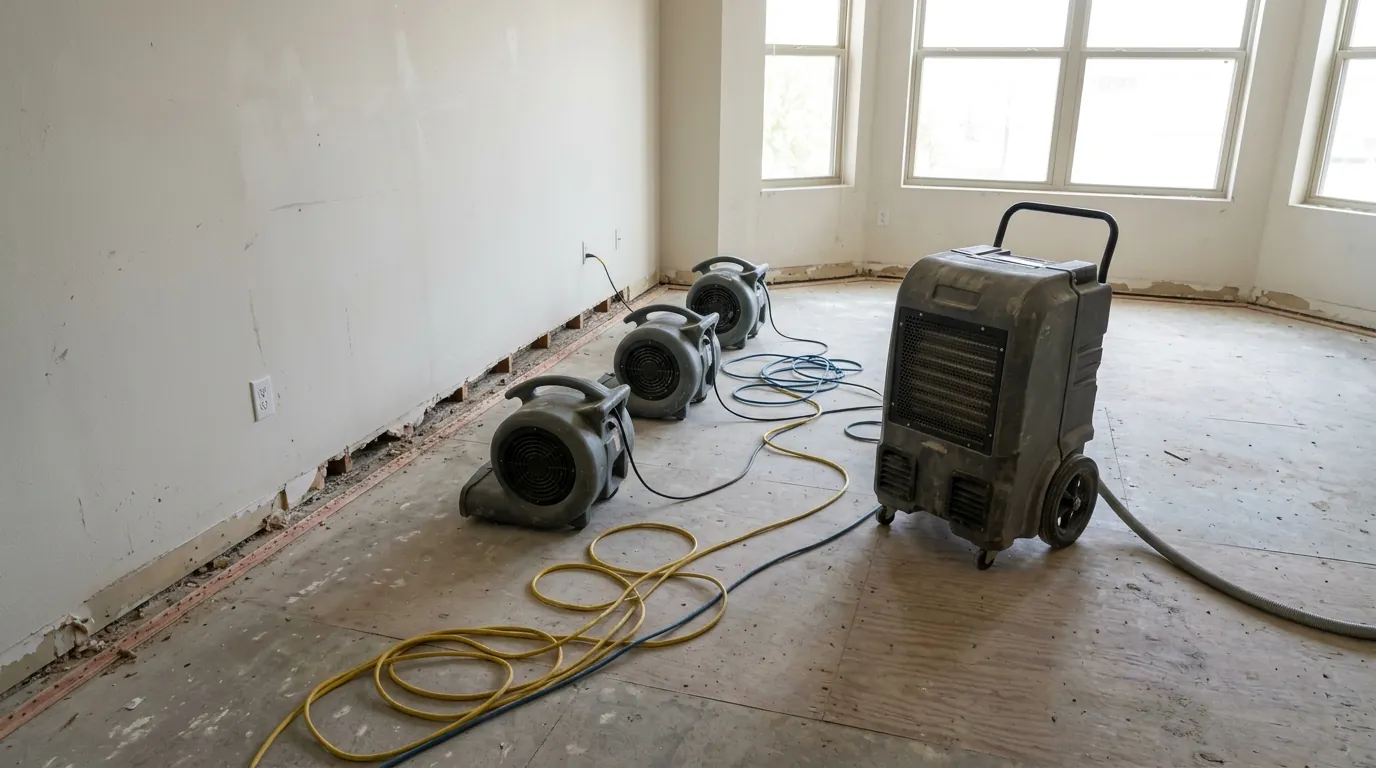
Short answer
Carpet soaked by clean water can usually be dried in place if extraction starts within a day or two. The pad under it holds most of the water and is cheap to replace, so it is often pulled while the carpet is saved. Carpet and pad soaked by toilet, sewage or flood water are removed.
Why the pad matters more than the carpet
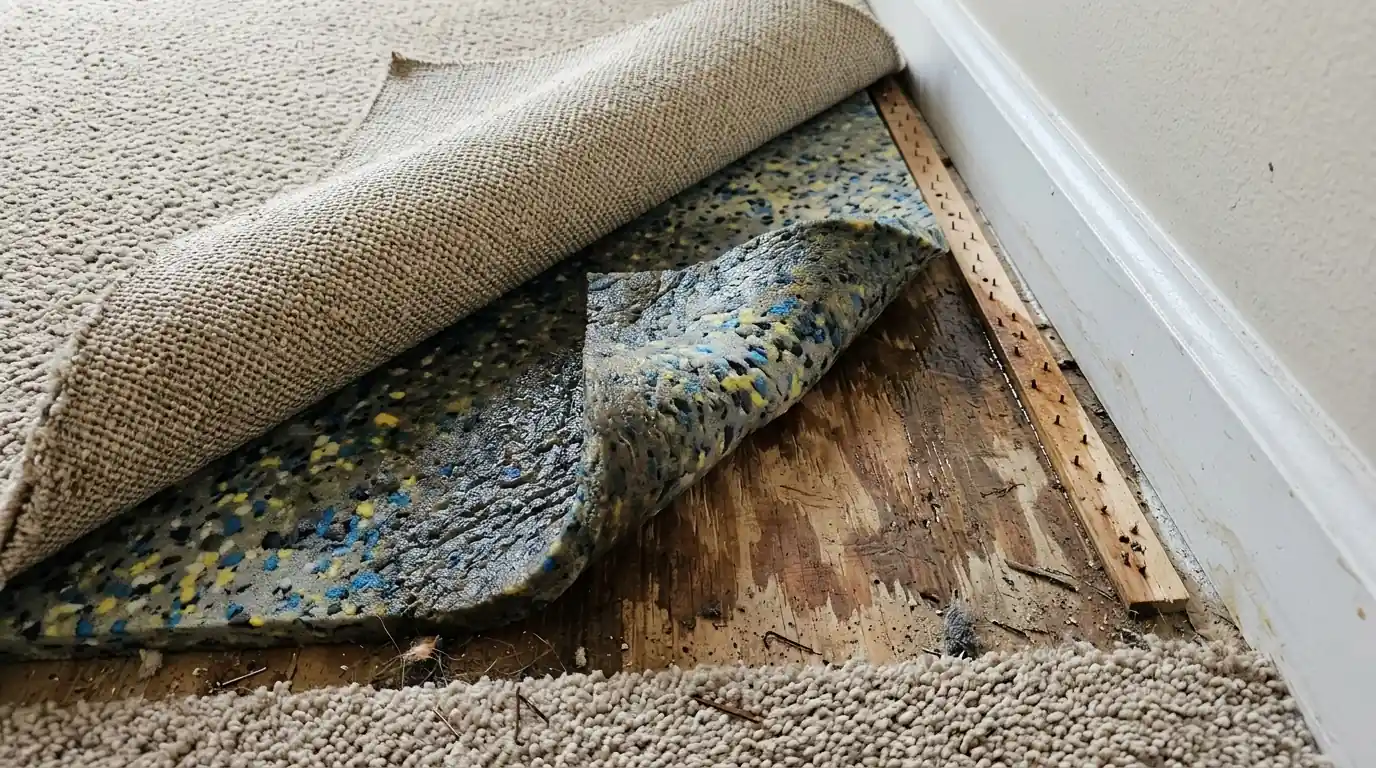
Carpet fibers release water fairly easily. The foam pad underneath does not, and a wet pad keeps the carpet backing and the subfloor wet for days. That is where the smell and the mold start.
We extract with weighted tools, check the pad, and either float the carpet with air underneath or pull the pad and dry the carpet and subfloor separately.
How we dry wet carpet
Identify the water
Clean, gray or black water decides what can stay.
Extract
Weighted tools squeeze water from carpet and pad.
Lift rugs
Area rugs go out so the floor below can dry.
Float or pull pad
We float the carpet or replace the pad.
Dry and read
Air movers and dehumidifiers run until readings are dry.
Re-stretch
Carpet is reset and seams are checked.
Clean water carpet saves
When the water came from a supply line, a tub or a rain leak, and it is extracted quickly, the carpet itself can usually be saved. Delamination, where the backing separates, is the main risk and it shows as ripples.
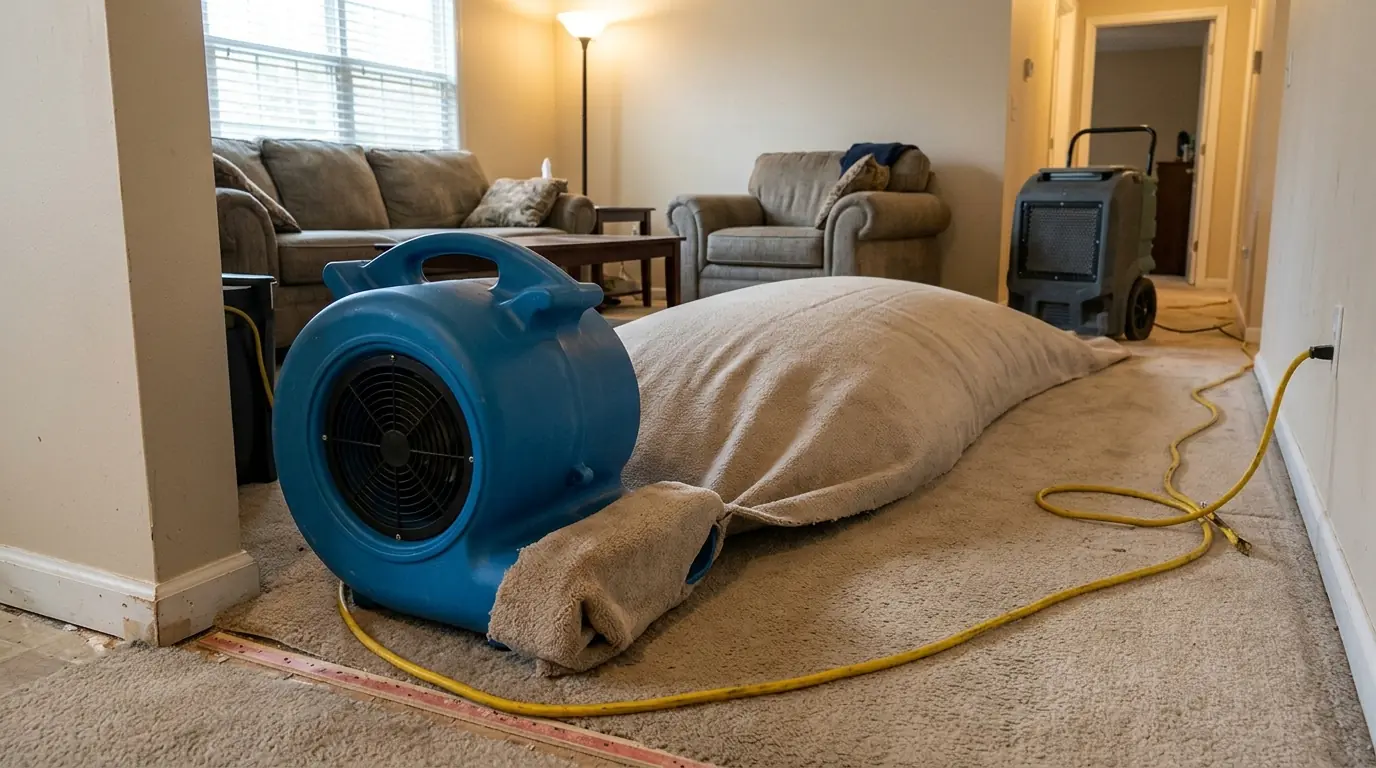
We extract hard, then float the carpet by lifting one edge and blowing air underneath. The carpet dries in a few days, is re-stretched, and the seams are checked before we sign off. If the backing has already started to separate, we tell you before any drying starts, since that carpet will not lie flat again.
Pad replacement
Carpet pad is the sponge in the system. It holds water, it smells first, and it is inexpensive compared with carpet, so replacing it is often the fastest way to a dry, fresh floor.
We cut out wet pad, dry the carpet and subfloor, then lay new pad and re-stretch the carpet. With gray or black water the pad is always removed, whatever its condition, because it cannot be disinfected. The subfloor underneath is cleaned and treated before new pad goes down, so the smell does not come back.
Area rugs and wall-to-wall carpet
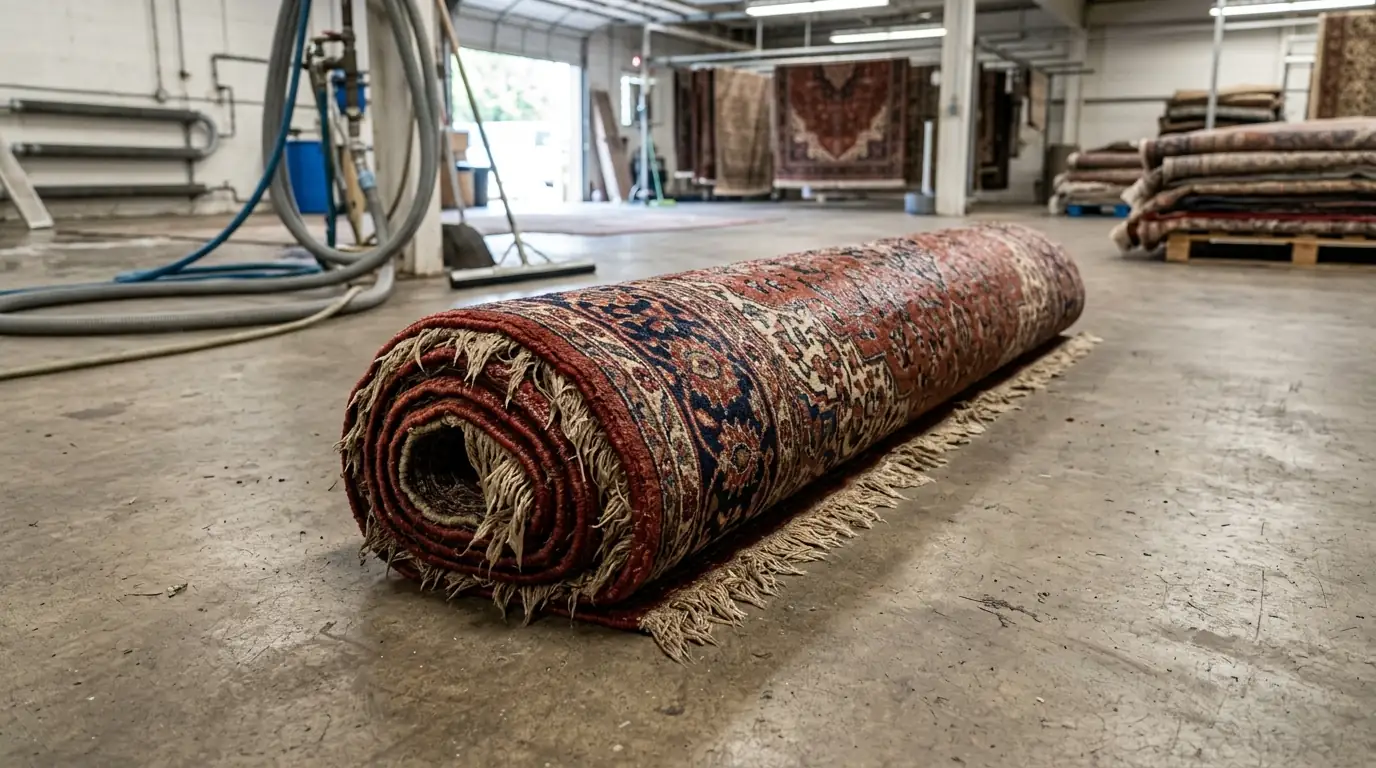
Area rugs are handled differently. They can be rolled up and taken out for cleaning and drying, which also frees the floor underneath to dry.
Wool and hand-knotted rugs can bleed dye when wet, so they should be lifted off wet floors quickly and dried flat, not over a radiator. We lift them, photograph them for your file, and send valuable rugs for specialist cleaning. Wall-to-wall carpet stays in place and is dried as part of the room, with the pad checked separately.
Carpet and rugs in New York apartments
Many New York apartment buildings expect floors to be covered with rugs or carpet to cut noise for the unit below, so wet carpet is common even over hardwood. That combination matters when a leak happens. A wet rug laid on strip oak traps water against the wood, and the floor under it cups while the rest of the room looks fine. We lift the rugs on the first visit so the floor underneath can be read and dried too.
What you can do with wet carpet before we arrive
Safe to do yourself
- Lift area rugs off wet floors
- Put foil or blocks under furniture legs
- Open the room door so air can move
- Photograph the carpet and any labels
Leave to a crew
- Extracting water from the pad
- Floating or re-stretching carpet
- Handling carpet soaked by dirty water
- Checking the floor underneath
Dry in place, new pad or new carpet
| Situation | Usual outcome |
|---|---|
| Clean water, under 48 hours | Dry carpet and pad in place |
| Clean water, pad soaked through | New pad, dry the carpet |
| Backing rippled or separated | Replace the carpet |
| Toilet, sewage or flood water | Remove carpet and pad |
What affects the cost of wet carpet drying
Dirty water means removal, not drying.
Replacing pad is often cheaper than drying it.
Room count and furniture moves change the setup.
Backing that separated means new carpet.
Specialist rug cleaning is priced by the rug.
There is no sourced range for carpet drying alone; it is usually part of the overall water damage job.
Questions about wet carpet and pad
Usually, if the water was clean and it is extracted within a day or two.
The pad holds most of the water and is cheap. Replacing it speeds up drying.
Not if the pad and subfloor are dried or replaced. Smell usually means something is still wet.
Lift it off the wet floor and let us send it for specialist cleaning.
Home machines do not pull enough water from the pad.
When the water damage is covered, carpet and pad usually are too.