Short answer
Water damage in a New York home has to be extracted and dried within 24 to 48 hours, before mold starts in plaster and wall cavities. The work runs in a fixed order: stop the source, remove standing water, measure how far it spread, dry with air movers and dehumidifiers, then rebuild what could not be saved.
What happens to a room after the water stops
The visible puddle is usually the smaller problem. Water wicks up drywall, sits on plaster ceilings and settles under strip oak, and a room that looks dry by evening can still read wet inside the wall a week later.
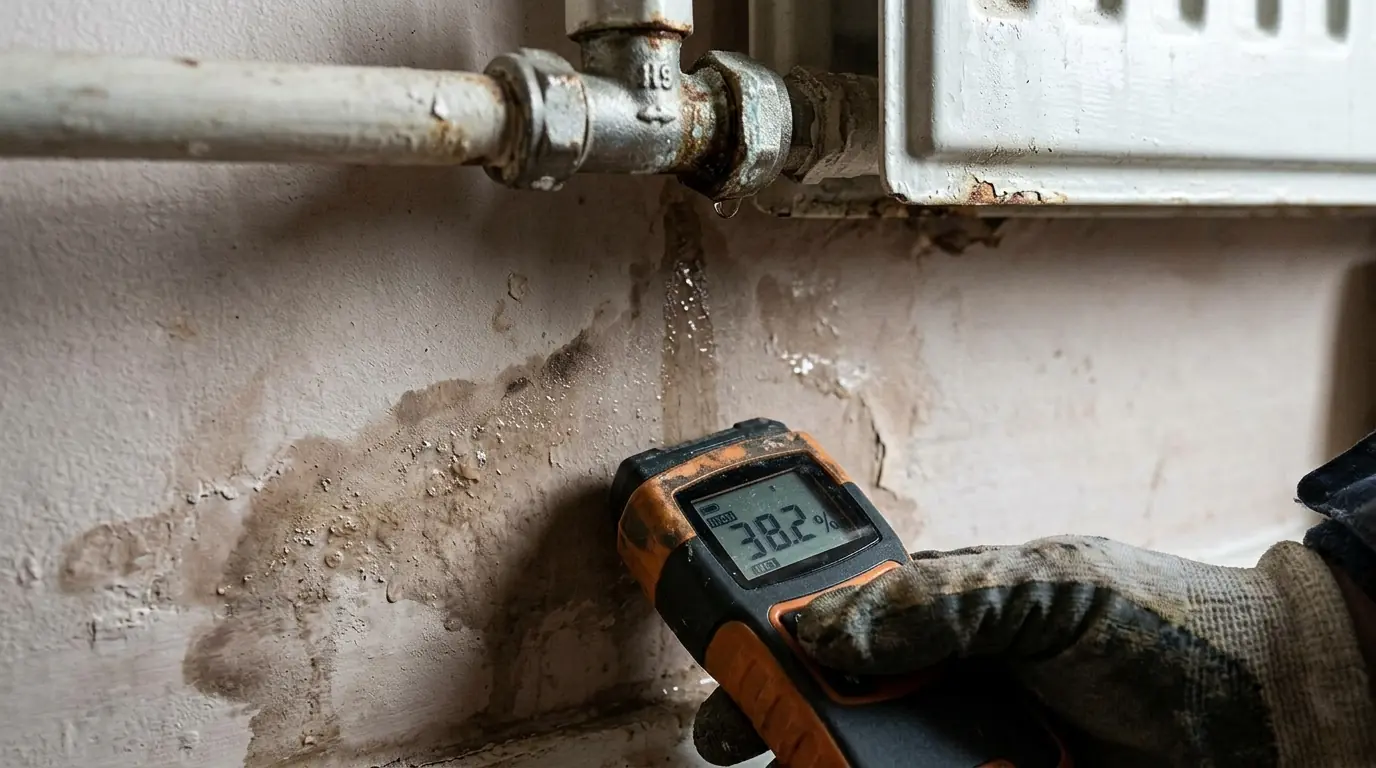
We map moisture with meters and a thermal camera, open only what has to be opened, and dry until every material matches a dry reference reading.
Signs that water is still in the walls or floor
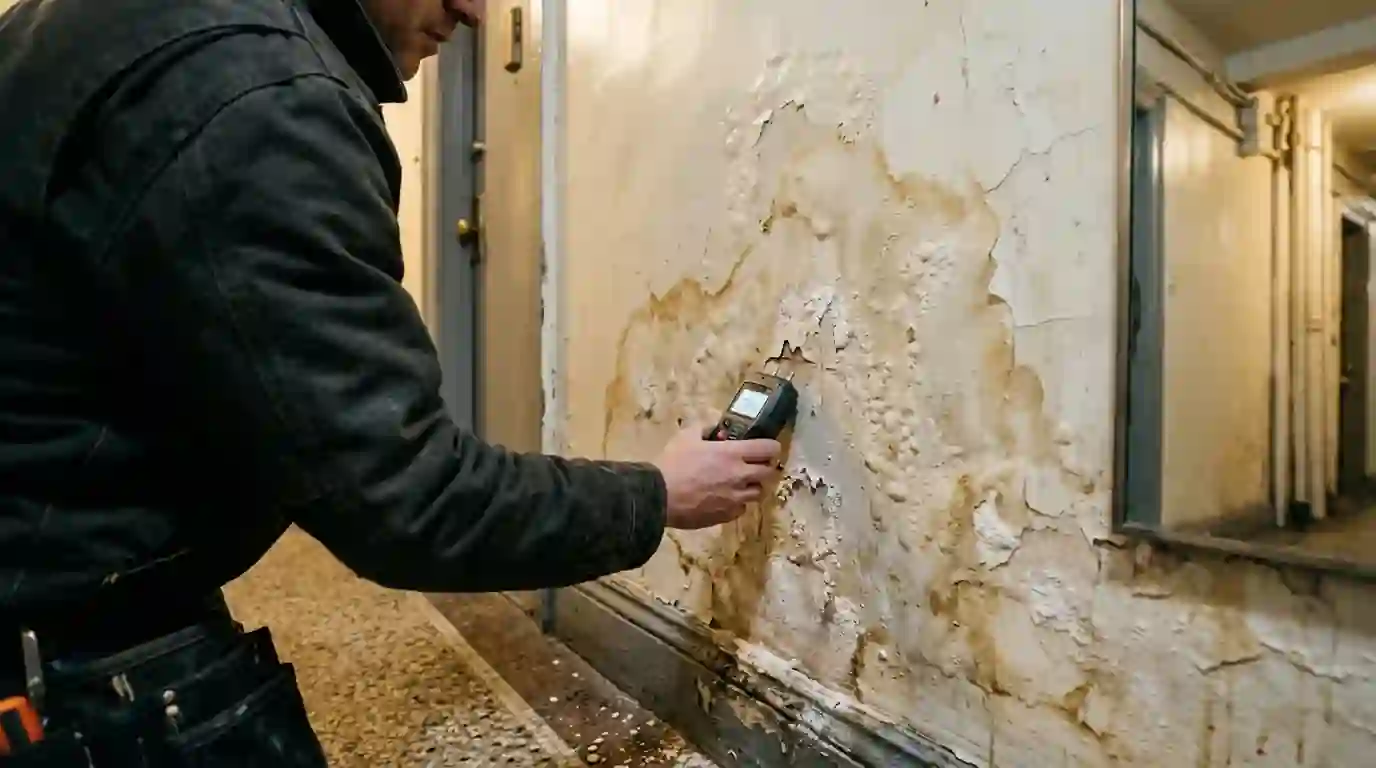
Paint lifting in bubbles
Water is trapped between the plaster and the paint film.
A soft spot in the ceiling
Drywall or plaster is holding water and may sag or fall.
Floorboards cupping
The edges of strip oak rise when moisture sits under the boards.
Baseboards pulling away
Swelling at the bottom of the wall means water wicked up.
A musty smell that stays
A closed cavity is still damp and mold may be starting.
A higher water bill
A slow hidden leak may still be running somewhere.
How a water damage job runs, start to finish
Stop the source
We shut the valve or have the super isolate the line.
Extract standing water
Extractors pull water from floors, carpet and pad.
Map the moisture
Meters and a thermal camera show how far it went.
Remove what cannot dry
Swollen particleboard and soaked pad come out.
Dry to a number
Equipment runs and we take readings every day.
Repair and rebuild
Walls, floors and paint are put back to match.
Clean water supply line losses
A split supply line, a failed toilet fill valve or a cracked filter housing releases clean water under pressure. It spreads fast, but it is the easiest loss to save. Carpet, pad and most drywall can often be dried in place if extraction starts within the first day.
We shut the line, extract, and set drying equipment on the first visit. Across the market, typical water damage jobs run $1,270 to $5,376, about $3.15 to $7.40 per square foot, and clean water losses usually sit at the lower end.
Gray water from appliances and drains
Water from a washing machine, dishwasher or a backed-up sink carries soap, food and bacteria. It is treated as gray water, which changes what can be kept: pad usually goes, carpet may be cleaned, and porous materials that soaked for more than a day come out.
We extract, remove affected materials, clean and apply an antimicrobial before drying. Kitchen cabinets and vanity bases made of particleboard usually cannot be saved once gray water soaks them. If gray water sits longer than about two days, it is handled as contaminated water.
Water inside walls and ceilings
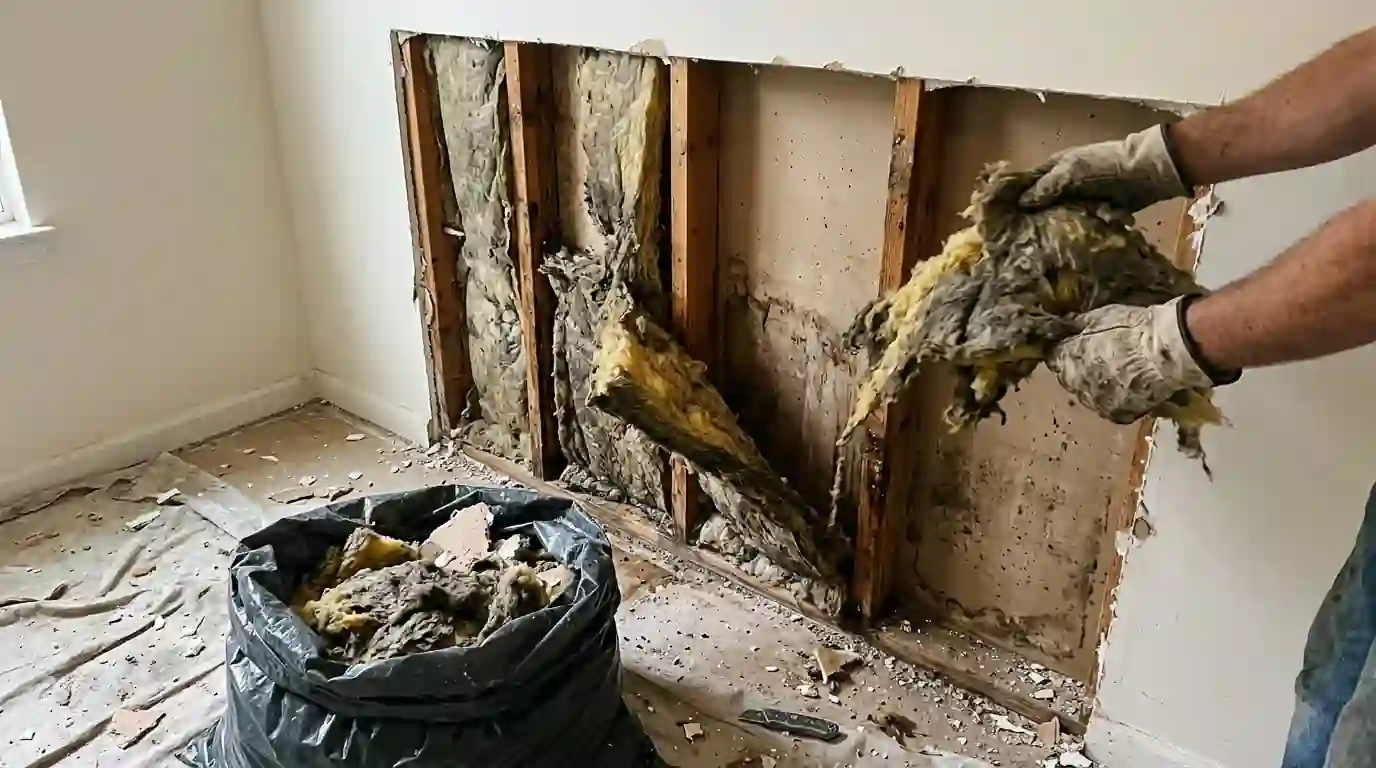
A ceiling stain, bubbling paint or a baseboard that swells tells you water got inside the assembly. Plaster holds moisture longer than drywall and hides it, so we read it with meters rather than judging by the surface.
Where a cavity is wet we drill small vent holes or remove the lowest strip of drywall, then push dry air through it. Most walls dry in three to five days this way without a full tear-out, and the holes are patched during the repair.
After-hours emergency visits
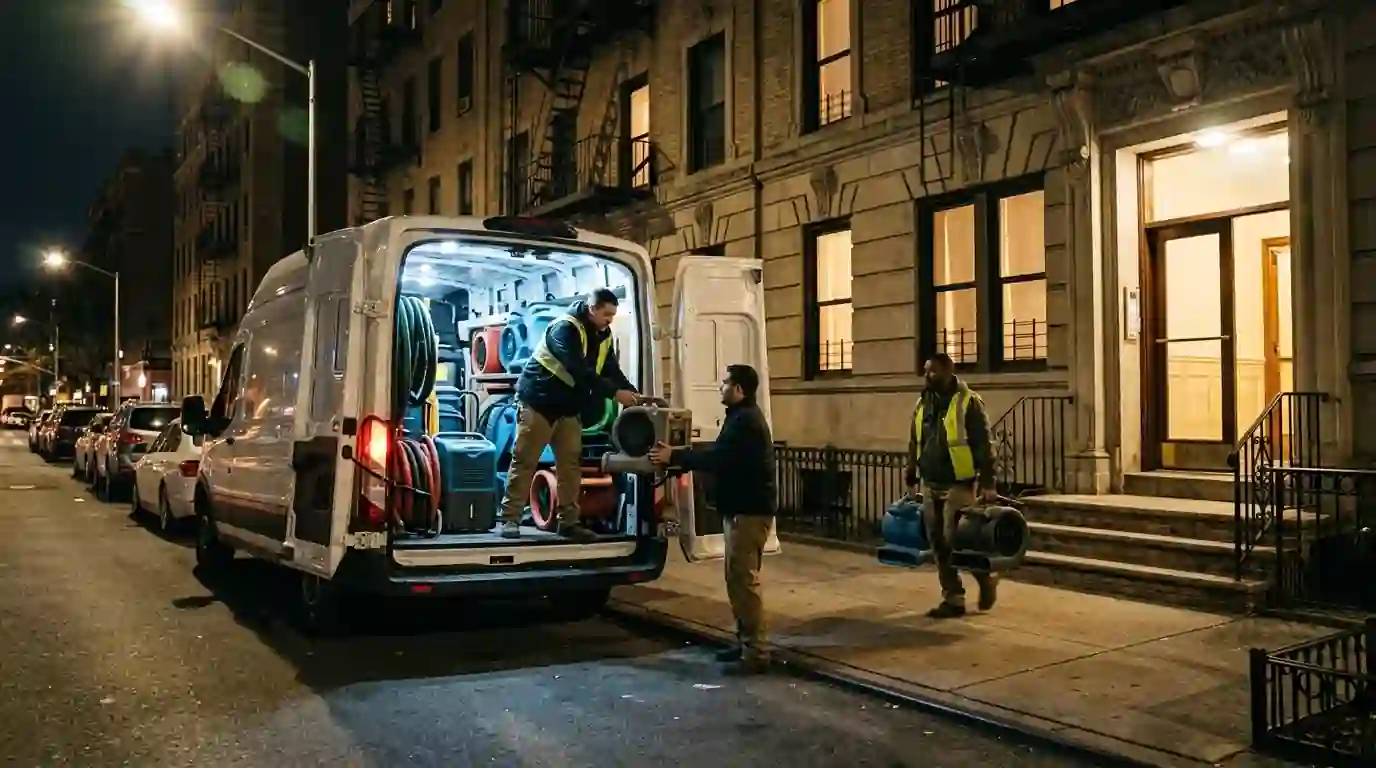
Leaks do not wait for business hours, and a lot of our calls come in late at night or on weekends. The person answering asks where the water is now, whether it is still running and whether the power is on in wet rooms.
Those answers decide what the crew loads: pumps and extractors for standing water, ceiling supports for a sagging ceiling, containment if the water is dirty. You get an arrival window on the same call, and someone talks you through shutting the water off meanwhile.
How long drying takes in a typical apartment
Most clean water jobs dry in three to five days. Plaster walls, stacked flooring and water that sat for a day or two can push that past a week.
Equipment stays until the readings say dry. Pulling it early is how mold shows up a month later.
Water damage in older New York buildings
Rent control only covers buildings put up before February 1947, and that cutoff is a useful reminder of how much of New York City is prewar. Those buildings mean three-coat plaster, wood lath and strip oak, and they behave differently when wet. Plaster soaks up water slowly and gives it back slowly, so a ceiling can look finished while the lath behind it still reads saturated. We plan drying times around that and check the plaster, not just the paint on top of it.
What drives the cost of water damage restoration
Typical US market range for water damage restoration. Source, 2026. A planning range, not a quote.
Gray and black water need removal and disinfection.
Water that reached the unit below doubles the work.
Plaster and strip oak dry slower than drywall and carpet.
Water left for days turns salvage into removal.
Replacing floors, walls and paint is priced separately.
Questions about water damage restoration
Start within 24 to 48 hours. After that, mold can begin on damp drywall, plaster and wood.
Sudden water such as a burst line usually is. Flood water and sewer backups often need separate coverage.
Often, yes. Small vent holes or a narrow cut at the base let dry air into the cavity.
For clean water in a room or two, most people stay, though the equipment is loud.
When readings in wet materials match the same material in a dry room.
Yes. The same job file carries through to reconstruction.