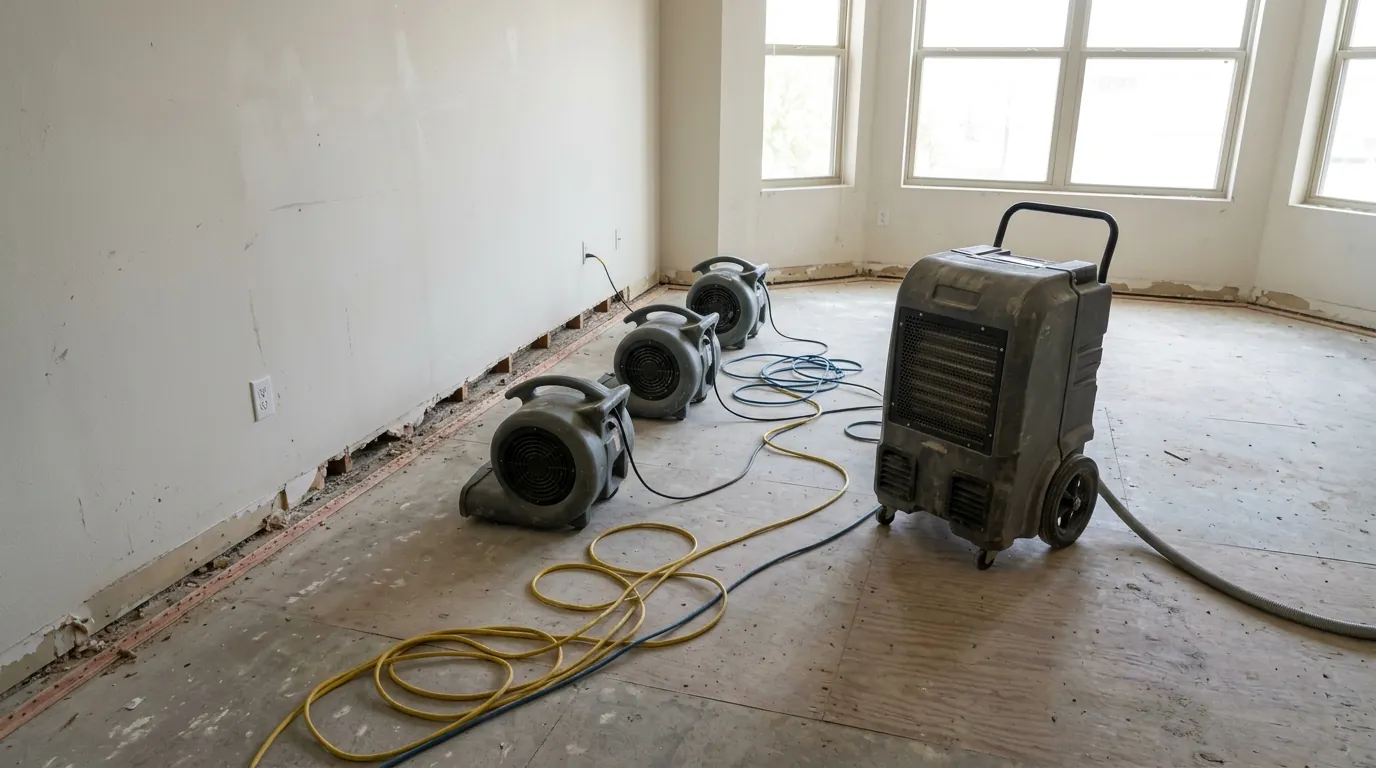
Short answer
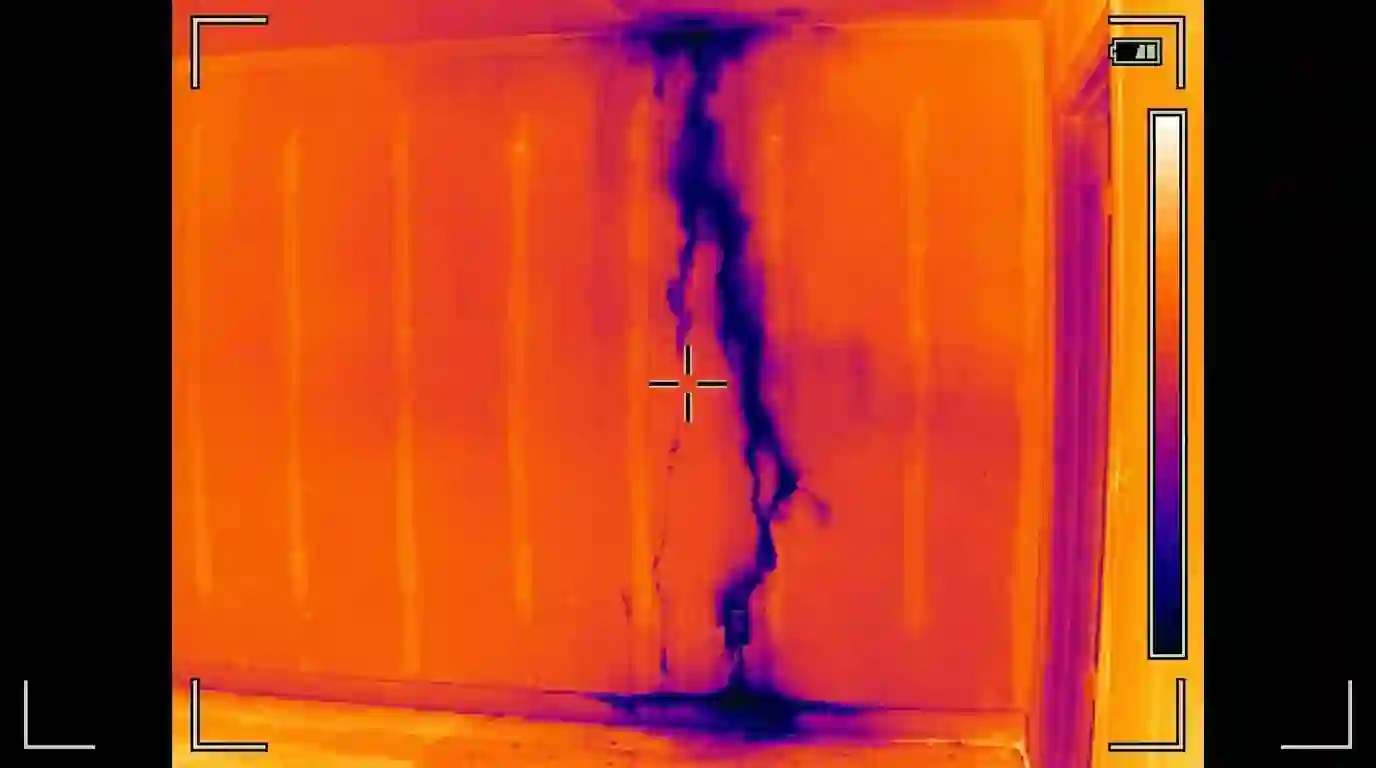
Moisture mapping uses pin and pinless meters plus a thermal camera to find wet areas inside walls, ceilings and floors. It shows where water traveled from a leak, gives your insurer a record of the damage, and confirms when drying is finished. A thermal image alone does not prove moisture, so every cold spot is checked with a meter.
What a moisture map shows that your eyes cannot
Water travels inside a building along joists, pipes and wall plates, so the stain you see is rarely the whole story. A map made with meters shows the true edge of the wet area and whether it is growing or shrinking.
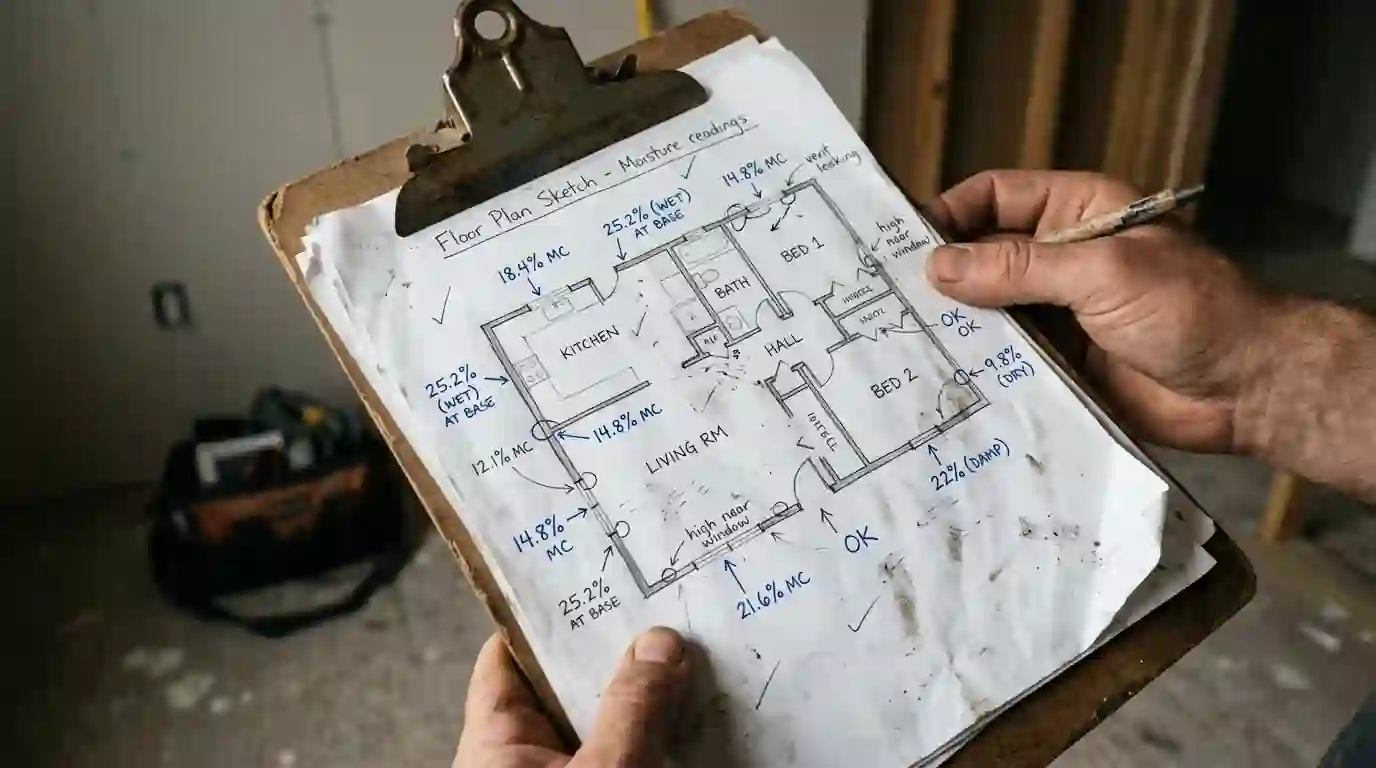
We draw it room by room with readings marked on a floor plan and photos of each area, then repeat it until the building is dry.
What a moisture inspection includes
- Thermal scan of affected rooms
- Meter confirmation of every cool spot
- Dry reference readings
- Floor plan with readings marked
- Dated photos of meters on materials
- Likely water path and source
- Recommendation: dry, open or leave
Moisture maps for an insurance file
Adjusters ask the same questions: how far did the water go, which materials were affected, and why was equipment needed. A dated map with readings and photos answers all three.
We record readings on a floor plan for each affected room and photograph the meter on the material. That record supports the claim for drying, removal and repairs, and it helps when a leak crosses into another unit. The same map is updated as drying continues, so the file shows the damage shrinking day by day until it is gone.
Final dry standard check
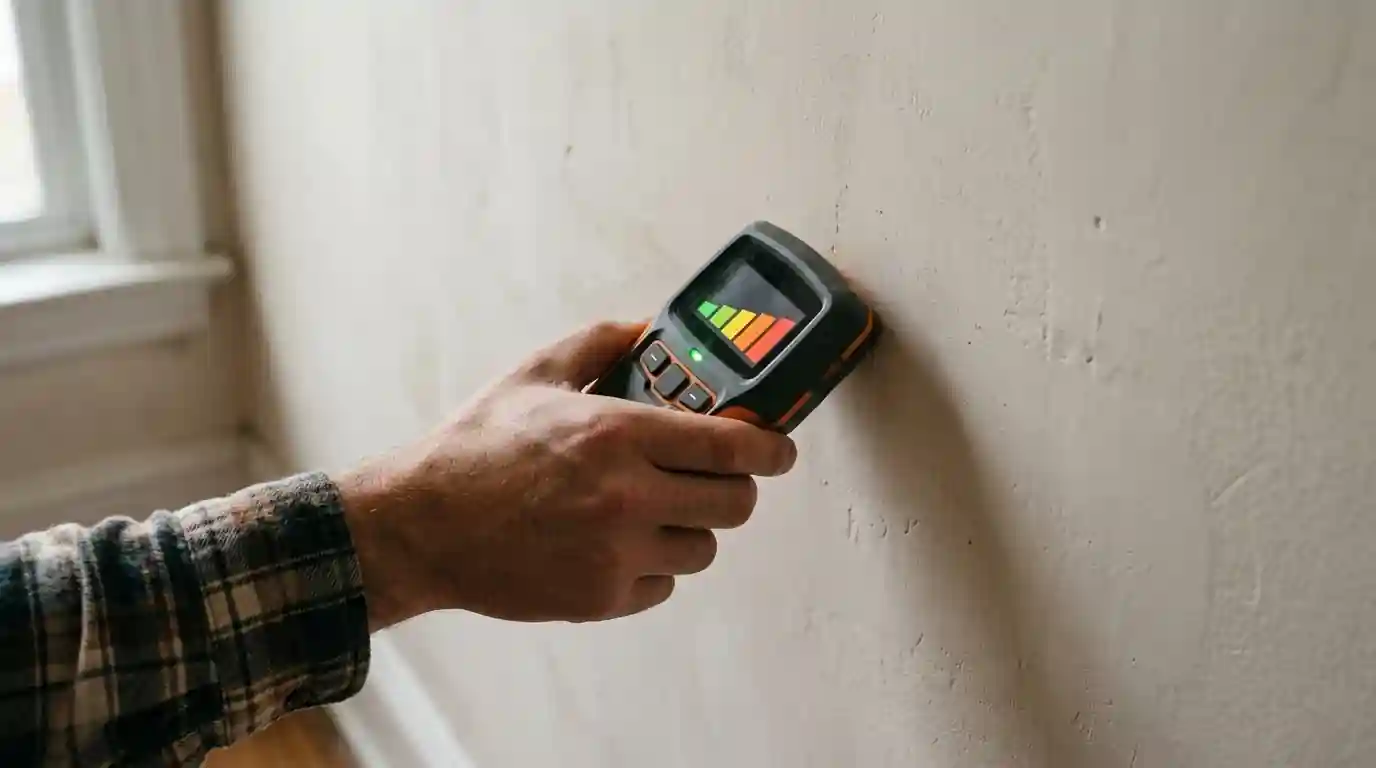
Drying is finished when wet materials read the same as the dry reference readings taken in unaffected parts of the building. Not before.
We take a final set of readings in every area that was wet and record them with photos. That sign-off is what tells the painter or flooring installer the room is ready, and it protects you from mold starting behind new finishes. If you had drying done by someone else and want a second check, we can do that too.
Leak tracing in New York buildings
In a New York apartment building, the question after a leak is often whose leak it is. Water can travel sideways along a floor before it comes down, so the stain may sit under a neighbor’s kitchen rather than the bathroom directly above. A moisture map showing the wet path, with dated readings, is often what settles that between owners, the managing agent and the insurers, and it saves opening ceilings in the wrong unit.
Signs you may have a hidden leak
Musty smell with no visible water
Something inside a wall or floor is damp.
Paint bubbling in one spot
Water is pushing through from behind.
Baseboard gaps widening
Wood behind it is swelling or shrinking.
Cold patch on a wall
Evaporating water cools the surface.
Higher water bill
A line may be leaking somewhere.
Neighbor reports a stain
Water is traveling through your floor.
How a moisture inspection runs
Hear what happened
Where you saw water and when.
Scan with thermal
The camera flags cool areas on walls, ceilings and floors.
Confirm with meters
Every flagged area is read with pin or pinless meters.
Set dry references
We read the same materials in unaffected rooms.
Map and photograph
Readings go on a floor plan with dated photos.
Report
You get the map and our recommendation.
What affects the cost of a moisture inspection
Each affected room is read and mapped.
Tracing across apartments adds visits.
A full insurance map takes longer than a spot check.
Drying jobs are mapped daily until dry.
Ceiling hatches and locked units affect timing.
A moisture inspection on its own has no sourced local range; on a drying job it is part of the work.
Questions about moisture mapping
It sees temperature. Wet areas usually read cool, but every spot is confirmed with a meter.
Only if readings show it is needed, and then only small, targeted openings.
Often. The map shows the wet path, which usually points to the source.
Yes. A second set of readings confirms the dry standard.
Adjusters use dated readings and photos to support a claim, so we provide both.
Most apartments take an hour or two, longer across several units.