Short answer
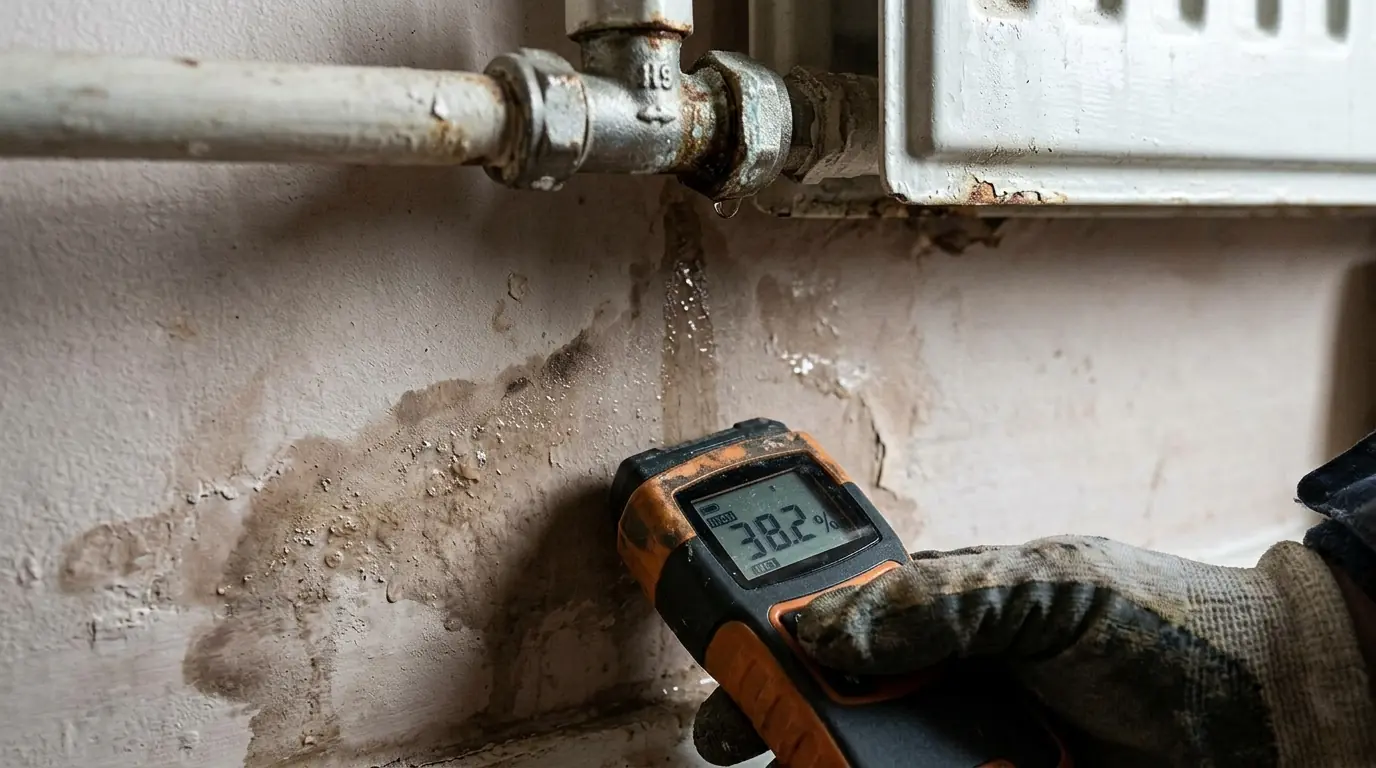
A discharged sprinkler head releases water until the system’s control valve is closed, which is the building’s or fire department’s call. Once it stops, extract fast. Sprinkler water sat in pipes for years, so it is often dark and smells, and that affects what can be saved. Drying usually starts the same day.
Why sprinkler water is different from a pipe leak
Sprinkler lines are pressurized and a single head can put a lot of water into a room quickly. The water has sat in the pipes since the system was last drained, so it is often discolored, oily and smelly, and we treat it as dirtier than tap water.
We extract, remove soaked porous materials, clean, and dry. The sprinkler head replacement and system restoration are for the building’s fire protection contractor.
From the discharge to the repaired room
Confirm the valve is closed
The building or fire department shuts the sprinkler zone.
Make it safe
Power to wet areas is shut off and walkways are cleared.
Extract
Standing water is removed from floors, carpet and tile.
Remove soaked materials
Ceiling tile, pad and wet insulation come out.
Clean and dry
Surfaces are cleaned and equipment runs until readings are dry.
Repair
Ceilings, walls and flooring are put back.
Frozen or struck sprinkler heads
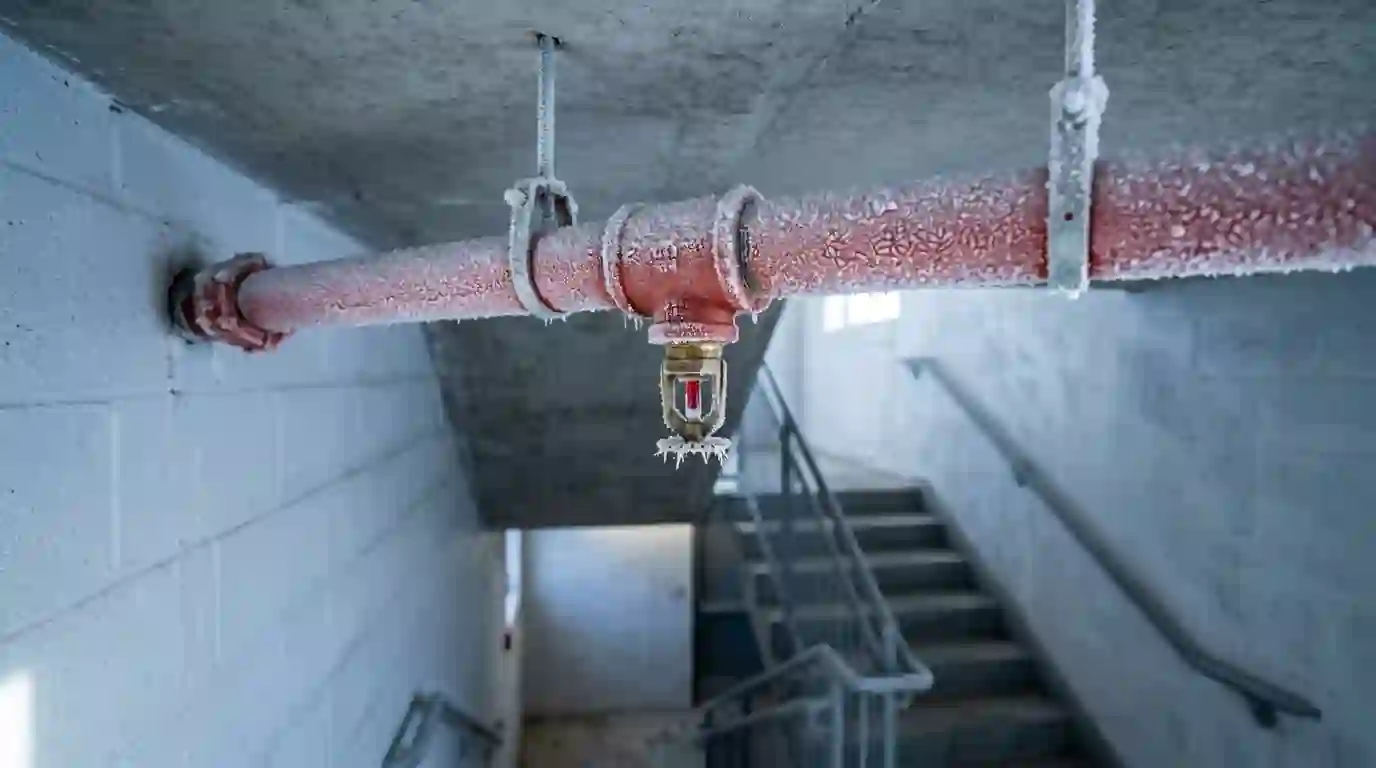
Sprinkler pipes in unheated stairwells, garages and near exterior walls can freeze and split. Heads also break when struck by furniture, a ladder or a ball, and they open instantly.
Frozen lines often leak only after a thaw, the same way household pipes do. We extract and dry the affected rooms and the floors below, and note where the line runs so the fire protection contractor can check the rest of the run. Ceilings under a frozen line are checked first, since that is where the water collects.
Accidental discharge in apartments
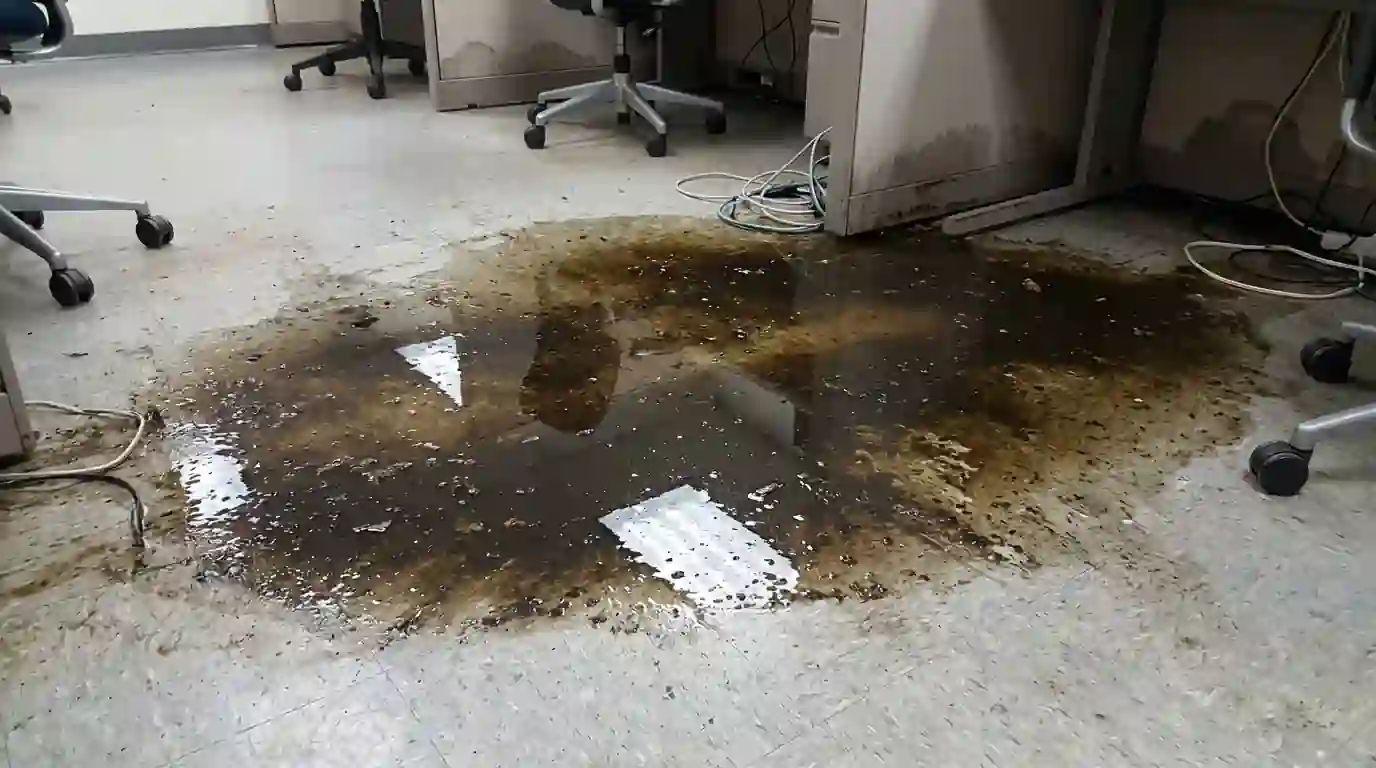
In an apartment, a head can go off from high heat nearby, from someone hanging things on it, or from damage during work. The water is heavy for the few minutes before the valve is closed.
That discharge often soaks the unit, the hallway and the apartment below. We dry each space and keep separate photo and moisture records, since the building, the unit owner and neighbors may all be involved. Furniture and rugs are moved to dry rooms first.
Commercial sprinkler losses
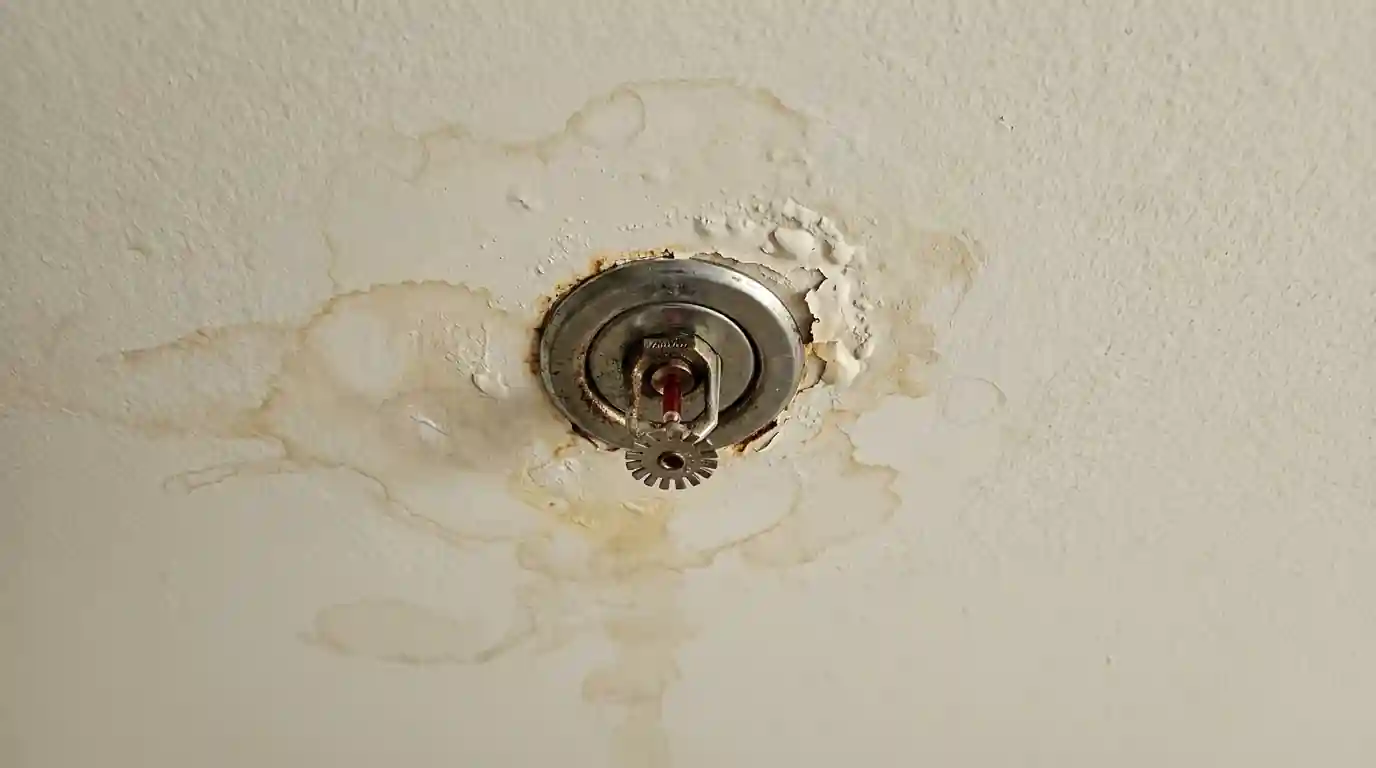
In offices, shops and restaurants, a sprinkler discharge hits inventory, computers, ceiling tiles and carpet tile across a wide area. Ceiling tiles that took sprinkler water usually sag and have to be replaced.
We work after hours where we can to keep the space open. Wet ceiling tile and carpet come out, the floor and walls dry, and contents are moved or covered so business can continue in the dry zones. Computers and stock that got wet are listed and photographed for the claim.
How long sprinkler water damage takes to dry
A single room usually dries in three to five days after extraction. Several units or a large commercial floor can take a week or more, especially where ceiling cavities took water.
Commercial spaces can often stay partly open, with drying zones sectioned off.
Sprinkler freezes in a New York winter
With Central Park’s normal January low at 27.8°F, any sprinkler pipe in an unheated space in Manhattan or anywhere in the city spends the coldest weeks at risk. The ones that freeze are almost always in stair towers, loading areas, garages, vestibules and spaces where the heat was turned down for a weekend. We see those calls come in on the first mild day after a hard freeze, when the ice melts and the split starts to flow.
What to do yourself when a sprinkler goes off
Safe to do yourself
- Get out of the room and call 911 if there is any fire
- Tell the super or building manager to close the zone
- Move electronics and papers out of the water
- Photograph the head and the damage
Leave to a crew
- Closing the sprinkler control valve
- Replacing the head and restoring the system
- Removing wet ceiling tile and insulation
- Drying floors below the discharge
What drives the cost of sprinkler water cleanup
Typical US range for water damage restoration; sprinkler losses often sit higher because of the water category. Source, 2026. A planning range, not a quote.
Dark, oily pipe water means more removal and cleaning.
A head in a hallway can wet several units at once.
Acoustic tile is replaced; plaster is dried and patched.
Inventory and electronics add handling and cleaning.
After-hours work in commercial space adds time.
Questions about sprinkler discharge
Leave it to the building or the fire department. Closing a fire protection valve takes the system out of service.
It sat in steel pipes for years. It is oily and discolored, so we clean more thoroughly after it.
Accidental discharge is usually covered. Freeze damage may depend on whether heat was maintained.
Usually not. Acoustic tile that took sprinkler water sags and stains, so it is replaced.
Often. We section off wet zones and run equipment after hours where we can.
The building’s fire protection contractor. We handle the water damage.