Answering around the clock
A person picks up day and night, asks where the water or smoke is now, and sends a crew loaded for what you describe.
Phones answered 24/7 across New York City
Every job we take on, from a leak through the ceiling to a rebuilt kitchen, grouped the way the work actually happens.
Pick a pane to jump to that group
Short answer
Most restoration jobs in New York fall into six groups: indoor water leaks, drying, floods and sewage, fire and smoke, mold and odor, and the rebuild afterward. If you are not sure which fits, call and describe what you see. The first visit sorts out which services the job needs, and they all run on one file.
Group 1 of 68 services
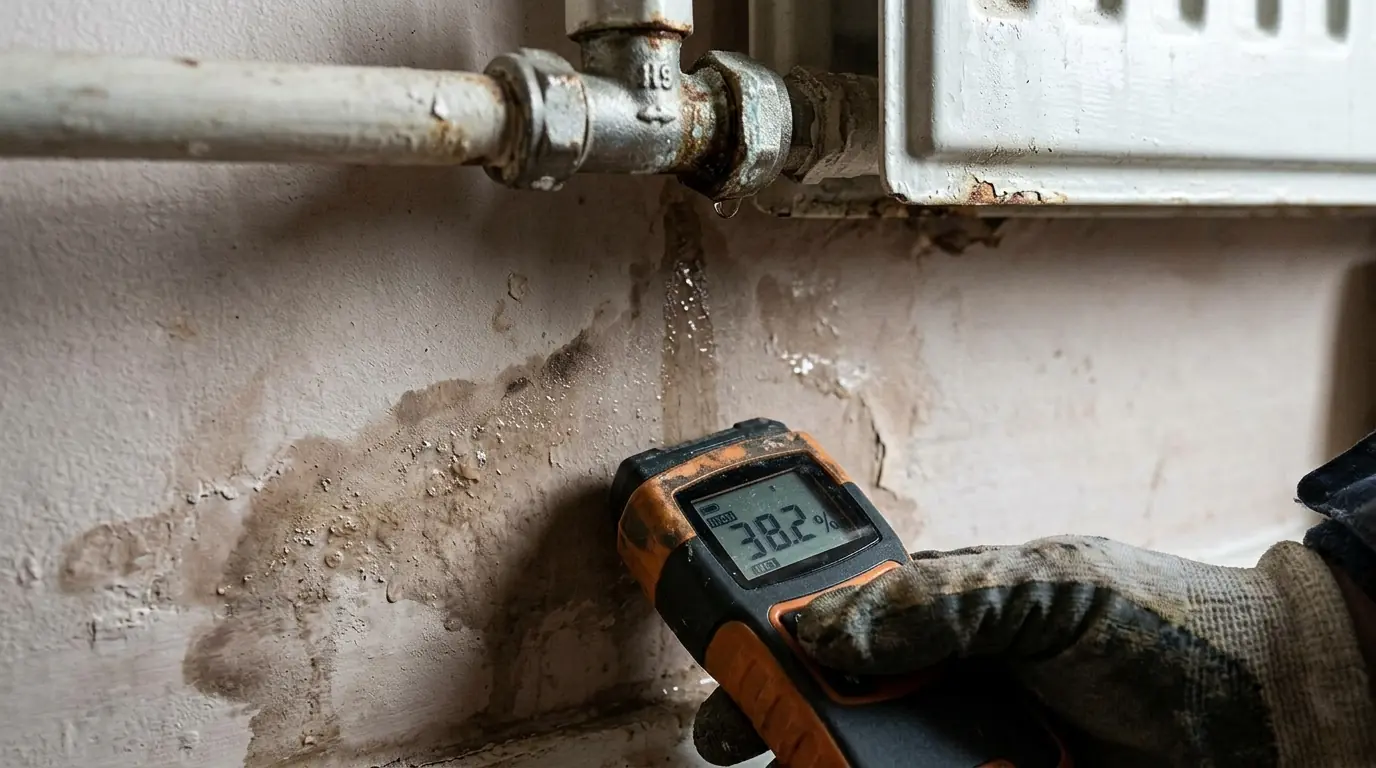
Water from inside the building: pipes, fixtures, appliances, radiators and the apartment upstairs. It usually starts clean, which is why speed decides how much of the room can be dried in place instead of torn out.
Call about water damage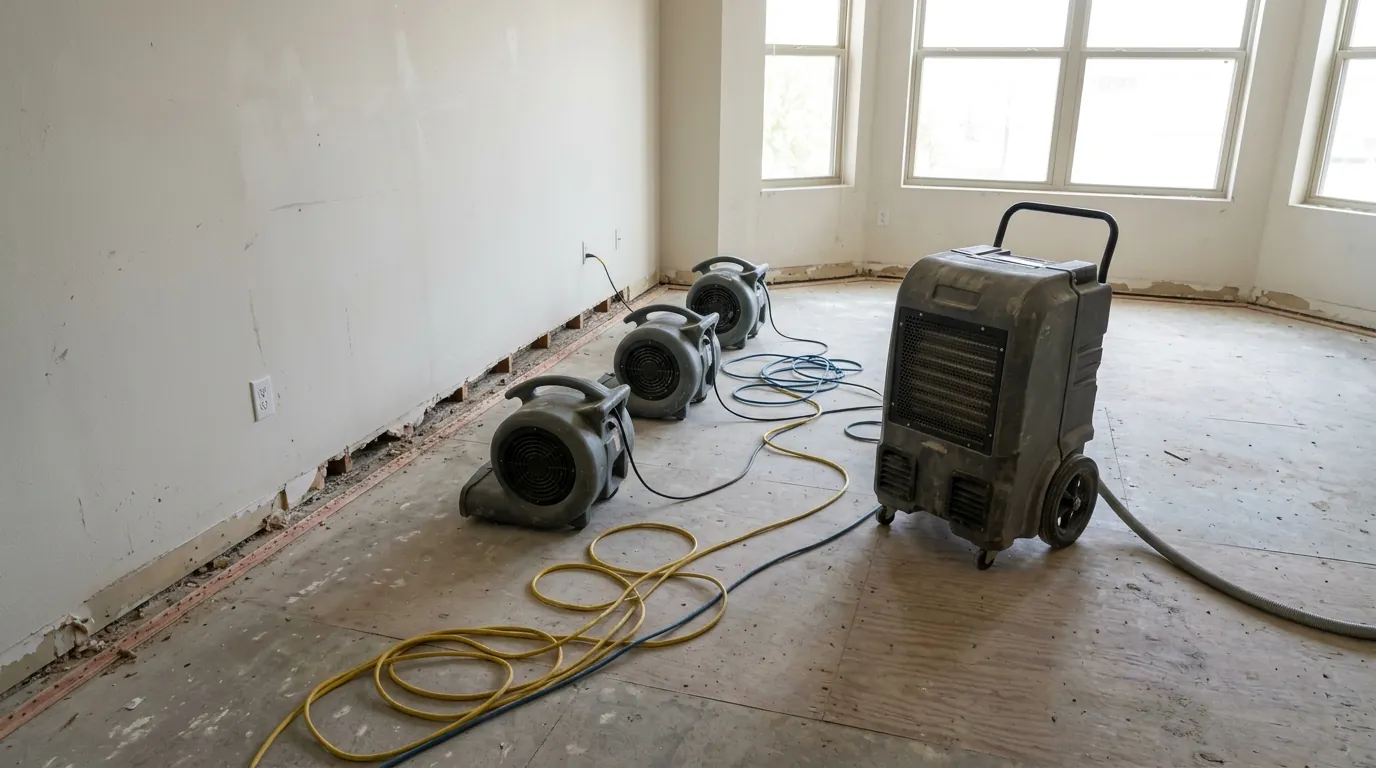
Group 2 of 64 services
The part of every water job you cannot see. Walls, subfloors and plaster are dried with measured equipment and checked every day, and these pages cover the drying work and the readings behind it.
Call about drying and leak tracing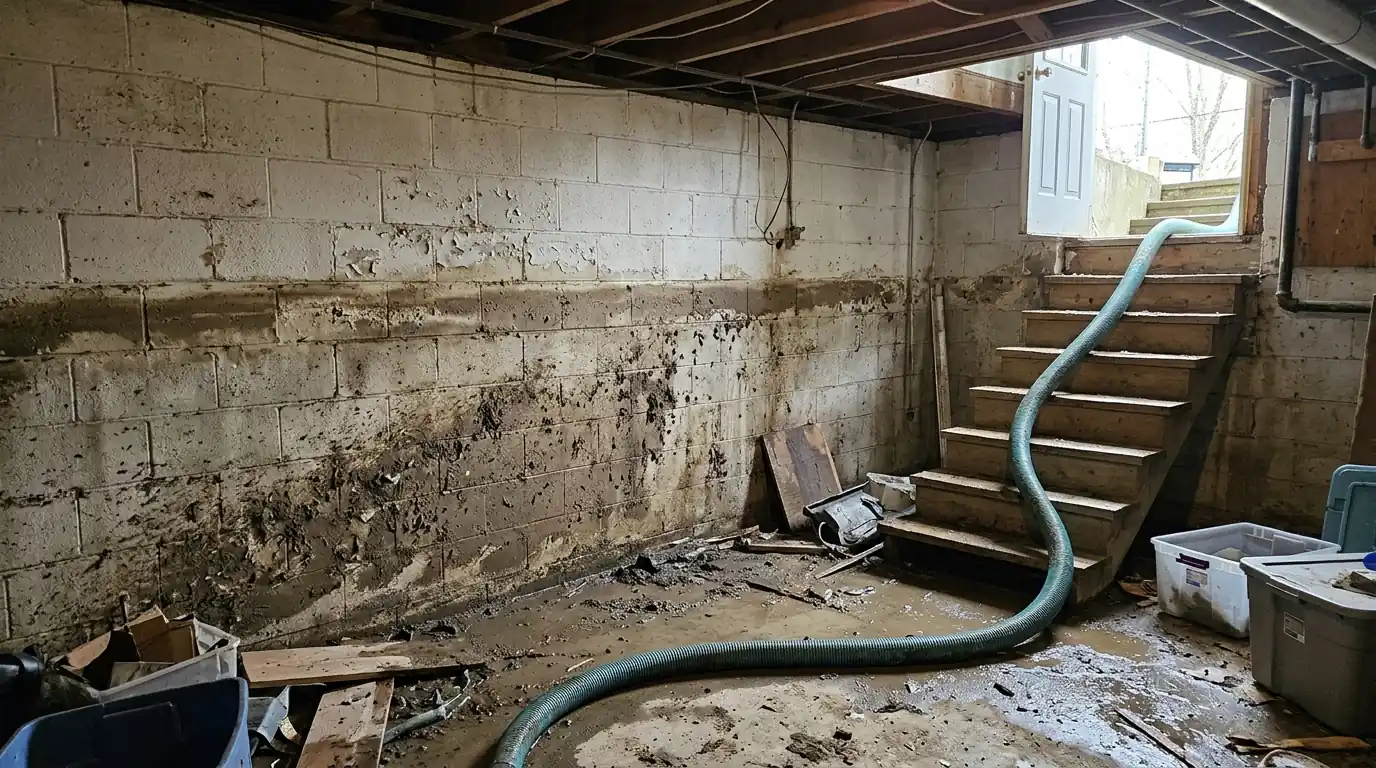
Group 3 of 65 services
Water from outside or from the sewer, which is treated as contaminated from the first minute. Pump-out, removal and disinfection come before drying, and board-up or tarping keeps the weather out while it happens.
Call about flood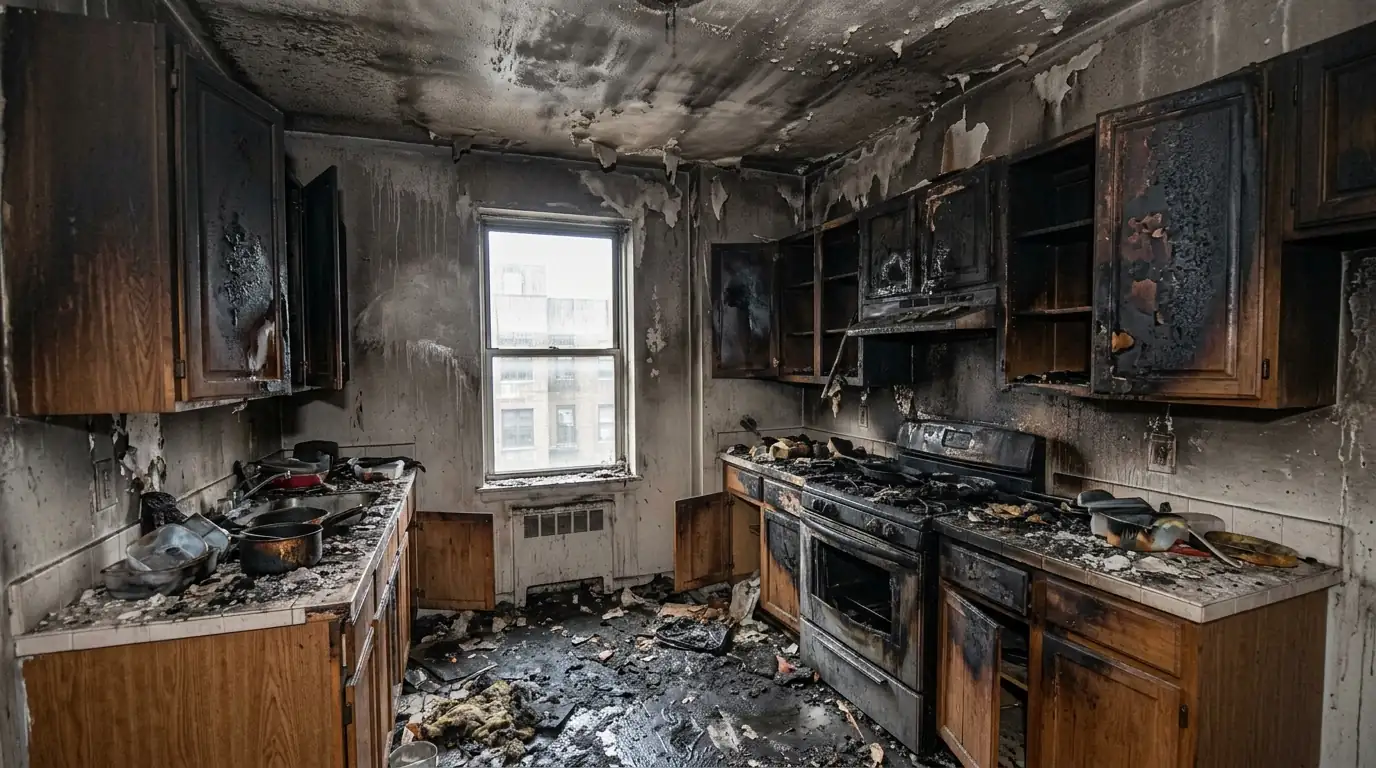
Group 4 of 67 services
Soot, smoke and the water used to put the fire out. Cleaning follows the type of residue, from dry soot to oily puff-back film, and battery fires get their own protected cleanup.
Call about fire and smoke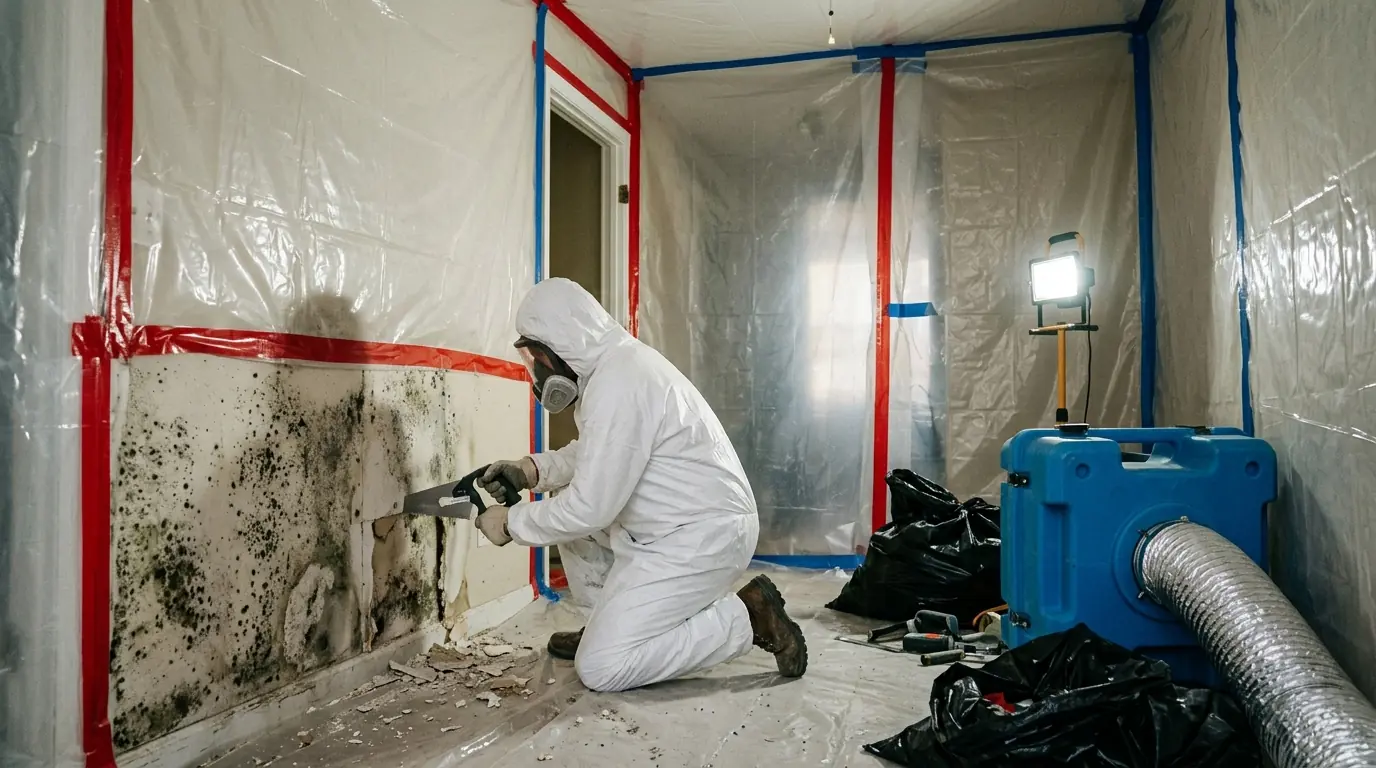
Group 5 of 65 services
Growth after a leak, lasting odors and ducts that keep spreading both. Work happens inside containment, and the moisture source is found so the problem does not simply return.
Call about mold and odor
Group 6 of 69 services
What happens after the emergency: rebuilding rooms, handling belongings and papers, commercial spaces, multi-unit buildings and the records your insurer asks for.
Call about rebuildWhich one do I need
Start from what you can see. The first visit fills in the rest.
| What you see | Start with |
|---|---|
| Water on the floor from a pipe, fixture or appliance | Emergency Water Extraction |
| A stain or drip in the ceiling | Ceiling Leak and Upstairs Leak Damage |
| Water that came in from the street or rose in the basement | Flood Damage Restoration |
| Anything coming up through a floor drain or toilet | Sewage Backup Cleanup |
| A fire, even a small one, or smoke from a neighbor | Fire Damage Restoration |
| Black streaks above radiators after the heat came on | Oil Burner Puff-Back Cleanup |
| A musty smell or spots on walls weeks after a leak | Mold Remediation |
| Everything is dry and clean and needs putting back | Reconstruction After Water or Fire Damage |
Most jobs end up using two or three of these. You only need to make one call.
How we work
A person picks up day and night, asks where the water or smoke is now, and sends a crew loaded for what you describe.
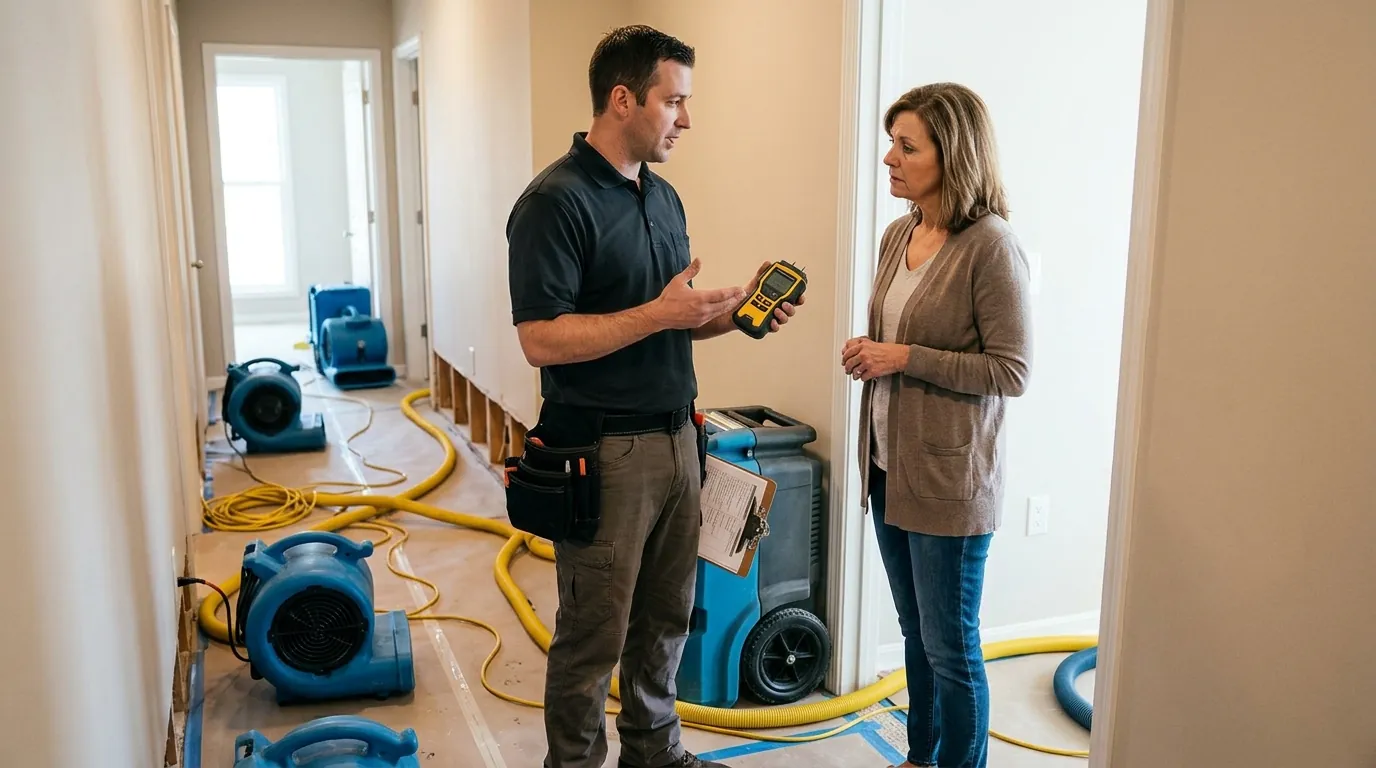
Equipment stays until wet materials read the same as dry ones, and every reading is logged with a photo.
The crew that dries or cleans also rebuilds, so the scope your adjuster approved is the scope that gets built.
Dated photos, moisture maps and an itemized scope go to you and your insurer on every job.
Questions
Yes. Drying, cleaning and rebuilding run on one job file, so nothing gets lost between two contractors.
Call the same number either way. Tell us what you see and we will send the right crew and equipment.
Most of our work is in multi-unit buildings. We coordinate with the super and the managing agent and keep a separate record for each unit.
Yes. We document every loss with photos, moisture readings and an itemized scope, and we meet your adjuster on site.
Yes, including restaurants, offices and shops, with after-hours work to keep you open where possible.
Manhattan and the other four boroughs, plus Westchester County, Yonkers and Nassau County. See the NYC area we cover.
One number for water, fire and mold
Describe what you see and we will tell you what the job needs and when a crew can be there.