Short answer
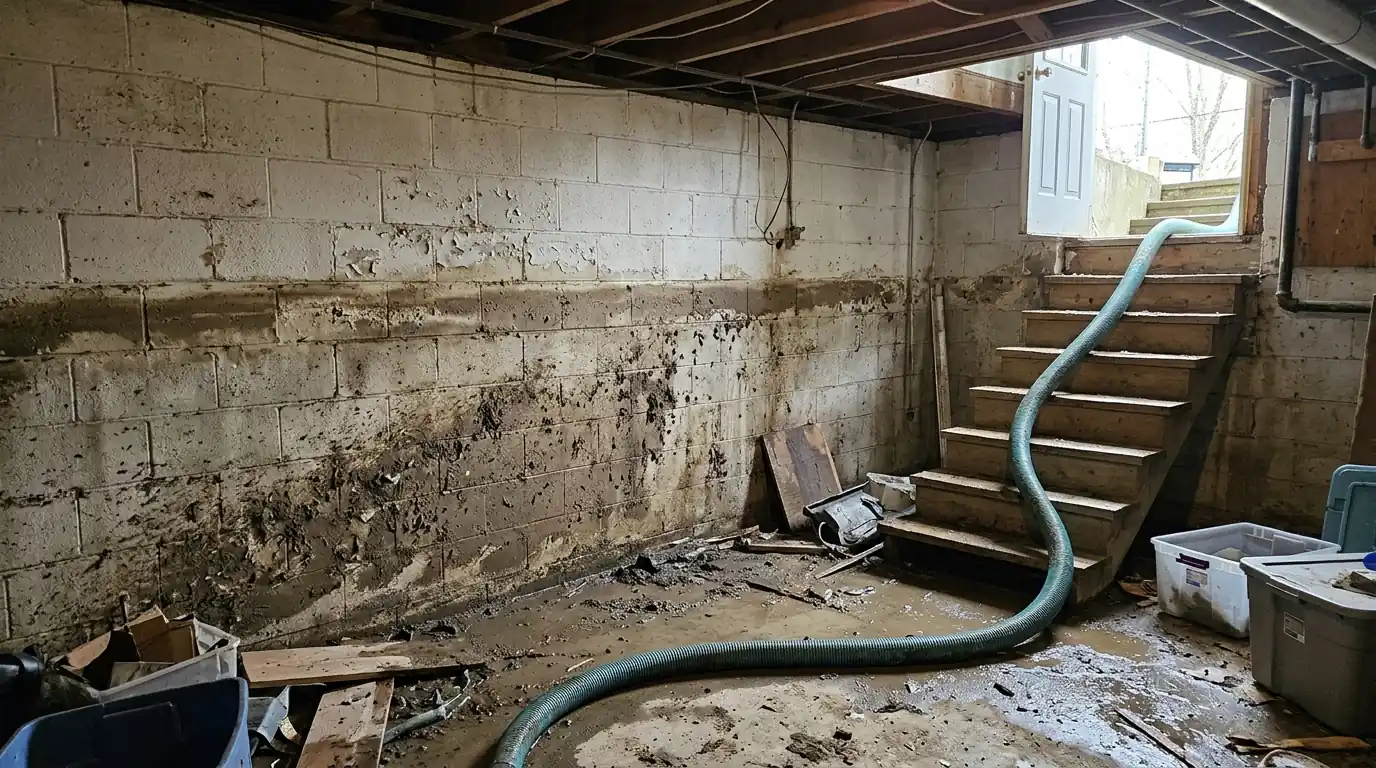
Flood water from outside is treated as contaminated, because it carries street runoff, sewage and soil. Wait until power to the flooded area is off, then pump out standing water, remove soaked drywall, insulation and carpet, clean and disinfect, and dry the structure. Standard homeowners policies usually exclude outside flooding, so check for separate flood coverage.
Why flood cleanup is different from a pipe leak
A burst pipe releases clean water. A flood brings in whatever was on the street and in the sewers, and it leaves silt behind when it drains. That changes the job: porous materials it touched are removed rather than dried, and every surface is cleaned before drying starts.
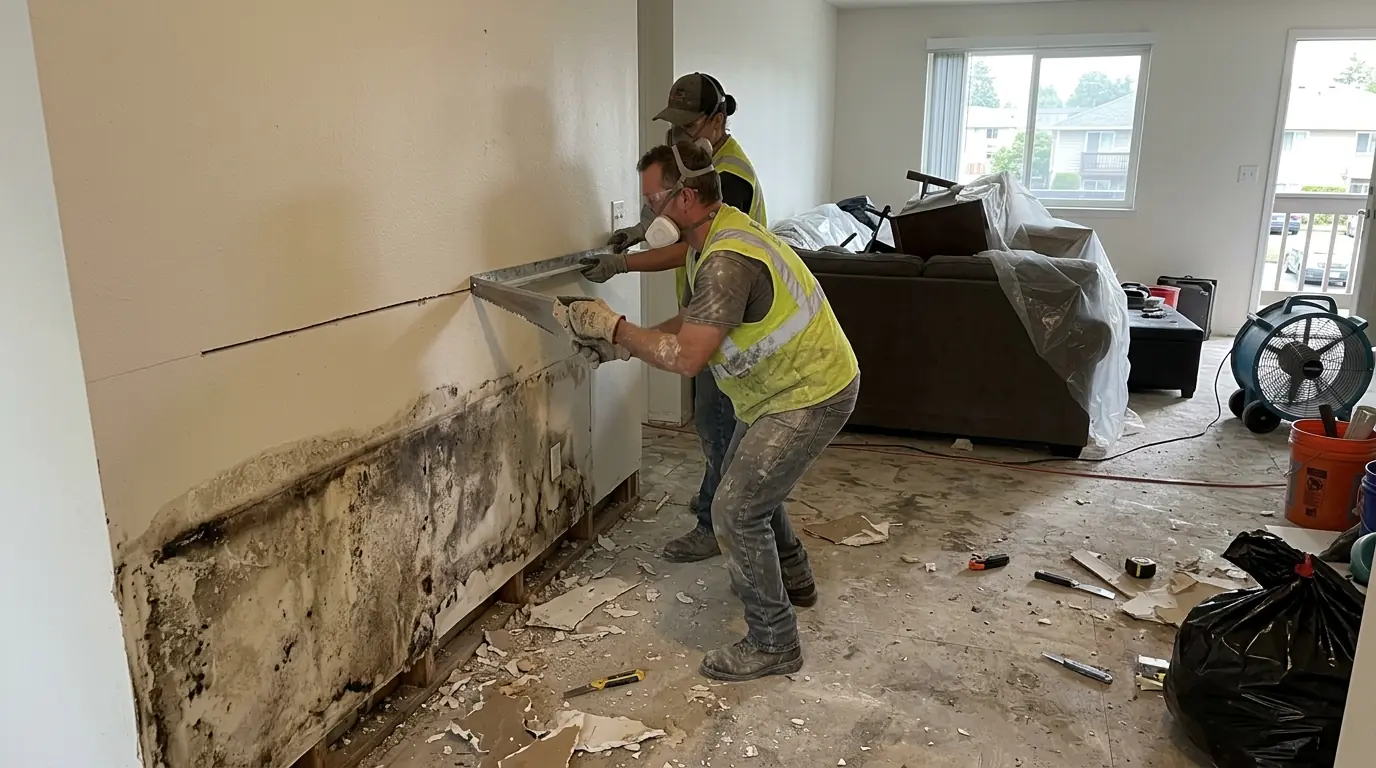
We cut drywall above the water line, pull wet insulation and flooring, wash and disinfect what stays, and then dry the framing and floors to a measured standard.
Signs flood water left damage you cannot see
A line on the walls
Drywall wicks water above the flood mark.
Swollen door frames
Wood trim absorbed water and is still wet.
Silt in outlets
Water reached the wiring; have it checked.
Musty smell after a week
Wall cavities are still damp.
Warped cabinet bottoms
Particleboard sat in the water.
White crust on masonry
Salt or minerals are drawing moisture.
How a flood job runs
Confirm it is safe
Power to wet areas is off and the water has stopped rising.
Pump out
Pumps and extractors remove standing water and silt.
Flood cut
Drywall and insulation come out above the water line.
Clean and disinfect
Framing, floors and surfaces are washed and treated.
Dry
Equipment runs until framing and slabs read dry.
Rebuild
Insulation, drywall, floors and trim go back in.
Flash flooding from heavy rain
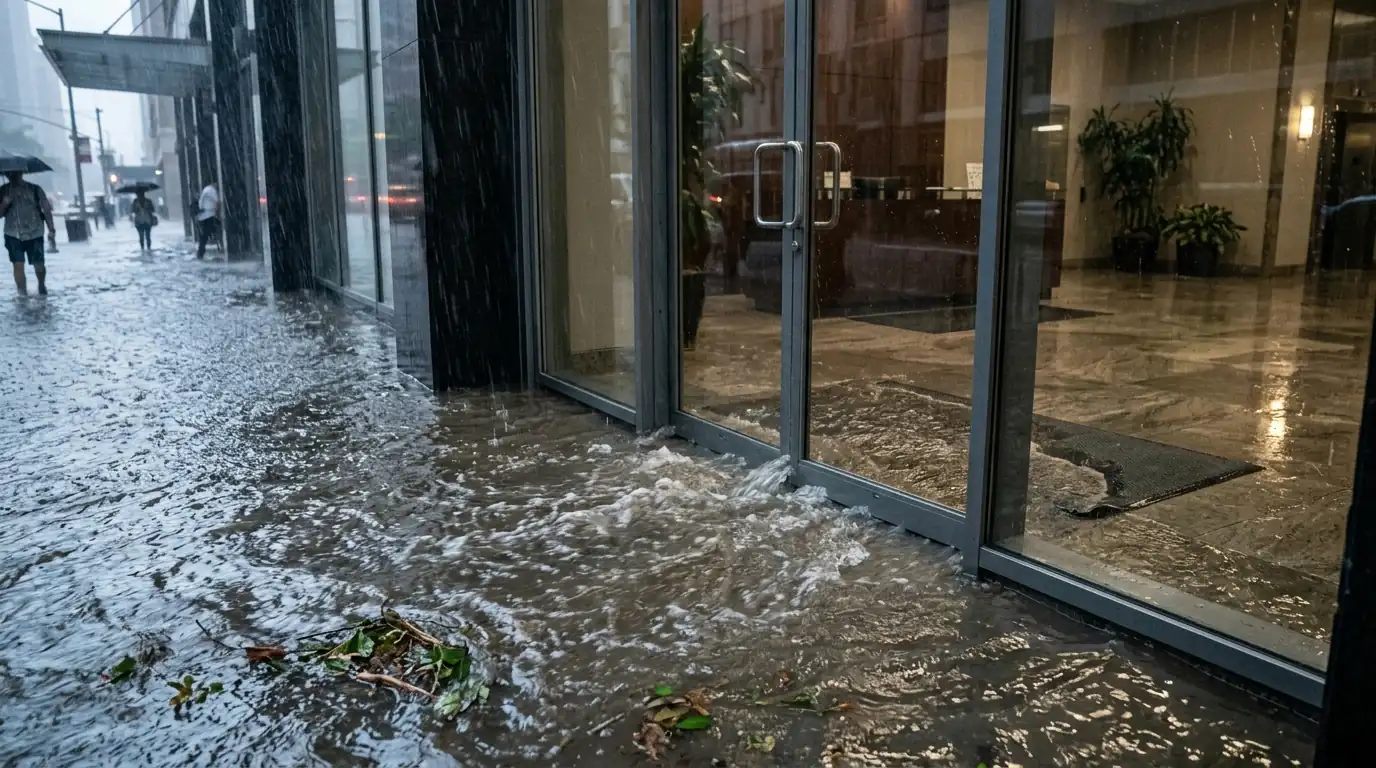
When rain falls faster than the sewers can take it, water rises in the street and pours into areaways, basements and ground-floor units, often within minutes. It usually carries sewage from overloaded combined sewers as well.
We pump out standing water, then do a flood cut: drywall is removed to a line above the high-water mark so the framing behind can be cleaned and dried. Floors, cabinets and furniture that sat in the water are assessed piece by piece, and nothing leaves without being photographed and listed for your claim.
Coastal and tidal flooding
Storm surge and extreme tides push salt water into low-lying homes near the shore. Salt water corrodes wiring, fixtures and appliances even after it drains, and it keeps drawing moisture out of the air because salt is hygroscopic.
On these jobs we rinse surfaces to remove salt residue before drying, check electrical components with the electrician, and remove more drywall and insulation than a fresh water flood would require, because salt left in the wall keeps it damp. Appliances that sat in salt water are listed for the claim even when they still run.
Water main break flooding
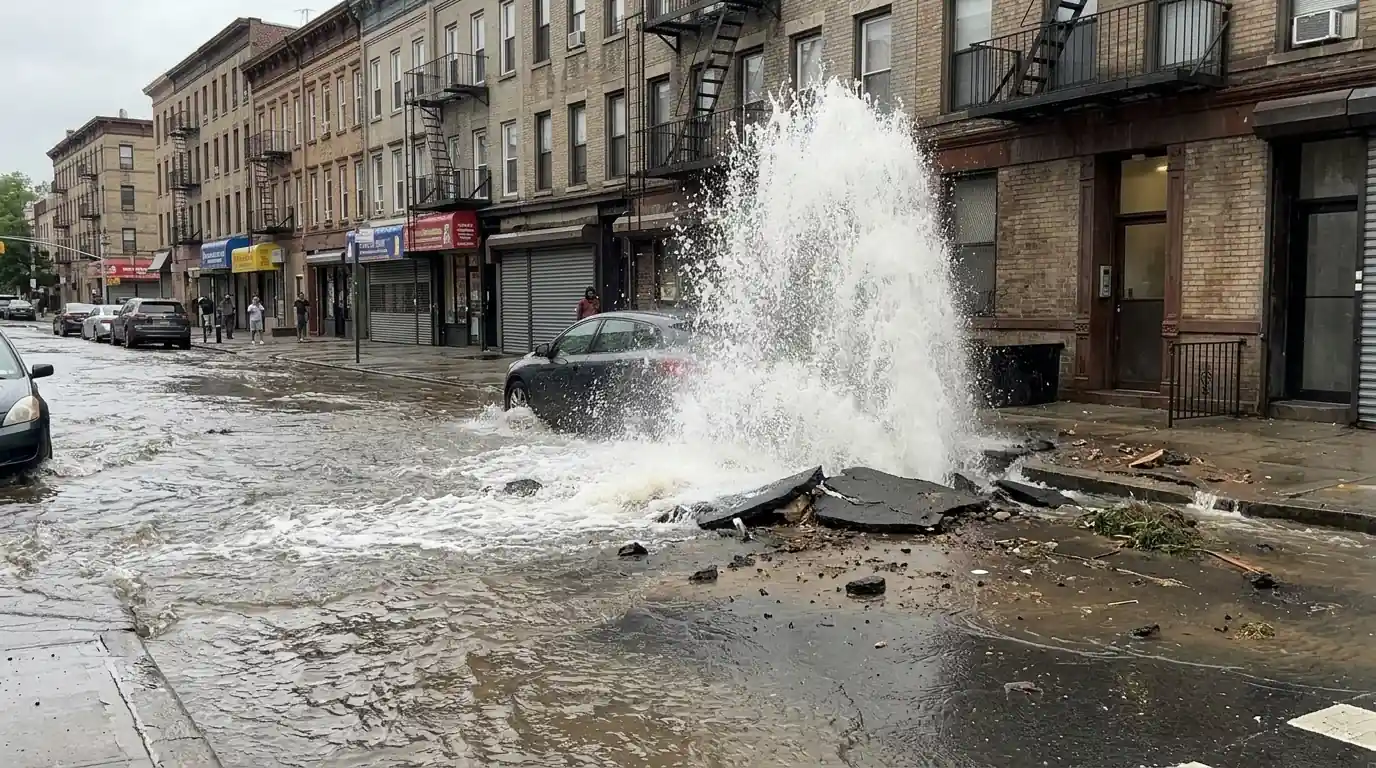
A broken street main can send a huge volume of water into cellars and ground-floor spaces in minutes, along with mud and gravel from the roadbed. The water starts clean but picks up everything on its way in.
We pump, shovel out sediment, and treat the space as a flood rather than a pipe leak. Claims for main break damage may involve the city, the building’s policy and your own, so we document the water line, the debris and every room from the first hour on.
How long flood cleanup takes
Pump-out and removal usually take a day or two. Drying framing and slabs takes another three to seven days, and longer where concrete soaked through.
Rebuild follows once readings are dry, and its length depends on how much was removed.
What recent floods taught New York
The remnants of Ida dropped 3.15 inches of rain on Central Park in one hour in September 2021, more than the sewers could carry, and the flooding reached places that had never flooded before. Sandy, in 2012, flooded about 51 square miles of the city. In Breezy Point, more than 100 homes burned when salt water reached electrical wiring. That is why we will not start a flood job until the power to wet areas is confirmed off.

Water coming in from the street?
Stay out of flooded rooms where power is on. Call us, and call 911 if water is rising in a living space.What drives the cost of flood damage restoration
Typical US range for water damage restoration; flood jobs with contaminated water sit toward the top. Source, 2026. A planning range, not a quote.
A 2 inch flood and a 4 foot flood need very different flood cuts.
Salt water means more removal and rinsing.
Mud and debris add labor before drying starts.
Furniture and stored items add handling and disposal.
New drywall, insulation and flooring are priced separately.
Standard homeowners policies usually exclude outside flooding. Flood insurance is a separate policy.
Questions about flood damage
Yes. It carries sewage and chemicals, and it can hide live electrical hazards. Stay out until power is off.
Usually not for water from outside. Flood coverage is a separate policy.
Drywall wicks contaminated water above the line. Cutting above it lets the framing be cleaned and dried.
Solid wood and metal often can be cleaned. Upholstery soaked by flood water usually cannot.
As soon as the water stops rising and power is safe. We answer 24/7.
Not if the space is cleaned and dried quickly. Delays make mold likely.