Short answer
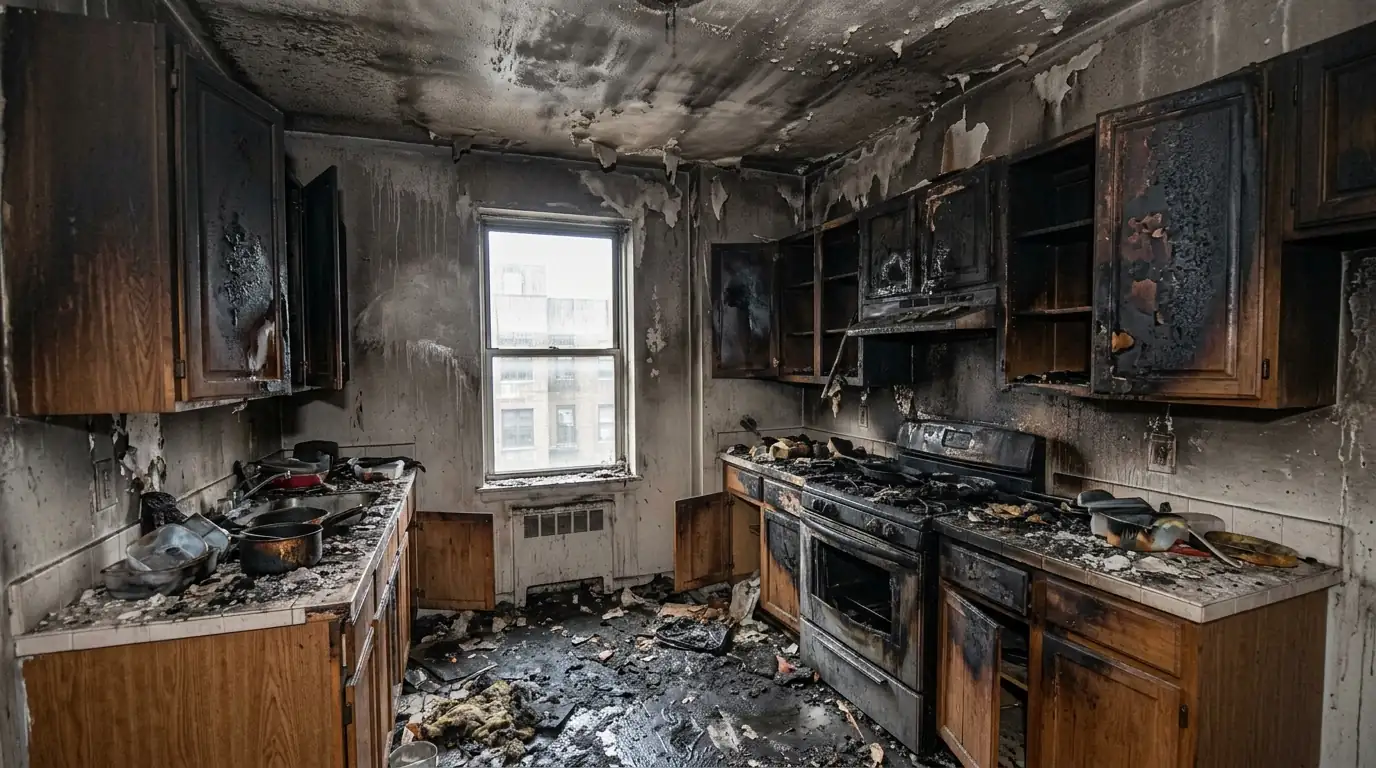
Soda and dry ice blasting remove soot, char and mold staining from framing, brick and concrete without the damage sand blasting causes. Soda is gentle and deodorizes; dry ice leaves no residue because it turns to gas. Blasting is done after the emergency phase, before sealing and rebuilding, and usually where walls and ceilings are already open.
When blasting beats hand cleaning
Scrubbing charred joists or sooty brick by hand is slow and uneven, and it leaves residue in the grain. Blasting reaches into rough surfaces and corners quickly and cleans them to a consistent finish.
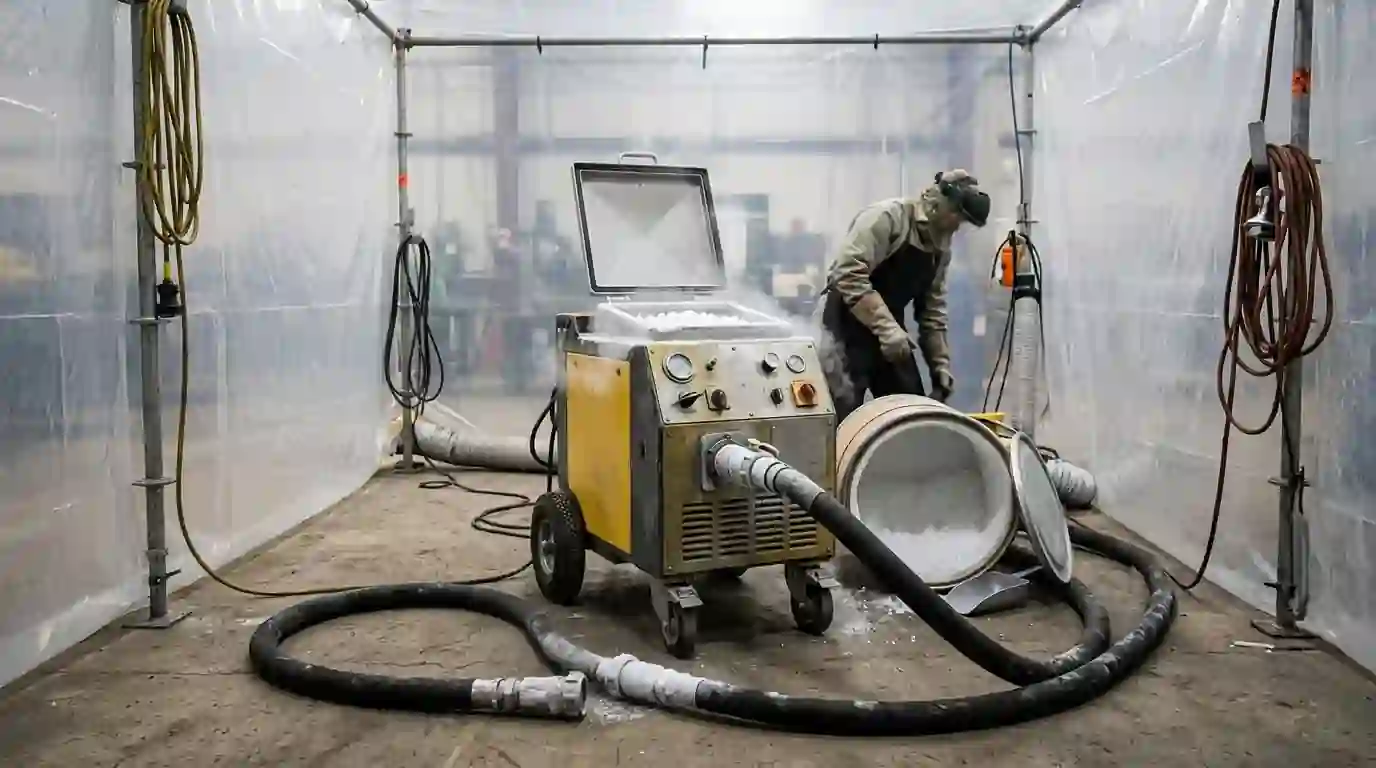
We contain the area first, because blasting throws media and debris. Then we blast, vacuum up the media and loosened material, and seal the cleaned surfaces before the rebuild.
Soda, dry ice or hand cleaning
| Method | Best for | Leaves behind |
|---|---|---|
| Soda blasting | Soot on wood and soft brick | Fine dust, vacuumed |
| Dry ice blasting | Mold staining, delicate framing | Only the removed debris |
| Hand cleaning | Small areas, finished surfaces | Nothing, but slow |
| Sand blasting | Not used indoors | Damage to wood and brick |
What affects the cost of blasting
Square footage of framing or brick to clean.
Dry ice costs more to run than soda.
Sealing the work area adds setup.
Ceilings and tight spaces slow the work.
Primer on cleaned surfaces is a separate line.
There is no sourced local range for blasting alone; it is usually part of a fire or mold job.
Soot on joists and brick
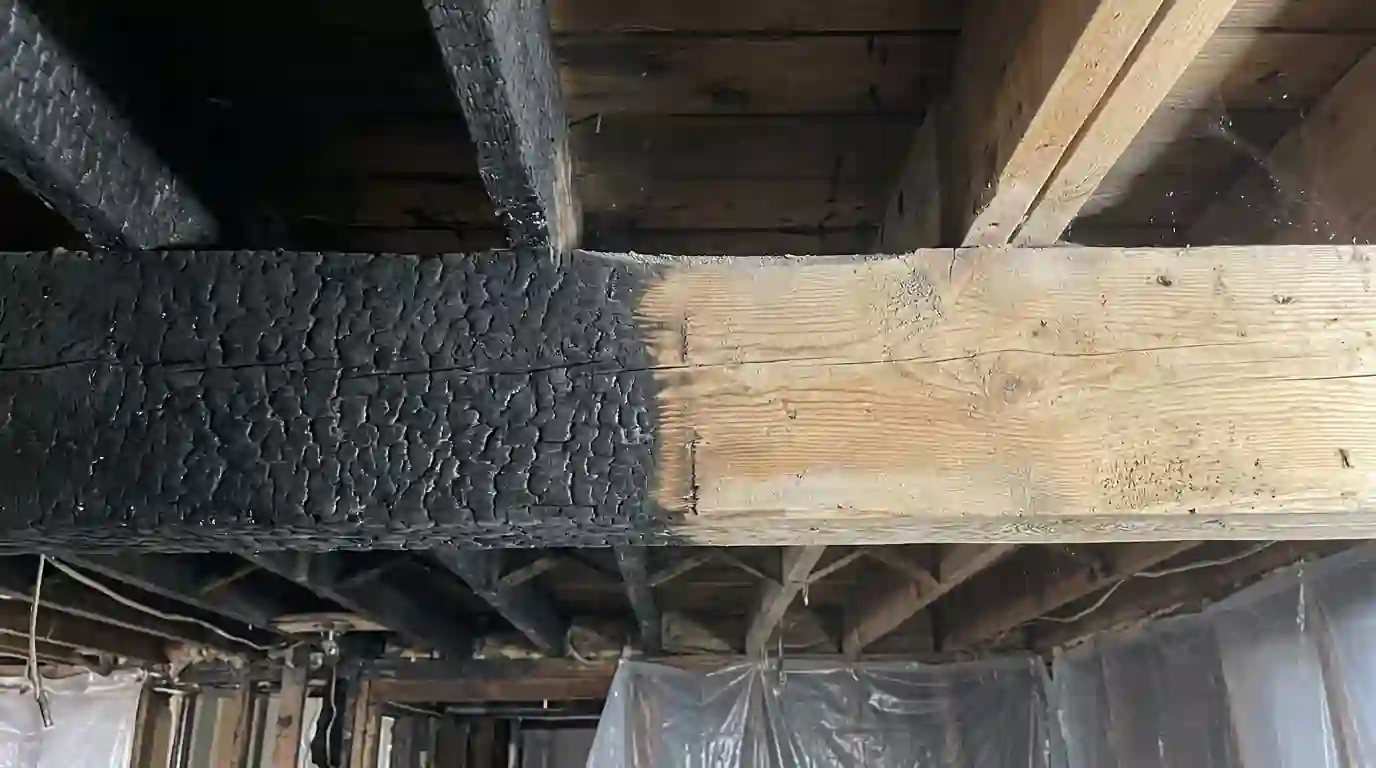
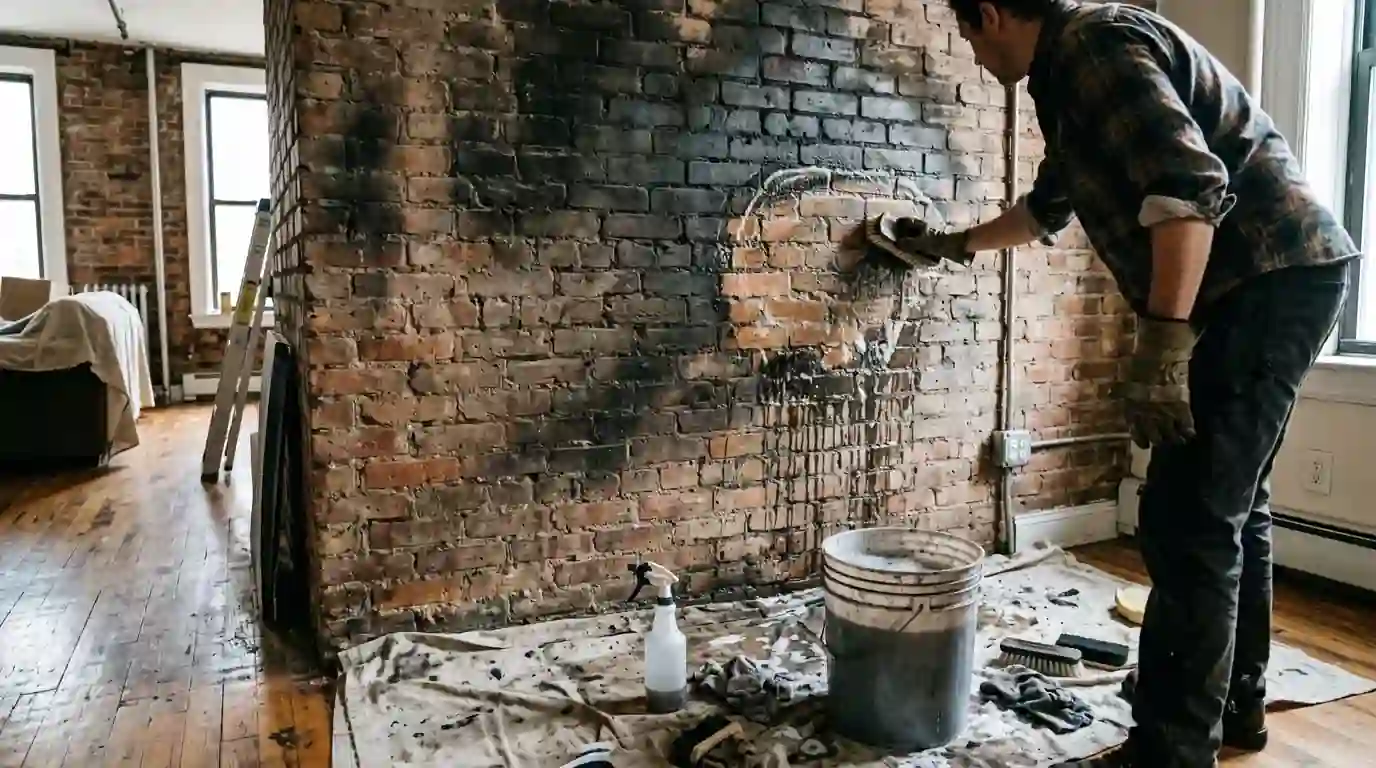
After a fire, exposed joists, rafters and brick hold soot in every crack and pore. Hand cleaning leaves shadows that show through new paint and hold odor.
Soda blasting uses sodium bicarbonate, which is soft enough not to gouge wood or brick and also neutralizes some of the odor. The dust it creates is contained and vacuumed. On brick, soda removes soot without eating into old mortar, which matters in older buildings where the brick is part of the character of the room.
Mold staining on framing
After mold remediation removes growth from framing, dark staining often remains in the wood grain. It is not active growth, but it looks bad and inspectors and buyers notice it.
Dry ice blasting removes the staining along with any remaining surface growth, and it leaves no secondary waste because the pellets turn to gas. It is often the final cleaning step on framing before an antimicrobial sealer goes on. Blasting does not replace remediation; it follows it, once the growth itself is gone.
Char removal before sealing
Lightly charred framing can often stay if the char is removed and the wood is sealed. Leaving loose char in place means odor will come back through the new walls.
We blast off the loose char down to sound wood, check the remaining thickness of each member so the builder knows what can stay, then seal it with an odor-blocking primer. Members that are charred too deeply are marked for replacement during the rebuild, and those are photographed for the claim.
What a blasting job includes
- Containment and negative air
- Protection of finished surfaces nearby
- Soda or dry ice blasting
- HEPA collection of media and debris
- Inspection of framing thickness
- Marking members for replacement
- Sealing of cleaned surfaces
Blasting on older brick and framing
About 27 percent of lots in Manhattan fall under the Landmarks Preservation Commission, and even where interiors are not regulated, owners of older buildings want exposed brick and old timber kept rather than covered. That shapes which media we use. Soda is gentle on soft old brick and mortar, and dry ice leaves nothing behind in the grain of old joists. Both let us clean what can stay rather than tearing it out.
How a blasting job runs
Open the area
Finishes are removed to expose framing or brick.
Contain
Plastic barriers and negative air protect other rooms.
Blast
Soda or dry ice is applied to the surfaces.
Vacuum
Media and debris are collected with HEPA vacuums.
Inspect
We check the wood and mark members to replace.
Seal
Odor-blocking or antimicrobial sealer goes on.
Questions about soda and dry ice blasting
Yes, with containment. The dust is vacuumed and the work area sealed off.
The pellets turn to gas, so only the removed debris is left.
Soda is gentle on brick and mortar. Sand is never used indoors.
It removes staining after remediation. It does not replace remediation.
Not in that area. It is loud and contained.
Usually, as part of a covered fire or mold claim.