Short answer
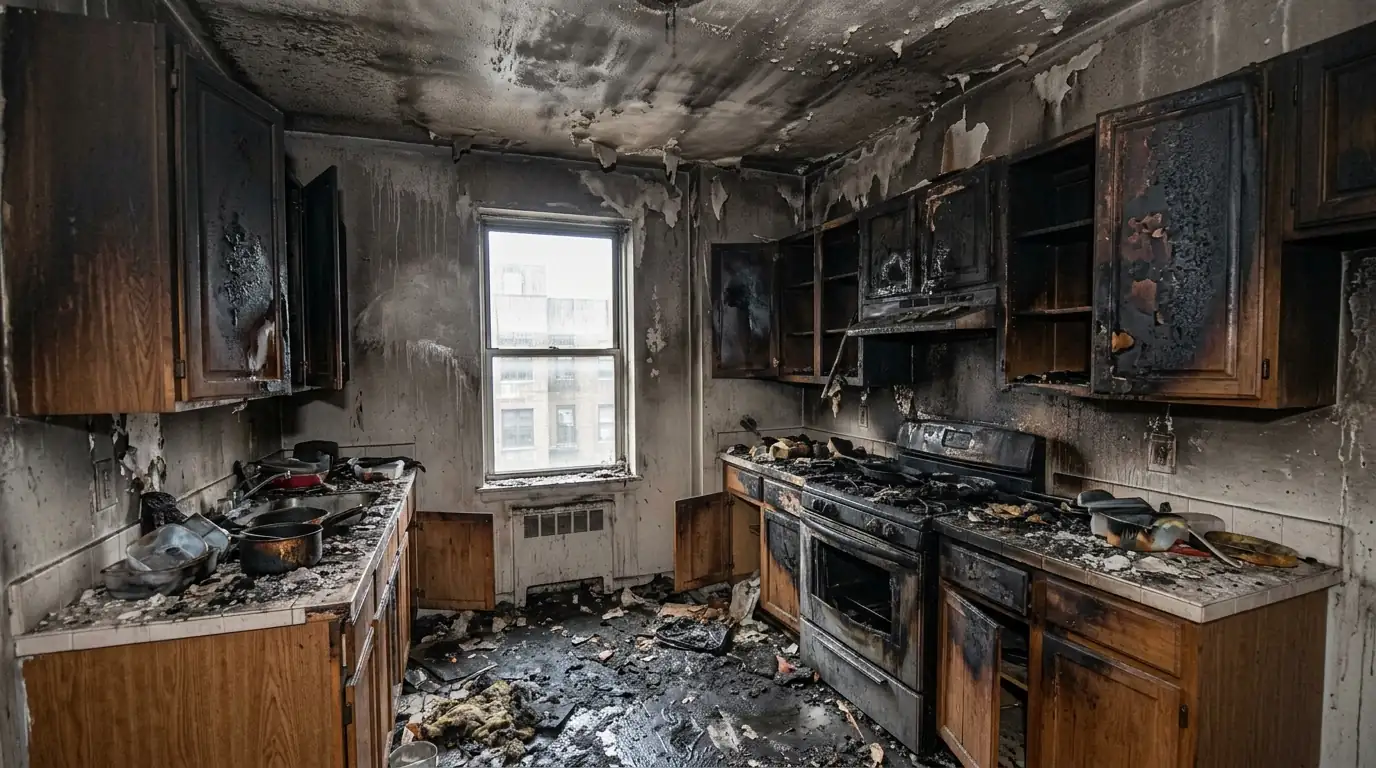
A lithium battery fire leaves more than ordinary soot. Burning cells release toxic gases and a residue containing metal particles, and the damaged battery can reignite hours later. Do not touch the battery or the debris. Once the fire department releases the space, the residue needs protected removal and cleaning before anyone moves back in.
Why battery fires are a different cleanup
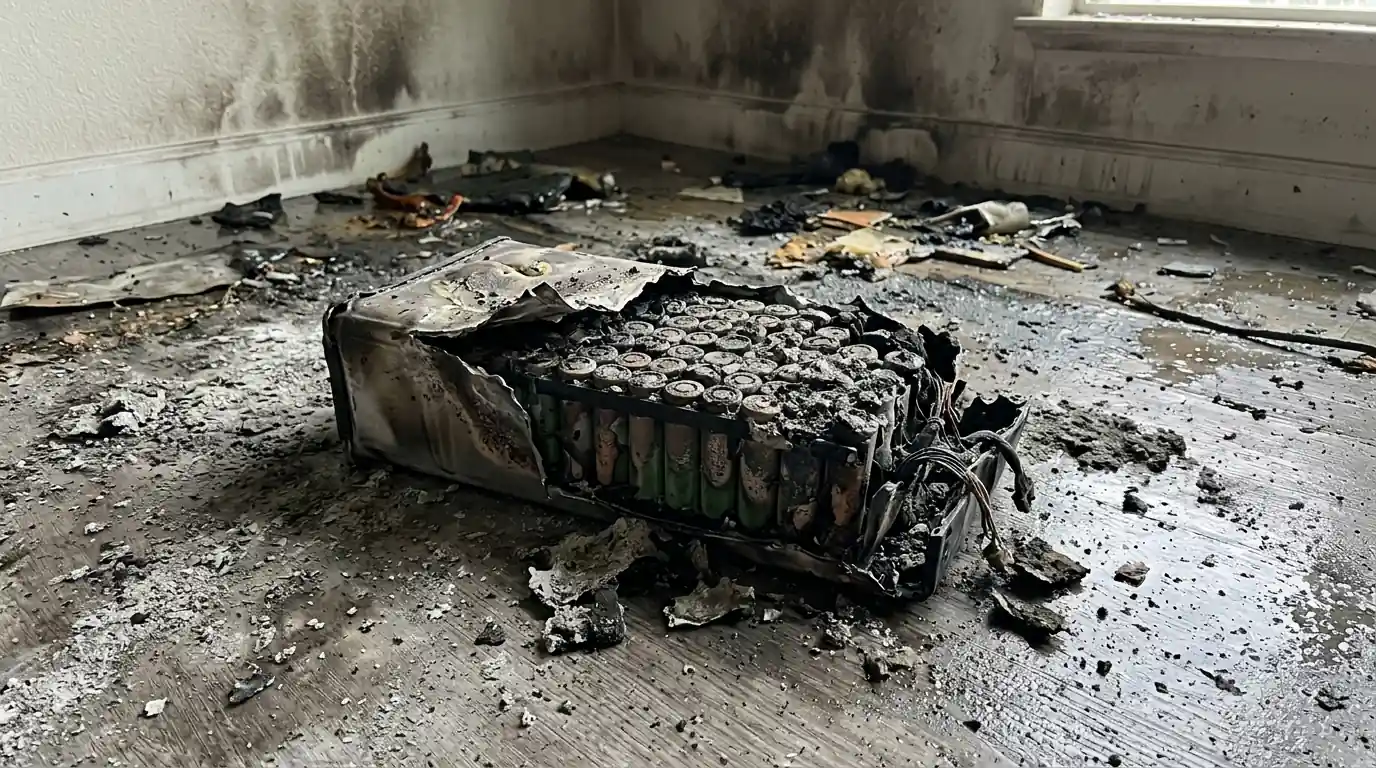
A lithium battery in thermal runaway burns intensely, throws burning material and produces thick, acrid smoke. The residue is oily and gritty, and it can contain metals from the cells, so it is handled with more protection than ordinary soot.
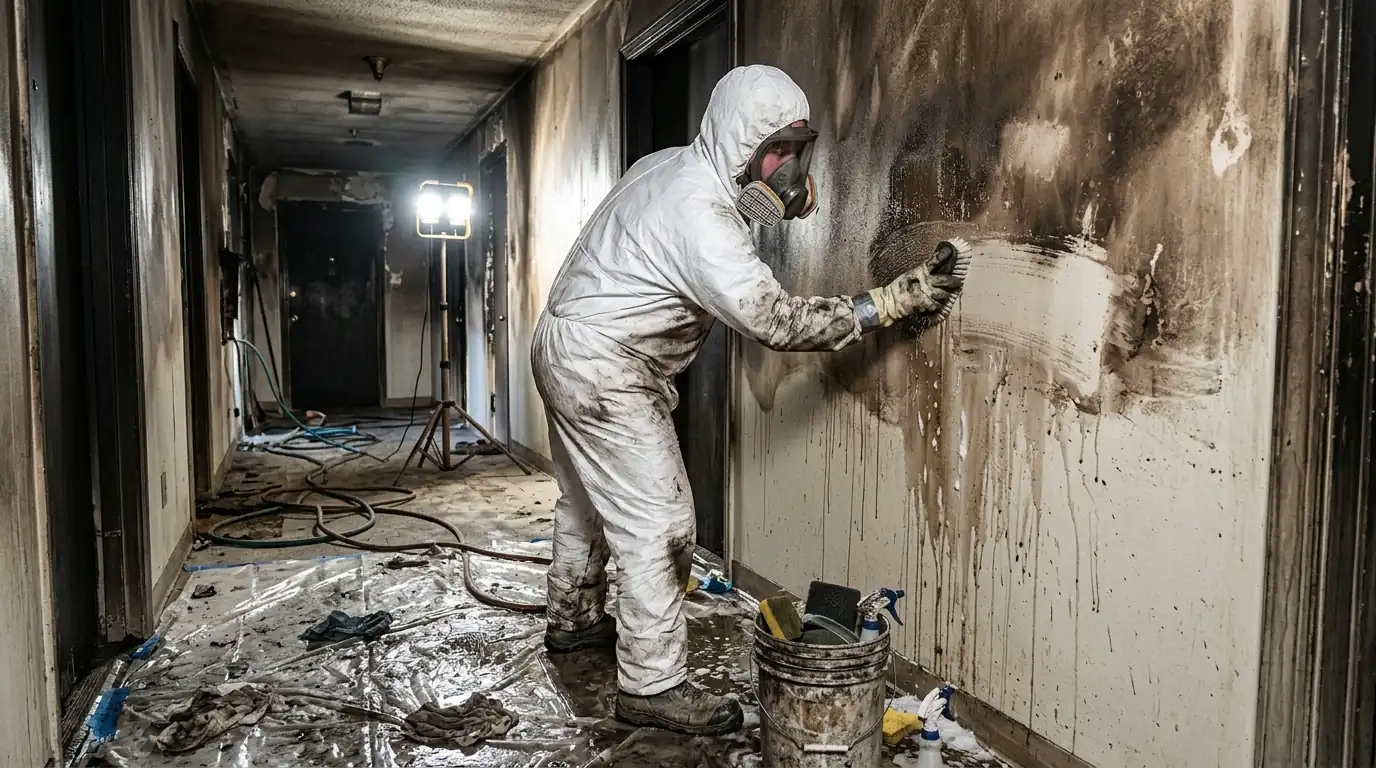
We wear respirators and protective suits, remove debris and damaged materials, clean surfaces with methods suited to the residue, and treat the smoke odor. Damaged batteries are handled only as the fire department directs.
How we clean up after a battery fire
Wait for release
The fire department clears the space first.
Secure and ventilate
Openings are boarded and the air is scrubbed.
Remove debris
Burned items and residue are removed with protection.
Clean surfaces
Walls, floors and ceilings are cleaned top down.
Treat odor
Air treatment and sealing where needed.
Rebuild
Damaged materials are replaced.
E-bike and scooter battery fires
Most battery fires we see start with an e-bike or scooter charging indoors, often in a hallway, a bedroom or near the apartment door. They start suddenly and spread fast, which is why they are so dangerous for anyone between the fire and the exit.
After the fire department releases the unit, we secure it, remove the burned bike and debris as directed, extract any hose water, and start cleaning. Typical fire damage restoration runs $3,083 to $52,031 across the market, and battery fires often sit higher because of the residue.
Toxic residue and metal debris
Battery fires leave a residue that is heavier and more hazardous than wood or paper soot. Burned cell material, metal fragments and fluoride compounds can settle on floors, walls and belongings near the fire.
We remove debris with HEPA vacuums and protective gear, clean hard surfaces with wet methods, and discard porous materials near the origin that cannot be cleaned with confidence. Belongings close to the fire are inventoried before any are cleaned or thrown out, so nothing leaves without a record for your claim.
Hallway and stairwell smoke
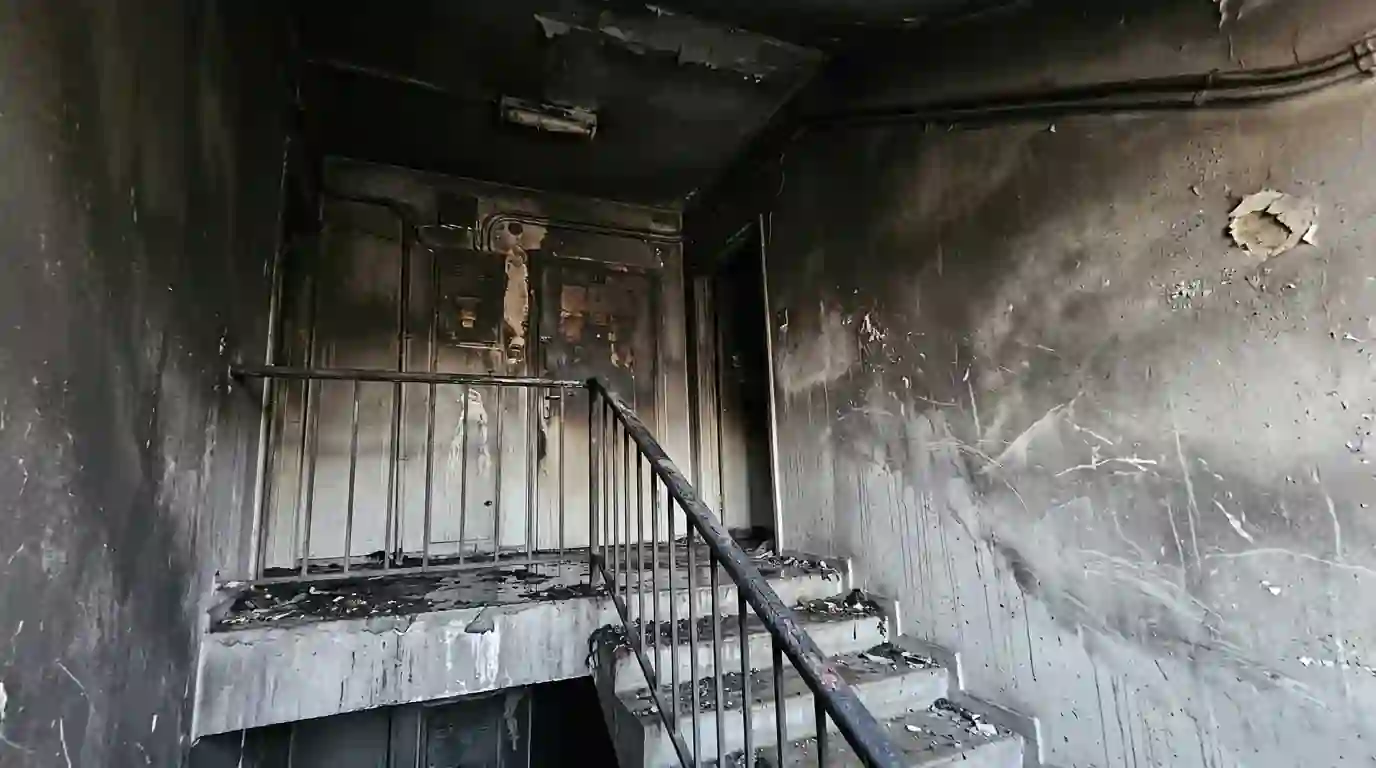
When a battery fire starts near a door or in a hallway, smoke fills the corridor and the stairwell, which are the building’s escape routes, and seeps into every unit on the floor.
We clean common areas with the managing agent, and neighboring units separately with their own records. Stairwells need cleaning from the top down, and fire doors and their seals are checked so the building’s smoke protection works as it should. Residents are told which areas are closed while we work.
Battery fires in New York City
The FDNY counted 277 fires started by lithium-ion batteries in 2024, up from 268 in 2023, a year in which 18 people died in them. They are not only an apartment problem. In July 2025 an e-bike stored inside a pizzeria on Kissena Boulevard in Flushing caught fire and killed a woman trapped in the restroom. We work in homes and in businesses after these fires, and the cleanup follows the same careful steps in both.
What to do, and what never to do, after a battery fire
Do
- Get out and call 911
- Stay out until the fire department releases the space
- Tell us a battery started it
- Photograph the scene from a distance
Do not do yourself
- Touching or moving the burned battery
- Sweeping or vacuuming the residue
- Cleaning belongings near the origin
- Cleaning hallways and stairwells
What our battery fire cleanup includes
- Protected removal of burned debris
- HEPA vacuuming of residue
- Wet cleaning of walls, floors and ceilings
- Inventory of belongings near the origin
- Common area cleaning with the managing agent
- Smoke odor treatment
- Separate records for each affected unit
What drives the cost of battery fire cleanup
Typical US range for fire damage restoration, per Angi. Source, 2026. A planning range, not a quote.
Battery residue can reach well beyond the burn area.
Respirators and suits slow the work.
Hallways and stairwells add cleaning.
Items near the origin are often discarded.
Battery smoke odor needs treatment and sealing.
Questions about e-bike battery fires
It can contain metals and toxic compounds. Do not touch it; let a protected crew remove it.
Yes, sometimes hours later. Leave it where it is until the fire department says otherwise.
Fire damage usually is. Some policies have specific rules on e-bikes, so check yours.
Not until the residue is cleaned and the air is clear.
Yes, with the managing agent, on a separate record.
They are inventoried. Many hard items clean; porous items near the origin are often discarded.