Short answer
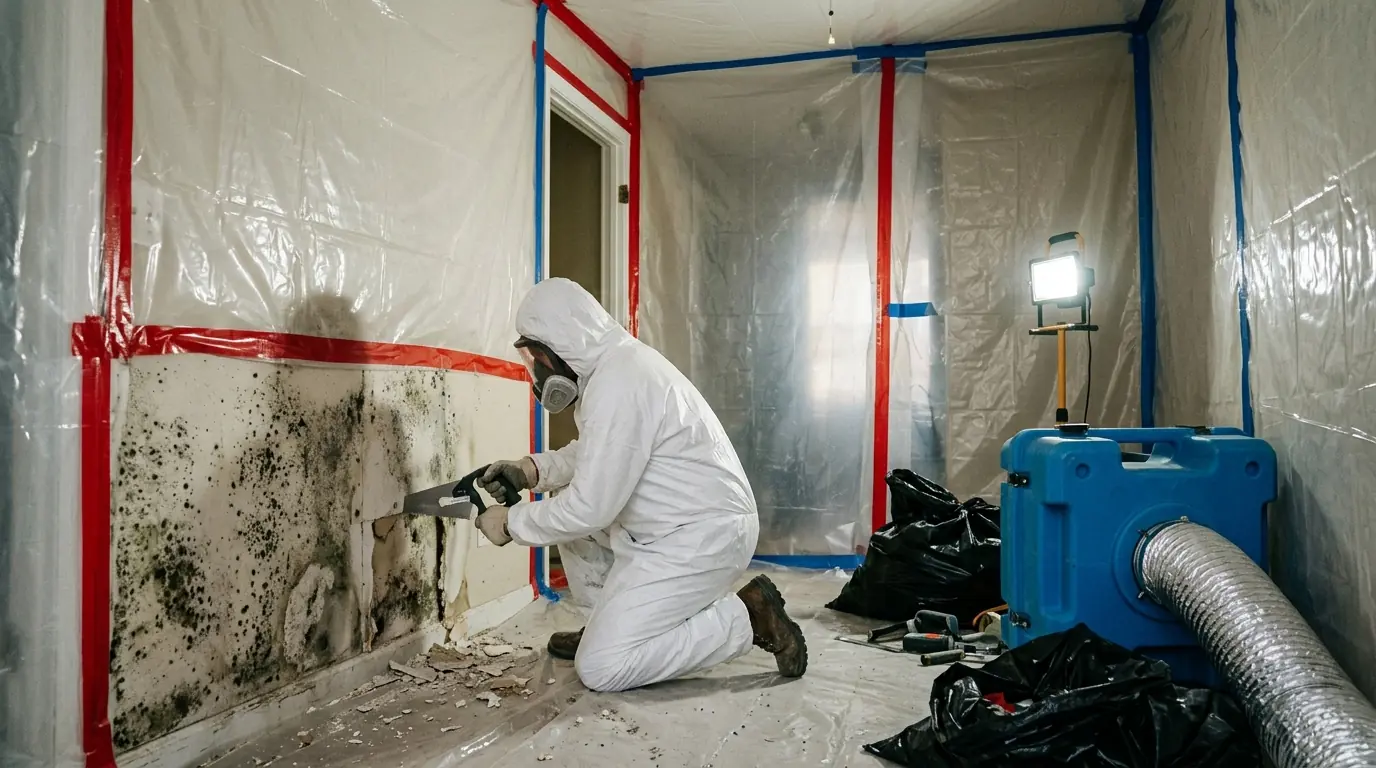
After a fire, a puff-back or a mold problem, ducts can carry soot or spores into every room each time the system runs. Keep the system off, clean the rooms and the ducts together, and replace filters last. Ducts with mold growth in the insulation liner usually need that section replaced rather than cleaned.
Why ducts are part of the job
A heating or cooling system moves the air in the home through the same ducts over and over. If soot or mold got into them, running the system after the rooms are cleaned puts it straight back.
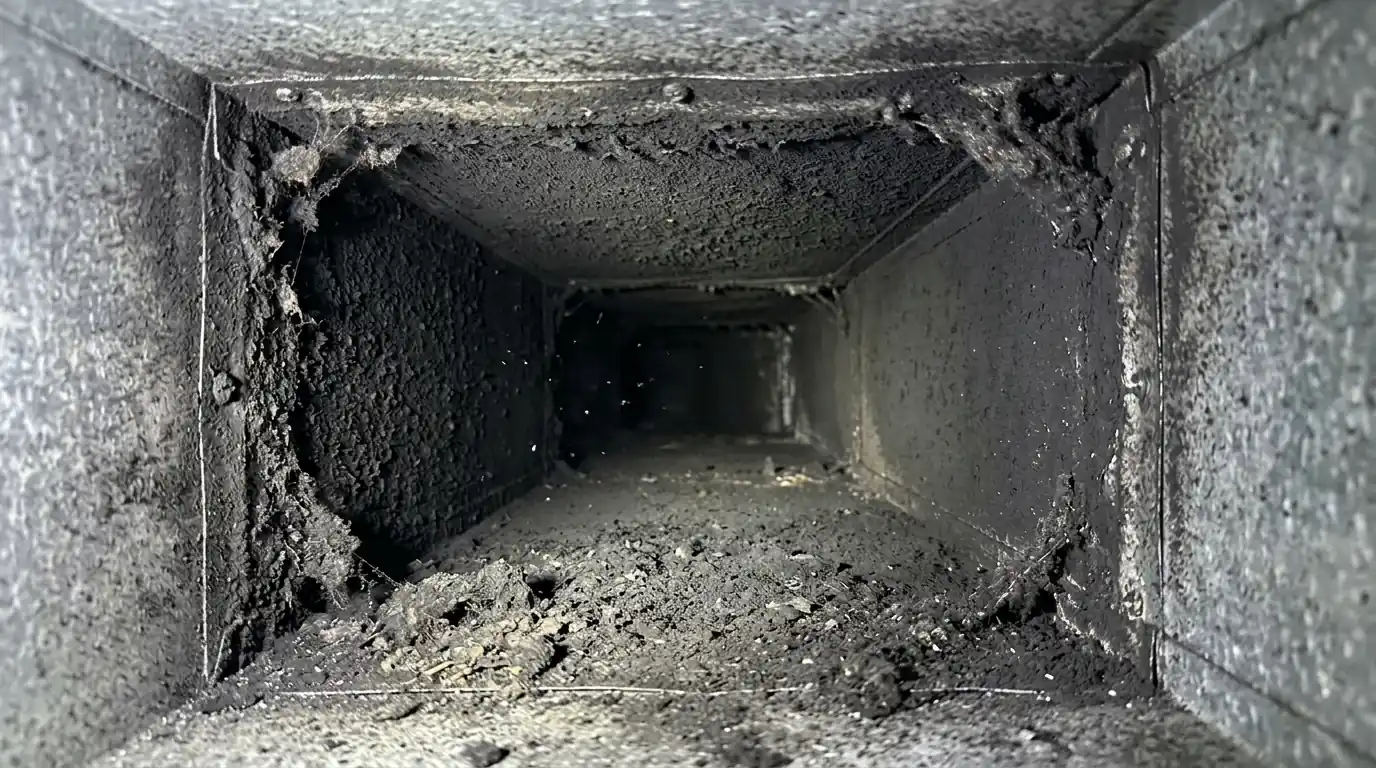
We clean supply and return ducts, registers and grilles with brushes and HEPA vacuums under negative pressure, then check the air handler and coil for the HVAC contractor.
What affects the cost of duct cleaning
Typical US range for duct cleaning after a fire, per Angi. Source, 2026. A planning range, not a quote.
More runs and registers mean more time.
Heavy soot or mold slows cleaning.
PTACs are cleaned one by one.
Moldy liner sections are replaced.
Ducts behind finished ceilings take longer.
Soot in supply and return ducts
Supply ducts deliver air to the rooms and returns draw it back. After a fire or puff-back, both collect soot, and the returns are usually worse because they pulled smoke from the rooms.
We seal registers, put the system under negative pressure with a HEPA collector, and brush and vacuum each run. Across the market, duct cleaning after a fire usually costs $250 to $500, with long runs and heavy soot adding time. Registers and grilles are cleaned or replaced, and filters go in once the house is clean.
Through-wall and PTAC units
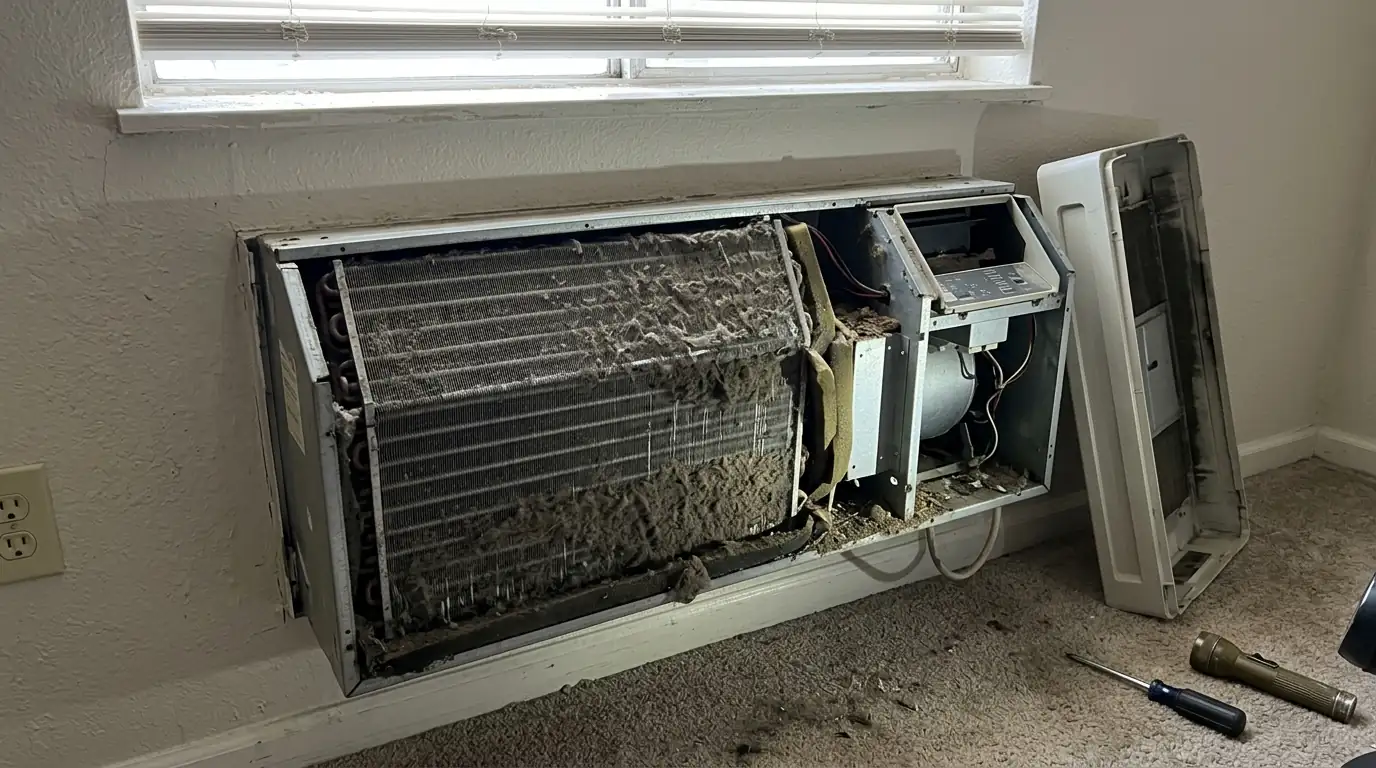
Many apartments have no central ducts at all. They use through-wall air conditioners or PTAC units under the window that pull room air across a coil and blow it back.
These units trap soot and smoke residue in their filters, coils and fan housings. We remove the covers, vacuum and clean the coils and housings, and replace filters, so the first hot day does not fill a cleaned room with smoke smell again. Units that took water or are badly contaminated are flagged for replacement by the HVAC contractor.
Mold in duct liner
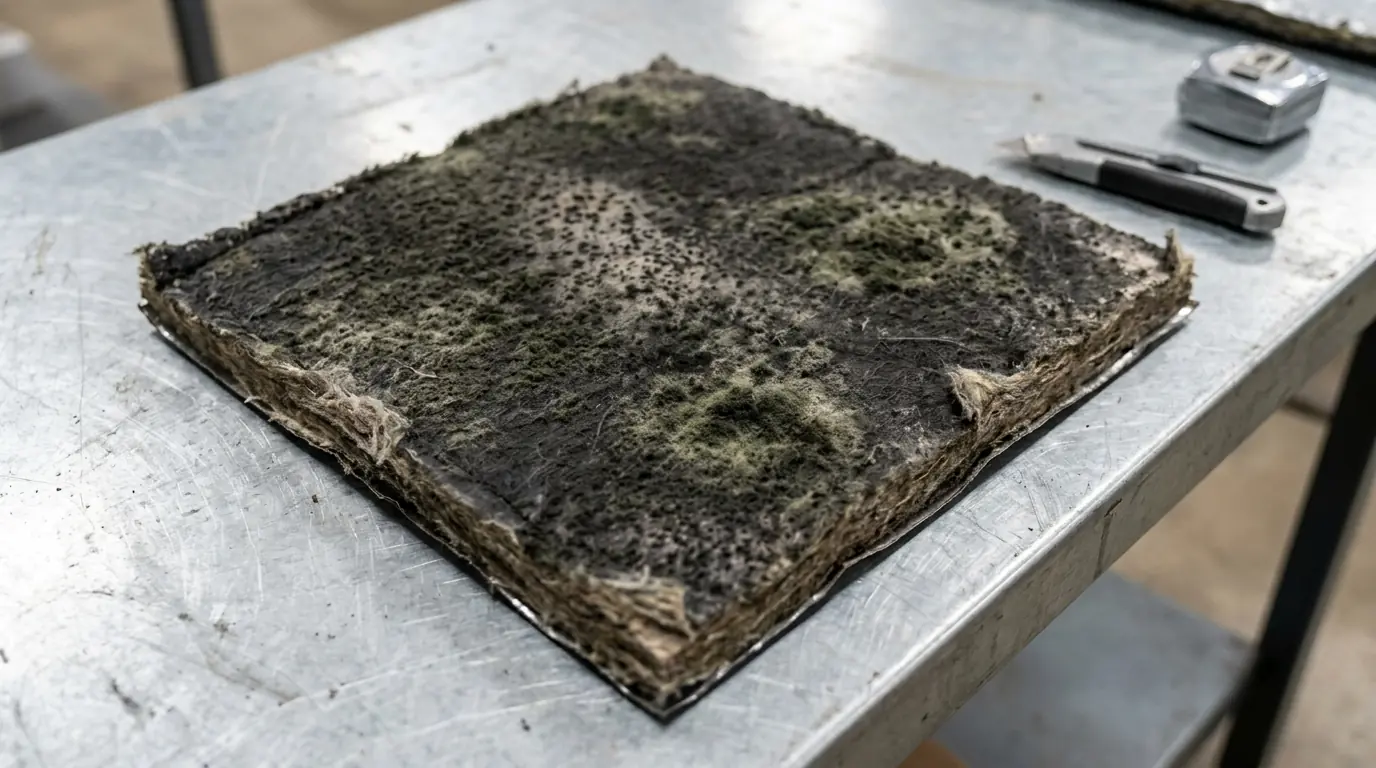
Some ducts have fiberglass insulation lining the inside. If the duct got wet from a leak or condensation, mold can grow in that liner, and it cannot be reliably cleaned out of the fibers.
We inspect the liner, and where it has growth, the affected section is removed and replaced rather than cleaned. Bare metal duct can be cleaned. The moisture source, often a leaking drain pan or condensation on an uninsulated duct, is noted for the HVAC contractor so the new liner stays dry.
What our duct cleaning includes
- Inspection of ducts and liner
- Negative pressure HEPA collection
- Brushing and vacuuming of each run
- Register and grille cleaning
- PTAC and through-wall unit cleaning
- Removal of moldy liner sections
- New filters after cleaning
Through-wall units in New York apartments
In many New York apartment buildings there are no central ducts at all. Cooling comes from window units, sleeves in the wall under the window, or PTAC units that heat and cool each room separately. After a smoke event, those units are where the smell hides, because each one has its own coil and filter full of residue. We clean them room by room as part of the job, rather than assuming a building without ducts needs no duct work.
How we clean ducts after smoke or mold
System off
It stays off until the ducts and rooms are clean.
Inspect
We check ducts, liner and units for soot or growth.
Negative pressure
A HEPA collector pulls debris out as we clean.
Brush and vacuum
Each run is cleaned from the far end back.
Clean units
Registers, grilles and PTAC units are cleaned.
New filters
Filters go in last, once everything is clean.
Signs your ducts need cleaning
Soot around registers
Soot is blowing out of the ducts.
Smell when the system starts
Residue is in the ducts or coil.
Dust after cleaning
The system is spreading it again.
Musty air from vents
Mold may be in the liner or coil.
Water at the air handler
A drain pan leak can grow mold.
Black specks on grilles
Growth or soot at the outlet.
Questions about duct cleaning
Not until the ducts and rooms are cleaned. Filters go in last.
Not reliably. Affected sections are replaced.
Yes, coils, housings and filters, room by room.
Usually, as part of a covered fire or smoke claim.
No. We clean and report what we find to your HVAC contractor.
Most apartments take a day; larger systems can take two or more.