Short answer
Board-up and tarping close a damaged building so rain, wind and intruders stay out until permanent repairs are made. Plywood goes over broken windows, doors and storefronts; heavy tarps go over roof and skylight openings. Most insurers expect you to prevent further damage, so securing the building quickly also protects your claim.
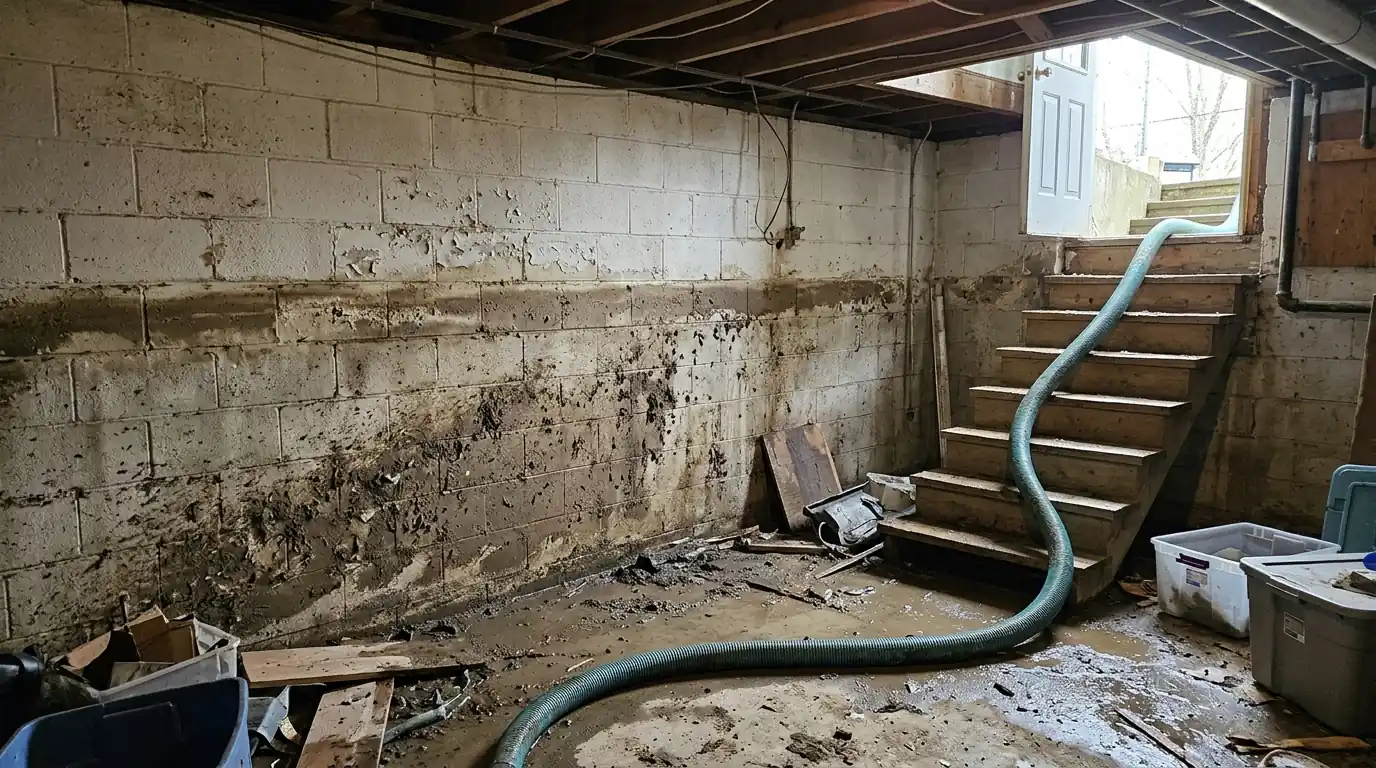
Why a building needs securing the same day
An open window or roof lets in rain with every storm and gives anyone access. Damage that happens after the original loss, because the building was left open, can be harder to claim.
We cut plywood to fit, fasten it from outside where possible so interior finishes are not damaged, and tarp roofs with the tarp run over the ridge or parapet so water sheds off instead of under it.
How a board-up call runs
Tell us the openings
Size, floor and what broke.
Cut and load
Plywood and tarps are cut to size where possible.
Clear glass
Broken glass is removed inside and out.
Board or tarp
Openings are covered and fastened to shed water.
Photograph
Before and after photos for your claim.
Check and remove
We check after rain and take it down for repairs.
Storefront and window board-up
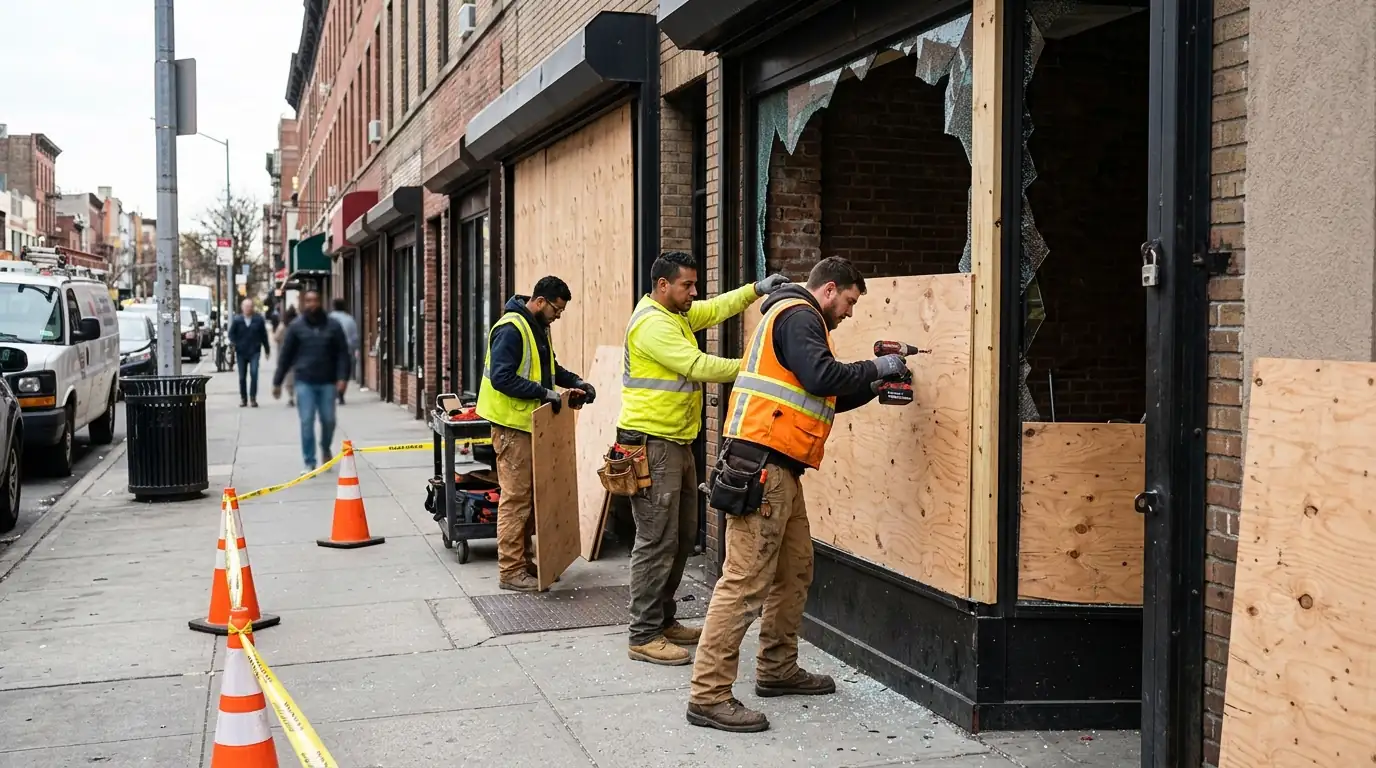
A broken storefront or window after an accident, vandalism or a storm is a security problem first. We cut plywood to the opening, fasten it through the frame and, on storefronts, leave a secured door so the business can still be reached.
Glass shards are cleaned up inside and out. Where a building sits in a landmark district, we fasten to the frame rather than the masonry wherever possible, which keeps the facade intact for the permanent repair and avoids extra patching once the boards come down.
Roof and skylight tarping
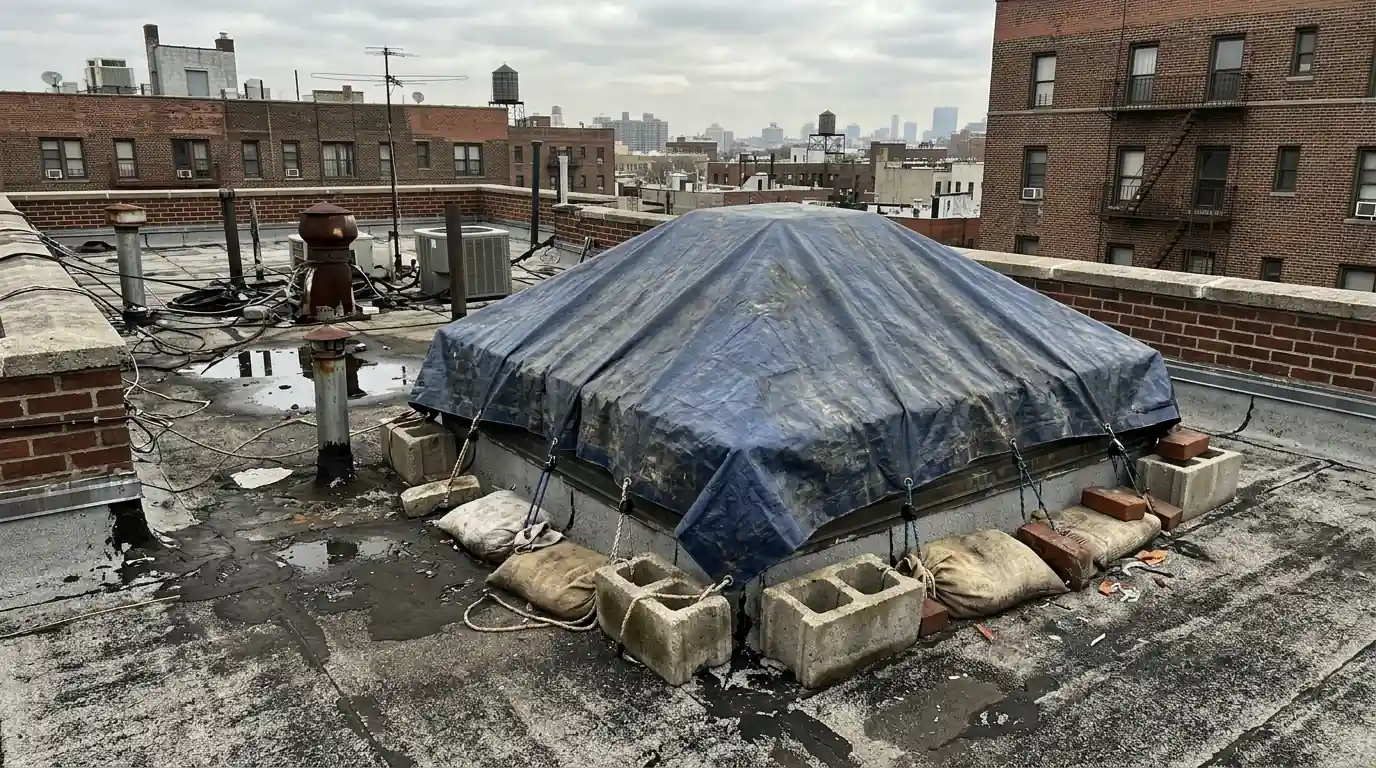
A tarp stops water only if it is fastened to shed water. We run it over the ridge or parapet, fasten it with battens rather than nails through the membrane where possible, and weigh it down against wind.
Flat roofs and skylights are common in this city, and they need a different approach from pitched roofs. We cover the opening, seal the edges and check the tarp after the next rain. The permanent roof repair is for a roofer, and we leave the tarp until they are ready.
Securing a building after a fire
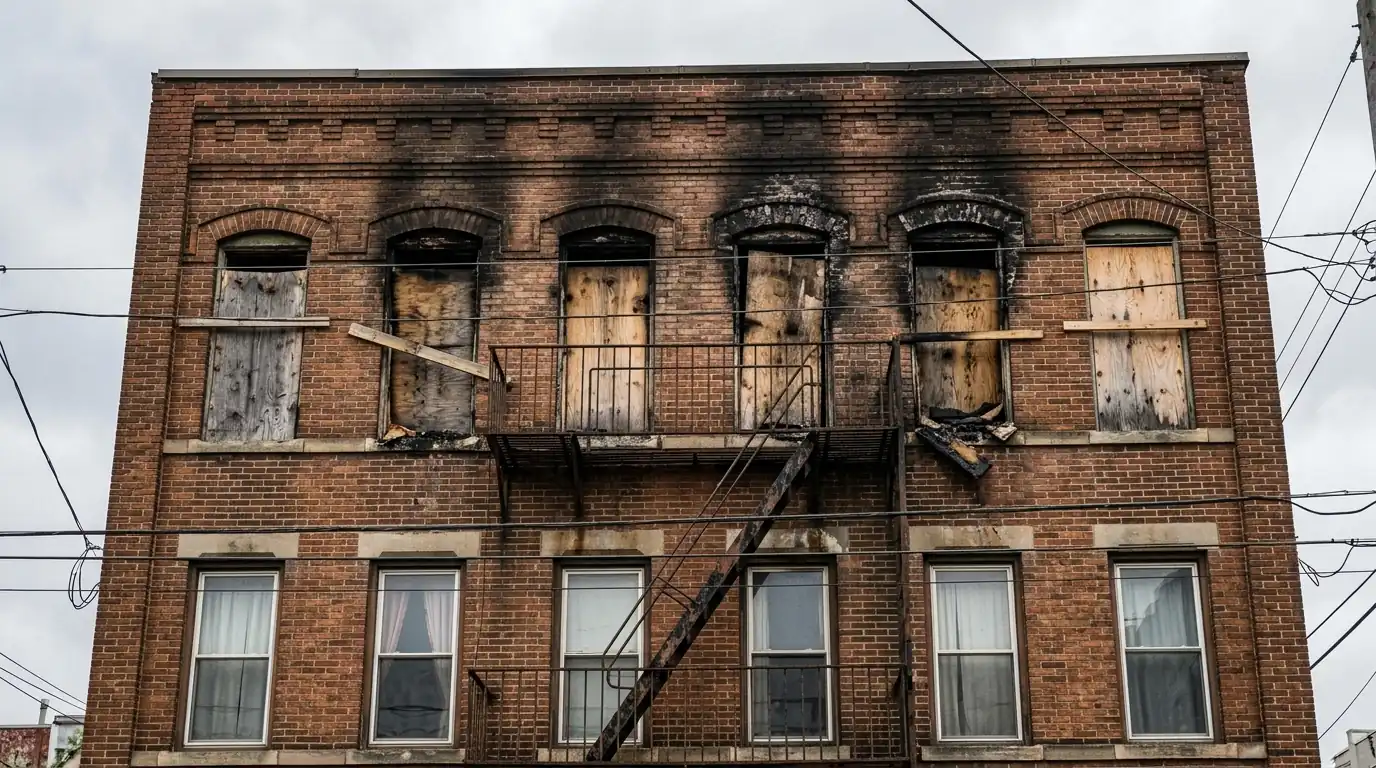
After a fire, the fire department may have broken windows and cut roof openings to vent smoke. The building is left open to weather and to anyone walking in.
We board windows and doors, tarp roof vents, and make the building secure the same day the fire department releases it. That also keeps rain from adding water damage on top of the fire and smoke damage, which is the next job we start as soon as it is closed up.
Board-up on landmark buildings
About 27 percent of lots in Manhattan are regulated by the Landmarks Preservation Commission, compared with 3.4 percent across the whole city. On those facades, cornices, brownstone and original window frames matter to the permanent repair. For emergency board-up we fasten into the window frame or use bracing from inside wherever we can, rather than drilling into stone or brick, so the building is secure now and nothing extra has to be restored later.
What a board-up visit includes
- Plywood cut to each opening
- Secured access door on storefronts
- Glass cleanup inside and outside
- Roof and skylight tarps fastened to shed water
- Fastening that avoids masonry where possible
- Before and after photos
- A return visit to remove boards
Board, tarp or both
| Opening | Usual cover |
|---|---|
| Broken window or door | Plywood fastened to the frame |
| Storefront glass | Plywood with a secured access door |
| Roof hole or vent cut | Tarp over the ridge or parapet |
| Skylight | Tarp sealed at the curb |
What decides the cost of board-up and tarping
One window differs from a whole storefront.
Upper floors and roofs need ladders or roof access.
Plywood thickness and tarp size depend on the opening.
Overnight calls may mean more crew.
Taking boards down later is a separate visit.
We do not have a sourced local range for board-up; we price it on the call from the size and number of openings.
Questions about board-up and tarping
We answer 24/7 and give you an arrival window on the call.
Usually, as part of preventing further damage after a covered loss.
We fasten to frames or brace from inside wherever we can.
Often, with a secured door left in the board-up.
We do, when the glazier or roofer is ready.
Yes, as soon as the fire department releases the building.