Short answer
Commercial water or fire damage has two clocks: the damage clock and the business clock. We stop the water or secure the building, extract and dry, and section off the affected area so the rest of the space can stay open where it is safe. Work is scheduled after hours where possible, and records are kept for property and business interruption claims.
What changes when the loss is a business
Commercial spaces are bigger, more open and more complicated than homes. Drop ceilings hide water, carpet tile spreads it, and inventory, equipment and records are all at risk.
We set drying zones with barriers so unaffected areas keep working, schedule noisy work when you are closed, and keep a daily log that supports both your property claim and any business interruption claim.
How a commercial job runs
Respond
We answer 24/7 and come with the right crew size.
Stabilize
Stop water, secure openings, cut power to wet areas.
Zone the space
Barriers separate work areas from open ones.
Extract and dry
Equipment runs, often overnight.
Clean and restore
Soot, residue and damaged finishes are handled.
Document
Daily logs for property and interruption claims.
Restaurants and commercial kitchens
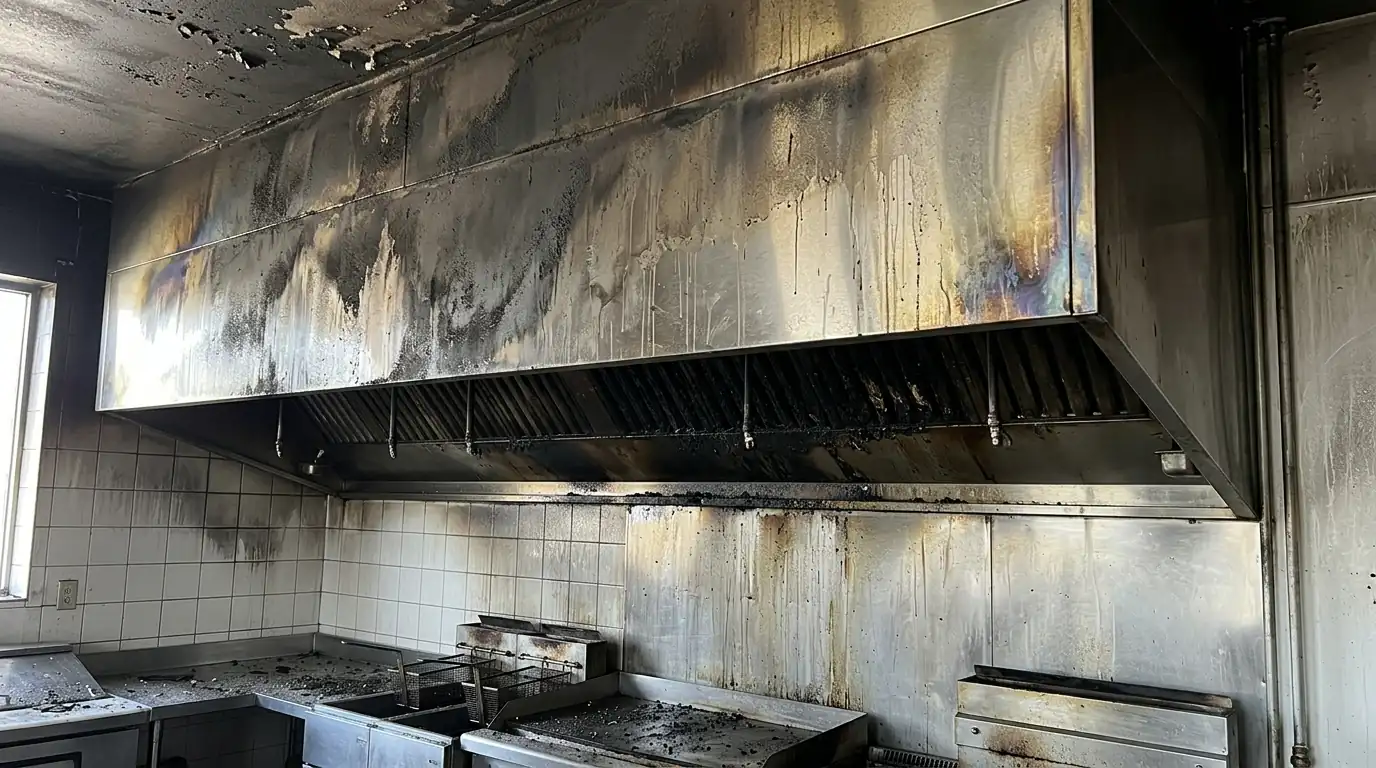
A restaurant kitchen fire or a grease backup can close the business until it is cleaned and inspected. Hoods, ducts, walls and equipment are coated with grease soot, and food areas need cleaning to a standard that satisfies the health inspector.
We degrease hoods, walls, ceilings and stainless surfaces, clean dining rooms of smoke residue, and deodorize. Hood and duct cleaning by a certified hood cleaner and equipment service are coordinated so the kitchen can reopen as a whole, not in pieces.
Offices and retail spaces
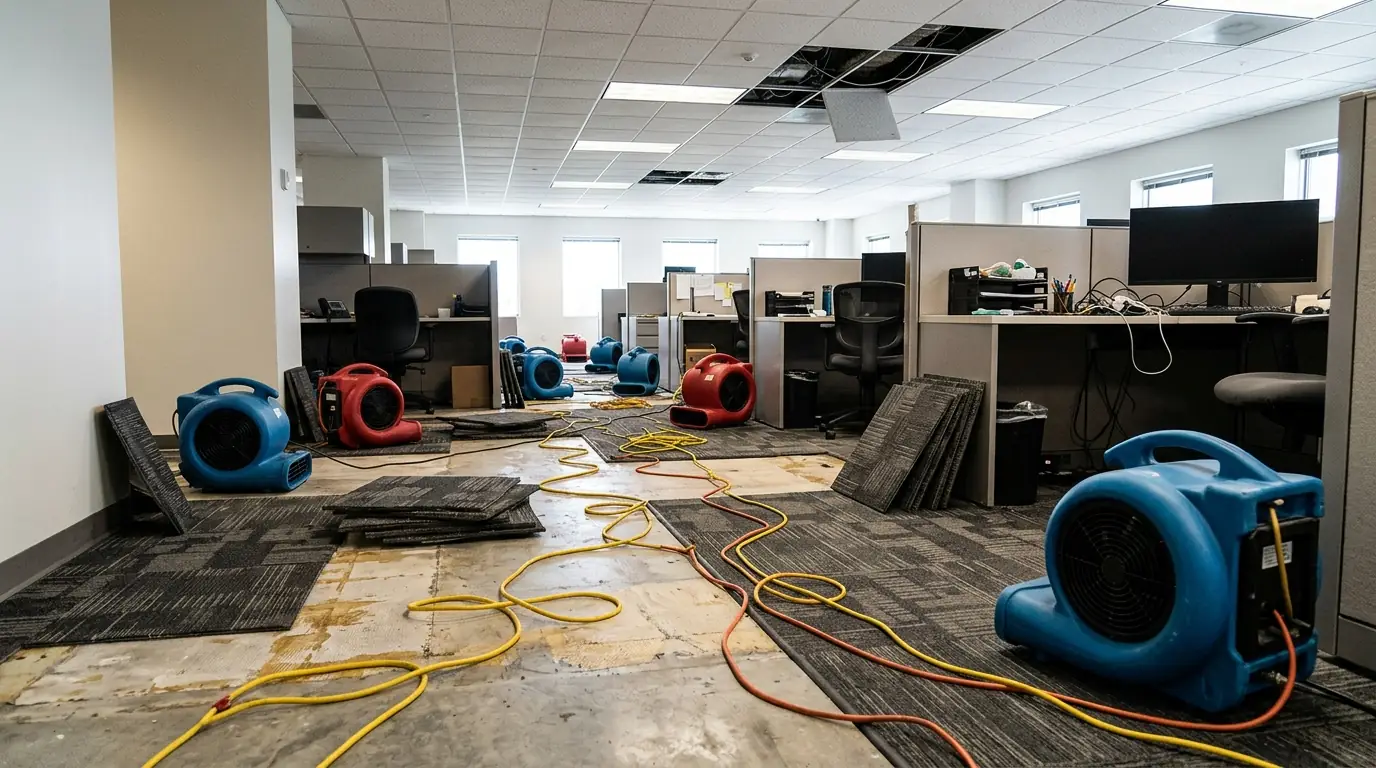
In offices, water spreads under carpet tile and through drop ceilings, and damages computers, files and furniture. In shops, stock is the biggest exposure, and water or smoke can ruin it in hours.
We lift carpet tile rather than removing it where possible, replace wet ceiling tile, move stock and equipment to dry zones, and dry the structure. Wet records go to freezing, and stock is photographed and counted before anything is thrown out. You get a list your insurer can work with.
After-hours work to limit downtime
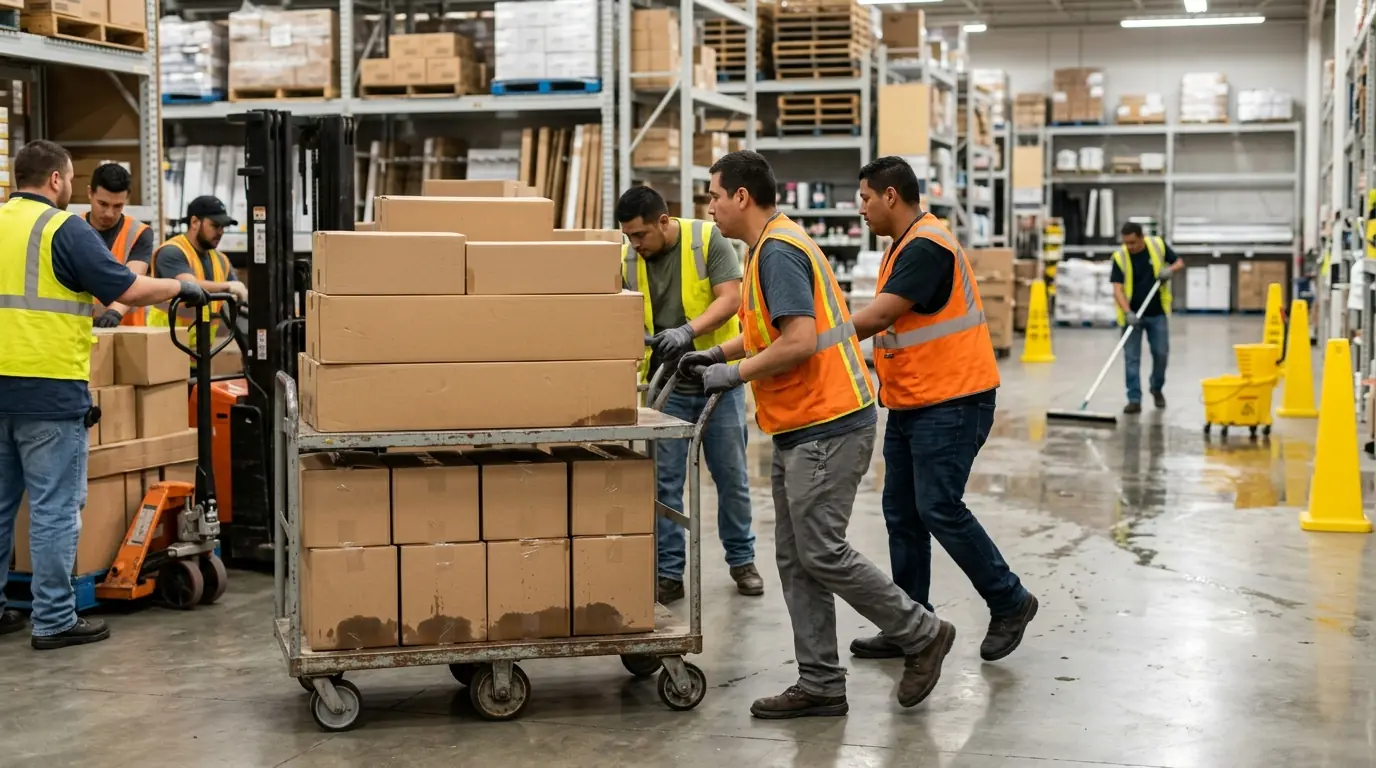
Every day closed is lost revenue. Much of the restoration work can be done at night and on weekends so the business keeps running in the parts of the space that are safe.
We plan the work in phases, set containment so customers and staff are separated from the work, and move noisy equipment into place after closing. Staff are told each day which areas are open. Business interruption claims depend on records, so we keep dated logs of what was closed and for how long.
How long a commercial job takes
Stabilizing and extraction happen on the first night. Drying usually takes three to seven days, often while the business keeps operating.
Rebuild and reopening depend on inspections and trades, and we plan them in phases.
Commercial losses in dense districts
When a 127-year-old water main broke under 40th Street and Seventh Avenue in August 2023, it flooded streets around Times Square and the subway station below, putting ground-floor businesses across that part of Midtown at risk in minutes. During Ida, businesses in Mamaroneck took water more than 10 feet deep. In losses like these, getting drying equipment and a crew into a basement storeroom on the first night is what decides how much stock is saved.
What commercial clients get from us
- 24/7 response with crews sized to the space
- Drying zones so the business can stay open
- After-hours and weekend work
- Stock and equipment moved and documented
- Coordination with hood cleaners and service trades
- Daily logs for insurance
- A single point of contact
What drives the cost of commercial restoration
Commercial spaces are larger and open.
Drop ceilings and ductwork add removal.
Handling and cleaning inventory adds labor.
Night and weekend work affects pricing.
Phasing to keep open adds planning, not always cost.
There is no single sourced range for commercial jobs; we price from a walk-through and share the scope with your adjuster.
Questions about commercial restoration
Often, in zoned areas away from the work.
Yes. We answer 24/7 and schedule loud work after hours.
We clean to a standard that supports reopening; the inspection is yours.
It is moved, counted and photographed before anything is discarded.
Yes, with dated logs of what was closed and for how long.
Yes, for common areas and building systems.