Short answer
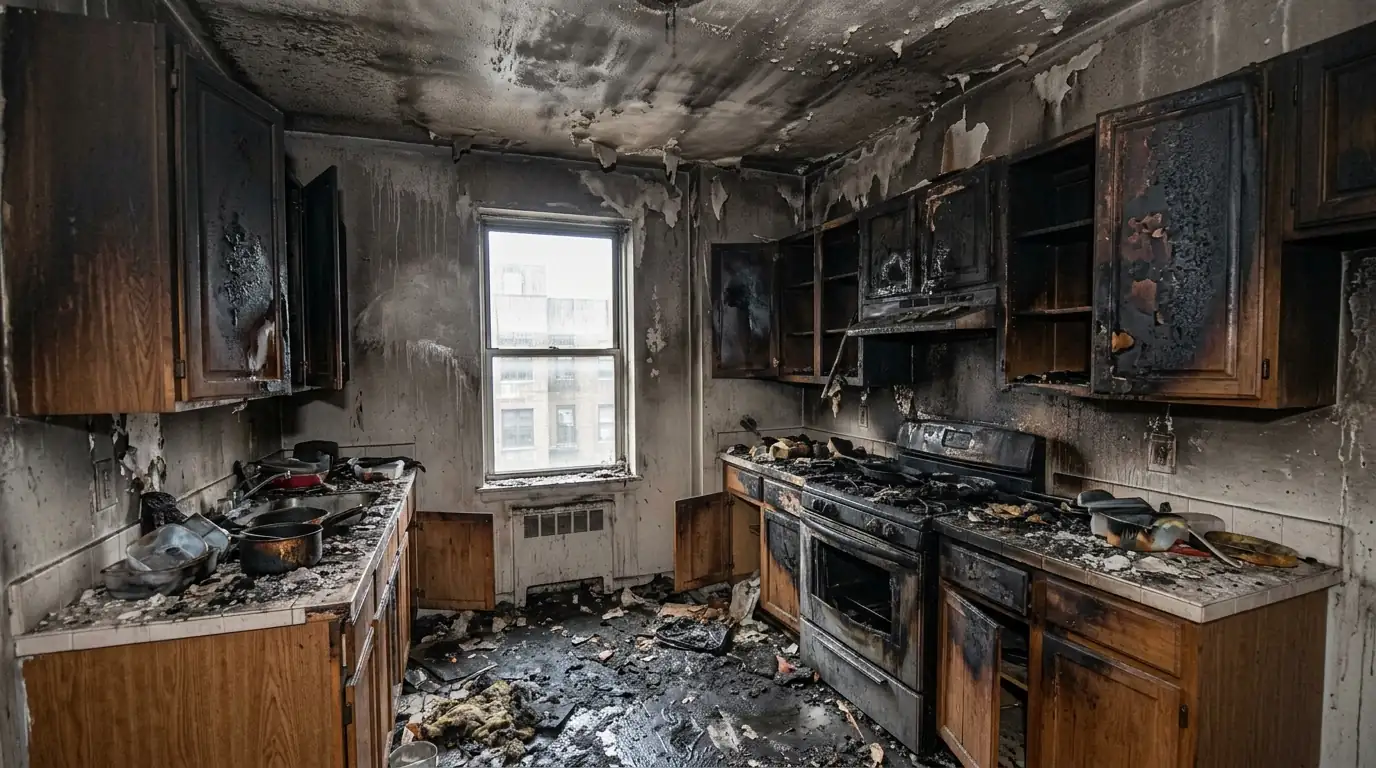
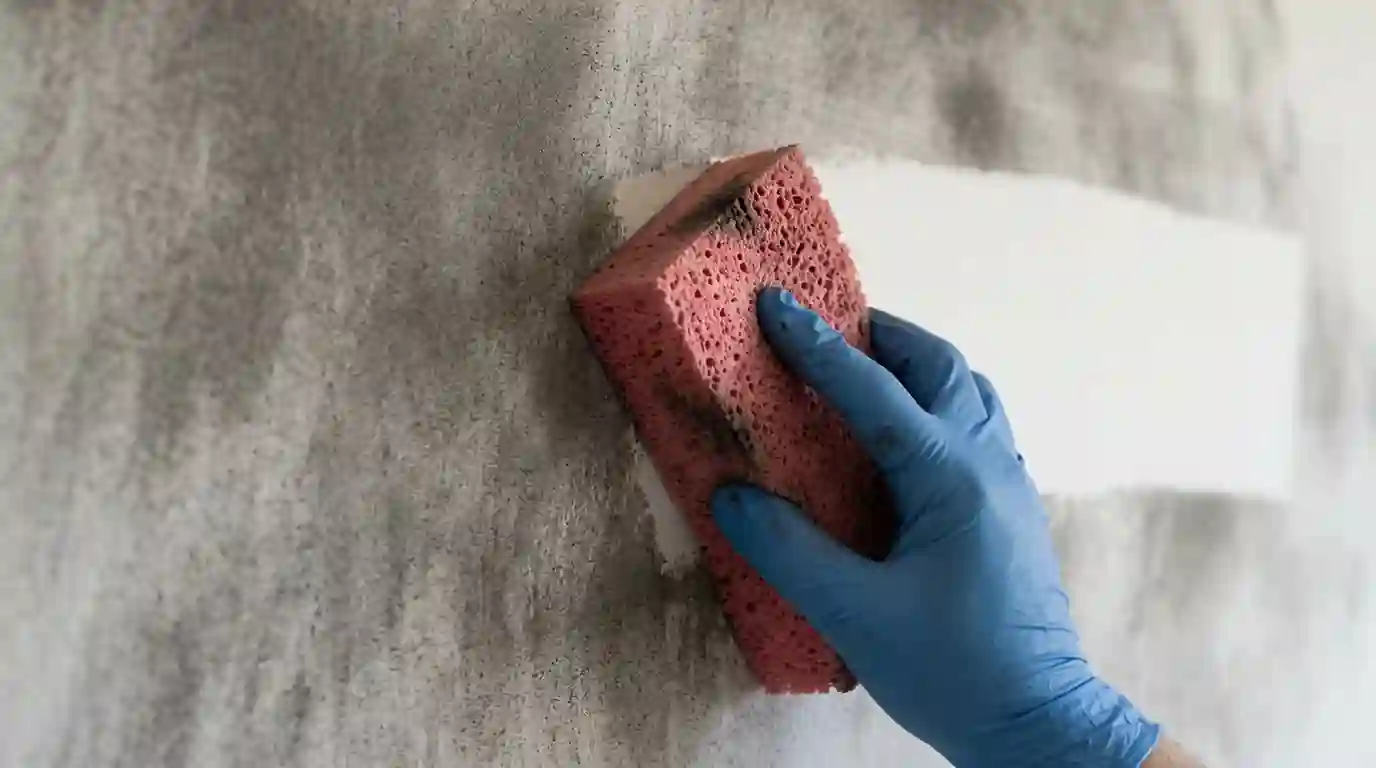
Soot cleanup starts with identifying the type. Dry soot from fast, hot fires is powdery and comes off with dry chemical sponges and HEPA vacuums. Wet, sticky soot from smoldering fires and protein residue from burnt food need wet cleaning with degreasers. Wiping soot with a damp rag first usually smears it into the surface for good.
Why soot needs the right method first time
Soot is fine, oily and acidic. The wrong first step, like a wet rag on dry soot, pushes it into paint, grout and fabric where it becomes a permanent stain. Left too long, it etches metal and discolors plastics.
We test surfaces, then work from the top of the room down: ceilings, walls, fixtures, floors. Surfaces that cannot be cleaned are sealed with a stain-blocking primer and repainted.
How we clean smoke and soot
Test surfaces
We identify soot type and test cleaning methods.
Protect
Floors and unaffected rooms are covered.
HEPA vacuum
Loose soot is removed without smearing.
Clean top down
Ceilings, walls, fixtures and floors in that order.
Seal what stays stained
Stain-blocking primer goes on before paint.
Check for odor
Remaining smell is treated separately.
Dry soot on walls and ceilings
Fast, hot fires that burn paper and wood leave dry, powdery soot. It looks alarming but is the easiest to remove if nobody touches it first.
We HEPA vacuum loose soot, then use dry chemical sponges that lift it without water. Most walls and ceilings clean up well this way, and only stubborn areas need a wet clean or primer. Across the market, soot removal typically runs $2,000 to $6,000, depending on how many rooms it reached and how many surfaces need sealing afterward.
Wet protein residue
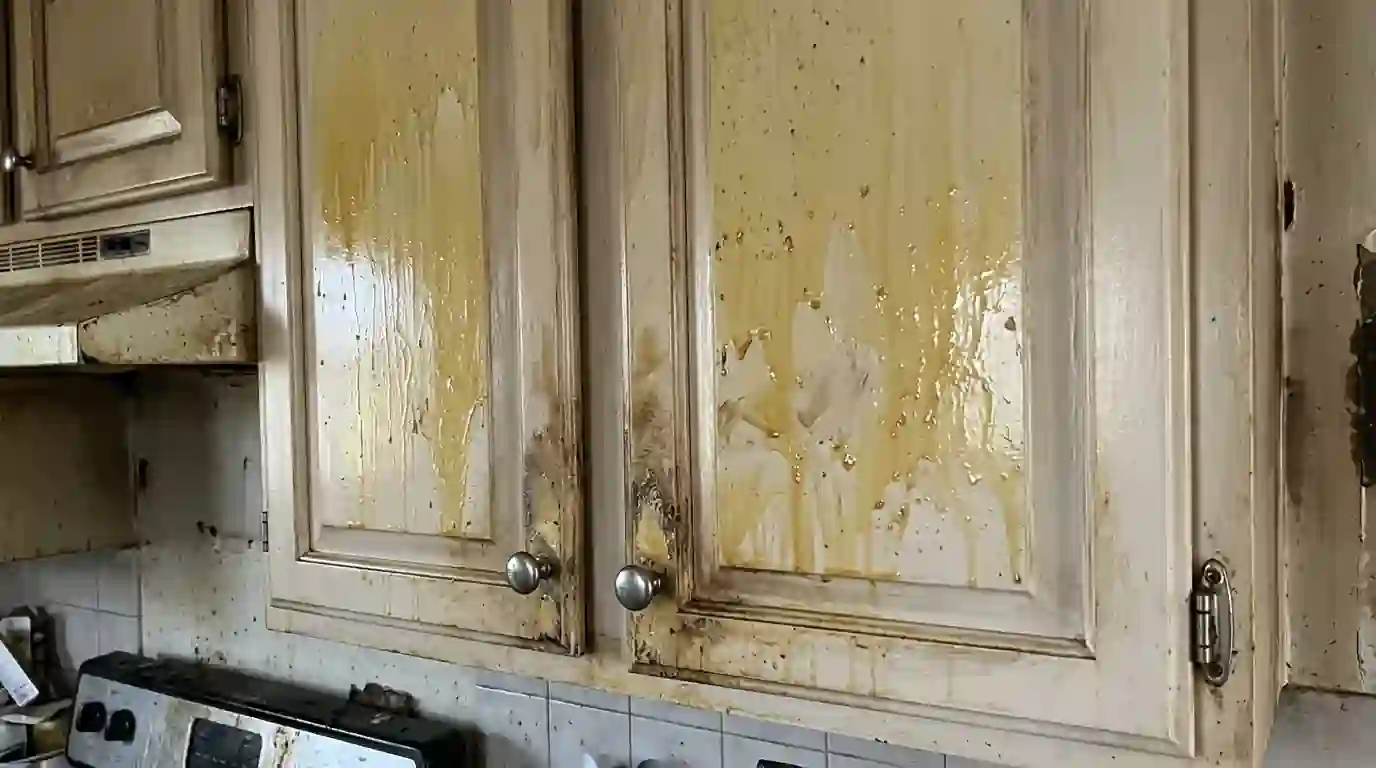
Burnt food leaves a nearly invisible, sticky yellow-brown film called protein residue, and smoldering fires leave wet, smeary soot. Both smell strongly and cling to cabinets, walls and ceilings.
These need wet cleaning with degreasing agents, followed by a rinse. Protein residue is easy to miss because it can be almost clear, so we check every surface by touch and light, and we clean inside cabinets and closets where the smell hides. Light fixtures and vent covers get the same treatment, since they collect it too.
Smoke from a neighboring unit
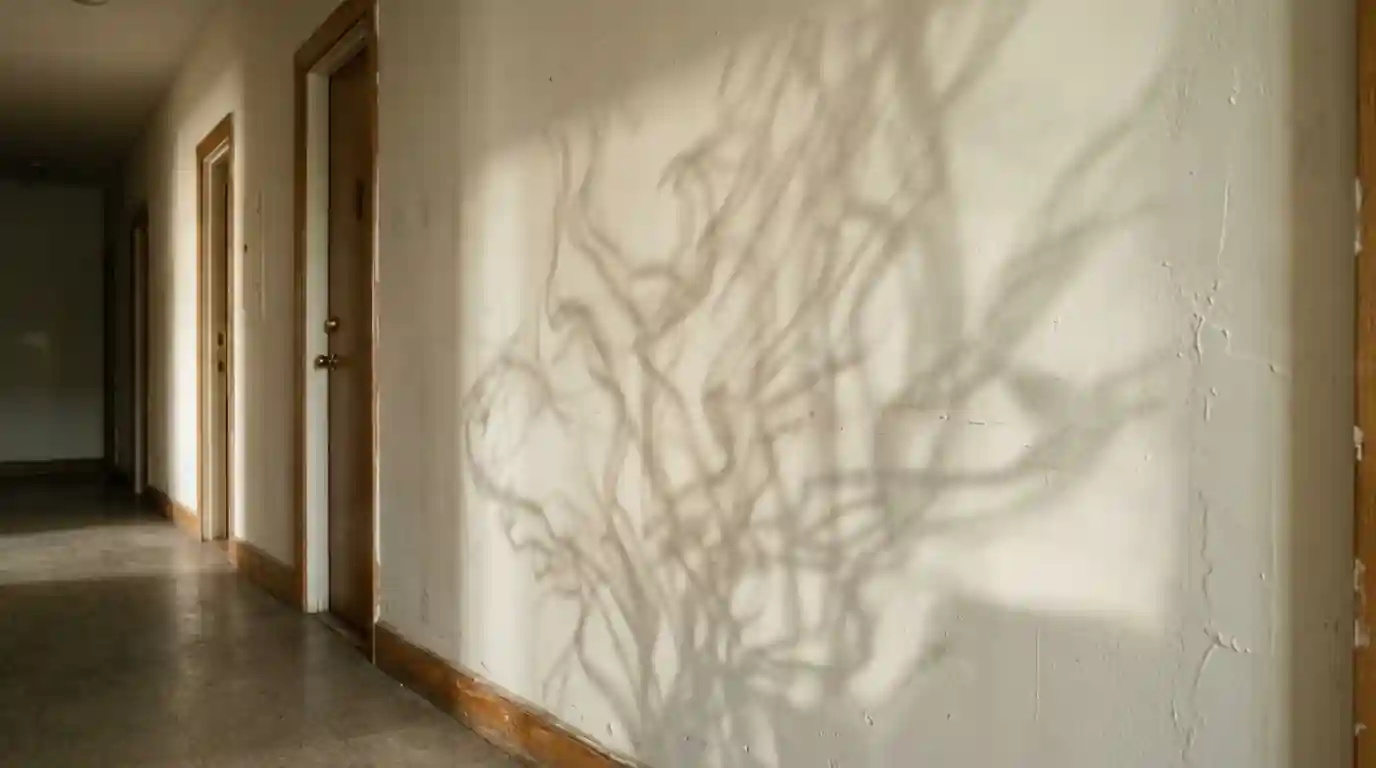
In an apartment building, smoke from a fire next door or below gets in through gaps around pipes, outlets, door frames and ventilation. You may find gray lines along walls, around doors and on the ceiling without any fire in your unit.
We clean your unit separately from the fire unit, with its own record. Your own renters or condo policy often covers smoke damage from a neighbor’s fire, and the building’s policy may cover shared areas like the hallway outside your door.
Smoke that travels through a building
After a 2025 fire in a six-story apartment building on Marion Avenue in Fordham, a charred e-bike was found in a hallway near where it started. Fires that begin in a hallway or stairwell send smoke into every unit that opens onto it, through door gaps and mail slots, and that is typical of the Bronx walk-ups and elevator buildings we work in. Neighbors who never saw flames often need smoke and soot cleaning too.
What not to do with soot, and what you can do
Safe first steps
- Keep windows closed so soot does not blow around
- Change or cover the HVAC filter
- Put clean sheets over furniture
- Photograph rooms before anything is moved
Leave to us
- Wiping or washing soot off walls
- Cleaning upholstery and curtains
- Cleaning electronics
- Sealing and repainting stained surfaces
Which cleaning method for which soot
| Soot type | Source | Method |
|---|---|---|
| Dry soot | Paper and wood fires | HEPA vacuum and dry sponge |
| Wet soot | Smoldering plastics | Degreaser wet clean |
| Protein residue | Burnt food | Degreaser and rinse |
| Oily soot | Oil burner puff-back | Solvent clean, then wash |
What drives the cost of smoke and soot cleanup
Typical US range for soot removal, per Angi. Source, 2026. A planning range, not a quote.
Protein and wet soot take longer than dry soot.
Smoke in closets and cabinets adds work.
Textured ceilings and brick are slower to clean.
Surfaces that will not clean are primed and painted.
Belongings are cleaned separately.
Questions about smoke and soot
Not as a first step. Water smears dry soot into the paint. Dry cleaning comes first.
It is fine particulate and can irritate lungs. Keep exposure low and let us clean it.
Smoke follows air currents and leaves shadow lines along studs, doors and ceilings.
Often yes, after cleaning, with a stain-blocking primer first.
Often by your own renters or condo policy. Check with your insurer.
Yes, through contents cleaning.