Short answer
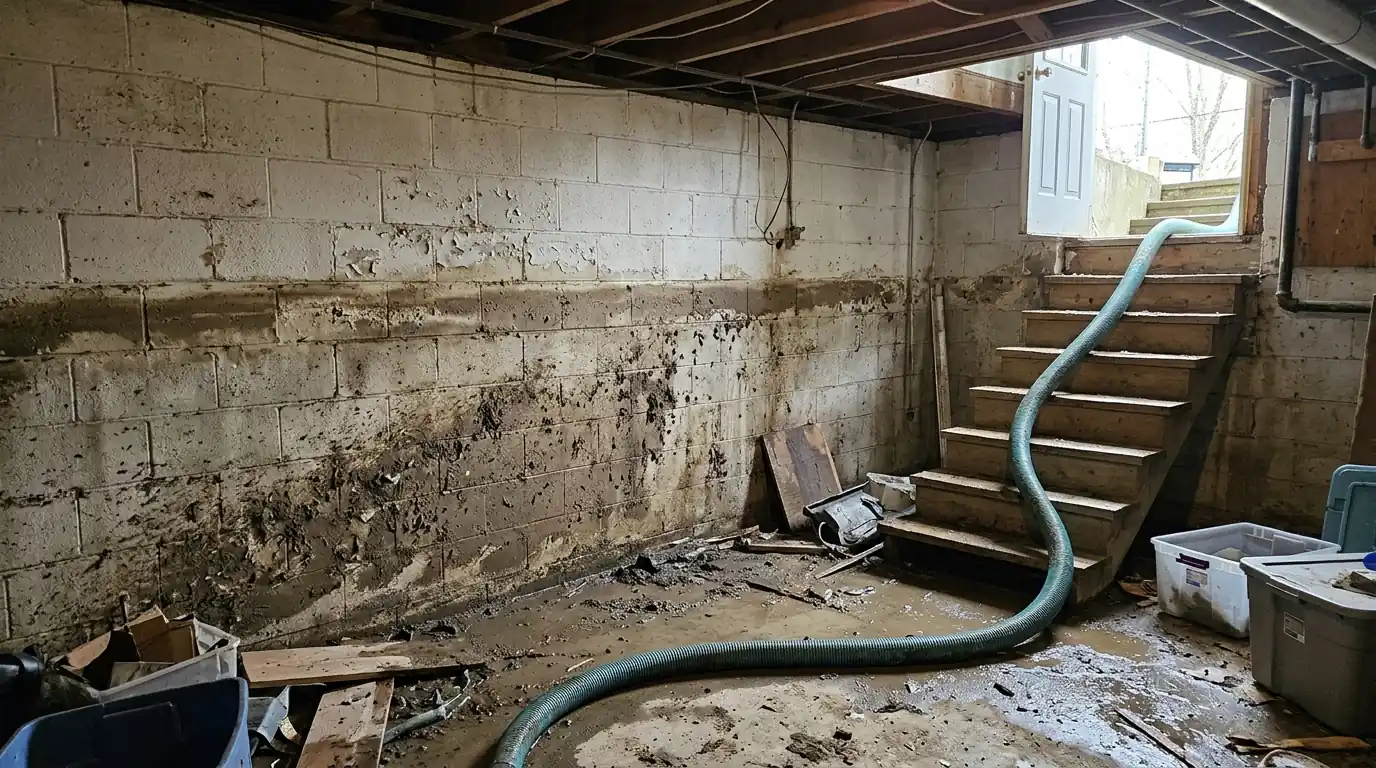
A flooded basement should be pumped out only after power to it is off and the water has stopped rising. Most basement water in this city arrives with sewage from overloaded drains, so porous materials are removed and surfaces disinfected. Concrete floors and foundation walls then need several days of drying before anything is put back.
What basement flooding does below grade
Basements sit where water collects: under the street, next to foundation walls and at the lowest drain in the building. When a storm overloads the sewer, water comes up through floor drains. When groundwater is high, it pushes through walls and the slab.
We pump out, remove what cannot be saved, clean and disinfect, then dry concrete and framing with dehumidifiers. Slabs take the longest, so we test them before any new flooring or finish goes down.
Signs your basement is taking water
Water at a floor drain after rain
The sewer is backing up into the building.
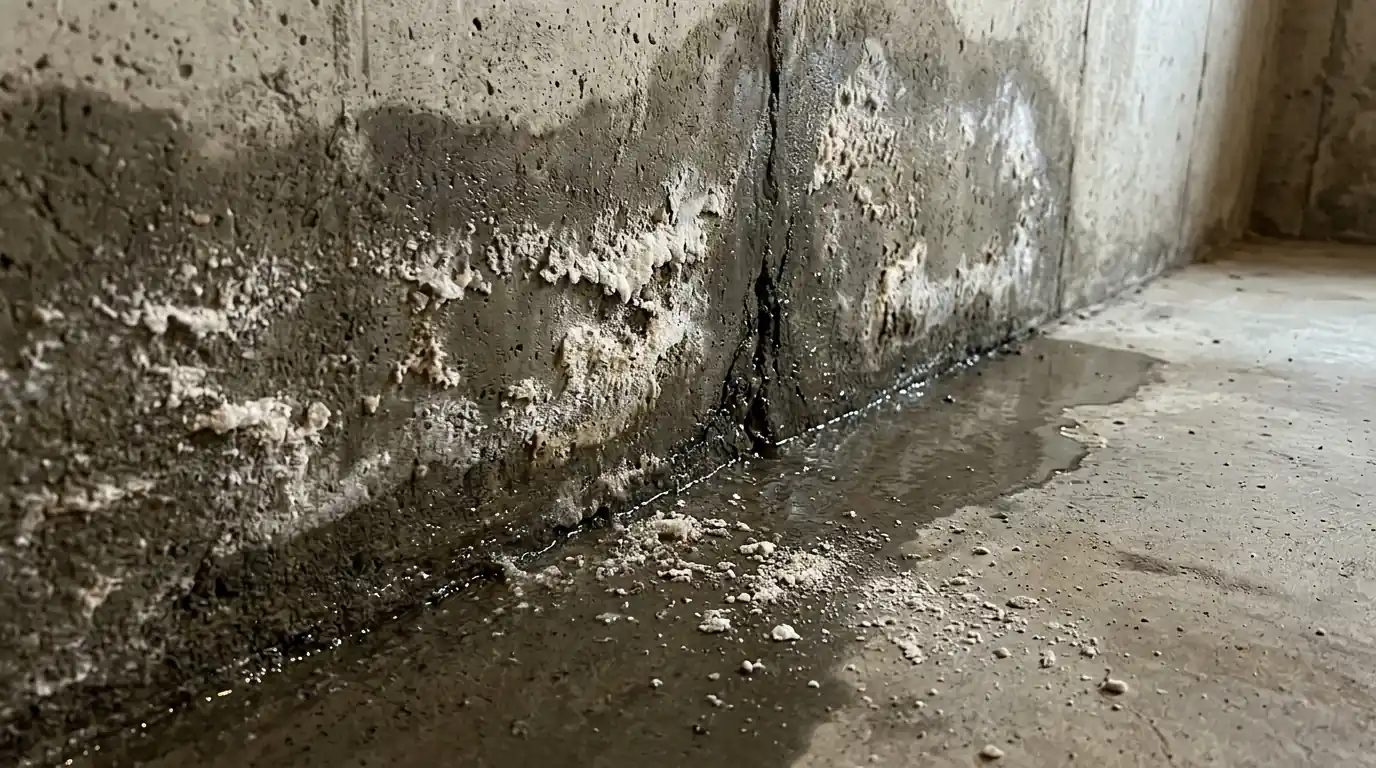
Damp line at the wall base
Water is seeping at the wall and floor joint.
White powder on masonry
Water is moving through the wall.
Musty smell below grade
Something is staying wet.
Peeling paint on the slab
Moisture is rising through the concrete.
Rust at the boiler base
Water has pooled in the equipment room.
How we clean up a flooded basement
Make it safe
Water has stopped rising and power to the basement is off.
Pump out
Submersible pumps and extractors remove the water.
Remove soaked materials
Drywall, insulation, carpet and ruined contents come out.
Clean and disinfect
Floors, walls and framing are washed and treated.
Dry
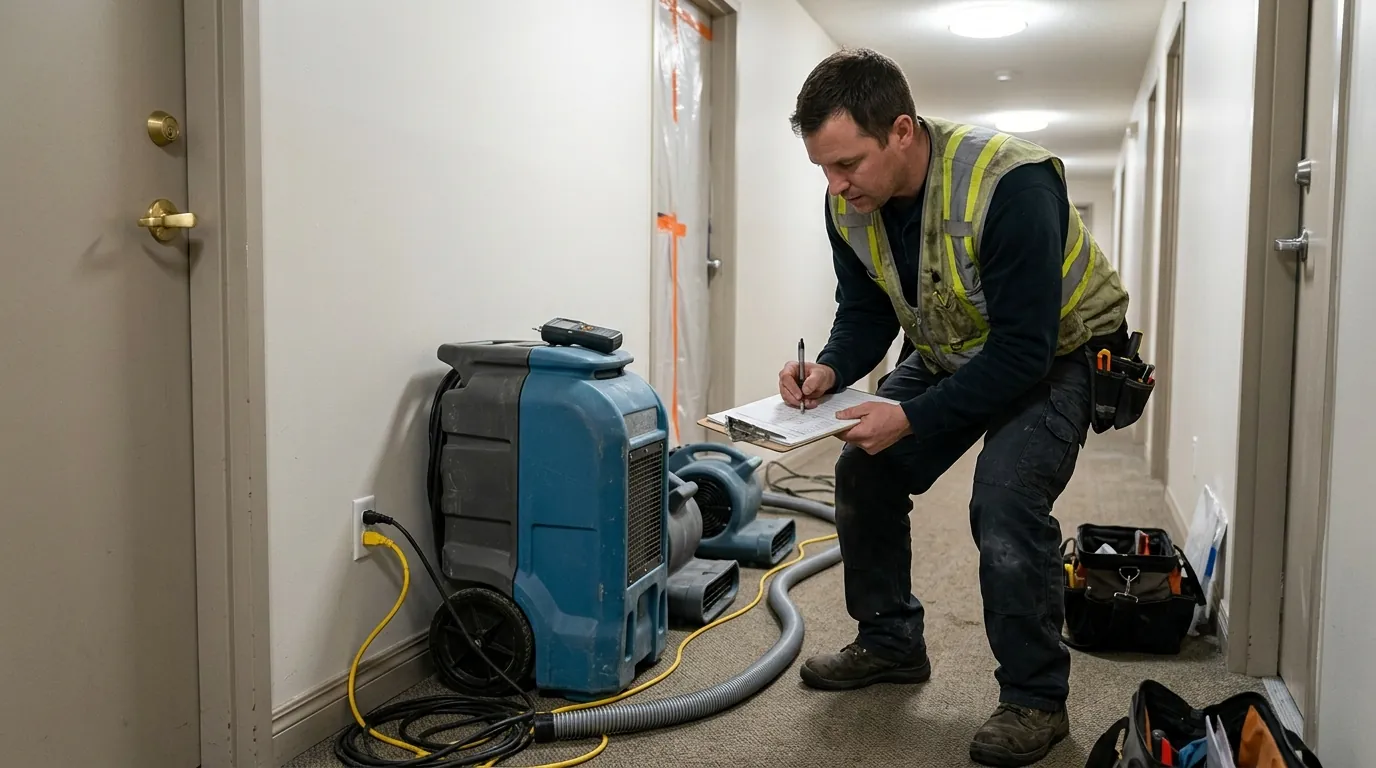
Dehumidifiers and air movers dry the slab and walls.
Hand back
Final readings and a record of where water entered.
Basement apartments
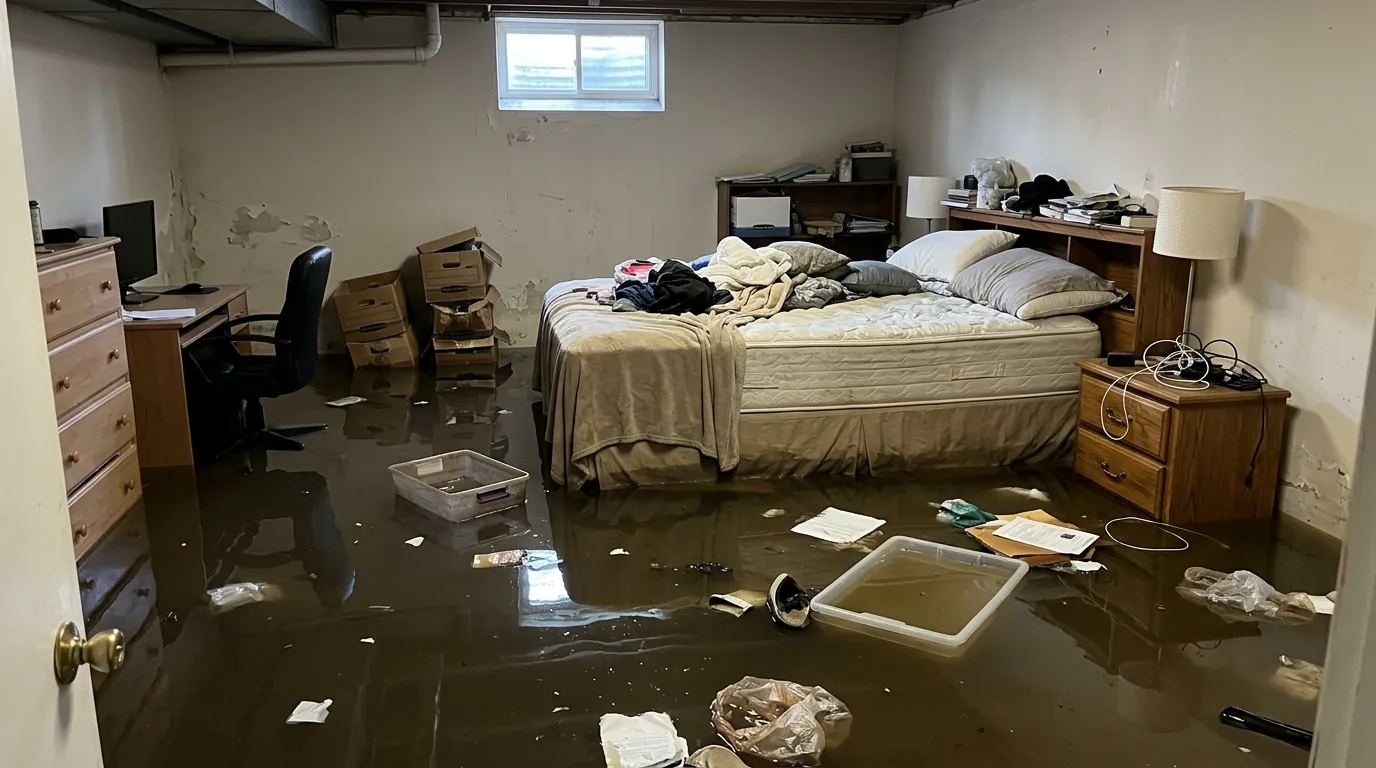
A finished basement unit has drywall, flooring, furniture and wiring sitting at the lowest point of the building. When water comes in fast, it can rise quickly and the only exit may be the stairs.
Safety comes first: nobody goes back in until the water has stopped and power is off. Then we pump out, remove wet drywall and flooring, clean and disinfect, and dry the unit. Tenants’ belongings are photographed and listed for their renters policy, and the building gets a separate record of the structural damage for its own claim.
Seepage through foundation walls
Seepage is slower. Water pushes through cracks, tie holes or the joint where the wall meets the floor during heavy or long rain, and the basement is damp rather than flooded.
We dry the space and remove anything that has started to rot or grow mold. The long-term fix is outside our work, whether that is crack injection, drainage or waterproofing, but we show you on the moisture map where the water is getting in so the right contractor can fix it.
Boiler room and utility flooding
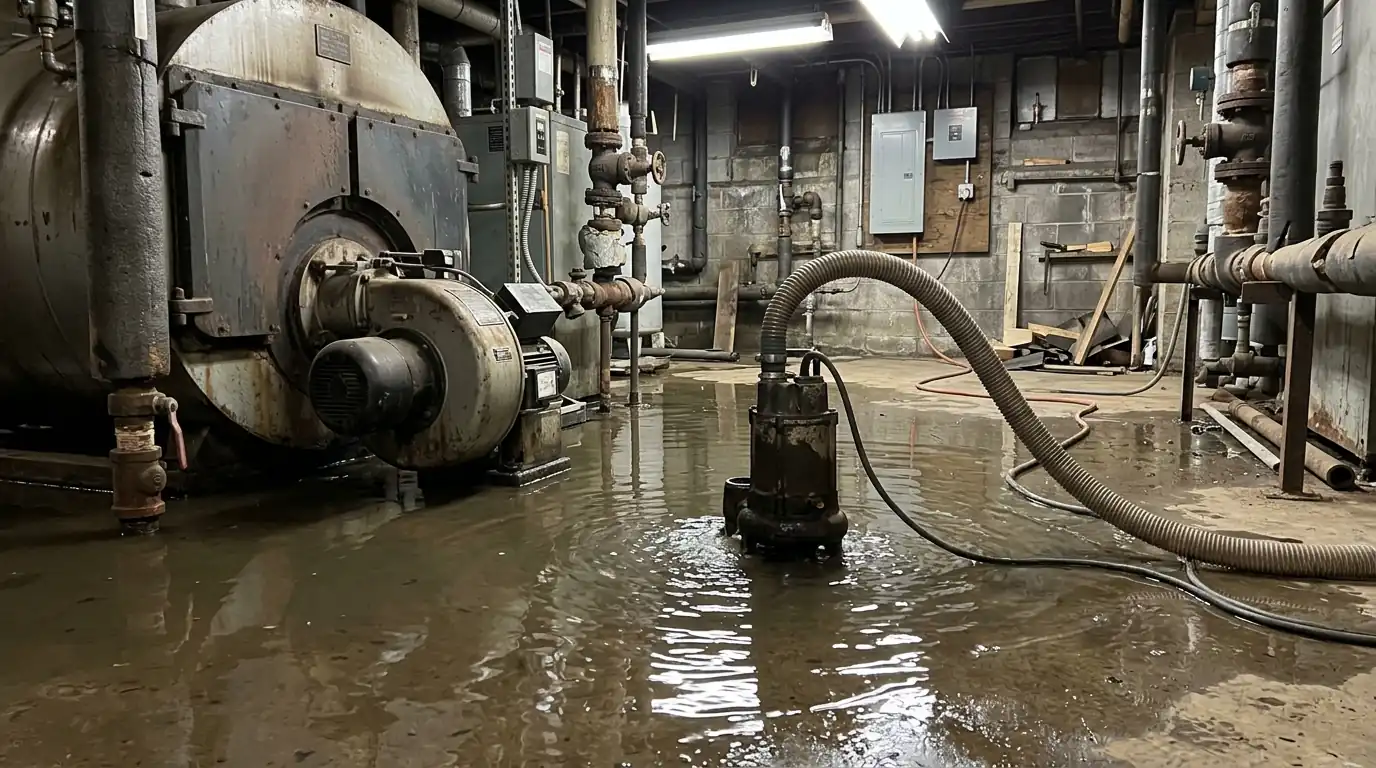
Boilers, water heaters, electrical panels and meters are usually in the basement. Flooding them can mean no heat and no hot water for the whole building until they are checked.
We pump the room out first so the heating contractor, electrician and utility can get to their equipment, then clean and dry the room around them. The equipment itself is inspected and repaired by those trades, not by us. Until heat is back, we can bring in temporary drying heat for the rooms we are working in and keep the building informed of progress each day.
Why basement flooding is a life-safety issue here
Ida killed at least 13 people in New York City in 2021, and 11 of them were in basement apartments that filled with water in minutes. Most of those deaths were in Queens, in Woodside, Hollis, Flushing and Jamaica. We keep that in mind on every basement call. If water is still coming in, the first advice is to get out and call 911, and our crew goes in only once the water has stopped and the power is off.
Basement filling up?
If water is rising in a living space, get out and call 911 first. Once it has stopped, call us.What to do yourself, and what not to
Safe to do yourself
- Get out and call 911 if water is rising
- Stay out until power to the basement is off
- Move belongings upstairs once it is safe
- Photograph the water line and damage
Leave to a crew
- Pumping out deep water
- Handling sewage-contaminated materials
- Drying concrete slabs and walls
- Coordinating with the boiler and electrical trades
What affects the cost of basement flood cleanup
Typical US range for water damage restoration; basement jobs with sewage sit higher. Source, 2026. A planning range, not a quote.
Drywall, flooring and built-ins add removal and rebuild.
Sewage or storm water means disinfection.
Deeper water means higher flood cuts and more contents lost.
Boiler and electrical rooms need coordination with other trades.
Concrete keeps equipment running longer.
Questions about basement flooding
When the water has stopped rising and power to the basement is off. Never walk into water near live outlets.
Flood water from outside usually needs flood insurance. Sewer backups need a sewer backup endorsement.
Shallow clean water, carefully, yes. Deep water or sewage needs a crew.
Usually several days after pump-out, longer for thick slabs.
The heating contractor inspects it. We pump the room out so they can.
We show you where the water came in. Drainage and backwater valves are the usual fixes.