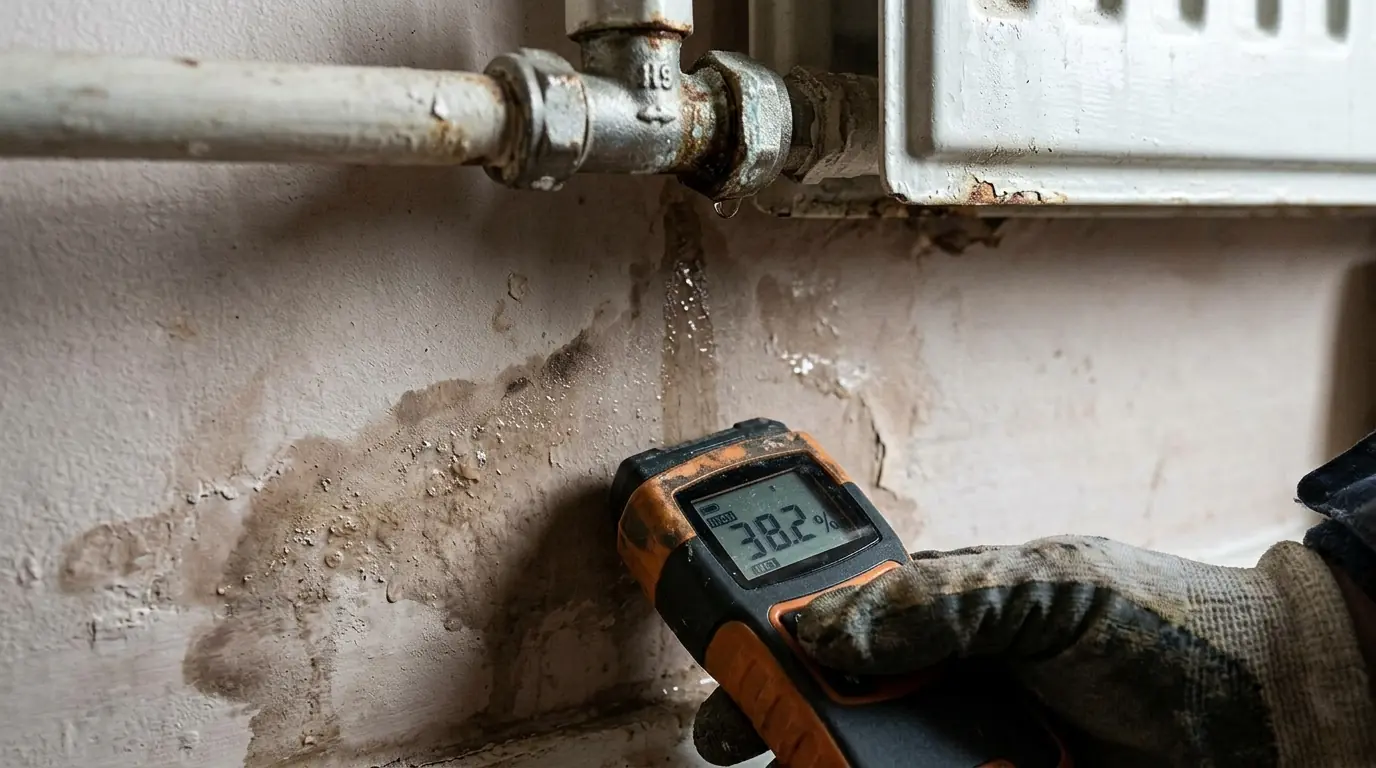
Short answer
When a pipe bursts, shut the apartment or fixture valve first, or have the super close the riser, then call for extraction. Water from a burst pipe is clean at the start, so fast work usually saves most drywall, carpet and flooring. Waiting more than a day or two turns that same loss into tear-out and possible mold.
What a burst pipe does inside a wall
Pressurized water does not drip. It sprays into the cavity, soaks insulation, runs down the inside face of the drywall and pools on the floor plate, and in a multi-story building it keeps going to the ceiling below. By the time a stain shows, the wall has often been wet for hours.
We open the wall where the break is so the plumber can reach it, extract the floor, then dry the cavity and the rooms around it. Repairs to the pipe itself are plumbing work; everything the water touched is ours.
Signs a pipe has burst or is leaking inside a wall
Sound of running water
You hear water with every fixture off.
No water after a freeze
A frozen line has stopped flow and may split when it thaws.
Wet spot low on a wall
Water pools at the bottom plate before it shows higher up.
Stain on the ceiling below
Your neighbor sees it before you do.
Pressure drops at a faucet
Water is leaving the line somewhere else.
Water meter still spinning
The meter moves with everything turned off.
From the burst to the finished wall
Shut the water
Close the fixture or apartment valve, or the super closes the riser.
Open for the plumber
We cut a clean opening at the break so the pipe can be repaired.
Extract
Standing water comes off floors and out of carpet and pad.
Dry the cavity
Air goes into the wall through the opening and small vent holes.
Check readings daily
Walls, floors and the ceiling below are measured until dry.
Close it up
Drywall or plaster, trim and paint are repaired to match.
Frozen pipe bursts
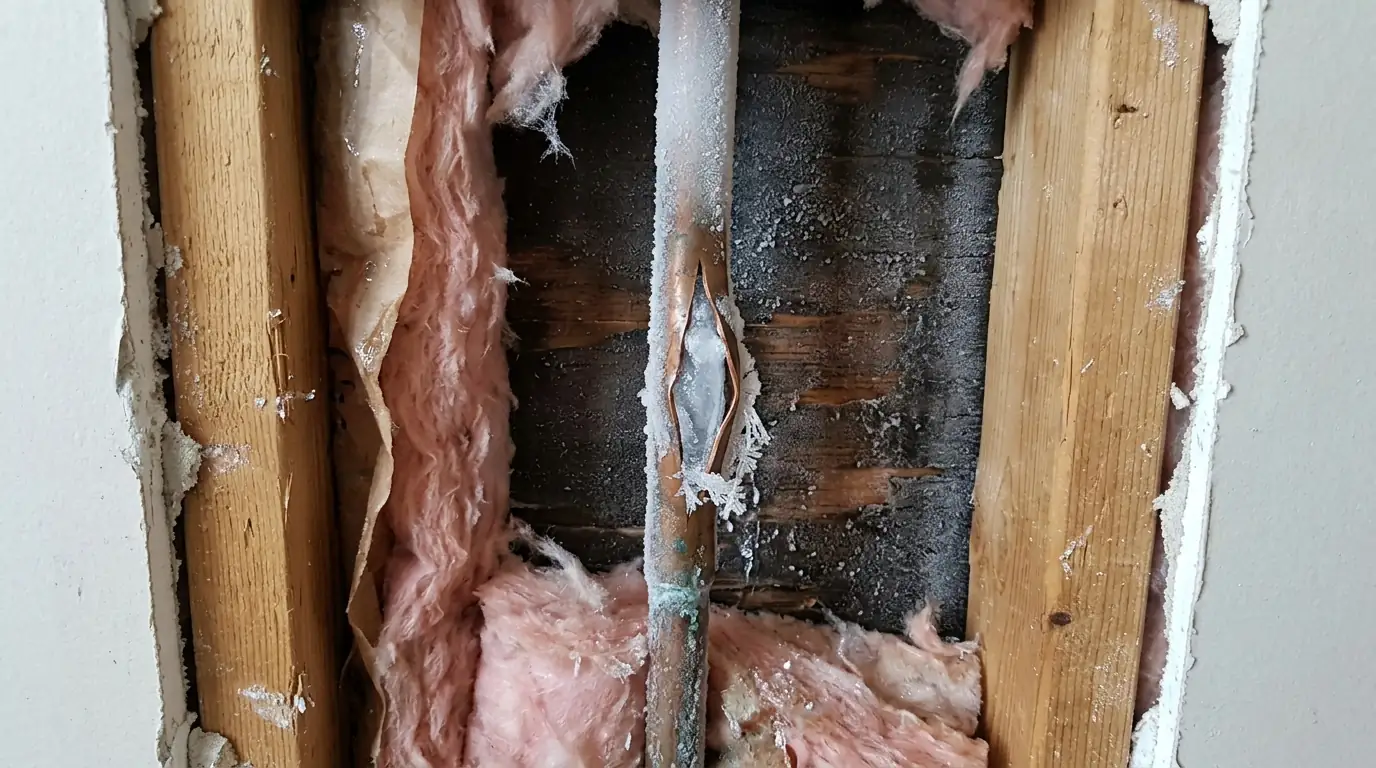
Pipes that run along exterior walls, through unheated vestibules or near a window left open can freeze during a cold snap. Ice expands inside the line and splits it, and the leak often starts only when the pipe thaws.
That delay matters. People find the water hours later, after the heat comes back. We extract, open the wall enough to dry the cavity and check for more splits along the same run, because a freeze rarely cracks just one spot.
Pinhole leaks in copper lines
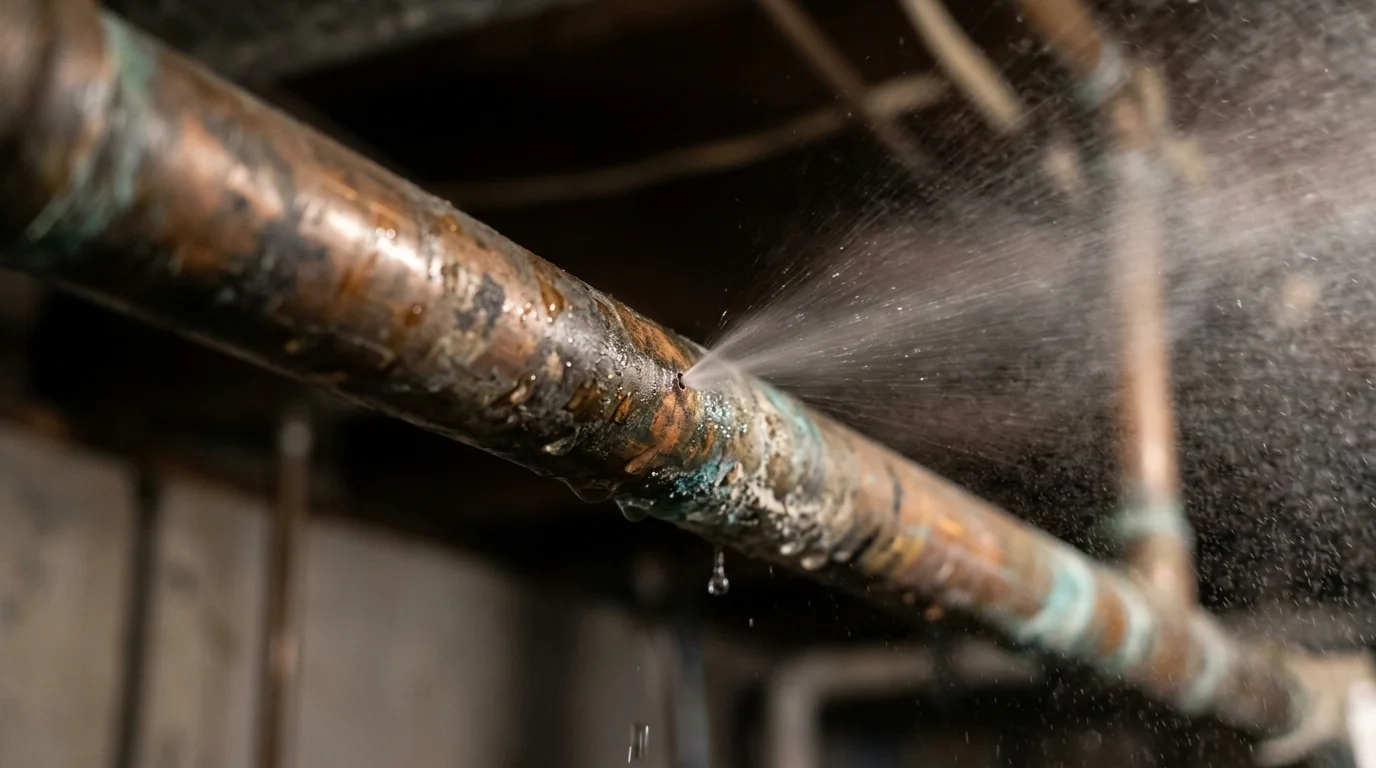
Older copper lines can develop pinholes that spray a fine mist into the wall. The leak is slow, so it may run for weeks before a stain, a musty smell or a soft baseboard gives it away.
Slow leaks do different damage: less standing water, more rot, more mold. We trace the wet area with a thermal camera, remove what has decayed and dry the rest. One pinhole often means others nearby, so we flag the run for the plumber.
Riser and branch line breaks
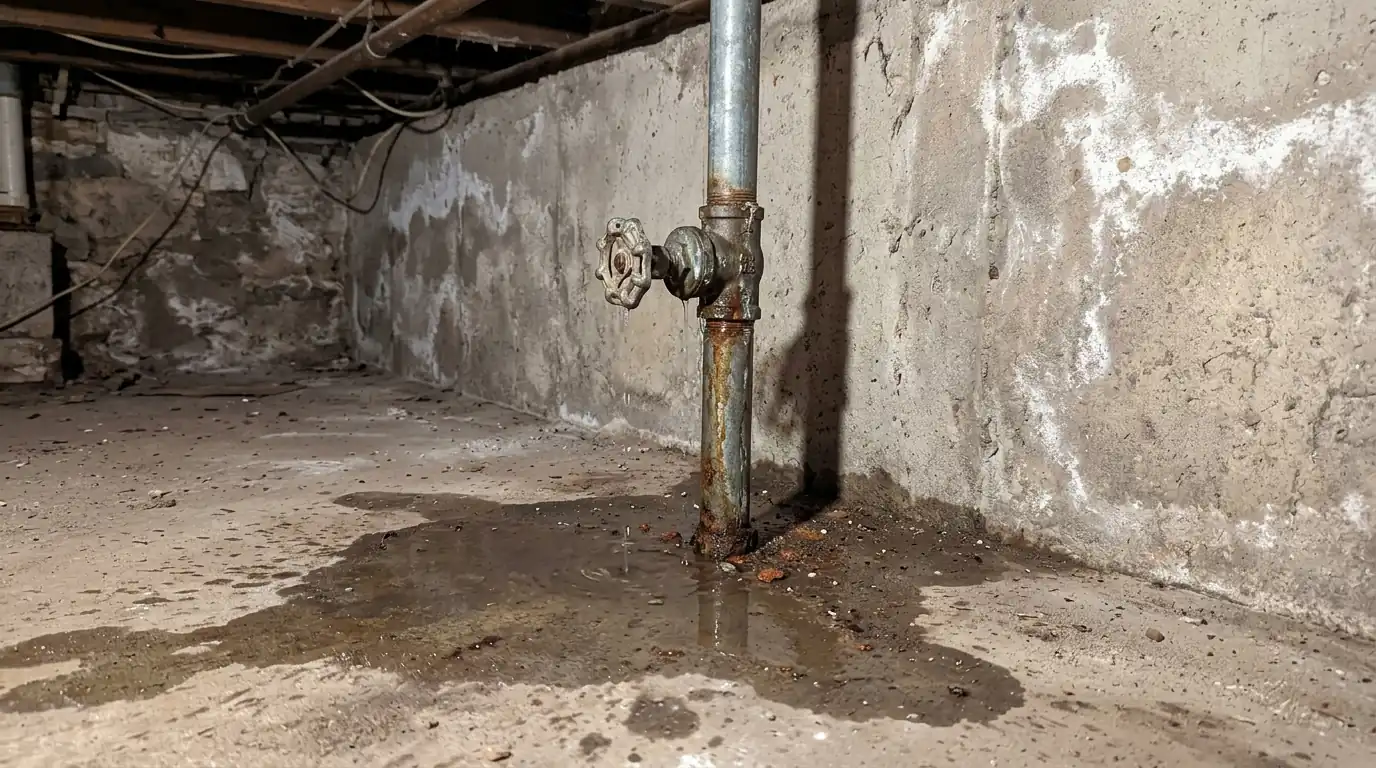
In an apartment building, a break in a riser or a main branch line affects several units at once. The super has to shut the riser, which cuts water to every apartment on that line until the repair is done.
We work with the super and the managing agent on these, drying each affected unit and keeping a separate photo and moisture record for each owner or tenant, since more than one insurer is usually involved. Common hallways and the units below the break are checked too, because riser water travels down the chase.
Why pipes freeze in a New York January
Central Park’s normal January low is 27.8°F, so pipes on exterior walls in Manhattan and across the city spend weeks just below freezing in an average winter. Most of the frozen-pipe calls we get come from kitchens and bathrooms on outside walls, from rooms over unheated entries, and from apartments where a window was left open a crack while the radiator was off. The damage shows up on the first warm afternoon, when the ice melts and the split starts running.
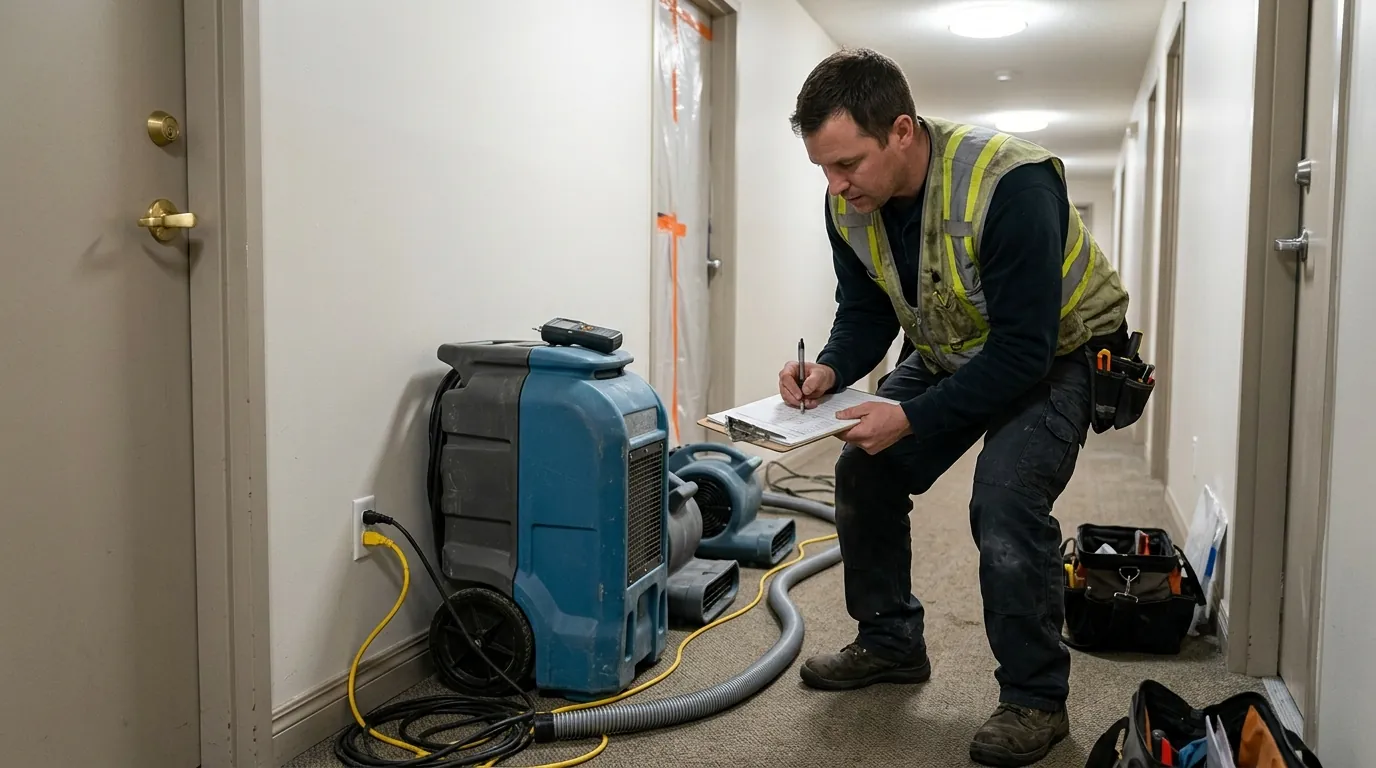
A pipe just let go?
Close the valve, keep people away from a sagging ceiling, and call. We answer every hour of the day.What you can safely do, and what to leave
Safe to do yourself
- Shut the fixture or apartment valve
- Call the super if the leak is on a riser
- Turn off power in wet rooms from a dry spot
- Photograph the water before cleaning up
Leave to a crew
- Opening walls to reach and dry the cavity
- Deciding what drywall and insulation must go
- Drying the ceiling and floor below
- Documenting moisture for the claim
What affects the cost of burst pipe cleanup
Typical US range for water damage restoration; burst pipe losses fall across the whole band. Source, 2026. A planning range, not a quote.
A burst caught in minutes is small; one that ran overnight is not.
Water in the apartment below doubles the drying work.
Tile and cabinets in front of the pipe add removal and rebuild.
Wet insulation in exterior walls has to come out.
Patching and paint are priced separately from drying.
The plumber’s repair is a separate bill.
Questions about burst pipe damage
Yes, if the fixture valve does not stop it. In a building, the super can close the riser.
Damage from a sudden burst usually is. A long-running leak often is not, and the pipe repair is often excluded.
The pipe repair is plumbing work. We open the wall, handle the water damage and rebuild after.
Keep heat on, open sink cabinets on outside walls in a cold snap, and keep windows shut near pipes.
We dry both units and keep separate records for each policy.
Usually a few days of drying, then repairs. Plaster takes longer than drywall.