Short answer
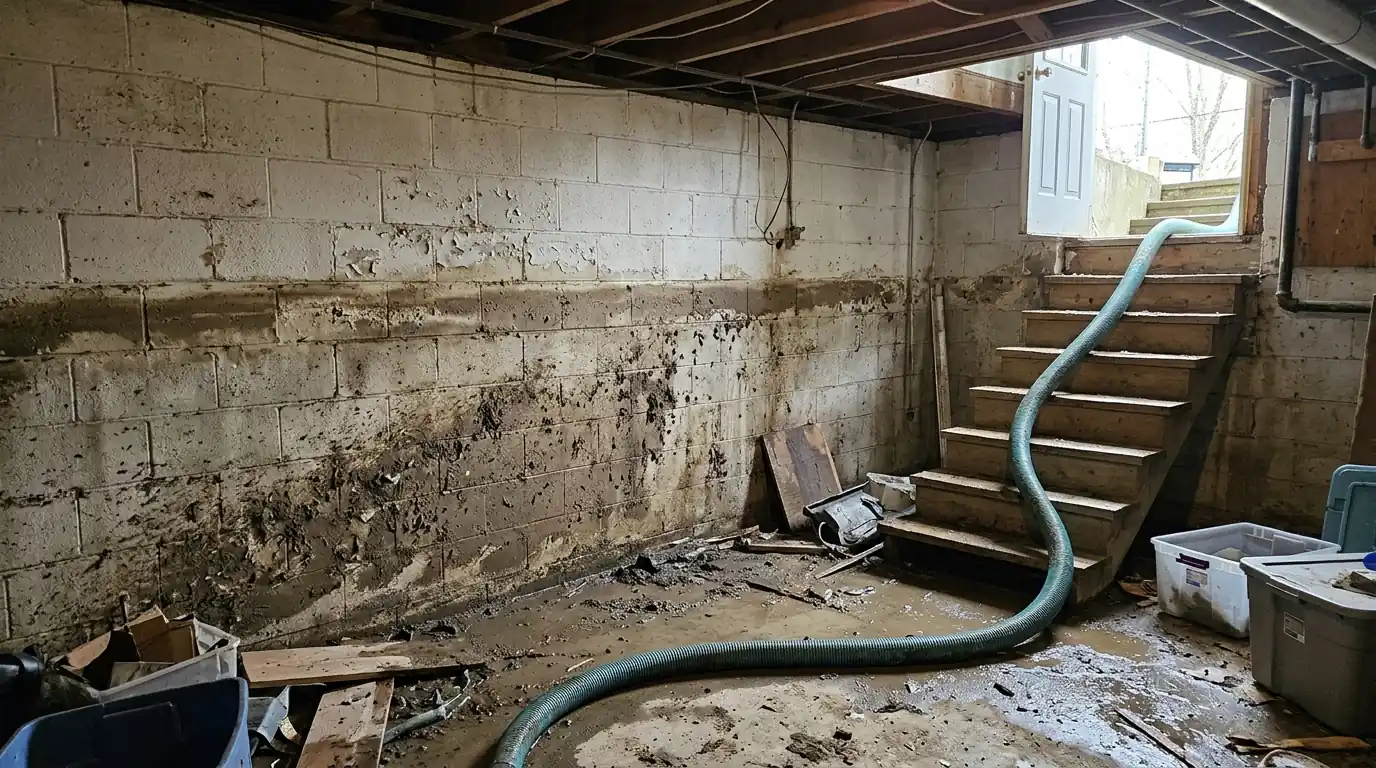
Sewage is the most contaminated kind of water damage. Keep people and pets away, do not run water or flush, and call for cleanup. Porous materials it touched, such as carpet, pad, drywall and insulation, are removed and bagged. Hard surfaces are cleaned and disinfected, then the space is dried to a measured standard.
Why sewage cleanup follows stricter rules
Sewage carries bacteria, viruses and parasites, and it soaks into anything porous. There is no drying it out of carpet or drywall; those materials are removed. What stays has to be cleaned and disinfected before drying, or the smell and the contamination stay too.
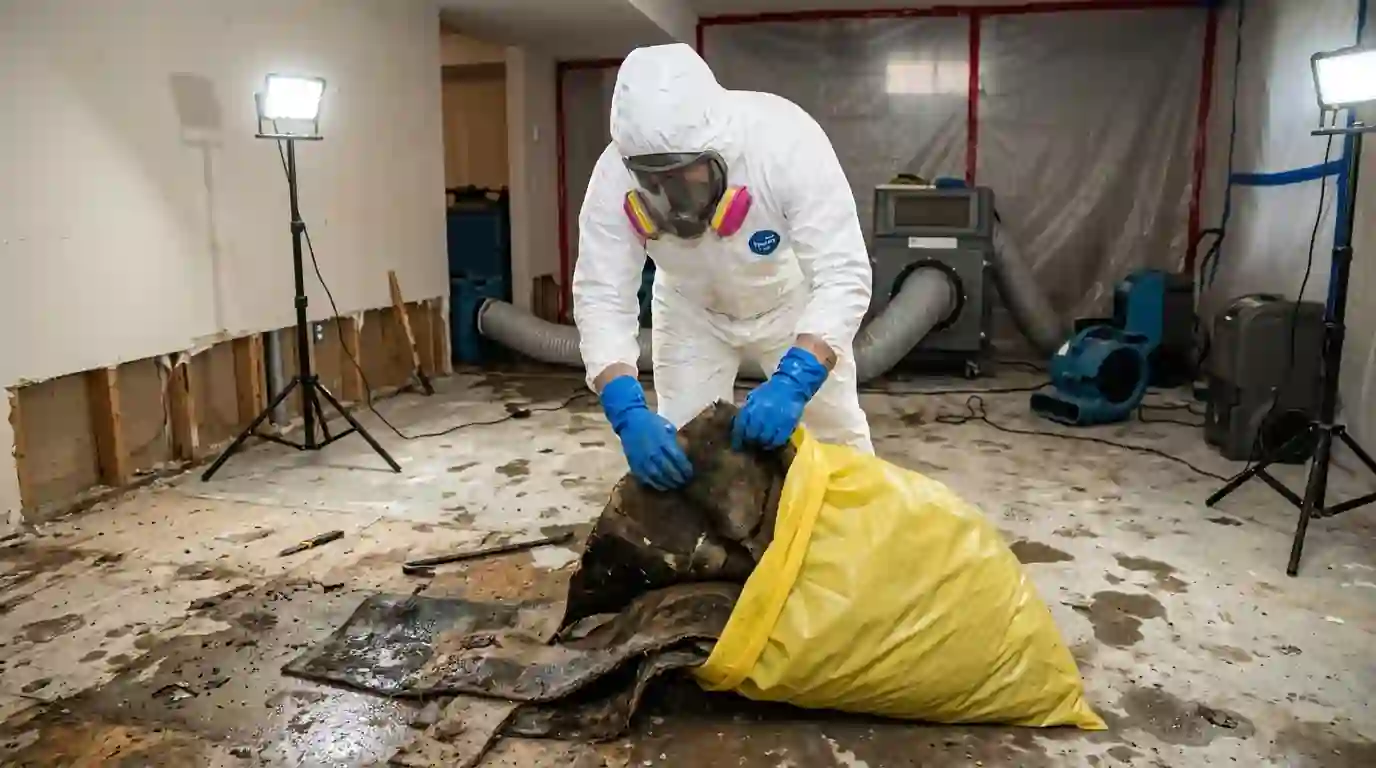
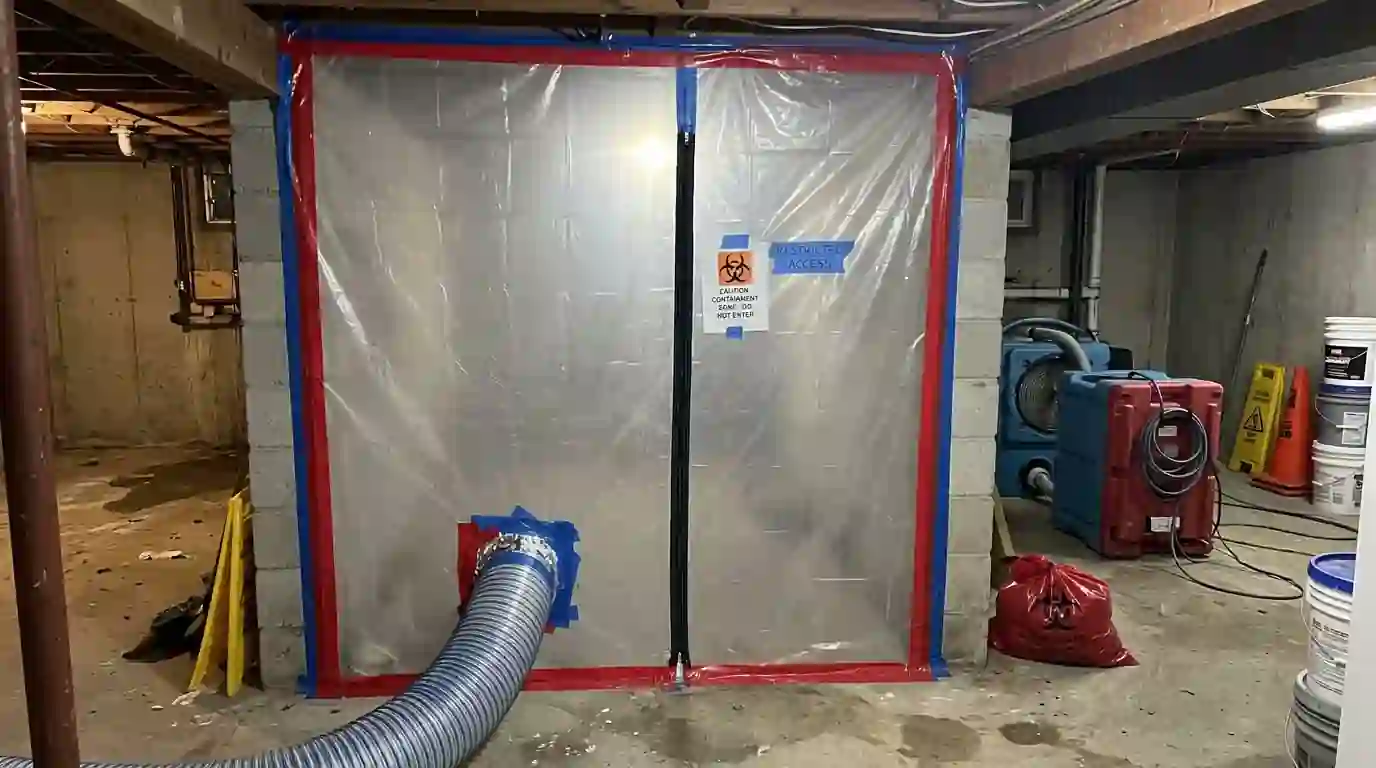
Our crews wear protective gear, set containment so the rest of the home stays clean, and bag and remove contaminated materials before cleaning and drying.
Signs a sewage backup is coming
Gurgling drains
Air is being pushed back through the lines.
Slow drains everywhere
The building line is partly blocked.
Water in the tub when flushing
The lowest fixture is backing up.
Sewer smell after rain
The combined sewer is surcharging.
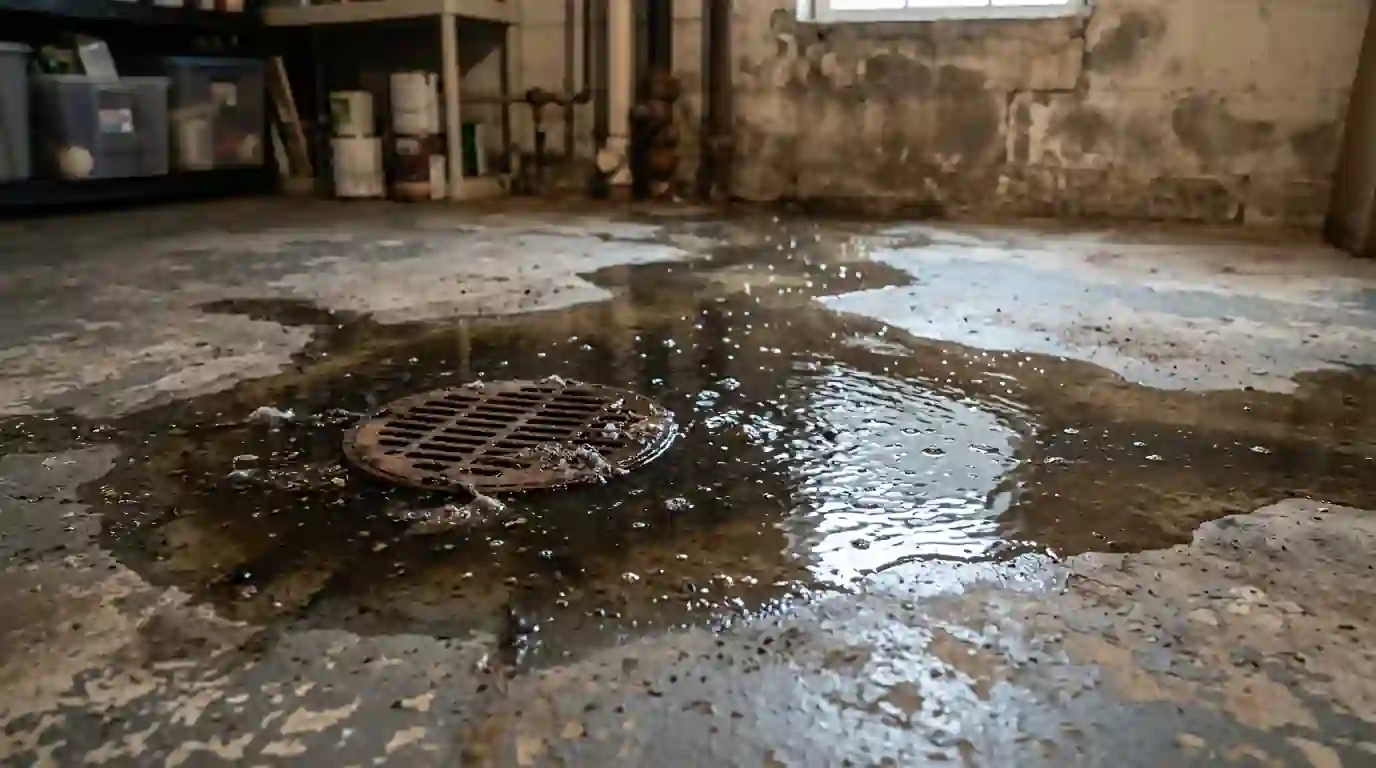
Water around a floor drain
The drain is pushing water up, not taking it.
Toilet bubbling
Pressure in the line is rising.
How a sewage cleanup runs
Stop the source
A plumber clears the blockage or the storm passes.
Contain
Plastic barriers keep the rest of the home clean.
Remove
Water is extracted and contaminated materials are bagged.
Clean and disinfect
Hard surfaces are scrubbed and treated.
Dry
Equipment runs until readings are dry.
Deodorize
Remaining odor is treated before rebuild.
Wet weather sewer backups
In heavy rain, combined sewers carry stormwater and sewage together. When they overload, the mix pushes back up through the lowest openings in a building: basement floor drains, toilets and showers.
These backups tend to hit many buildings on the same block at once. We remove the water and contaminated materials, disinfect, and dry. For most homes, the market range for sewage cleanup is $2,000 to $10,000, about $7 to $16 per square foot, with depth and finished space driving where a job lands.
Grease and blockage backups
A blocked building line or lateral, often from grease, wipes or roots, causes sewage to back up even on a dry day. It usually starts at the lowest fixture and repeats every time water runs upstairs.
The blockage has to be cleared by a plumber before cleanup starts, or the backup keeps coming. Then we remove, clean and dry. If the backup came from a shared line in an apartment building, several units may need the same work, and we keep each one on its own record.
Backups through floor drains
Floor drains in basements, laundry rooms and boiler rooms are often the first place sewage appears. The water spreads across the slab and under anything stored on the floor.
We pump and extract, remove stored items that cannot be cleaned, scrub and disinfect the slab and the lower walls, and dry. A backwater valve on the building line is the usual way to stop a repeat, and we point out where one would go so the plumber can quote it.
Why sewers back up in New York
About 60 percent of New York City’s sewer system is combined, so the same pipe carries sewage and stormwater. DEP now reports that wet weather backups driven by extreme rain are the most common kind, pointing to Ida and the storm of Sept. 29, 2023. On dry days the cause is usually different: in one year, 71 percent of confirmed sewer backups were grease related. We ask on the call whether it was raining, because it changes what the plumber needs to check.
Sewage in the house?
Keep everyone away from it and stop running water. We answer day and night.What to do yourself after a sewage backup
Very little, and that is deliberate. Sewage is not a mop-and-bleach job.
Safe to do yourself
- Keep children and pets away
- Stop running water and flushing
- Open windows if you can do it without walking through it
- Photograph the backup from a distance
Leave to a crew
- Removing sewage and soaked materials
- Disinfecting floors and walls
- Drying the space
- Deodorizing afterward
What drives the cost of sewage cleanup
Typical US range for sewage cleanup in most homes. Source, 2025. A planning range, not a quote.
More square feet and higher water mean more removal.
Drywall, flooring and built-ins must come out.
Porous items that touched sewage are discarded.
Keeping the rest of the home clean adds setup.
An unfixed blockage means paying twice.
Sewer backups are often excluded unless your policy has a sewer backup endorsement.
Questions about sewage backup
No. Sewage carries pathogens. Keep away from it and let a protected crew handle it.
No. Carpet and pad that touched sewage are removed.
Only with a sewer backup endorsement on most policies. Check yours.
Usually your own policy. Claims against the city follow a separate process.
A backwater valve, installed by a plumber, is the usual fix.
Usually several days after cleanup, once it is dry and deodorized.