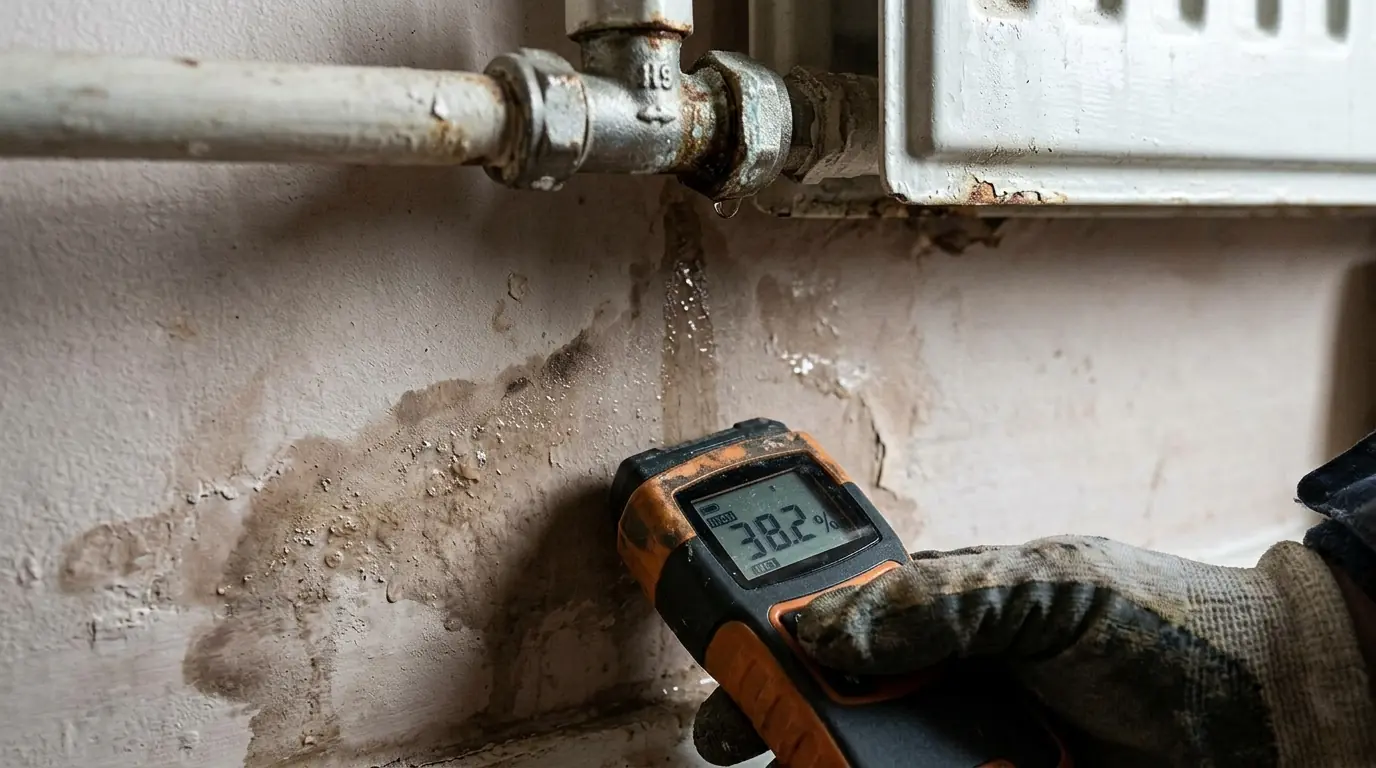
Short answer
Water through the ceiling usually comes from the apartment above, a roof leak on a top floor, or a pipe inside the ceiling itself. Keep people out from under any bulge, catch the drips, and call the super and a restoration crew. The ceiling may need a small release hole, then drying before it can be repaired.
Why a ceiling leak is rarely just a ceiling problem
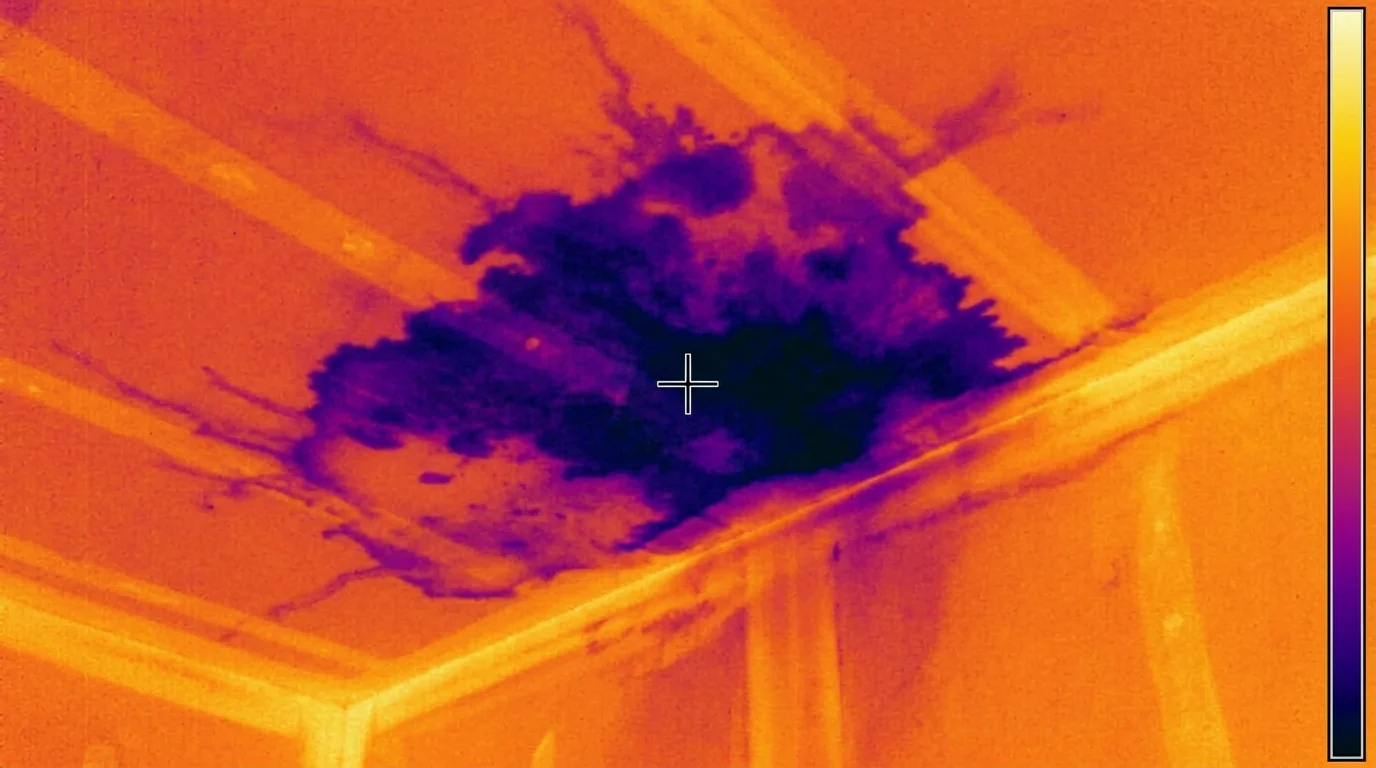
Water that comes through a ceiling has already crossed the floor above it. It runs along joists, collects on top of the plaster or drywall, and finds the lowest point, which is often a light fixture or a corner several feet from the source. The stain tells you where the water ended up, not where it started.
We check the ceiling from below with meters and a thermal camera, work with the super to find the source upstairs, and dry the ceiling cavity along with the walls and floor that took the runoff.
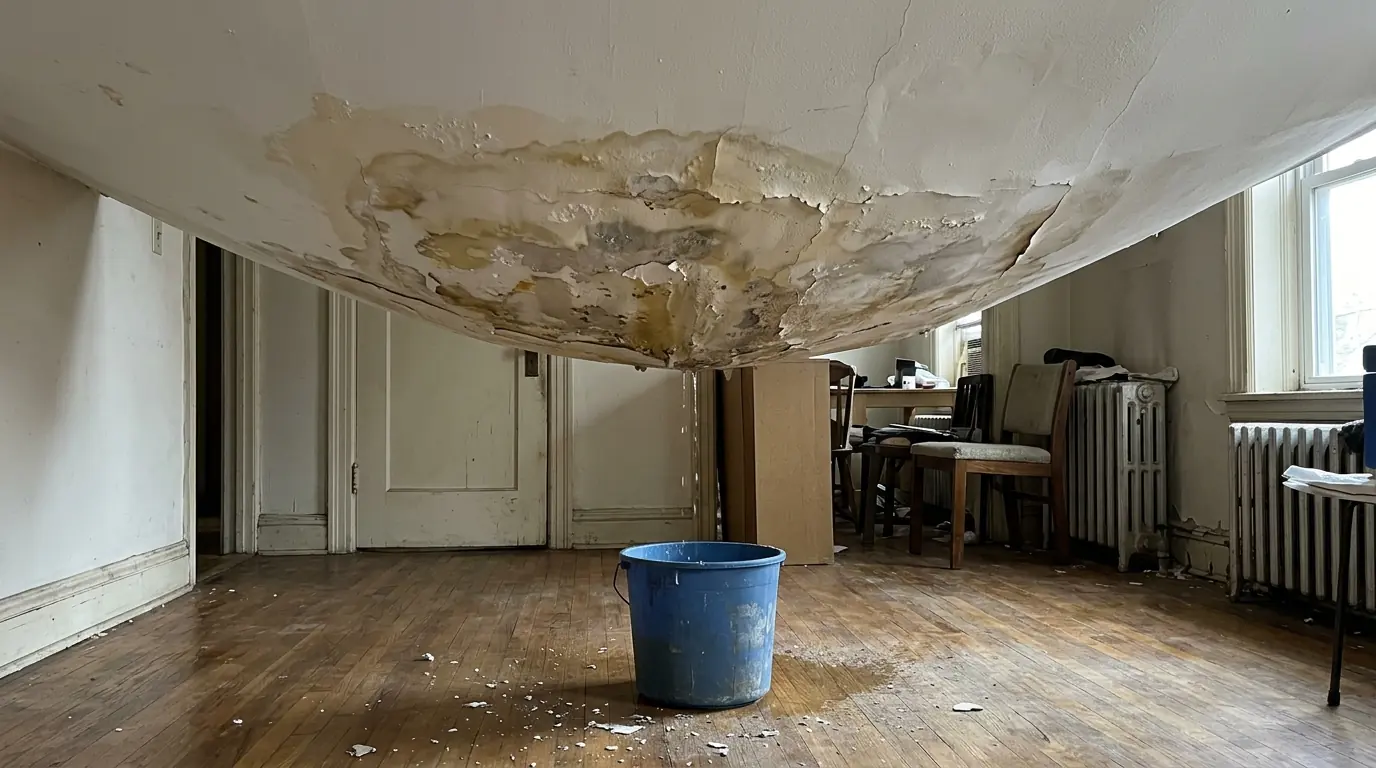
Signs water is building up above a ceiling
A brown ring that grows
Water is still arriving from above.
A bulge or belly
Water is pooling on top of the ceiling.
Drips at a light fixture
Water follows the wiring to the nearest opening.
Cracks spreading from a stain
Wet plaster is losing its grip on the lath.
Peeling paint overhead
Moisture is pushing the paint film off.
Stain after every rain
On a top floor, that points to the roof.
How we handle a leak through the ceiling
Make the room safe
People and furniture move out from under the wet area.
Release trapped water
A small hole at the low point drains a bulge into a bucket.
Find the source
We work with the super to confirm where the water came from.
Map and photograph
Readings and photos cover the ceiling, walls and floor.
Dry the cavity
Air movers and dehumidifiers dry the ceiling and what is below it.
Repair the ceiling
Plaster or drywall is patched and painted to match.
Leaks from the apartment above
An overflowing tub, a failed toilet seal or a washing machine upstairs is the most common source. The water may take hours to reach you, and it can keep dripping after the upstairs leak is fixed.
We coordinate with the super or managing agent to confirm the source, then dry your ceiling and anything below it. Each unit gets its own photos and readings, because the upstairs owner’s policy, the building’s master policy and your own may each cover part of the damage.
Top-floor roof leaks
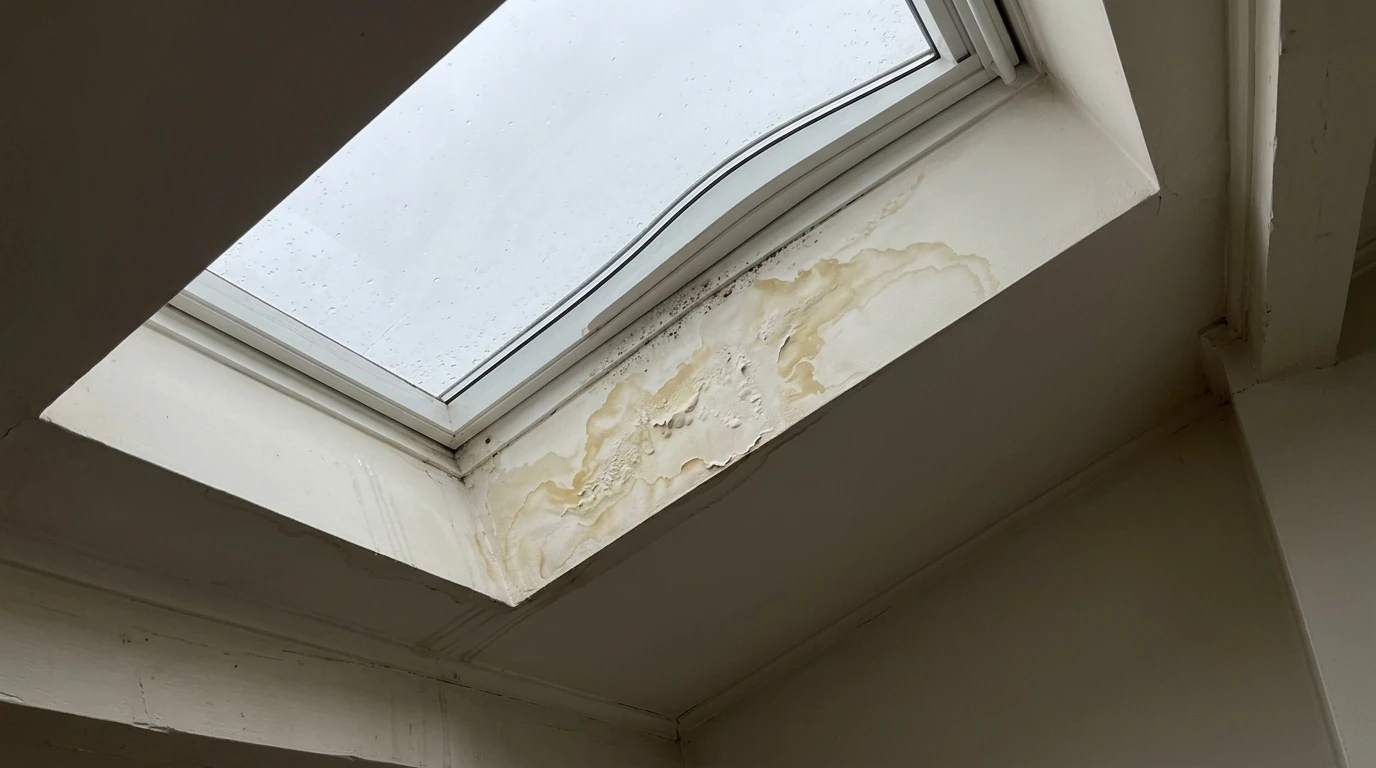
On the top floor, water through the ceiling after rain usually means the roof, a parapet, a skylight or flashing around a bulkhead. It often shows up only in wind-driven rain from one direction.
We dry the ceiling and insulation and document the pattern for the building. The roof repair itself is a roofer’s job, and until it is done we can protect the room below with plastic and catch basins, then check the ceiling again after the next storm before any repair.
Sagging or collapsed ceilings
A bulge in the ceiling means water is pooling on top of it. Plaster ceilings can hold a surprising amount before they drop, and when they fall, they fall in heavy pieces.
We clear the room, put a small hole at the low point to release the water into a bucket, and support or remove the loose section before it drops on its own. Poking it yourself from directly underneath is how people get hurt, so if it is sagging, stay clear and tell us when you call.
How long before the ceiling can be repaired
A drywall ceiling usually dries in three to five days. Plaster on lath often needs a week or more, and a ceiling that collapsed needs the framing dried before new material goes up.
Patching over a damp ceiling brings the stain back within weeks, so we wait for the readings.
Ceiling leaks in stacked prewar buildings
So much of New York City was built before 1947 that rent control, which only covers those buildings, still anchors housing policy. In those walk-ups and elevator buildings, bathrooms sit directly on top of each other in the same line, so one failed tub drain can wet three ceilings on the way down. The ceilings are plaster on wood or metal lath, heavy and slow to dry. We read the ceiling above and below the stain and check the unit under yours, because the water rarely stops at one floor.
What drives the cost of ceiling leak repair
Typical US range for water damage restoration, including ceiling losses. Source, 2026. A planning range, not a quote.
Plaster on lath dries slower and costs more to patch.
A small stain differs from a whole room.
A fallen ceiling adds debris removal and rebuild.
On top floors, wet insulation comes out.
Water in the unit below adds another drying job.
Questions about ceiling and upstairs leaks
It depends on the source and your building’s rules; several policies may each cover part.
Only from the side, never underneath, with a bucket ready. Otherwise let the crew do it.
Often. Bonded plaster that dries fully just needs primer and paint.
Water sitting on top of the ceiling drains out slowly until it is released.
Not if the ceiling is dry before painting and a stain-blocking primer goes on first.
Yes. Leaks between units involve them, and we keep them informed.