Short answer
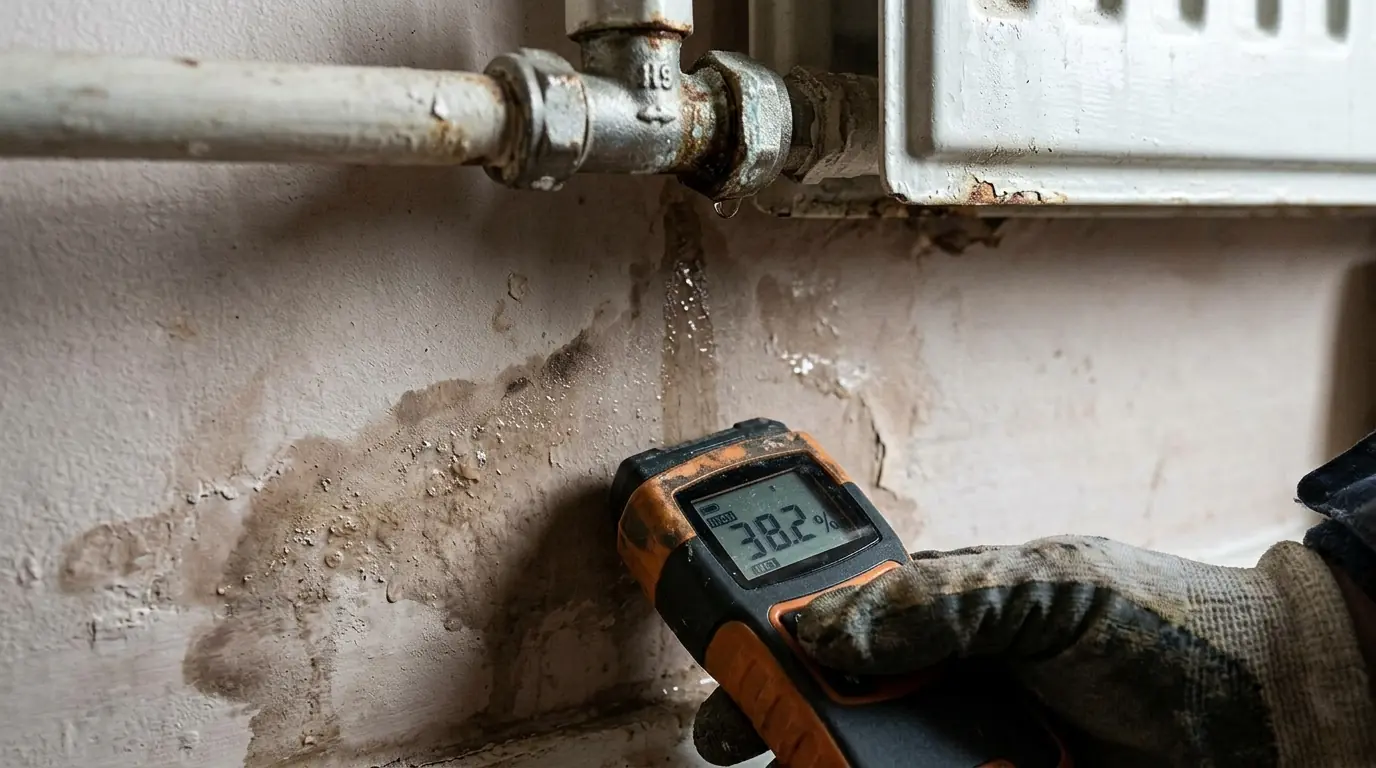
A leaking appliance should be shut off at its supply valve first, then unplugged from a dry spot. Washer hoses and water heater tanks release a lot of clean water fast, so extraction within the first day usually saves the floor and cabinets. Dishwasher and refrigerator line leaks are slower and often hide under cabinets for weeks.
Why appliance leaks spread further than they look
Appliances sit against walls and inside cabinets, so the water goes where you cannot see it: under the toe kick, into the subfloor and along the wall to the next room. In an apartment, a laundry closet leak often reaches the ceiling below before anyone notices.
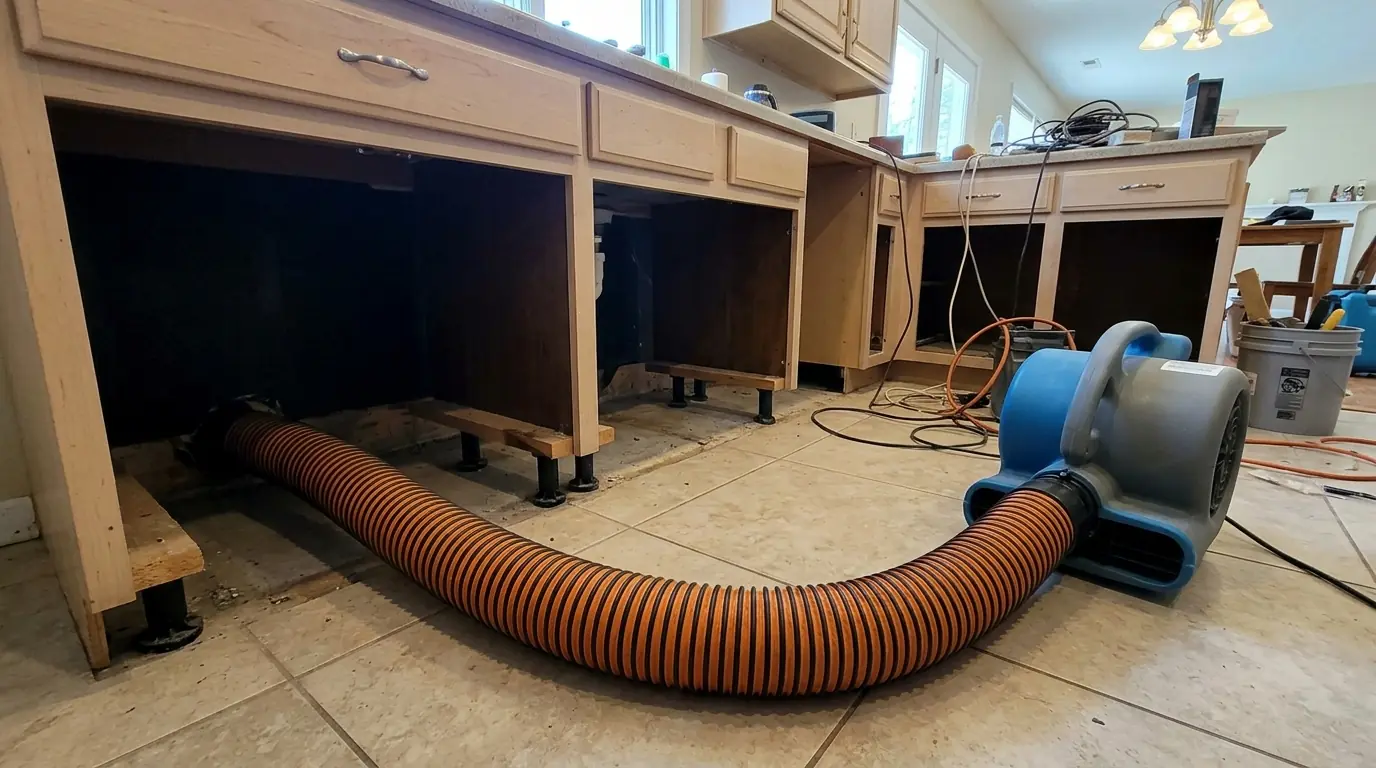
We pull the appliance out, extract underneath, open the toe kicks and dry the cabinet bases, floor and wall behind. The appliance repair or replacement is for your appliance tech or plumber.
Signs an appliance has been leaking
Floor lifting at the dishwasher
Boards cup where water runs out from under it.
Soft cabinet base under the sink
Particleboard swells when it stays wet.
Rust at the bottom of the heater
The tank is corroding and may let go.
Water in the washer drip pan
A hose or pump seal is weeping.
Musty smell in the kitchen
Water is sitting under the cabinets.
Stain on the ceiling below
The unit under yours sees the leak first.
How an appliance leak job runs
Shut the supply valve
Close the valve behind the appliance and unplug it from a dry spot.
Pull the appliance
We move it out to reach the water behind and under it.
Extract
Standing water comes off the floor and out from under cabinets.
Open toe kicks
Removing the kick panels lets air reach the cabinet floor.
Dry and measure
Equipment runs and readings are taken daily.
Rebuild
Cabinet bases, flooring and trim are replaced where needed.
Washing machine hose failures
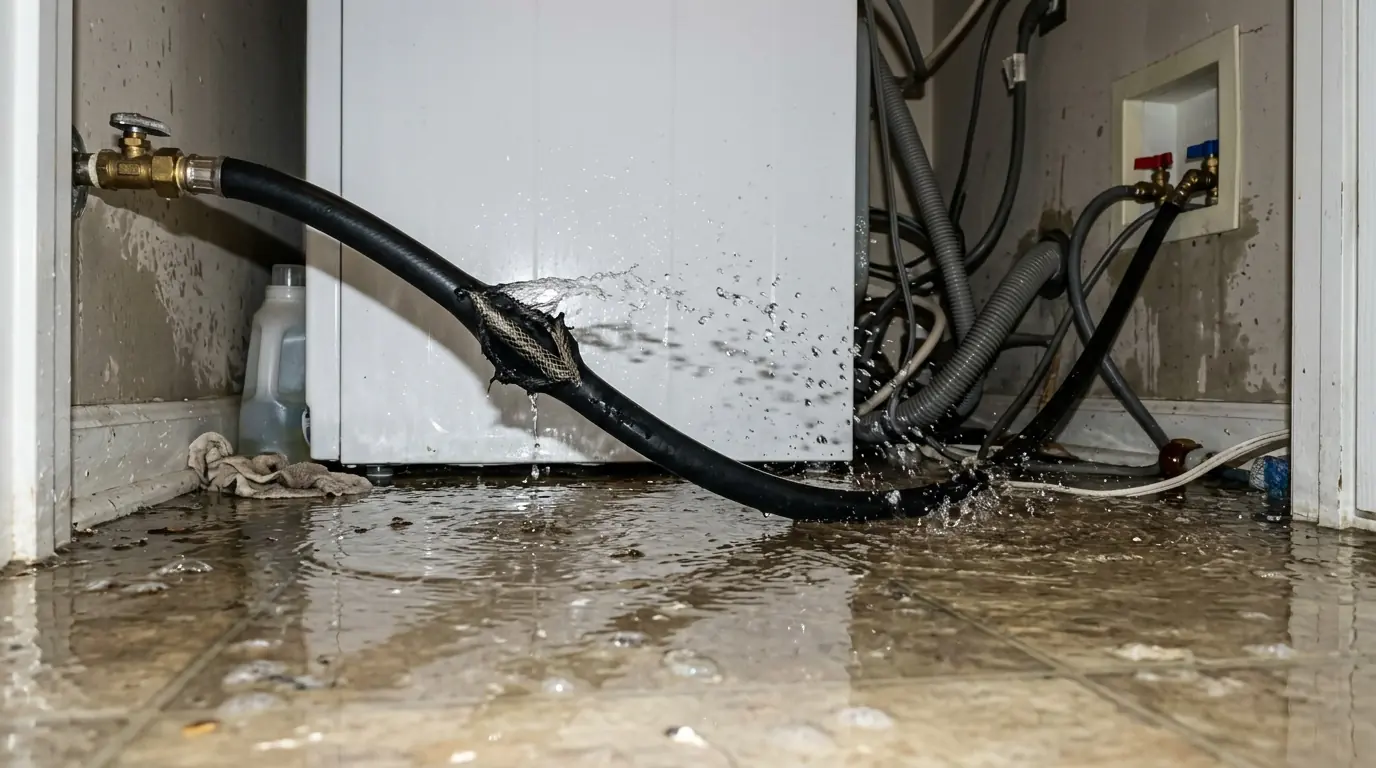
Rubber fill hoses on washers from Whirlpool, LG, Samsung and every other maker age out, and when one splits it can pour water until someone closes the valve. Laundry closets in apartments rarely have a floor drain, so the water heads straight for the walls and the ceiling below.
We extract, pull baseboards if the wall wicked, and dry the closet and the rooms around it. Braided steel hoses and a leak sensor with an automatic shutoff are the usual fixes afterward.
Dishwasher and refrigerator line leaks
A loose dishwasher connection under a Bosch or any other brand, or a cracked plastic ice maker line behind the fridge, usually leaks slowly. You notice a warped floorboard at the cabinet edge or a soft spot in the kitchen floor weeks later.
These leaks mean long-wet materials. We check for mold under the sink base, remove swollen particleboard, and dry the subfloor with the cabinets left in place where the boxes are still sound. A new braided line and a quick check of the shutoff valve keep it from happening again.
Water heater tank failures
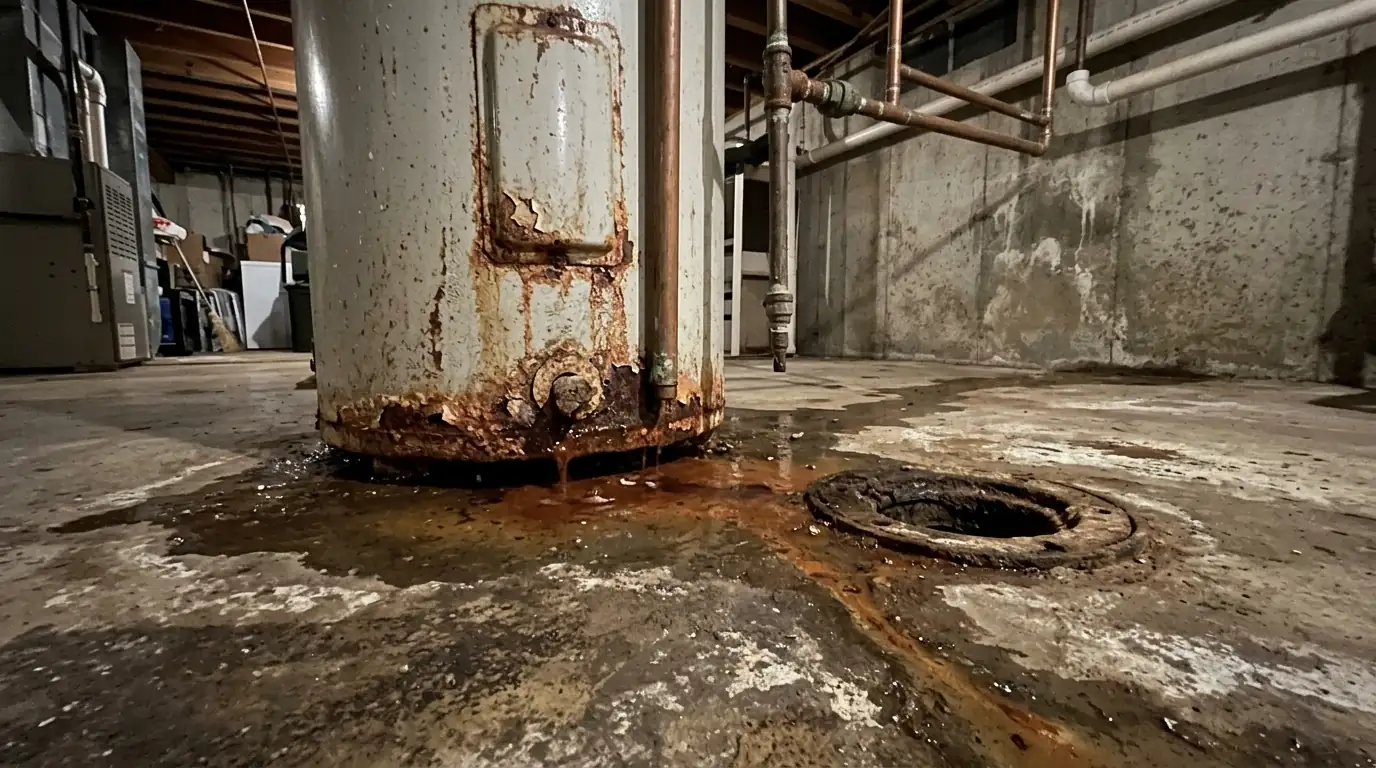
Tank heaters from Rheem, A. O. Smith, Bradford White and others eventually rust through at the bottom. A failed tank can release its whole capacity, and in a basement or utility closet that water runs toward the lowest point.
We extract and dry the basement or closet, then the walls and anything stored nearby. The replacement heater is plumbing work. The typical market range for water damage restoration is $1,270 to $5,376, and heater losses near a floor drain fall toward the low end.
Appliance leaks in New York apartments
In a New York apartment, a washer or dishwasher leak is rarely a one-unit problem. Laundry closets and kitchens tend to stack in the same line from floor to floor, most have no floor drain, and the water finds the plumbing chase and the ceiling underneath. That is why we ask on the first call which floor you are on and who lives below, and why we check that ceiling as part of the job rather than waiting for a neighbor to knock.
What to do yourself after an appliance leak
Safe to do yourself
- Close the supply valve behind the appliance
- Unplug it from a dry spot
- Mop and towel the visible water
- Photograph the floor and the appliance label
Leave to a crew
- Drying under cabinets and inside walls
- Checking the ceiling below
- Deciding what flooring can be saved
- Documenting moisture for the claim
What drives the cost of an appliance leak cleanup
Typical US range for water damage restoration. Source, 2026. A planning range, not a quote.
A burst hose is wetter but newer; a slow leak brings rot and mold.
Particleboard bases that swelled have to be replaced.
Tile over plywood dries differently from strip oak.
A wet ceiling downstairs adds a second drying job.
Built-in and stacked units take longer to pull out.
We clean up after leaks from every major brand, including Whirlpool and LG washers, Bosch dishwashers and Rheem or Bradford White water heaters.
- Whirlpool
- GE Appliances
- LG
- Samsung
- Bosch
- Frigidaire
- Maytag
- Miele
- Rheem
- A. O. Smith
- Bradford White
- Kohler
- Moen
- Weil-McLain
Questions about appliance and heater leaks
No. Leave it off and the valve closed until the hose, line or tank is fixed.
Sudden leaks usually are. A leak that ran for weeks is often treated as maintenance and excluded.
Often not. Opening the toe kicks lets us dry underneath. Swollen particleboard is the exception.
That is plumbing work. We handle the water damage and can dry the space while the plumber swaps the tank.
Braided steel hoses, a drain pan and a leak sensor with automatic shutoff cover most of it.
Not if it is dried quickly. Floors that sat wet for days often cup for good.