Short answer
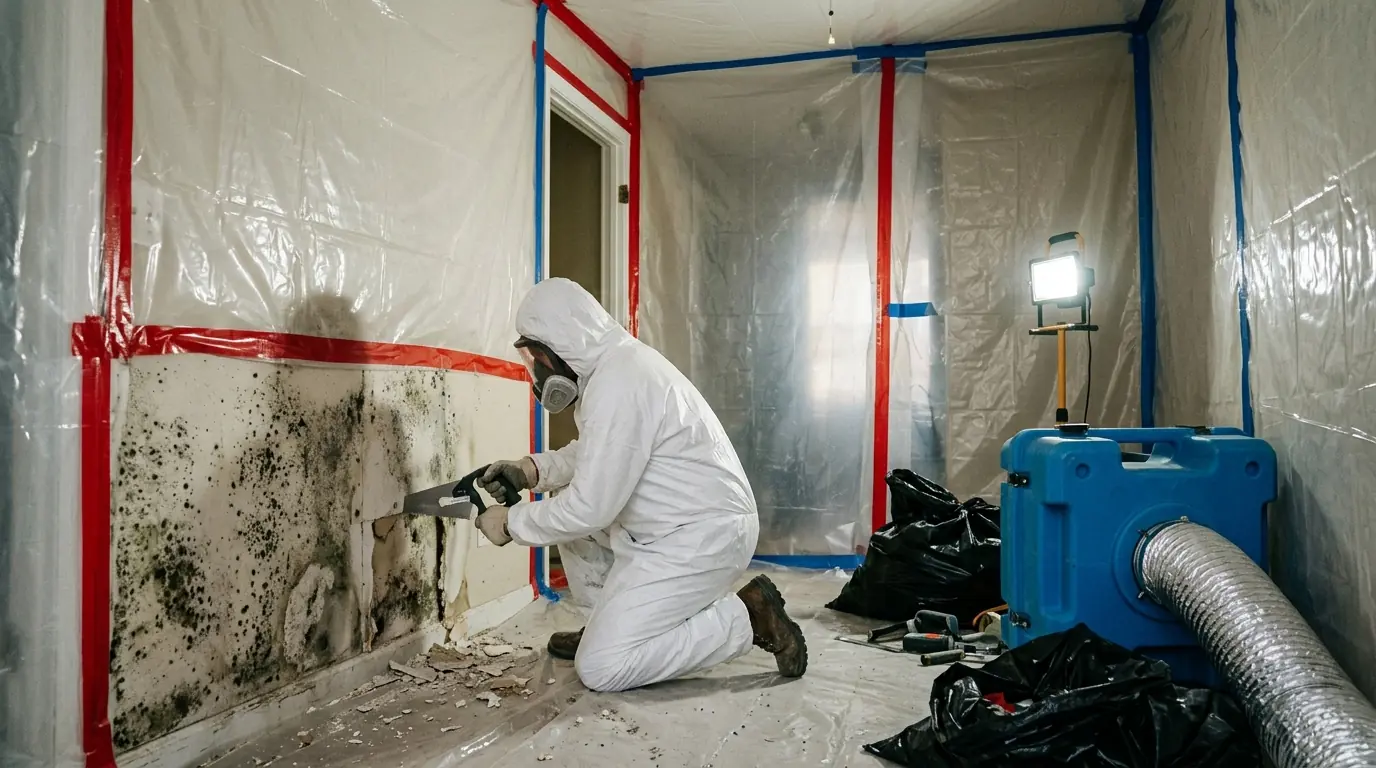
Mold remediation removes growth from a building without spreading spores to clean rooms. The area is sealed with plastic and kept under negative air pressure, moldy porous materials such as drywall and insulation are cut out and bagged, hard surfaces are cleaned, and the moisture source is fixed. Without fixing the moisture, mold returns.
Why mold removal is more than cleaning a stain
Mold on the surface is usually the visible edge of growth inside the wall or under the floor. Scrubbing or spraying the surface does not reach it, and disturbing it without containment sends spores through the home.
We seal the work area, run HEPA air scrubbers, remove what is growing, clean the framing, and dry it. Then we show you the moisture source, because a leak or condensation problem left in place brings the mold straight back.
What drives the cost of mold remediation
Typical US ranges for mold remediation, per This Old House; whole-house jobs run $10,000 to $30,000. Source, 2026. A planning range, not a quote.
Square footage of growth drives most of the price.
Inside walls or ceilings means opening and rebuilding.
Larger jobs need full containment and negative air.
Drywall and insulation are removed; framing is cleaned.
The leak or ventilation fix is priced separately.
Bathroom and closet mold
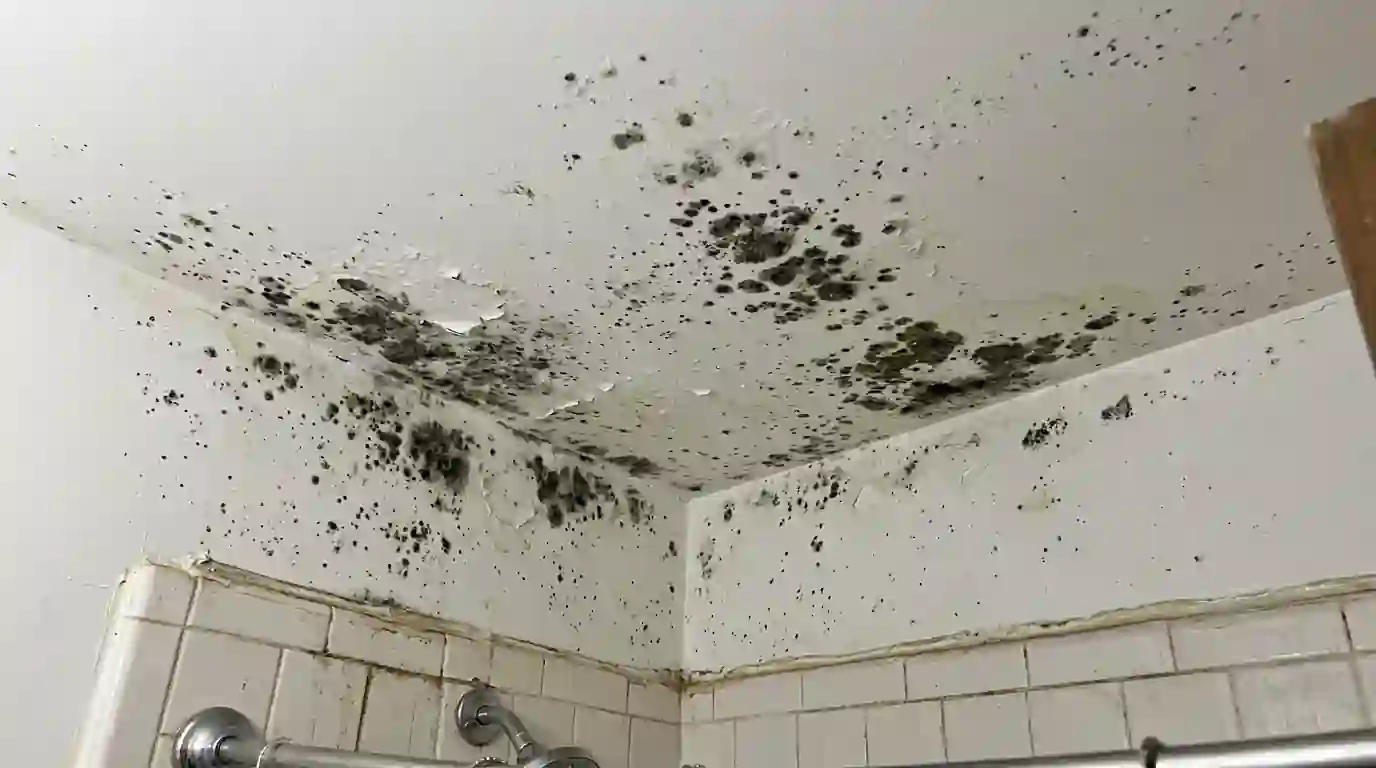
Bathrooms without enough ventilation, and closets on cold exterior walls, grow mold from condensation. It shows on ceilings, grout, the back of closets and behind furniture pushed against outside walls.
Small surface growth on hard surfaces can often be cleaned. Growth that has gone into drywall or plaster, or keeps returning, is cut out and replaced. Across the market, mold remediation typically runs $1,200 to $3,750, or about $10 to $25 per square foot, with bathroom and closet jobs usually toward the lower end.
Mold behind drywall
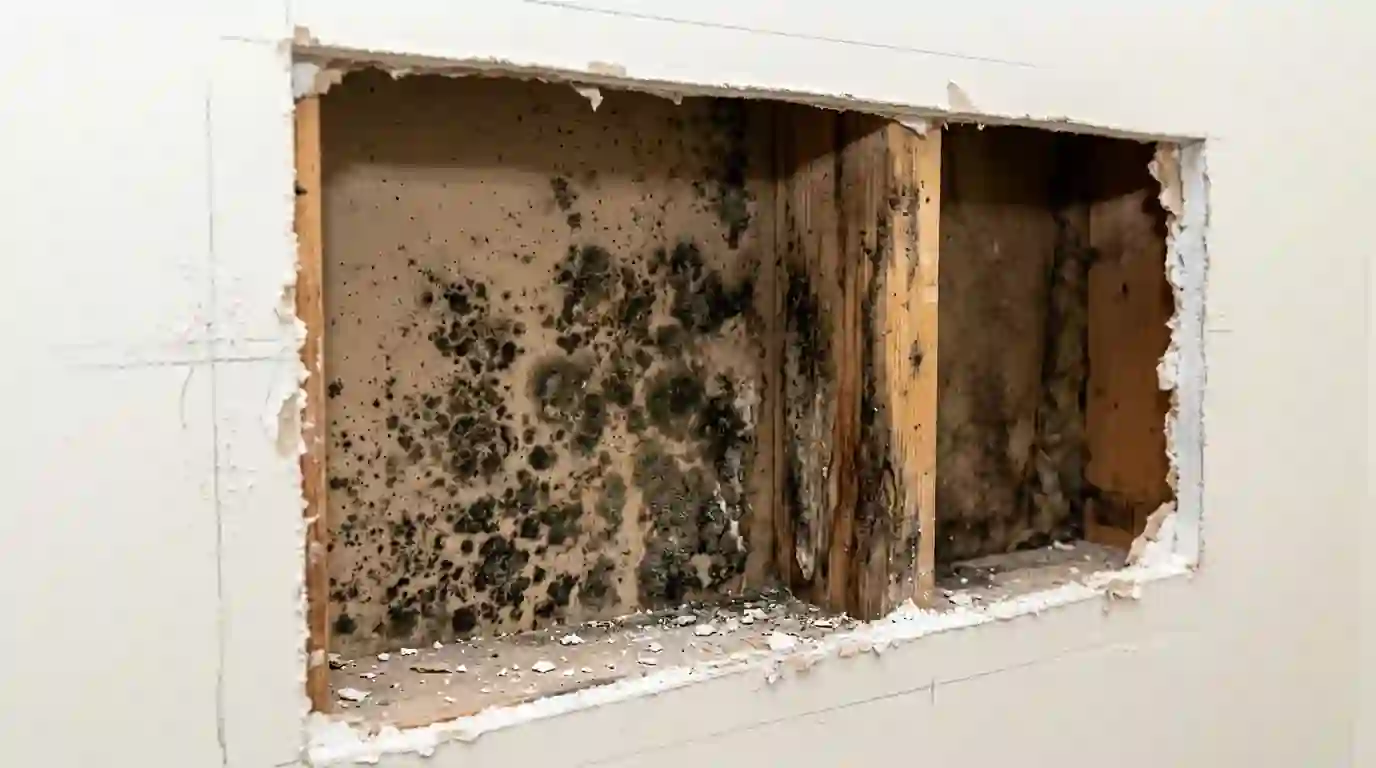
A slow leak inside a wall grows mold on the back of the drywall and on the studs long before anything shows on the painted face. A musty smell is often the only sign.
We find the extent with moisture readings and, where needed, a small inspection cut. Then the wall is opened inside containment, moldy drywall and insulation are bagged, the studs are cleaned and treated, and the cavity is dried before new drywall goes up. The leak is fixed first.
Basement mold
Basements are damp by nature, and flooding or seepage makes them worse. Mold grows on drywall, stored cardboard, carpet and wood framing near the floor.
We remove affected materials, clean and treat the framing and concrete, and set dehumidifiers to dry the space. Long term, the basement needs its humidity kept down, and we show you where water is getting in. Stored boxes and fabrics are sorted with you before anything is discarded, and keepsakes that can be cleaned are set aside for contents cleaning.
What our mold remediation includes
- Moisture mapping to find the extent
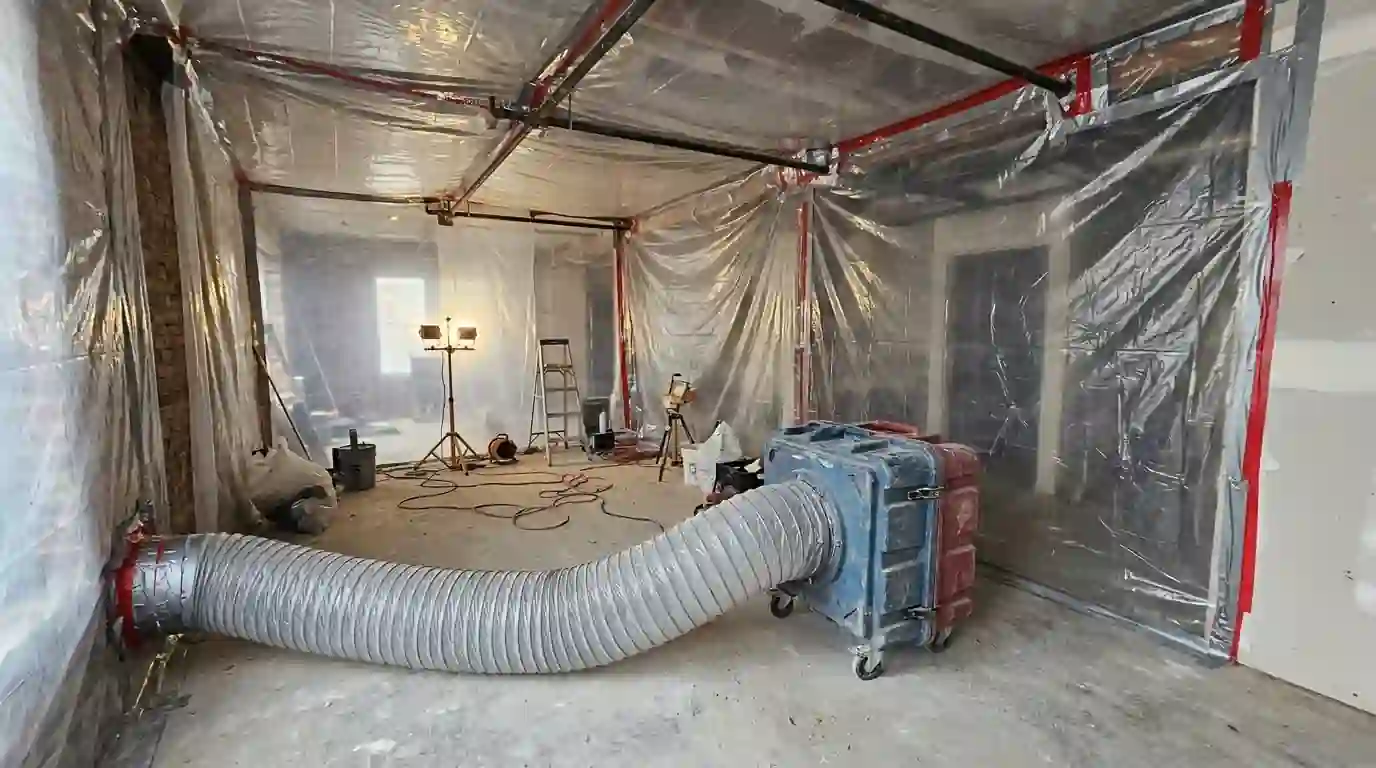
- Plastic containment and negative air
- HEPA air scrubbers
- Removal and bagging of moldy materials
- HEPA vacuuming and cleaning of framing
- Drying and antimicrobial treatment
- Location of the moisture source
Mold rules for New York buildings
Under Local Law 55, owners of New York City buildings with ten or more units must use a qualified mold assessor and a separate, independent remediator when mold covers more than 10 square feet. The assessment and the removal cannot be done by the same company. For a house or a smaller building, the city rule does not apply, but the same practice is still the sensible one: an independent assessment sets the scope, and the remediation follows it.
How a mold remediation job runs
Assess
Moisture readings and inspection set the scope.
Contain
Plastic barriers and negative air seal the area.
Remove
Moldy porous materials are cut out and bagged.
Clean
Framing and hard surfaces are HEPA vacuumed and cleaned.
Dry and treat
Surfaces are dried and an antimicrobial applied.
Clear and rebuild
The area is checked, then closed up.
When you can clean mold yourself
Small spots on hard, non-porous surfaces, roughly the size of a bath mat or less, can usually be cleaned by a homeowner with detergent and water.
Safe to do yourself
- Small spots on tile, glass or metal
- Grout mildew in a ventilated bathroom
- Running the bathroom fan longer
- Wiping condensation from windows
Leave to a crew
- Mold on or inside drywall or plaster
- Anything larger than about 10 square feet
- Mold after a flood or sewage backup
- Mold that keeps coming back
Signs of hidden mold
Musty smell
Growth is somewhere you cannot see.
Paint bubbling
Moisture is behind the surface.
Stains that return
The source is still wet.
Condensation on walls
Cold surfaces are staying damp.
Warped baseboards
Water is wicking into the wall.
Symptoms at home only
Allergies ease when you leave.
Questions about mold remediation
Color does not tell you the type. Any mold indoors should be removed and its moisture source fixed.
No. It keeps growing under the paint and comes back.
Often only when it resulted from a covered sudden leak.
Usually, outside the containment area.
On larger jobs, an independent assessor checks the work.
Not if the moisture source is fixed and the area is dried.