Short answer
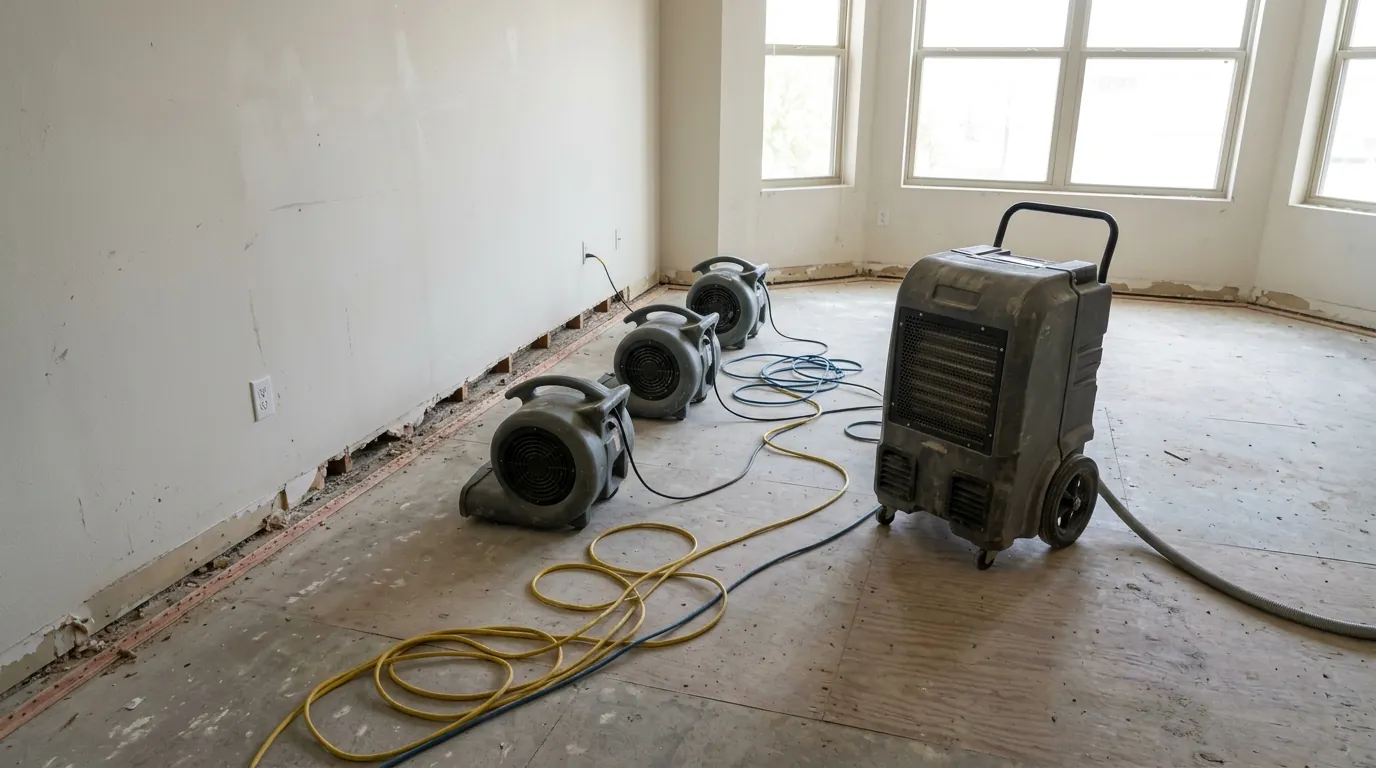
Structural drying removes water from the building itself: studs, subfloors, plaster and concrete. It uses dehumidifiers to pull moisture from the air and air movers to push dry air across wet surfaces, and it ends when readings in wet materials match readings in dry ones. Most rooms take three to five days.
What structural drying actually dries
Extraction removes the water you can see. What is left is water inside materials: the bottom of the wall, the subfloor under the finish floor, the plaster on the ceiling. That water leaves slowly, and it only leaves if the air around it is drier than the material.
We set equipment to create that difference, and we measure every day. Equipment is moved, added or removed based on the readings, and it stays until the dry standard is reached.
How a drying job runs day by day
Set the dry target
We read the same materials in a dry room.
Place equipment
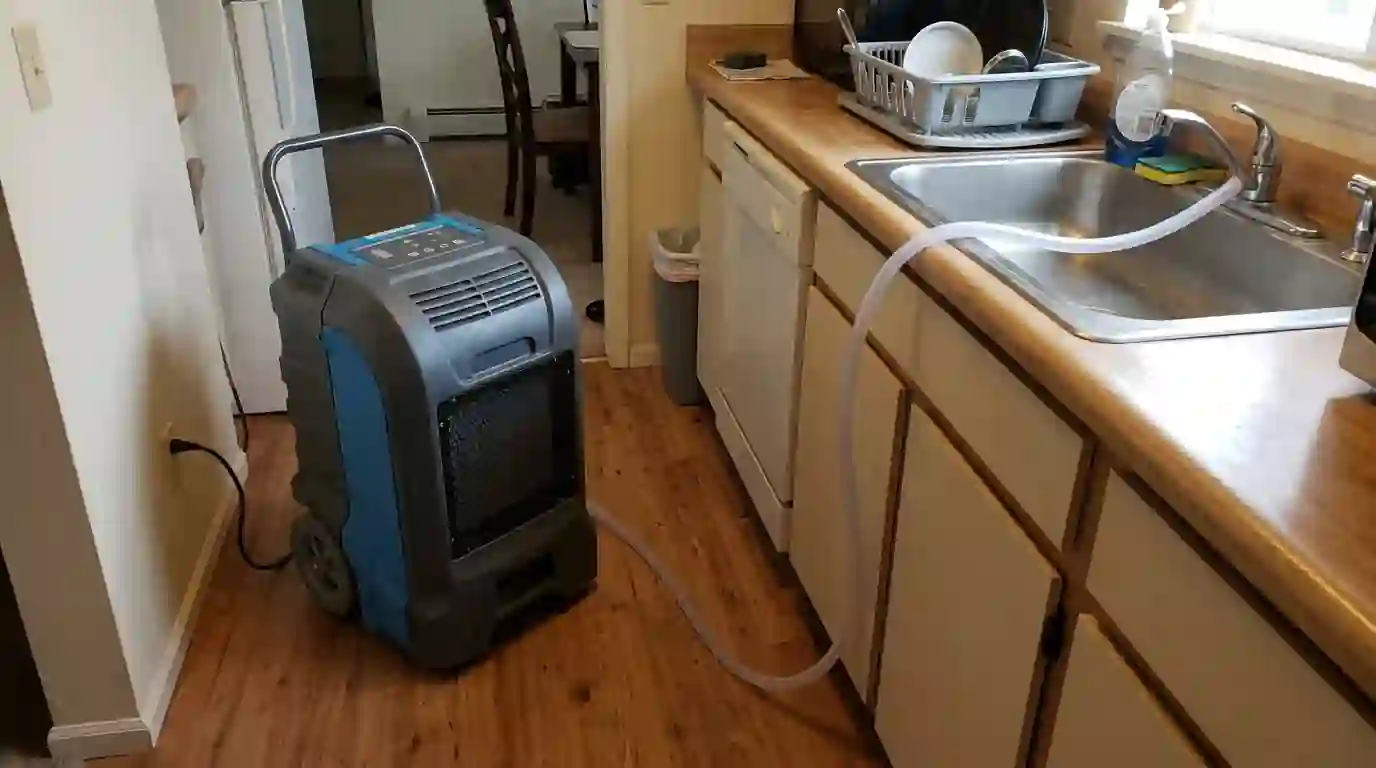
Dehumidifiers and air movers go where readings are highest.
Open cavities
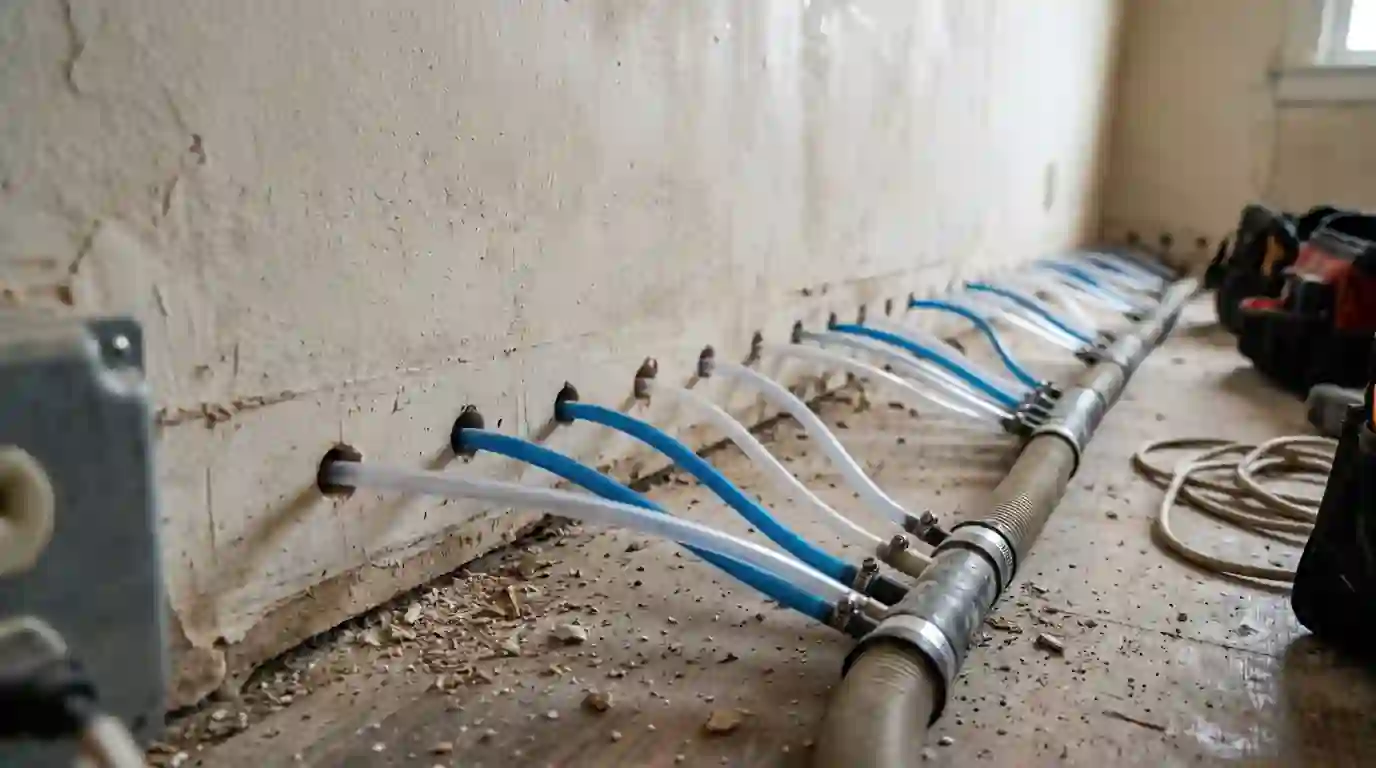
Small holes or baseboard removal let air into the walls.
Read daily
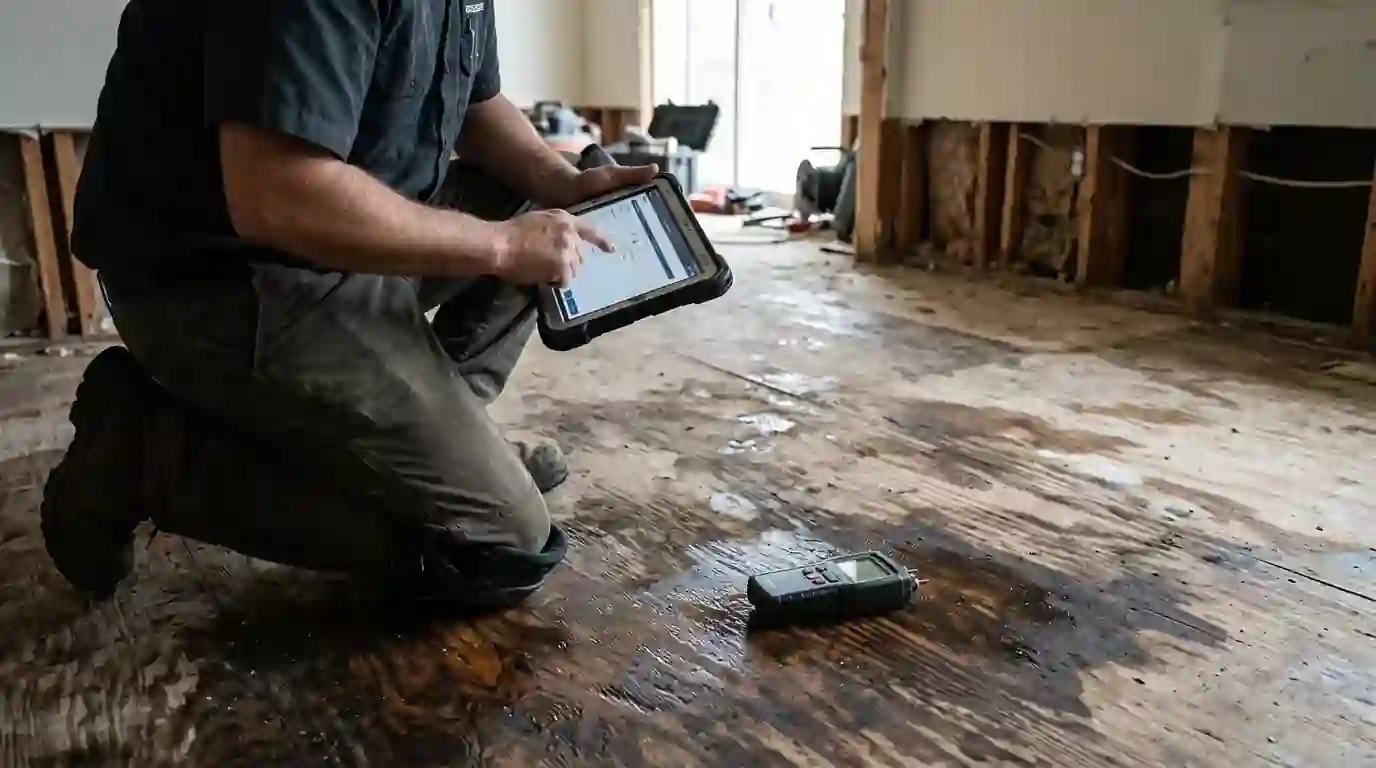
Moisture, temperature and humidity are logged each visit.
Adjust
Equipment moves or comes out as areas reach dry.
Sign off dry
Final readings are recorded before repairs start.
Wall cavity drying
A wall that took water keeps it inside the cavity, behind the paint, where air cannot reach. Fans blowing on the surface dry the paint and leave the inside wet.
We drill small holes along the base, or remove the baseboard and cut a narrow strip, and inject dry air into the cavity. That dries the studs, the back of the drywall or plaster, and the bottom plate without tearing out the whole wall. The holes are hidden behind the baseboard or patched.
Subfloor and slab drying
Water that gets under a finished floor sits on the plywood or planks below, or soaks into a concrete slab in a basement or ground-floor unit. It dries far slower than the surface.
On wood subfloors we use drying mats or open a few boards to let air under. On concrete we use heat and dehumidification, and we test the slab before any new flooring goes down, because flooring laid on a wet slab fails within months. Slabs are the slowest part of most jobs, so we tell you that up front.
Daily moisture readings and drying logs
A drying job is measured, not guessed. On the first day we take readings in wet materials and in the same materials in a dry room, which gives us the target.
Every day after that we record readings, temperature and humidity, and note any equipment changes. The log shows your adjuster why each piece of equipment was there and for how long, and it tells us when to stop. Pulling equipment on a date rather than a reading is how mold ends up behind finished walls.
How long structural drying takes
Most rooms with drywall dry in three to five days. Plaster, stacked floors and concrete slabs often take a week or longer.
Water that sat for days before we arrived also adds time, because it soaked deeper into the materials.
Drying through New York’s seasons
New York summers are humid and winters are dry and heated, and both change how a drying job runs. In July, dehumidifiers work harder because the air coming in from open windows is already damp, so we ask people to keep windows closed while the equipment runs. In January, steam heat helps drying, but it also dries the surface of plaster faster than the core, which can fool anyone reading the paint instead of the wall.
What is included in a structural drying job
- Initial moisture map with photos
- Dry reference readings in unaffected rooms
- Dehumidifiers and air movers sized to the space
- Air injection into wet wall cavities
- Daily readings, temperature and humidity logs
- Equipment moved as areas dry
- A final dry report for your adjuster
What drives the cost of structural drying
Typical US range for water damage restoration, which includes structural drying. Source, 2026. A planning range, not a quote.
More wet area means more air movers and dehumidifiers.
Plaster and slabs keep equipment running longer.
Air injection into walls adds setup time.
Many units on old circuits may need spreading across rooms.
Daily visits and readings are part of the price.
Questions about structural drying
Each air mover covers a set area of wet surface. Fewer machines means a longer job.
Please do not. Drying stops when the equipment stops, and the job runs longer.
Outside air, especially in summer, is often damper than the air the dehumidifiers make.
Yes, it draws steady power. We spread units across circuits so breakers do not trip.
When wet materials read the same as the dry reference readings taken on day one.
Yes. They go to you and your adjuster with the photos.