Short answer
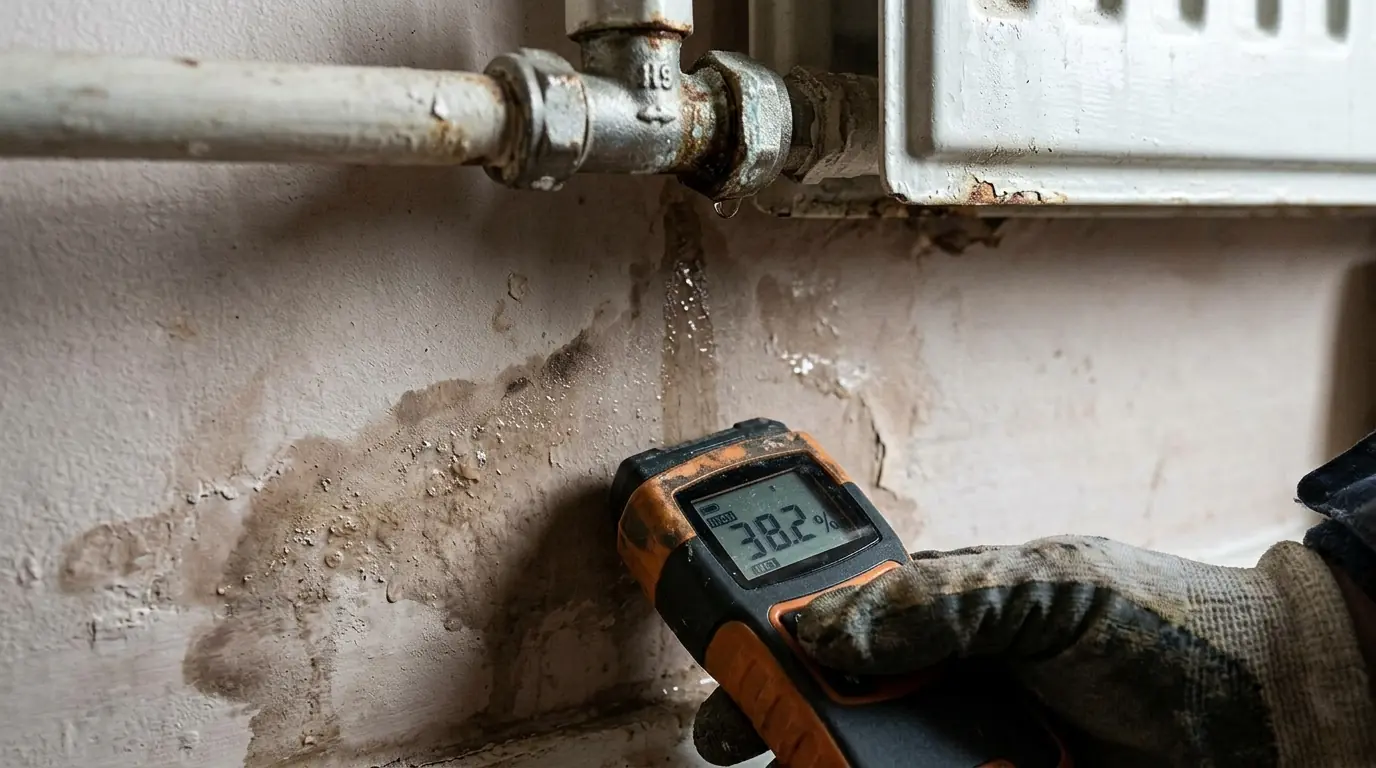
Standing water should be extracted within hours, because every gallon left behind soaks into subfloors, pad and walls and has to be dried later. We remove water with truck-mounted or portable extractors, then measure what is left in the materials and set drying equipment on the same visit.
Why extraction comes before everything else
A dehumidifier removes water from the air a few gallons at a time. An extractor removes it from the floor by the gallon per minute. Every bit of liquid water we pull out is water that never has to be dried out of wood, pad or plaster, which is why extraction is the step that decides how long the rest of the job takes.
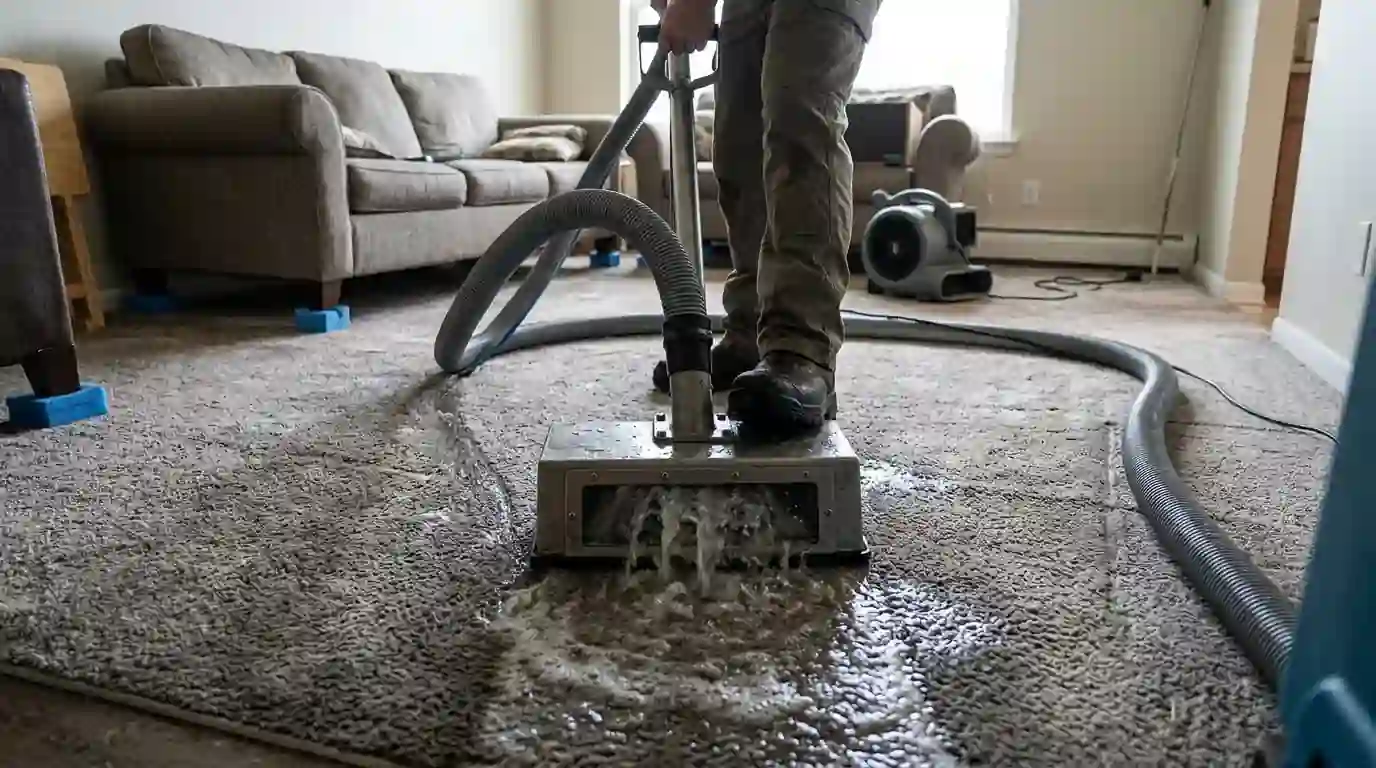
We extract hard floors with squeegee wands, carpet with weighted extraction tools that squeeze the pad, and hidden pockets under cabinets with small wands and pumps. Then we measure and start drying.
What the extraction visit looks like
Confirm the source is off
We make sure no more water is coming before we start.
Check power and safety
Wet outlets and panels are shut off before anyone walks in.
Extract
Truck-mounted or portable units pull water from every affected surface.
Lift and block contents
Furniture goes onto blocks or foil so legs do not stain carpet.
Take readings
We record how wet each material still is and photograph the rooms.
Set drying equipment
Air movers and dehumidifiers go in before we leave.
Truck-mounted versus portable extraction
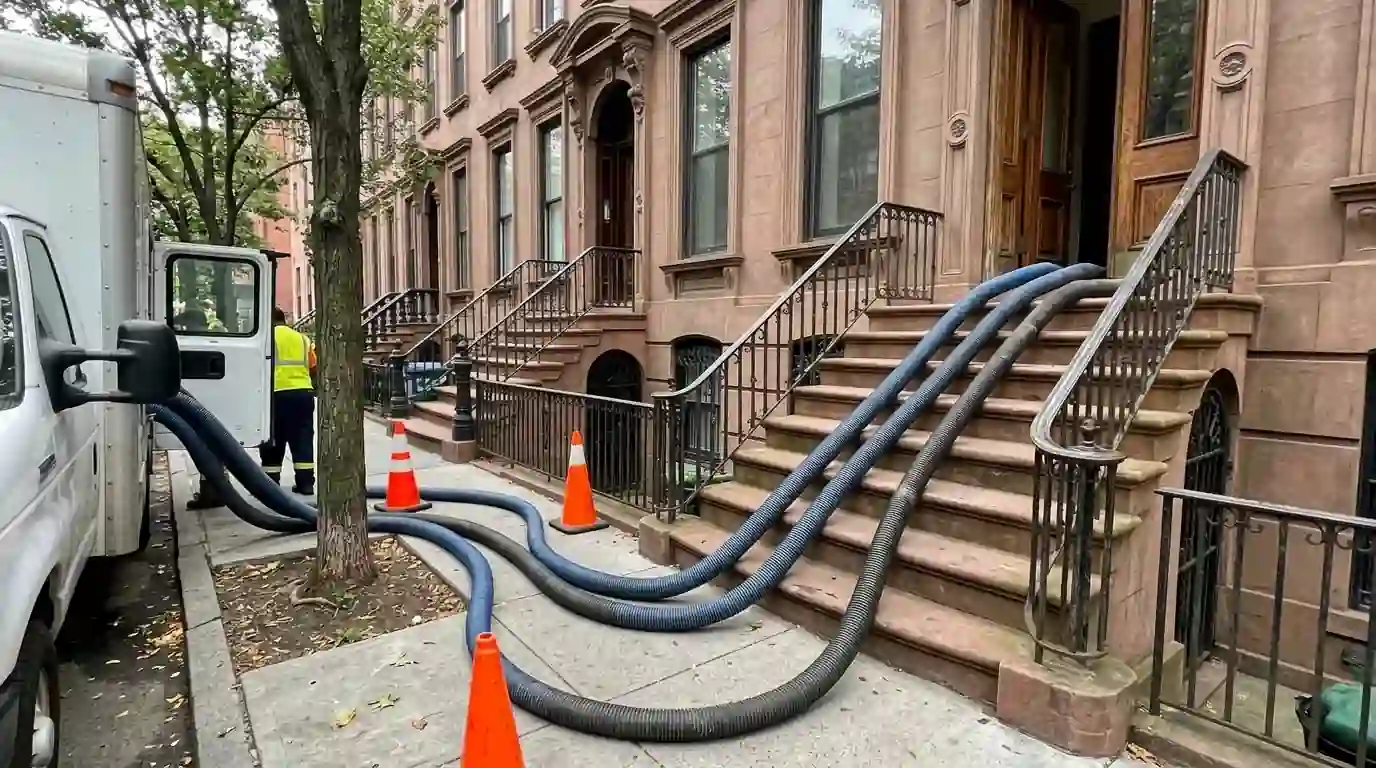
Truck-mounted units have far more suction and hold hundreds of gallons, so they suit large losses, basements and commercial spaces. The catch in this city is the hose run: parking, stairs and elevators set how far a truck line can reach.
Portable extractors come upstairs in a service elevator and plug into a standard outlet. In a high-floor apartment they are often the practical choice, and several units working together can match a truck on a mid-sized loss. We decide on the phone, from the floor, the access and how much water you describe.
Standing water on hardwood
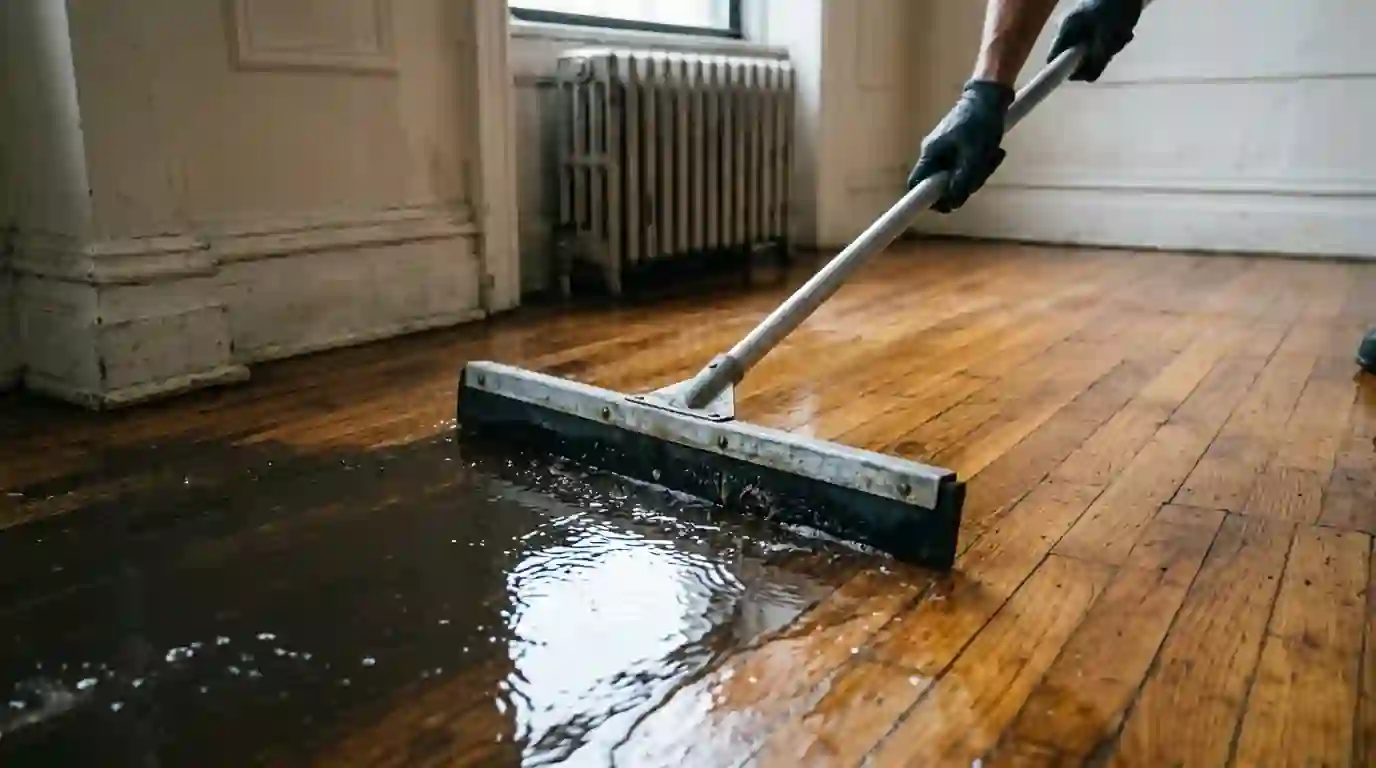
Strip oak and parquet start cupping as soon as water gets into the seams. Mopping only spreads it around the surface while the seams keep drinking.
We use squeegee wands to pull water off the surface, then a floor-drying mat system that draws moisture up through the boards under suction. Started early, that often saves a floor that would otherwise be replaced. We decide on the first visit whether the floor is a drying candidate, based on readings rather than looks.
Carpet and pad extraction
Wall-to-wall carpet holds several times its weight in water, and most of it sits in the pad underneath. Passing a wand over the top leaves the pad soaked.
A weighted extraction tool presses the carpet and pad together as it pulls, which removes far more water than a surface wand. With clean water, carpet can often be dried in place after extraction, with air movers blowing underneath. Pad soaked by gray or black water is pulled and replaced, and the carpet is cleaned or removed depending on how long it sat.
How long extraction takes
A single room of clean water usually takes an hour or two to extract. A flooded floor or a basement can take most of a shift, especially where hoses run up from the street.
Drying afterwards takes days, not hours, and that is normal. Extraction is what keeps that number down.
Extraction when a water main breaks
The city answered 402 water main breaks in fiscal year 2023, across roughly 6,800 miles of mains, so street water in a lobby or a cellar is not a rare call here. When a 127-year-old main split under 40th Street in August 2023 it flooded streets around Times Square and the subway station below. Breaks like that push a lot of water fast into ground-floor shops and basements in Midtown, and that is when truck-mounted units earn their place.
What you can do before the crew gets there
Safe to do yourself
- Shut the water at the fixture or apartment valve
- Turn off power to wet rooms from a dry spot
- Photograph the water and your belongings
- Move rugs, electronics and papers to a dry room
Leave to a crew
- Pulling water out of carpet pad and subfloors
- Deciding whether hardwood can be saved
- Anything involving sewage or storm water
- Drying inside walls and under cabinets
What changes the price of water extraction
Typical US range for full water damage restoration, of which extraction is one part. Source, 2026. A planning range, not a quote.
A soaked rug is small; a flooded floor through several rooms is not.
Stairs, elevator rules and hose runs from the street affect the setup.
Gray and black water mean removal and cleaning, not only extraction.
Hardwood mat systems cost more to run than carpet extraction.
Water that sat overnight has already moved into the subfloor.
Questions about water extraction
For a small spill on a hard floor, yes. It will not pull water out of carpet pad or from between hardwood boards.
We answer 24/7 and give you an arrival window on the call. Extraction starts once the source is off and the power is safe.
Not necessarily. Carpet soaked with clean water often dries in place; pad that took dirty water is replaced.
Truck-mounted units run from the truck. Portable units plug into outlets in dry rooms.
We remove the toe kick or drill small holes to dry underneath, so cabinets can usually stay.
When the water damage is covered, extraction is part of that claim, and we log it for the adjuster.