Short answer
After a kitchen fire, turn off the stove and the power to the range, keep the kitchen closed, and do not wipe the residue. Grease fires leave oily soot and burnt food leaves a sticky protein film, and both need degreasing rather than soap and water. Cabinets and range hoods near the flames are often replaced; the rest usually cleans.
Why a small kitchen fire makes a big mess
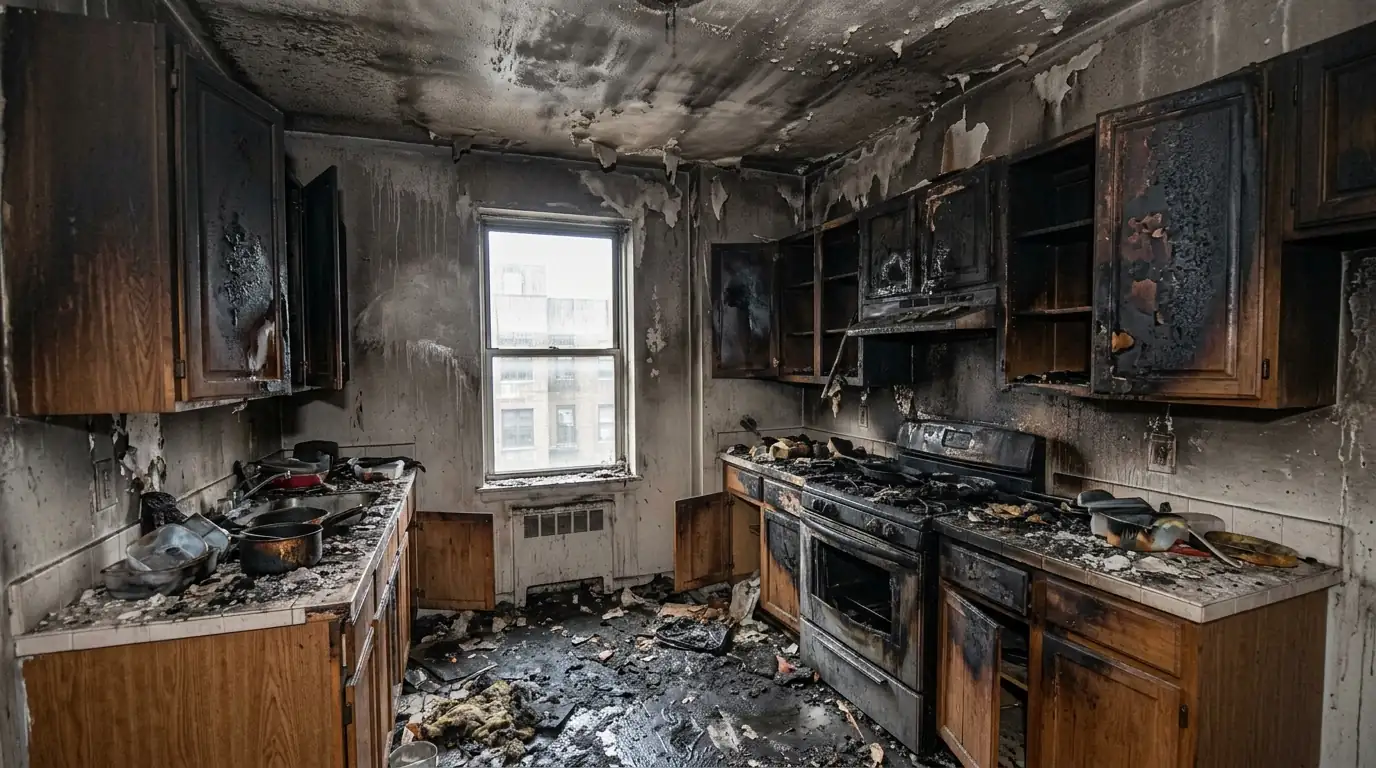
Kitchen fires are usually small, but they burn grease and food, which produce the heaviest, stickiest residue. It rises to the ceiling, coats the upper cabinets and drifts into the next rooms, and the smell is strong.
We clean the kitchen and the rooms around it, degrease every surface, and replace what burned. Appliances are checked by their own service techs before anyone cooks again.
Signs a kitchen fire did more damage than it looks
Sticky feel on surfaces
Protein residue is on everything.
Blistered cabinet fronts
The finish overheated and may need replacing.
Smell in the bedrooms
Smoke traveled beyond the kitchen.
Hood fan noisy or dead
Heat damaged the motor.
Yellowed ceiling
Grease residue has coated it.
Burnt smell from the cooktop
Residue is baked onto burners.
How we clean up after a kitchen fire
Make it safe
Stove and range power off; appliances left unplugged.
Assess
We note residue type and what burned.
Remove damaged parts
Charred cabinets and hood parts come out.
Degrease
Ceilings, walls and cabinets are cleaned top down.
Deodorize
Odor is treated in the kitchen and nearby rooms.
Replace and paint
New cabinets and paint where needed.
Grease fires
Grease fires flare fast and throw oily black soot upward. The ceiling and upper cabinets take most of it, and water thrown on a grease fire spreads it further.
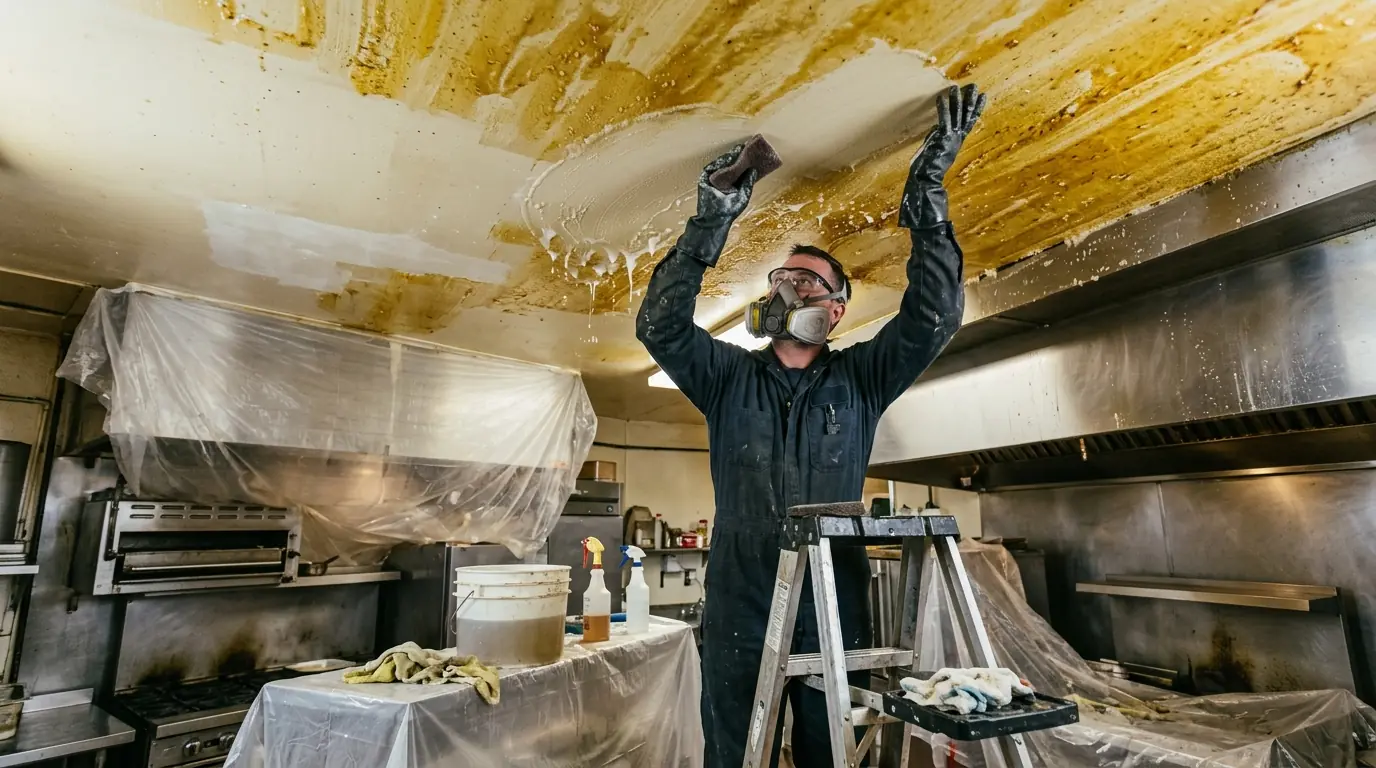
We degrease ceilings, walls and cabinet faces with cleaners made for oily soot, then seal and repaint surfaces that still stain. On Whirlpool, GE Appliances, Samsung or Frigidaire ranges, the cooktop and hood are cleaned, but anything that overheated is checked by the appliance maker’s service before use. Gas lines are left to the utility or a plumber.
Cabinet and range hood damage
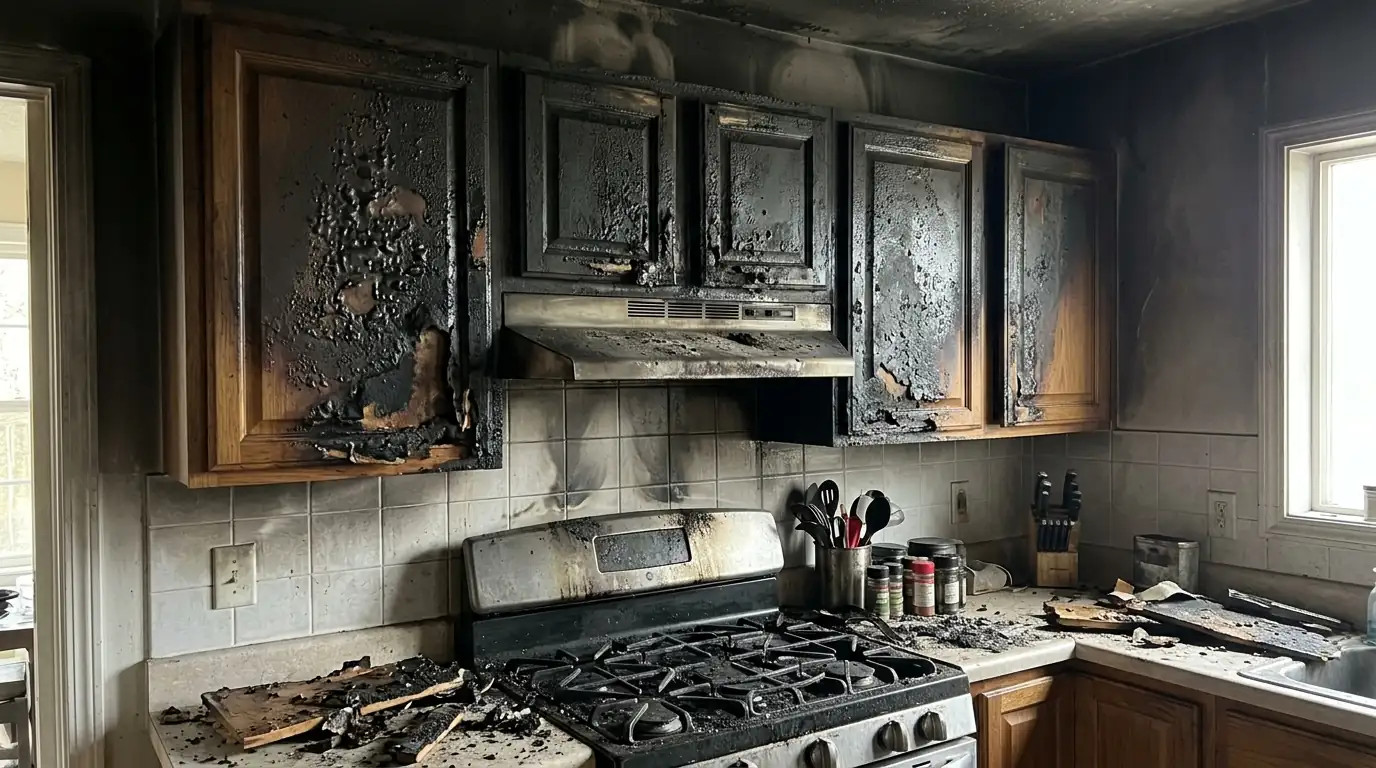
Upper cabinets and the range hood sit right above the heat. Laminate and thermofoil fronts blister and peel, and hood fans can be damaged inside.
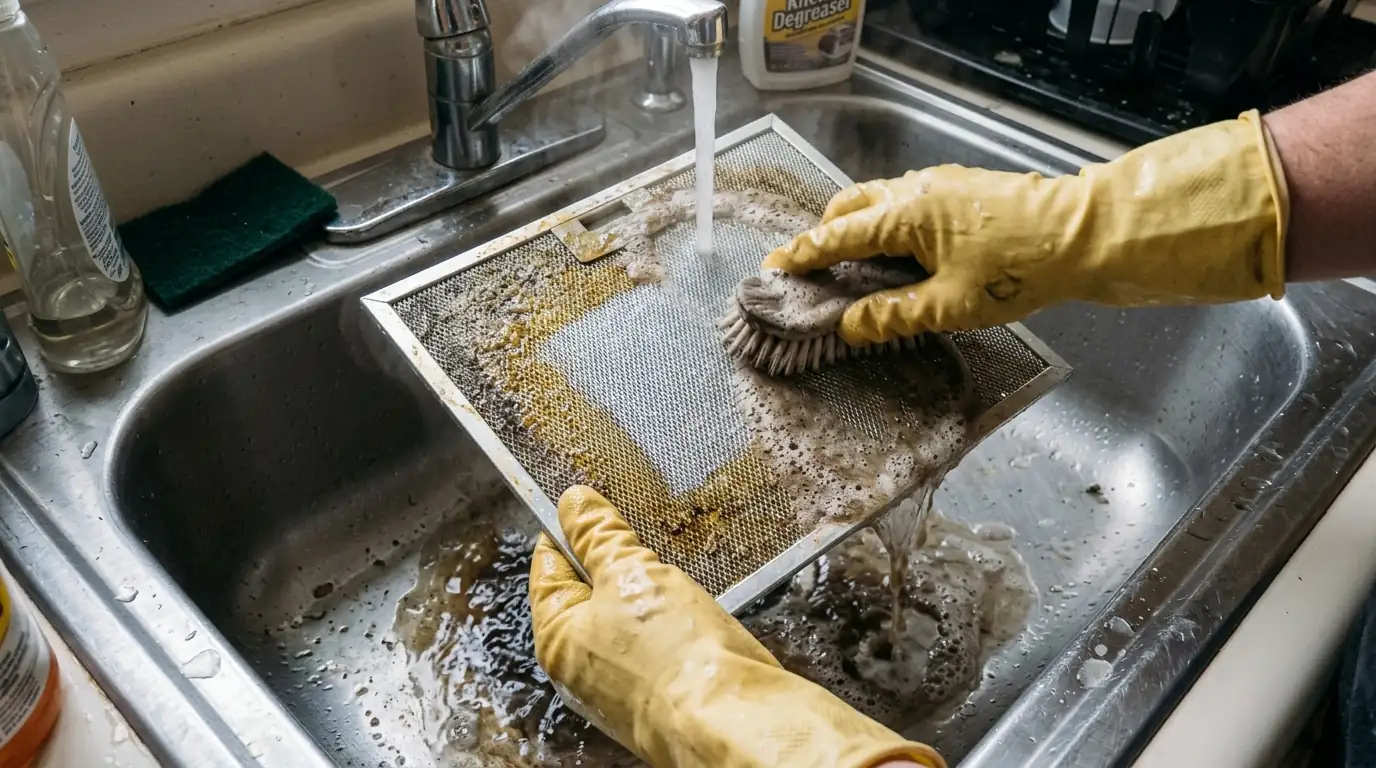
Cabinets that only have soot usually clean well. Blistered, warped or charred cabinets are replaced, and we measure them so the new ones match the rest of the kitchen. A Bosch or Miele hood insert may just need new filters and a thorough cleaning, while a scorched fan motor is replaced by the appliance tech.
Protein residue from burnt food
A pot of beans or a roast left too long does not burn like a grease fire, but it fills the apartment with a nearly invisible, sticky film and a smell that is hard to shift.
Protein residue sits on every surface, including inside drawers, closets and on clothes. We wet clean with degreasers, wipe down inside cabinets, clean fabrics, and deodorize. The smell is usually the last thing to go, and treating it early keeps it out of fabrics.
Kitchen fires in New York apartments
New York apartment kitchens are small and often open to the living room, with the range close to upper cabinets and little room for a big hood. In a galley kitchen, a stovetop flare puts soot on the ceiling within seconds, and smoke reaches the bedrooms quickly. Most of the kitchen fires we see are small ones that the tenant put out, and most of the work is residue and odor spread across the whole apartment, not burned cabinets.
What to do yourself after a small kitchen fire
Safe to do yourself
- Turn off the burner and unplug the range if safe
- Open windows if the smoke is light
- Keep cabinet doors closed
- Photograph the damage
Leave to a crew
- Degreasing ceilings and cabinets
- Removing burned cabinets
- Cleaning inside the hood
- Treating the smell in other rooms
What decides the cost of kitchen fire cleanup
Typical US rate for fire and smoke restoration, per LawnStarter. Source, 2026. A planning range, not a quote.
Grease and protein residue need degreasing.
Replacing burned cabinets is the largest line.
Residue in other rooms adds cleaning.
Service or replacement is billed by those trades.
Sealing and repainting stained ceilings adds cost.
We clean up after kitchen fires involving every major brand, from Whirlpool and GE Appliances ranges to Bosch hoods and Samsung cooktops.
- Whirlpool
- GE Appliances
- LG
- Samsung
- Bosch
- Frigidaire
- Maytag
- Miele
- Rheem
- A. O. Smith
- Bradford White
- Kohler
- Moen
- Weil-McLain
Questions about kitchen fires
Not with soap and water first. Grease residue needs degreasers or it smears.
Only the ones that blistered, warped or charred. Soot-covered ones usually clean.
Only after an appliance tech checks it.
Protein residue is still somewhere, often inside cabinets or fabrics.
Most homeowners, condo and renters policies cover fire and smoke damage.
Yes, through commercial restoration.