Short answer
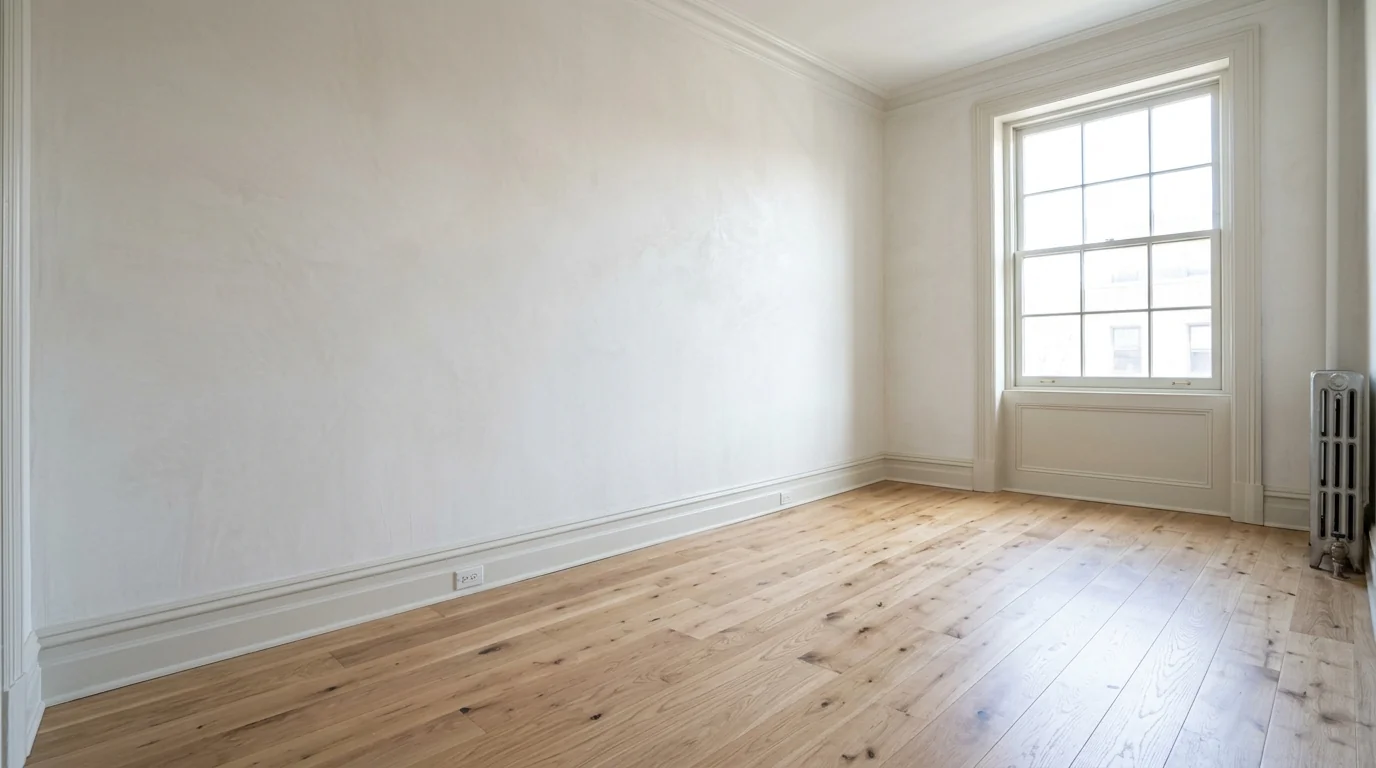
Reconstruction puts back what was removed during water or fire cleanup: drywall, plaster, insulation, flooring, cabinets, trim and paint. It starts only after the structure reads dry and any required inspections are done. Doing it on the same job file as the mitigation keeps the scope, photos and insurance estimate consistent from the first day to the last.
Why the rebuild should follow the drying crew
When one company dries the home and another rebuilds it, details get lost: what was removed, why, and what the adjuster already approved. The rebuild crew starts from scratch and the estimate gets argued twice.
We carry the same photos, measurements and moisture records from mitigation into the rebuild, so the scope matches what was taken out and the adjuster sees one consistent file.
Patch, section or whole room
| Damage | Usual approach | Why |
|---|---|---|
| Small area, same material | Patch and paint the wall | Blends when the whole wall is painted |
| Part of a floor | Weave in boards, refinish room | A single finish hides the repair |
| Most of a room | Replace the room finish | Patches would show |
| Kitchen cabinets, some damaged | Replace the matching run | Old and new doors rarely match |
What drives the cost of reconstruction
What came out during cleanup sets what goes back.
Plaster, custom trim and matched floors cost more.
Kitchens and baths are the most expensive rooms.
Plumbing and electrical work are part of many rebuilds.
Some work needs permits and inspections.
There is no single sourced range for rebuilds; we price from the measured scope and share it with your adjuster.
Kitchen and bath rebuilds
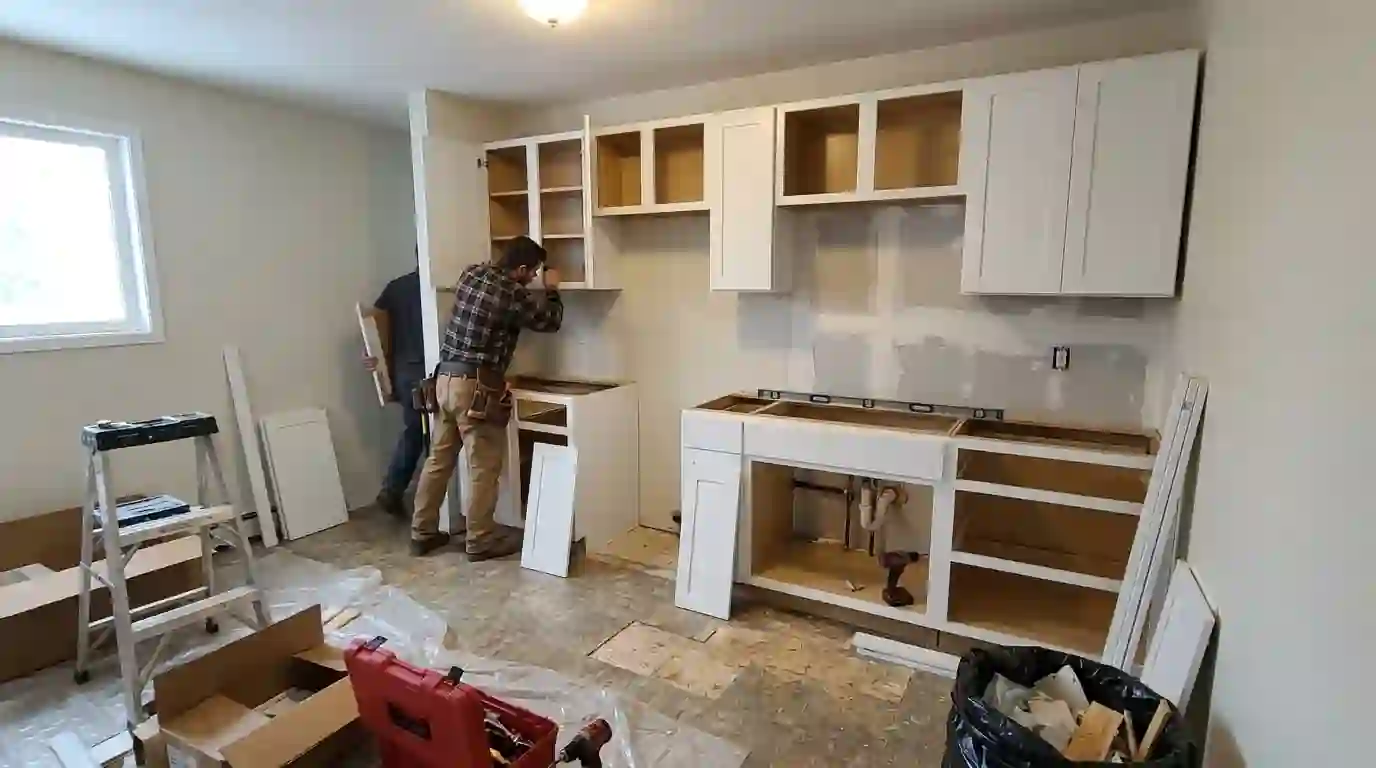
Kitchens and bathrooms take the most damage from leaks and fires, and they are the hardest rooms to live without. Cabinets, counters, tile and fixtures often have to come out for drying or because they burned.
We rebuild with the same layout unless you want changes, reuse counters and fixtures that survived, and schedule plumbing and electrical trades so the room is usable as early as possible. If you want upgrades beyond what insurance covers, we price them separately so the claim stays clean.
Flooring replacement
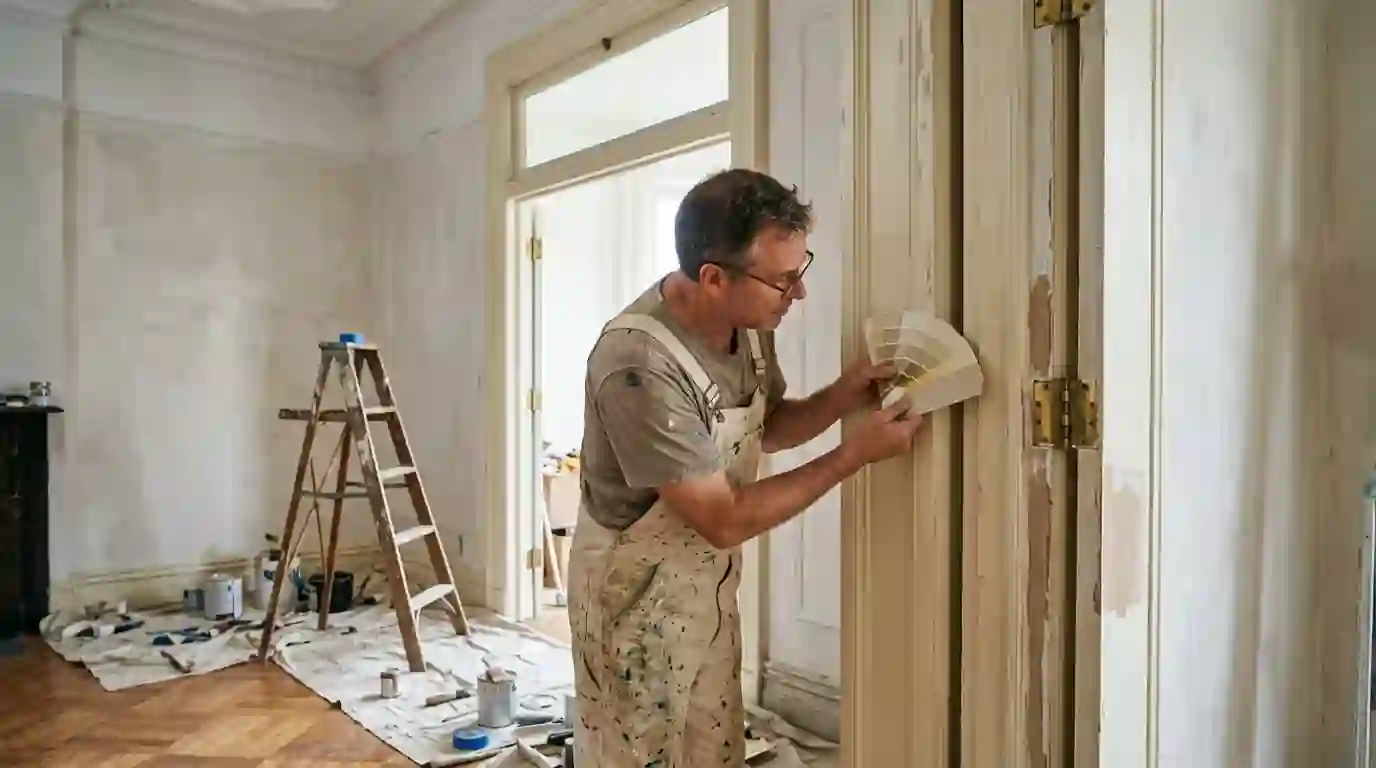
Flooring that could not be dried, or burned, is replaced. In older apartments that often means matching strip oak or parquet laid decades ago.
We weave new boards into the existing floor where the damage was partial, then sand and finish the whole room so the repair disappears. Where a floor is fully replaced, we check the subfloor is dry and flat first. Carpet, tile and vinyl are matched as closely as current products allow, and we tell you up front when an exact match is not available.
Paint and trim matched to the room
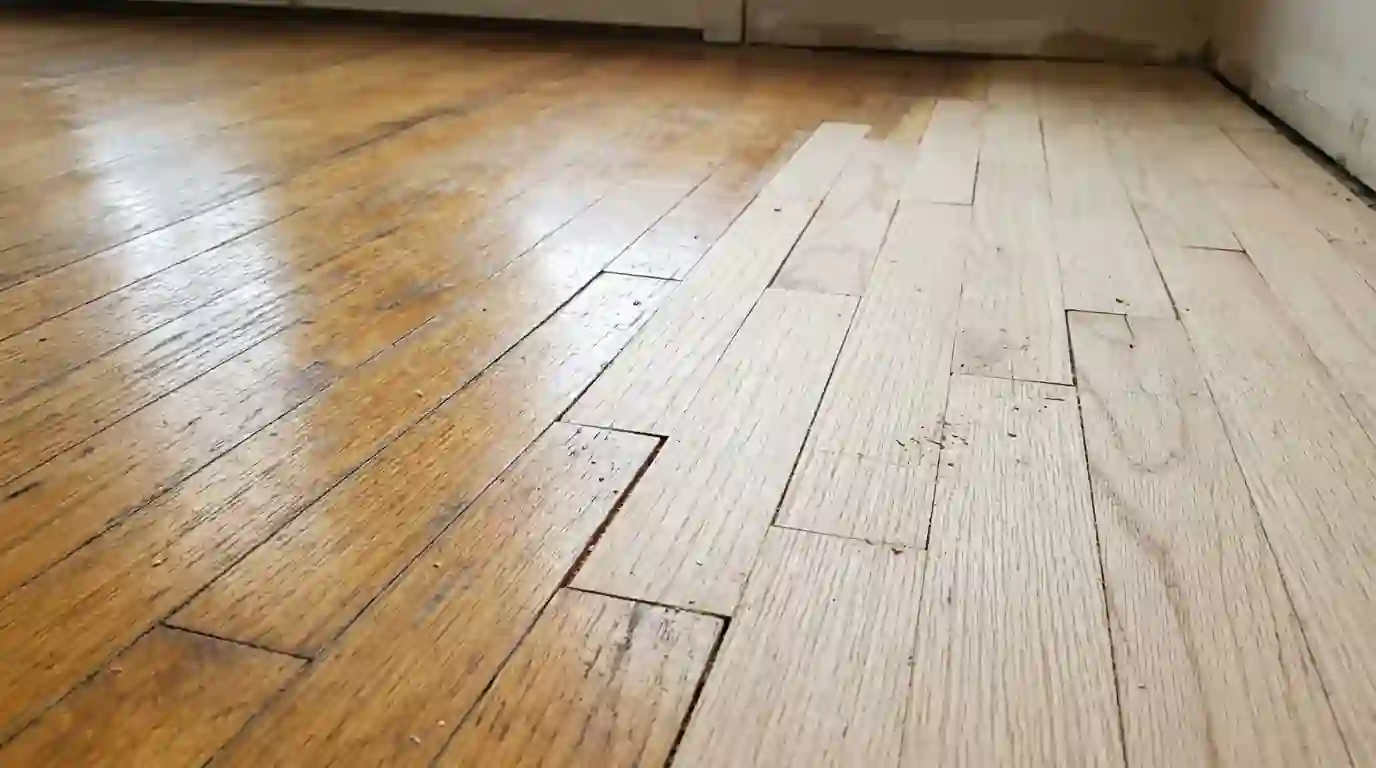
Patched walls painted in a slightly different white are the giveaway of a quick repair. Old trim profiles and door casings are another.
We match paint by sample, repaint whole walls or rooms where a patch would show, and mill or source trim to match existing profiles. Where the adjuster approves only part of a room, we explain what will and will not match so there are no surprises. Stain-blocking primer goes on first wherever water or smoke stained the surface.
What our reconstruction covers
- Framing and insulation
- Drywall and plaster
- Flooring, including matched hardwood
- Cabinets and counters
- Trim, doors and casings
- Paint matched by sample
- Coordination of plumbing and electrical trades
Rebuilding after the big storms
After Sandy, Nassau County expected about 1,400 homes to be destroyed or left uninhabitable, more than 1,000 of them in the Town of Hempstead. Rebuilds on that scale showed how long reconstruction takes when inspections, materials and adjusters are all stretched at once. Most of our rebuilds are one apartment or one house, but the same lesson holds: agree the scope with the adjuster before demolition closes, and order long-lead items like cabinets early.
How a rebuild runs
Confirm dry
Final readings show the structure is dry.
Agree scope
We and the adjuster align on what goes back.
Order materials
Cabinets and special items are ordered early.
Rough work
Framing, insulation and trade rough-ins.
Close and finish
Drywall or plaster, flooring, trim and paint.
Walk through
We check the finished room with you.
How long a rebuild takes
A room of drywall and paint usually takes one to two weeks. A kitchen or bathroom rebuild often takes several weeks, mostly waiting on cabinets and trades.
Permits and adjuster approvals can add time, so we start both as early as possible.
Questions about reconstruction
Yes. We hand over the photos and scope either way.
Often closely, by weaving in boards and refinishing the whole room.
Yes, priced separately from the insurance scope.
When readings show the structure is dry and the scope is agreed.
Where the work needs them, yes.
Usually, for the damage caused by a covered loss.