Short answer
In New York City buildings with ten or more units, mold covering more than 10 square feet must be assessed by one qualified company and removed by a separate, independent one, following Local Law 55 work practices. HPD issues mold violations with fixed correction periods, so owners need the work done correctly and documented on time.
What building owners are expected to do about mold
For owners, mold is a housing maintenance issue as well as a repair. Tenants can complain, HPD can inspect and issue a violation, and the violation has to be corrected and certified within its deadline.
We carry out the remediation to the assessor’s scope, keep tenants informed, fix or report the moisture source, and give you photos and records for certifying the correction. We are the remediator; the assessor is a separate company, as the law requires.
What affects the cost of mold work in a building
Typical US ranges for mold remediation, per This Old House; multi-unit jobs are priced per unit and area. Source, 2026. A planning range, not a quote.
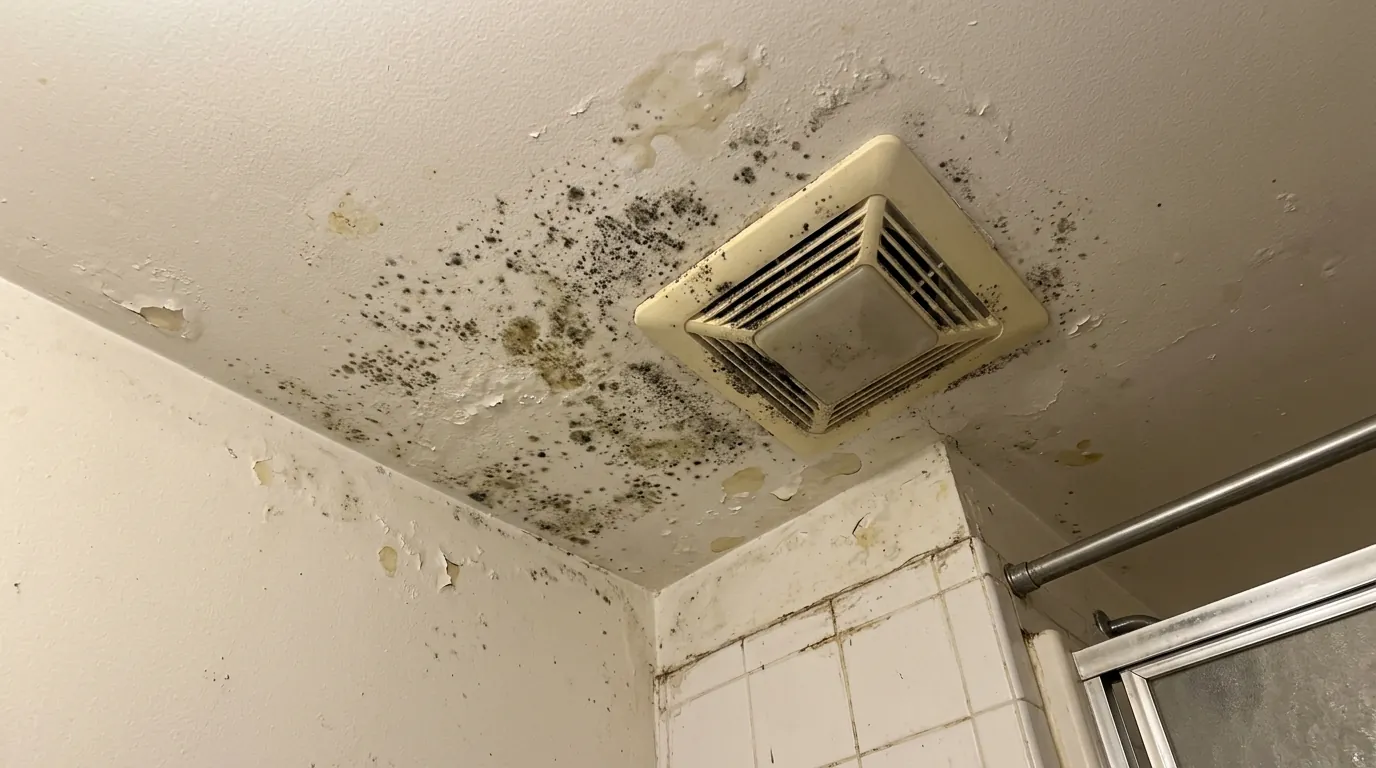
A line of stacked bathrooms means several jobs.
Square footage of growth sets removal time.
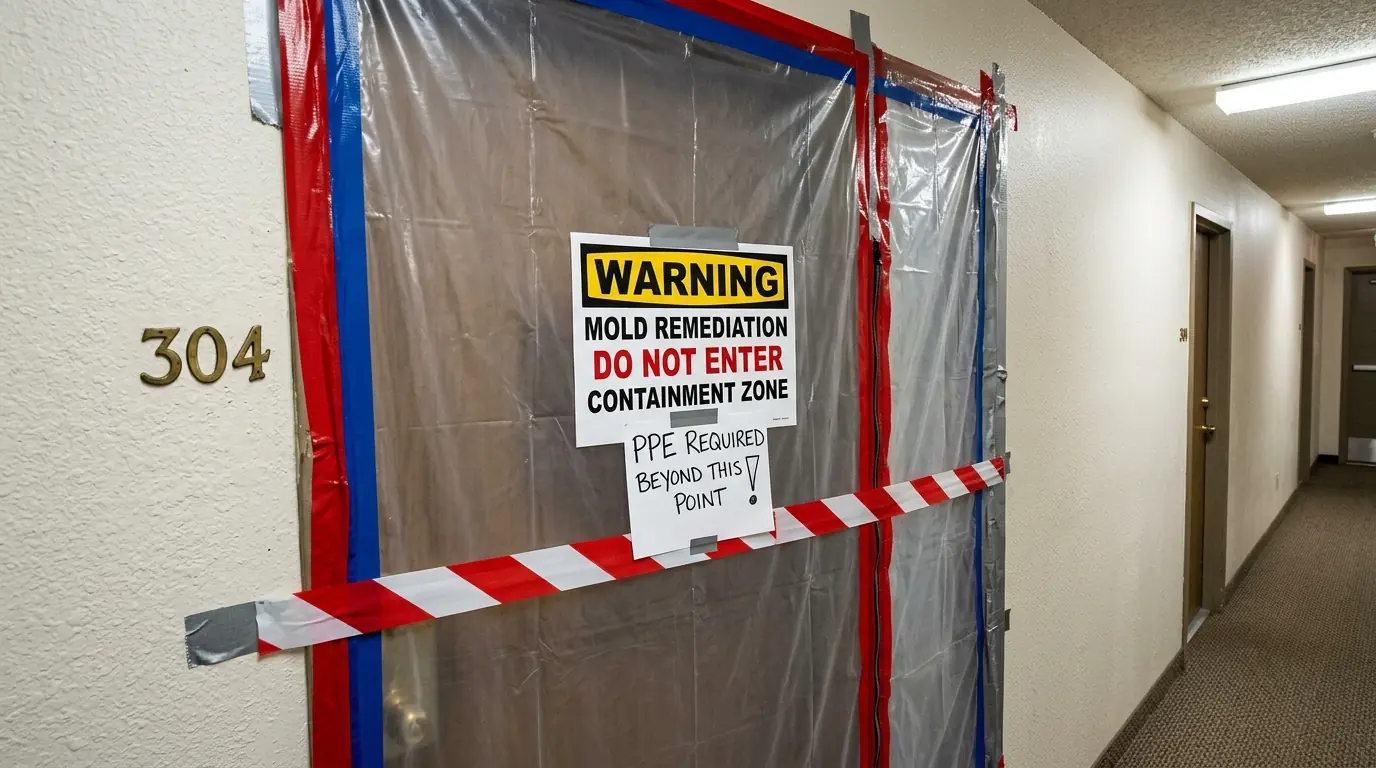
Jobs over 10 square feet need full containment.
Tenant schedules affect how many units per day.
Plumbing or ventilation fixes are billed separately.
Local Law 55 work practices
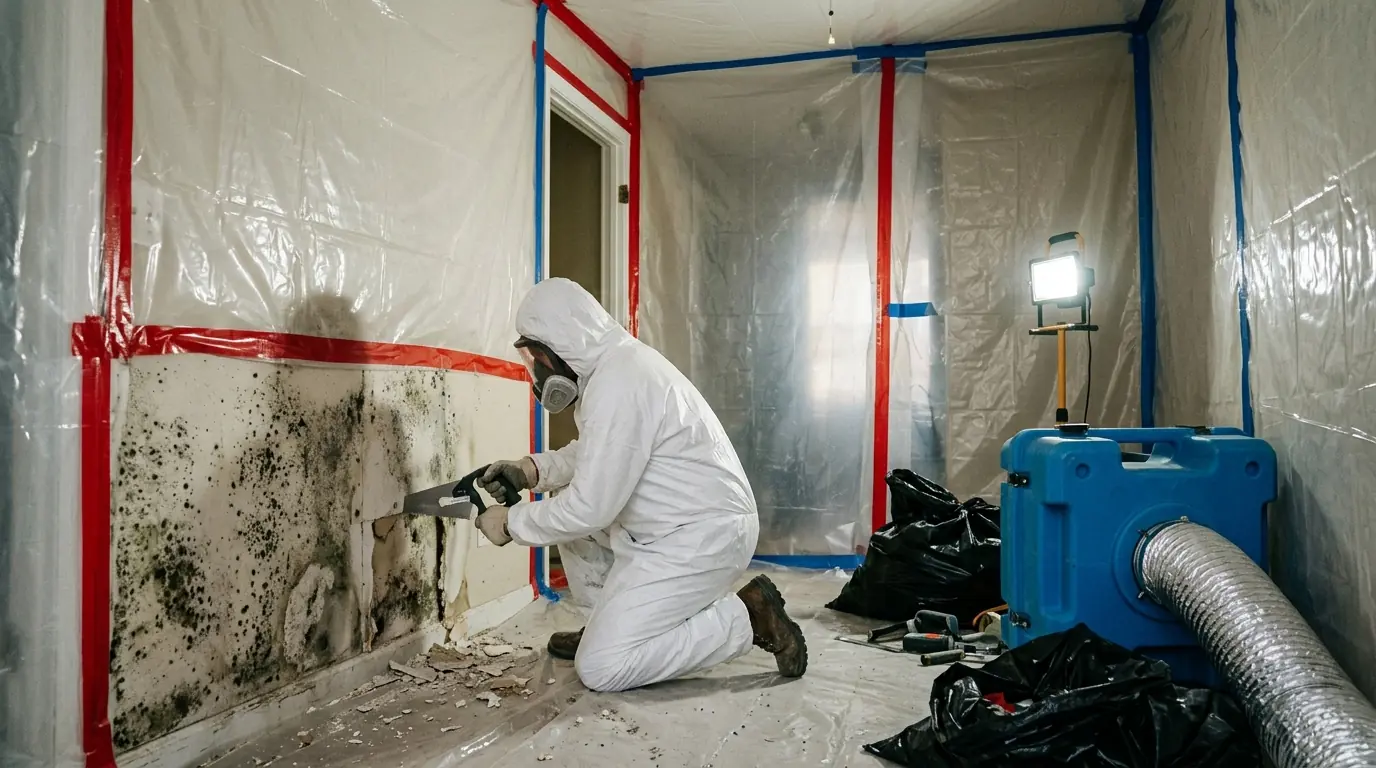
Local Law 55 sets out how mold must be handled in covered buildings: find and fix the moisture source, isolate the work area, remove and clean with methods that limit dust, and clean up afterward.
On larger jobs we set full containment with plastic sheeting and negative air, remove moldy materials, HEPA vacuum and clean, and leave the area dry and clean for the assessor’s clearance. Every step is photographed, so the owner has a record showing the work practices were followed.
Buildings with ten or more units
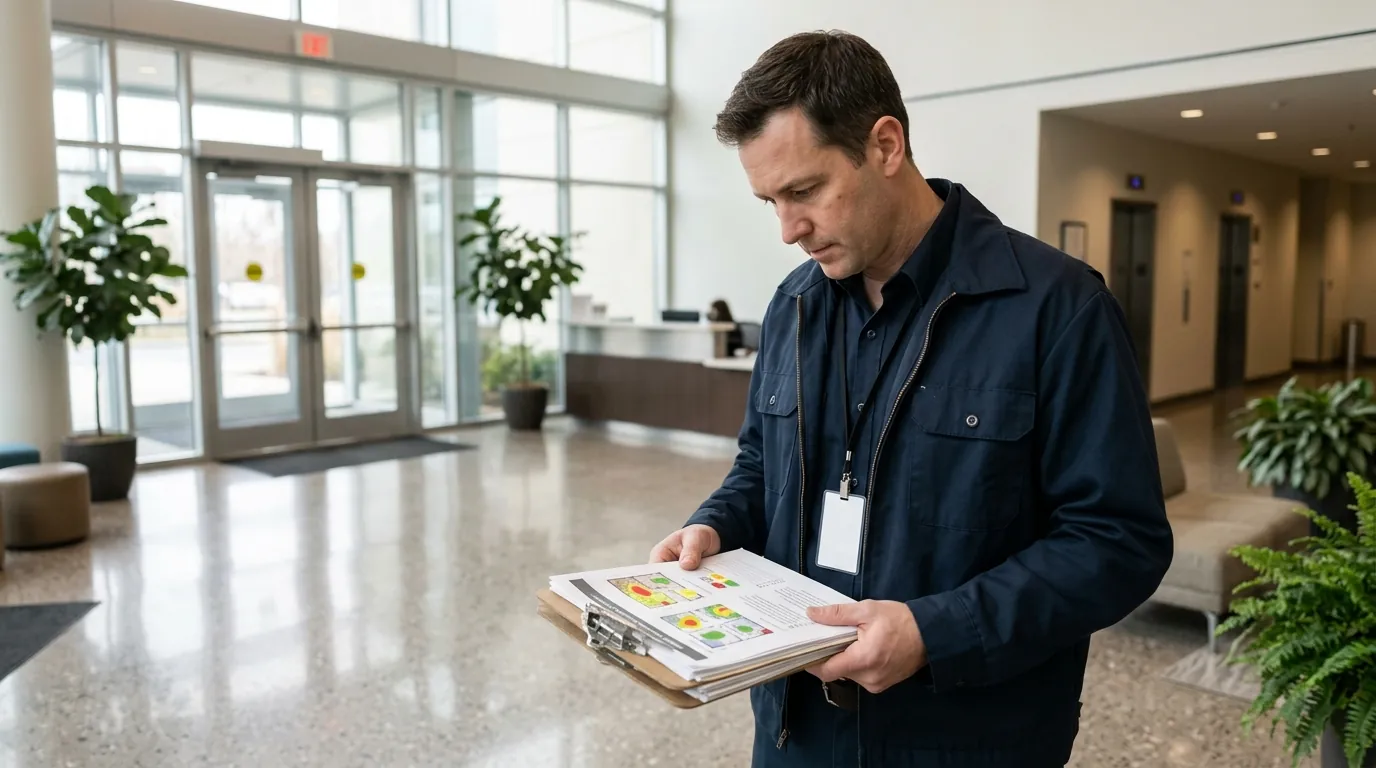
In buildings with ten or more units, mold jobs over 10 square feet need an independent assessor to write the scope and a separate company to do the removal. Smaller jobs still have to follow safe work practices.
We work from the assessor’s written scope, coordinate access with the managing agent and tenants, and schedule several units in a row where the same riser or leak affected a whole line. The assessor then checks the finished work before anything is closed up.
Clearing a mold violation
An HPD mold violation carries a deadline, and the owner has to correct it and certify the correction. Missing the deadline or doing the work poorly brings reinspection and more trouble.
We schedule the work inside the correction period, fix the visible damage, point out the moisture source, and hand over dated photos and a description of the work so the owner can certify it. Where the source is a leak in another unit, we note it so it is fixed as well, not just the stain.
What owners and agents receive from us
- Work to the assessor’s written scope
- Containment and HEPA filtration
- Tenant notice and access coordination
- Dated before and after photos
- Notes on the moisture source
- A description of the work for certifying the correction
- Scheduling inside the violation deadline
How HPD mold violations are classed
HPD classes mold violations as A, B or C, and the correction periods are 90, 30 and 21 days. Under Local Law 55, owners of New York City buildings with ten or more units need an independent assessor and a separate remediator once mold covers more than 10 square feet. We plan the schedule around the violation’s class, because a Class C in the middle of winter leaves little room for a delay in drying.
How a building mold job runs
Get the scope
The independent assessor writes the work plan.
Schedule access
We coordinate units and dates with the agent.
Contain
Work areas are sealed from the rest of the unit.
Remove and clean
Moldy materials go and surfaces are cleaned.
Dry and document
Areas are dried and photographed.
Hand over
Records go to the owner and the assessor.
How long building mold work takes
A single bathroom or closet is usually done in a day or two, plus drying. A line of units or a basement can take a week or more.
We schedule to meet the violation’s correction period and tell you early if a source repair will hold it up.
Questions about building and landlord mold
Not on covered jobs. Local Law 55 requires separate, independent companies.
We document attempts and dates so the owner has a record.
We find and report it. Plumbing repairs go to the building’s plumber.
The owner certifies with HPD; our photos and work records support it.
Usually, outside the contained area.
Yes. See co-op and condo buildings.