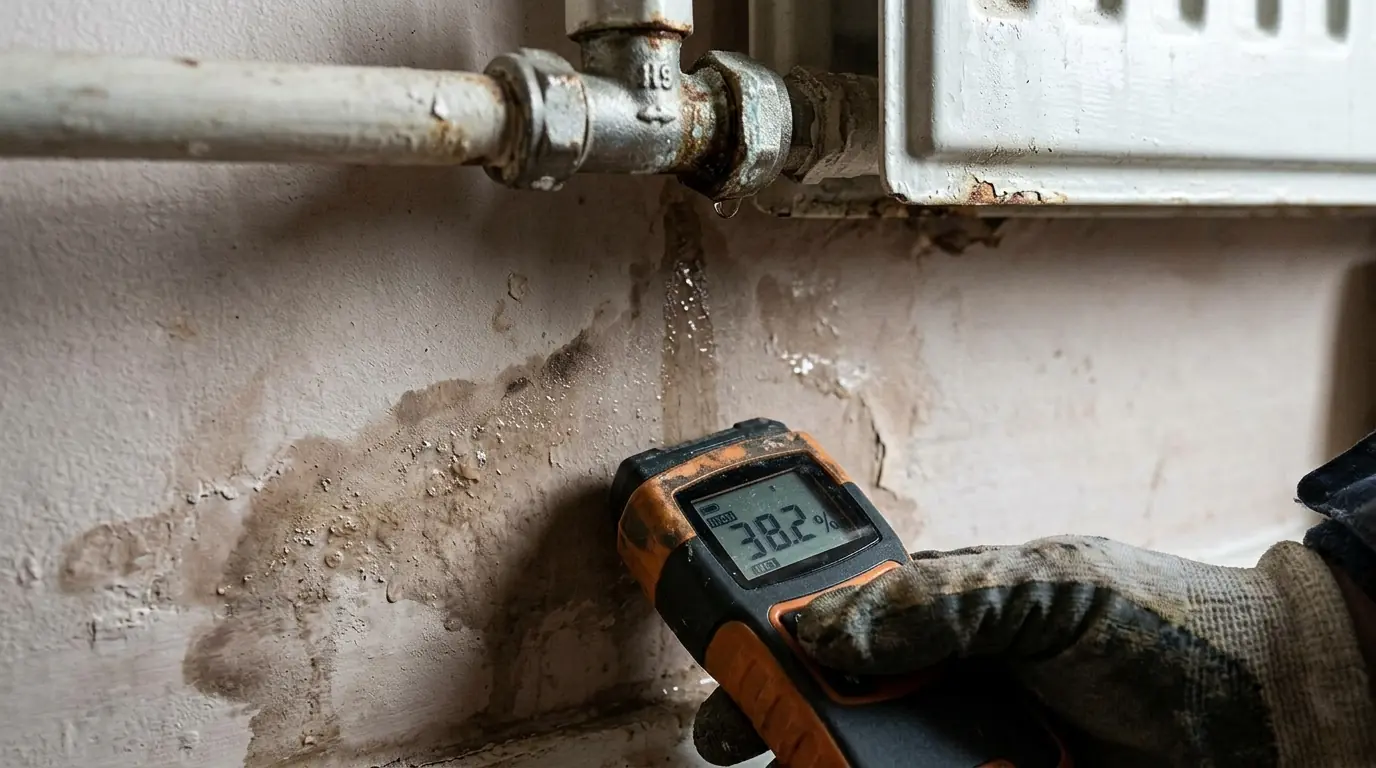
Short answer
An overflowing tub or sink is clean water and usually dries well if it is extracted within a day. An overflowing toilet is different: water from the bowl is contaminated, so rugs, pad and soaked porous materials usually come out and surfaces are disinfected. In an apartment, check the ceiling below too.
What an overflow does to a bathroom
Tile looks waterproof but is not. Water runs through grout lines and around the toilet flange, into the subfloor and down to the ceiling below. The bathroom may look fine an hour later while the floor underneath stays wet.
We extract, test how far the water went, and dry the subfloor and walls. Where the water came from the toilet, we remove porous materials it touched and disinfect before drying.
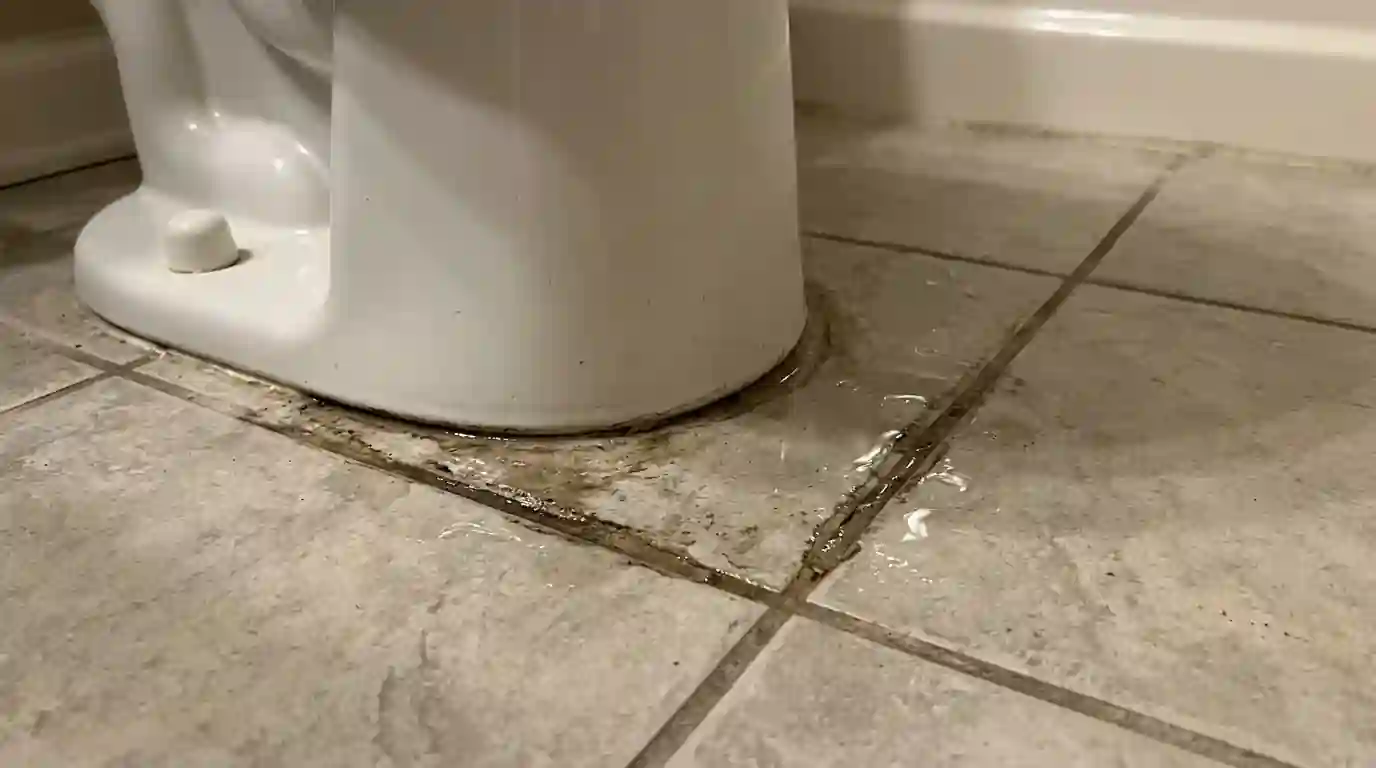
Signs overflow water got under the floor
Grout that stays dark
Water is still in the joints and the subfloor.
A rocking toilet
The floor under the flange may be soft.
Loose tiles
The bond is failing over a wet subfloor.
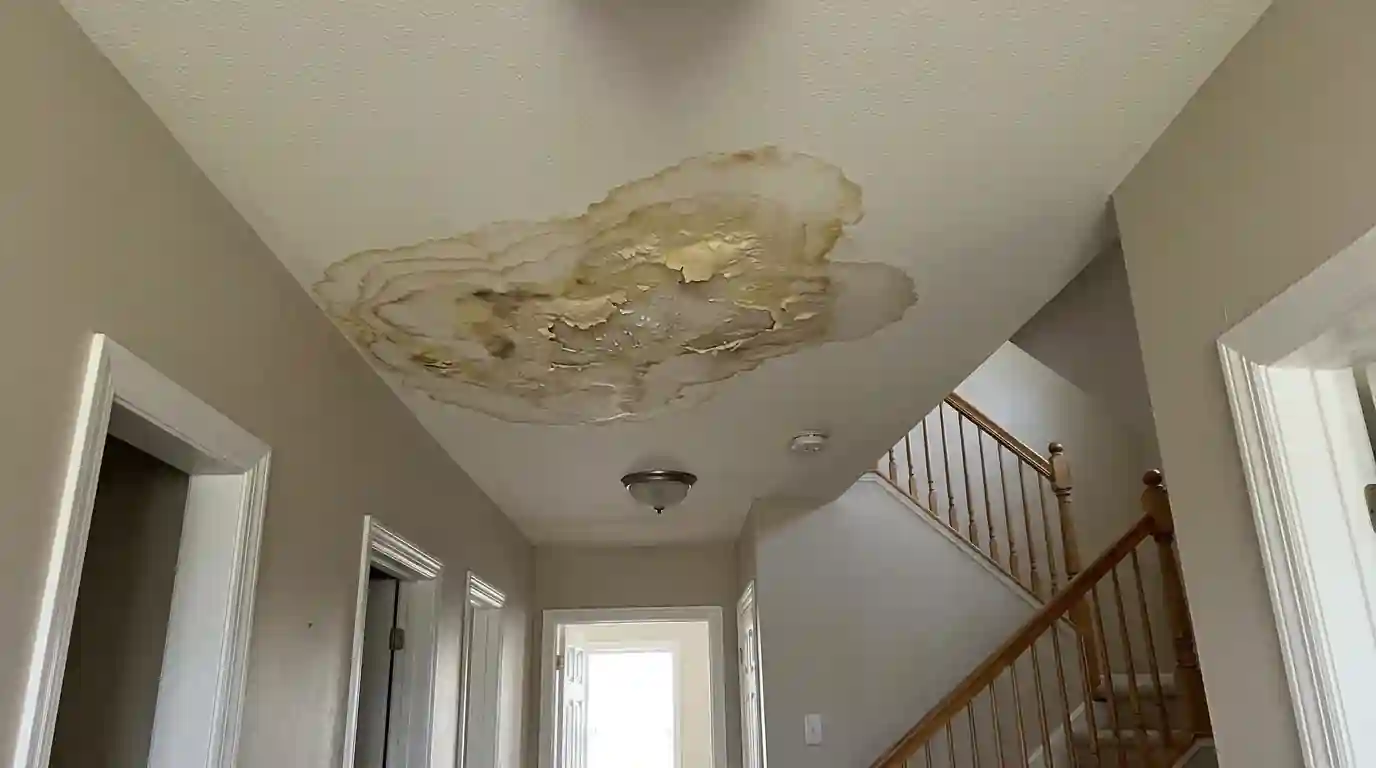
Stain in the ceiling below
Water made it through the floor.
Baseboard swelling
Water wicked into the wall.
A sewer smell
Toilet water is sitting under the floor.
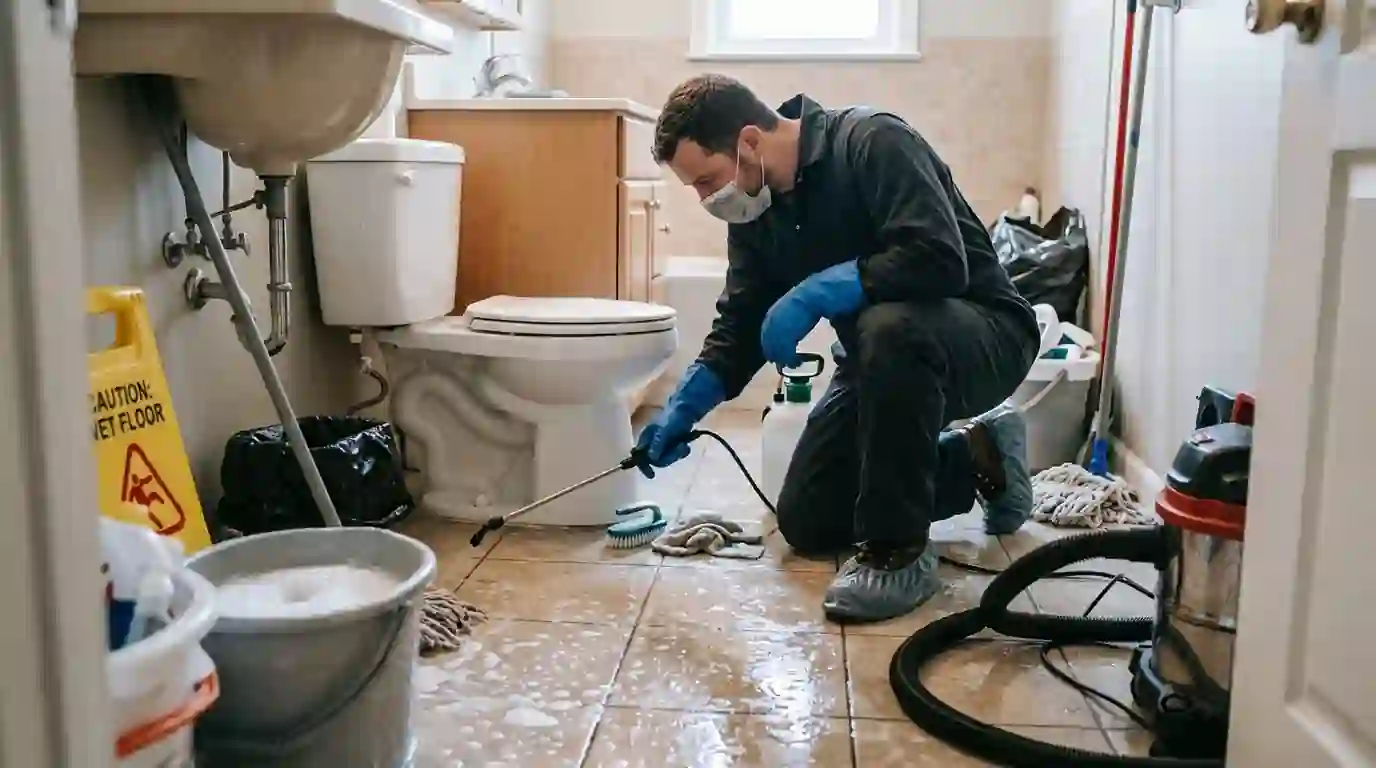
How we clean up an overflow
Stop the water
Close the toilet or fixture valve, or have the super close it.
Extract
Standing water comes off the floor and out of any carpet.
Remove what it soaked
Toilet water means rugs, pad and wet baseboards go.
Disinfect
Hard surfaces touched by toilet water are cleaned and treated.
Dry
The subfloor, walls and ceiling below are dried and measured.
Repair
Baseboards, drywall and paint are put back.
Clean tub and sink overflows
A tub left running, a stopper that dropped or a sink that overflowed is clean water from the supply. It is the best case: if extraction starts quickly, most floors and walls dry in place without removal.
We extract, lift the toilet only if water got under it, and dry the subfloor from above and the ceiling from below. The typical US range for water damage restoration is $1,270 to $5,376, and a clean overflow caught early usually sits at the low end.
Toilet overflows with contamination
Water that came out of the toilet bowl is treated as contaminated, even if it looks clear. Bath mats, rugs and carpet it soaked are discarded, and baseboards and drywall it wicked into are cut out.
We wear protective gear, remove the porous materials, disinfect hard surfaces and then dry. If the overflow came from a sewer backup rather than a clog, it is handled as a sewage job. Keep children and pets out of the bathroom until the floor is cleaned.
Water that reached the unit below
In a building, overflow water often shows up as a stain or drip in the bathroom or kitchen of the apartment below within an hour.
We dry both units, and keep separate records for each, because the downstairs neighbor may claim on their own policy and the building may be involved. If the ceiling below is sagging, we release the water and support it before drying. If toilet water came through, that ceiling is cleaned and treated like the bathroom above.
Overflows in stacked New York bathrooms
New York apartment buildings stack bathrooms in the same line from the lobby to the roof, so the plumbing chase acts as a path for any overflow. Water from a tub on one floor often shows up in the bathroom ceiling one or two floors down, sometimes before the person upstairs notices. That is why the first call to us is often from the neighbor below, and why we ask for the super’s number so both units can be checked in one visit.
What to do yourself, and when to stop
Safe to do yourself
- Close the valve behind the toilet
- Turn off the tub and pull the plug
- Mop clean tub water with towels
- Tell your neighbor below and the super
Leave to a crew
- Handling toilet water on porous materials
- Drying under tile and the subfloor
- Drying the ceiling below
- Anything that came up through a drain
What affects the cost of overflow cleanup
Typical US range for water damage restoration. Source, 2026. A planning range, not a quote.
Toilet water means removal and disinfection.
Water in the subfloor may mean lifting the toilet or tile.
The ceiling below is a second drying job.
Water left overnight reaches more of the floor.
Replacing tile or grout is priced separately.
Questions about toilet and tub overflows
It is treated as contaminated. Wear gloves, keep children and pets out, and let us handle porous materials.
Small ones on tile, yes. If water got into the subfloor or the ceiling below, it needs drying.
Usually not if it is released and dried quickly. Plaster can often be patched.
Sudden accidental overflows usually are. Check your policy for water damage limits.
Only if readings show water under it. It is reset on a new seal.
That points to a sewer backup, which we handle as a sewage job.