Short answer
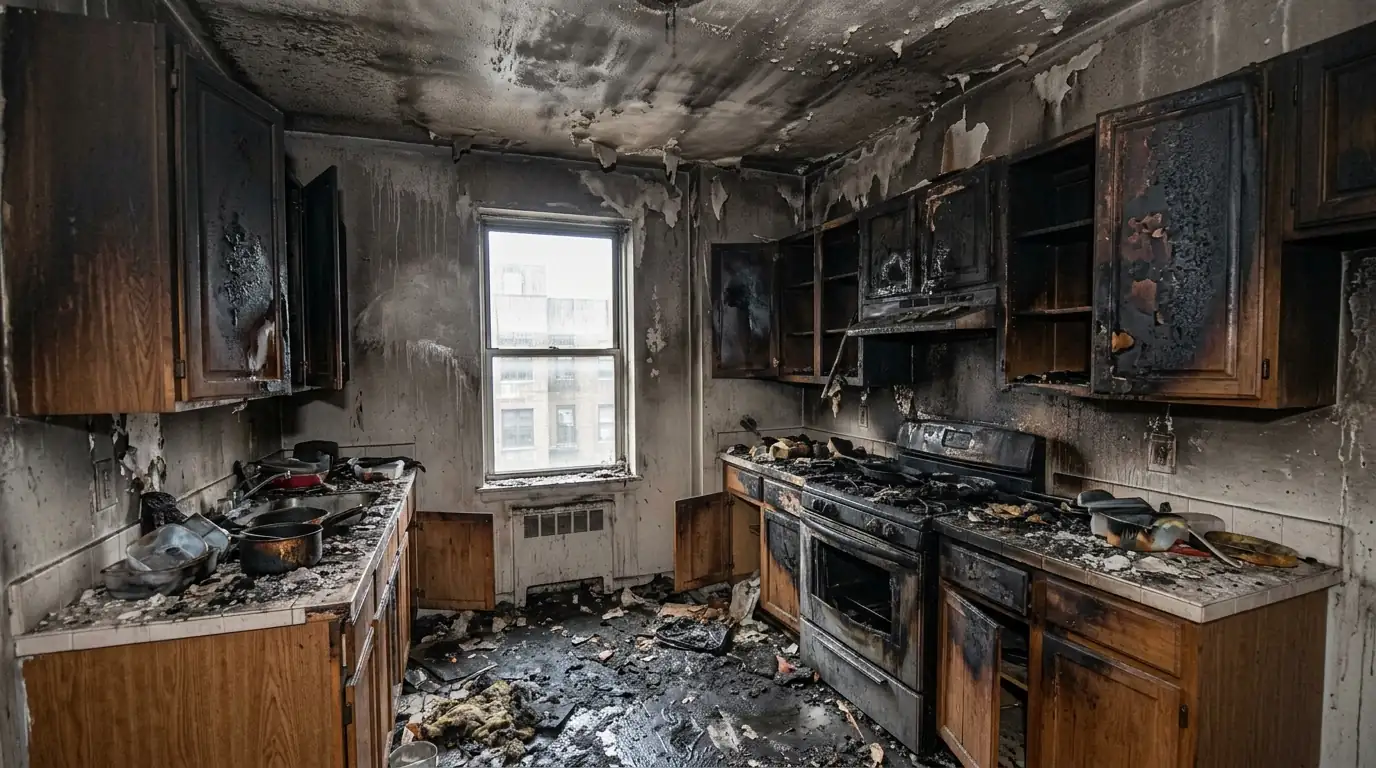
Fire damage restoration starts once the fire department releases the home. The order is fixed: secure the building, remove water from firefighting, clean soot and smoke residue, remove charred and unsalvageable materials, deodorize, then rebuild. Soot is acidic and keeps etching surfaces, so cleaning should begin within days, not weeks.
What a fire leaves behind besides the burned room
The burned room is usually the smallest part of the damage. Smoke travels through the whole home and through shared walls, soot settles on every surface, and hundreds of gallons of hose water soak floors and the units below.
We handle all three on one job file: water, soot and smoke, and the structure. That keeps the drying, cleaning and rebuild in the right order and gives your adjuster one complete record of the loss.
How a fire restoration job runs
Secure the building
Board-up and tarps close windows, doors and roof vents.
Remove water
Hose water is extracted and drying starts.
Pack out contents
Belongings are inventoried and taken for cleaning.
Clean soot
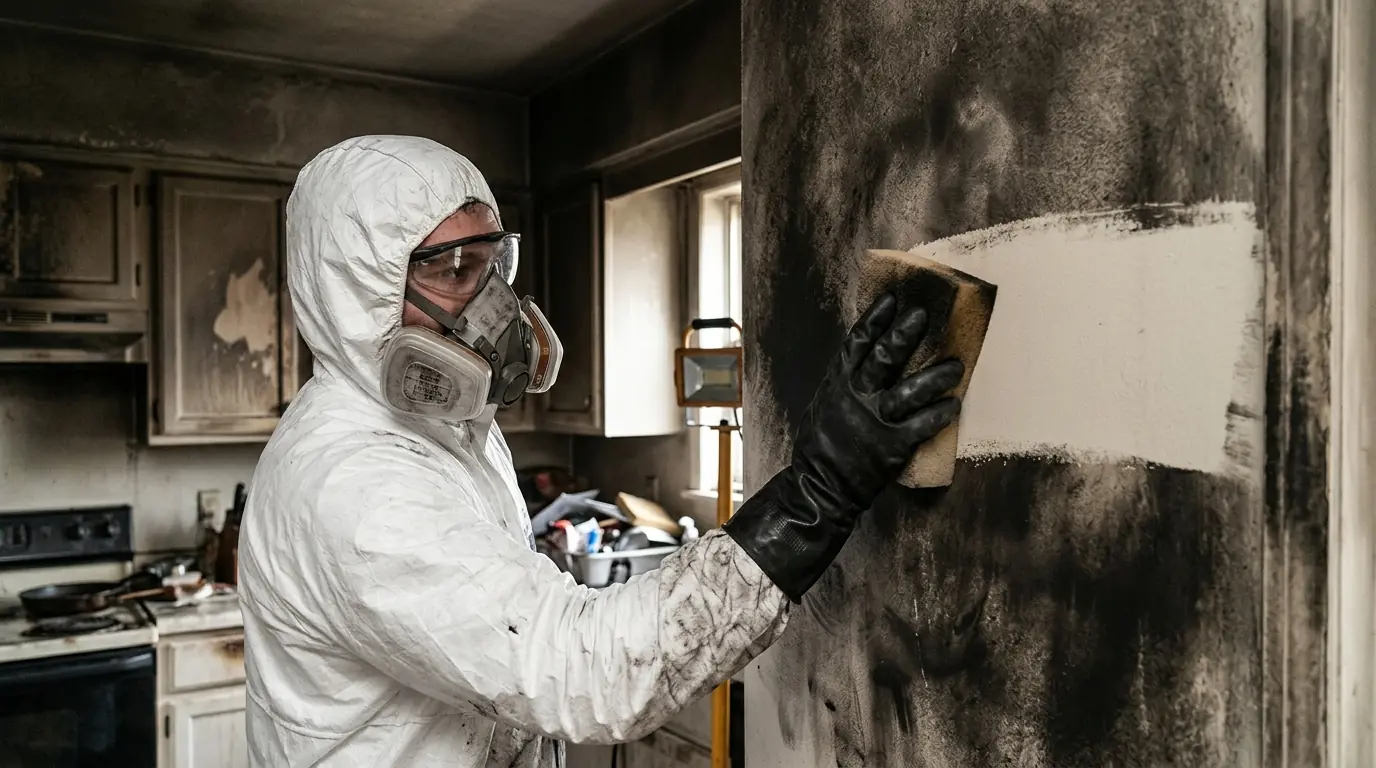
Walls, ceilings and surfaces are cleaned by soot type.
Remove and deodorize
Burned materials come out and odor is treated.
Rebuild
Framing, walls, floors and finishes are put back.
Apartment fires
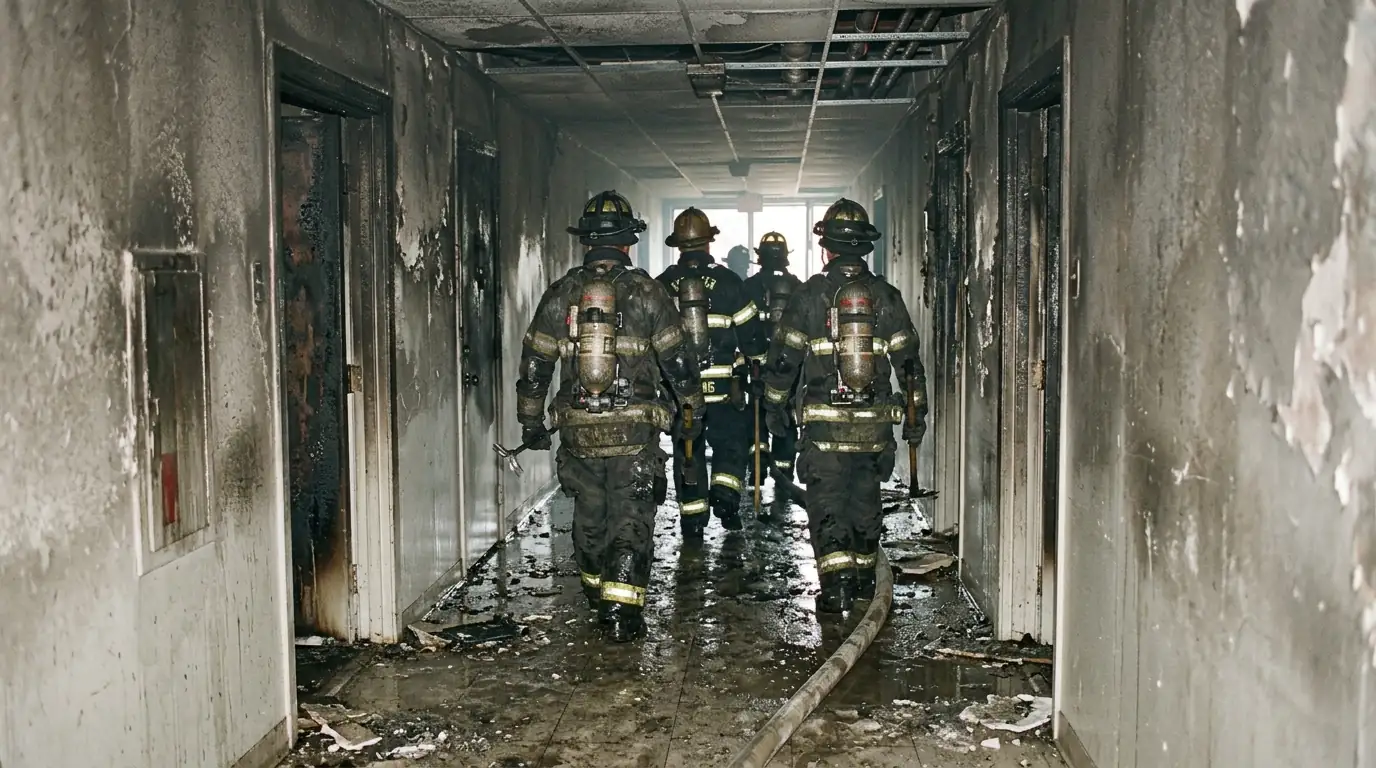
In an apartment, a fire in one unit leaves smoke in the hallway and neighboring units and water in the apartments below. Each owner or tenant may have a different insurer, and the building has its own policy for common areas.
We work unit by unit with separate records, coordinate with the managing agent on hallways and stairs, and start with the units that are wet so water damage does not spread. Typical fire damage restoration jobs run $3,083 to $52,031, averaging $27,477, with most of that range driven by how much has to be rebuilt.
Fire hose water cleanup
Firefighting puts a lot of water into a building in a short time. It soaks the fire floor and runs down through ceilings and walls, mixed with soot and debris, so it is dirtier than a clean pipe leak.
We extract it, remove soaked drywall, insulation and flooring, and dry the structure while the soot cleaning goes on. Left alone for even a few days, hose water turns a fire job into a mold job as well, so we start drying on the first visit.
Structural char removal
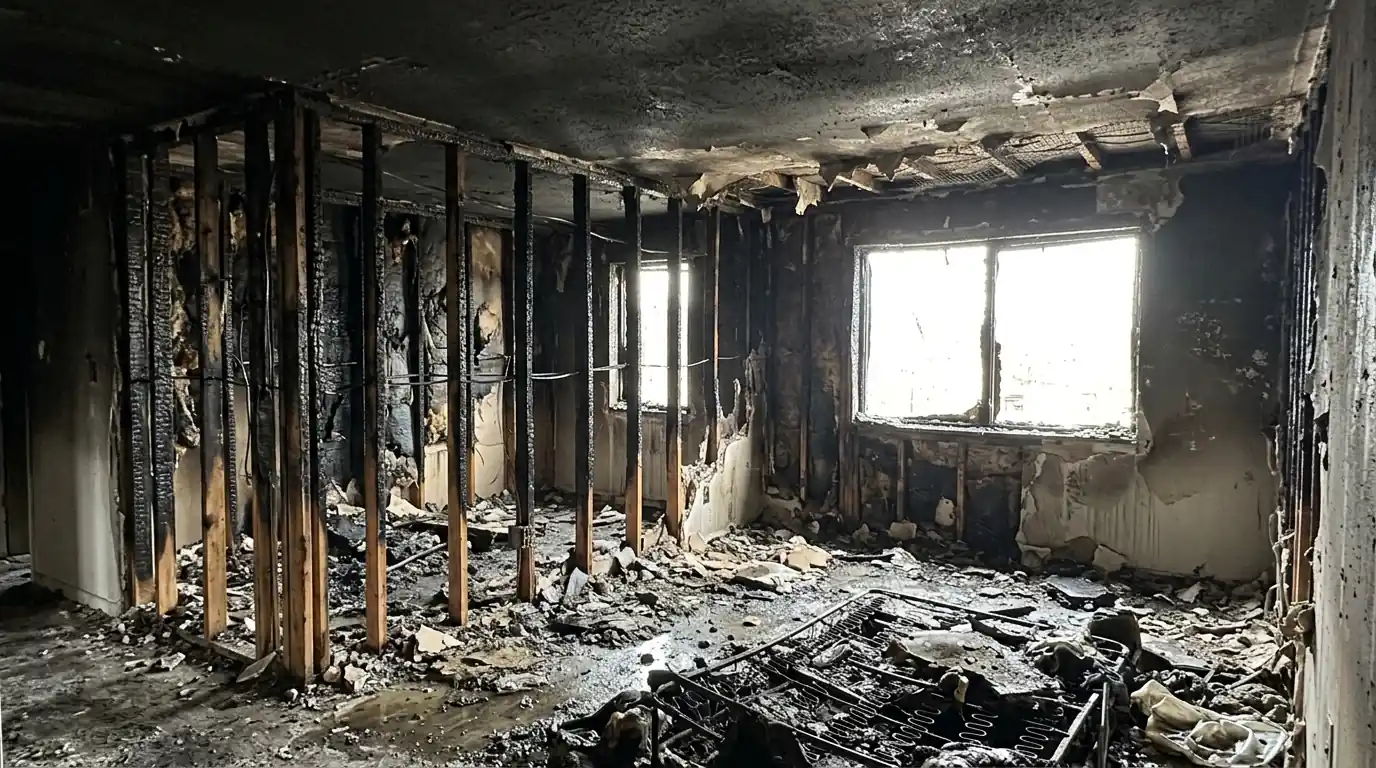
Charred framing is weakened and it holds smoke odor. Studs and joists that burned only on the surface can often be cleaned and sealed; deeper char means the member is replaced.
We remove burned drywall, plaster and insulation to expose the framing, clean off loose char by scraping or blasting, and seal what stays so the odor does not come back through new finishes. Framing that needs replacing is noted for the rebuild and for any required inspection, with photos taken before anything is covered.
How long fire restoration takes
Securing and water removal happen in the first day or two. Cleaning and deodorizing a smoke-damaged apartment usually takes one to three weeks.
Rebuilding depends on how much burned and can take weeks to months, especially where permits are involved.
When fire and flood meet
During Sandy in 2012, more than 100 homes in Breezy Point burned when floodwater reached electrical wiring, so a single storm left the same blocks with fire, smoke and flood damage at once. Most of our fire jobs are smaller than that, but the lesson carries over. Water and electricity are the first things we check at a fire scene, because fire jobs almost always come with water damage from the hoses and wiring that may still be energized.
Just released by the fire department?
Do not wipe soot or run the heat. Call us and we will secure the home and start on the water.What our fire restoration covers
- Board-up and roof tarping
- Hose water extraction and drying
- Contents pack-out and inventory
- Soot cleaning matched to soot type
- Char removal and sealing
- Smoke odor treatment
- Rebuild of walls, floors and finishes
What drives the cost of fire damage restoration
Typical US range for fire damage restoration, per Angi. Source, 2026. A planning range, not a quote.
One room differs from a whole apartment.
Smoke in every room means cleaning every room.
Water in the unit below adds drying.
Burned framing adds removal and rebuild.
Pack-out, cleaning and inventory add up quickly.
Fire is covered by most homeowners, condo and renters policies. We document the loss room by room for your adjuster.
Questions about fire damage
When the fire department releases the home. Even then, stay out of rooms with heavy soot or structural damage.
No. Wiping smears soot into porous surfaces and can make it permanent.
Most homeowners, condo and renters policies cover fire, smoke and hose water damage.
Many can. Hard goods and many textiles clean well; heavily burned items are listed for the claim.
Firefighting uses a lot of water, and it spreads through floors and ceilings.
Yes, on the same job file through reconstruction.