Short answer
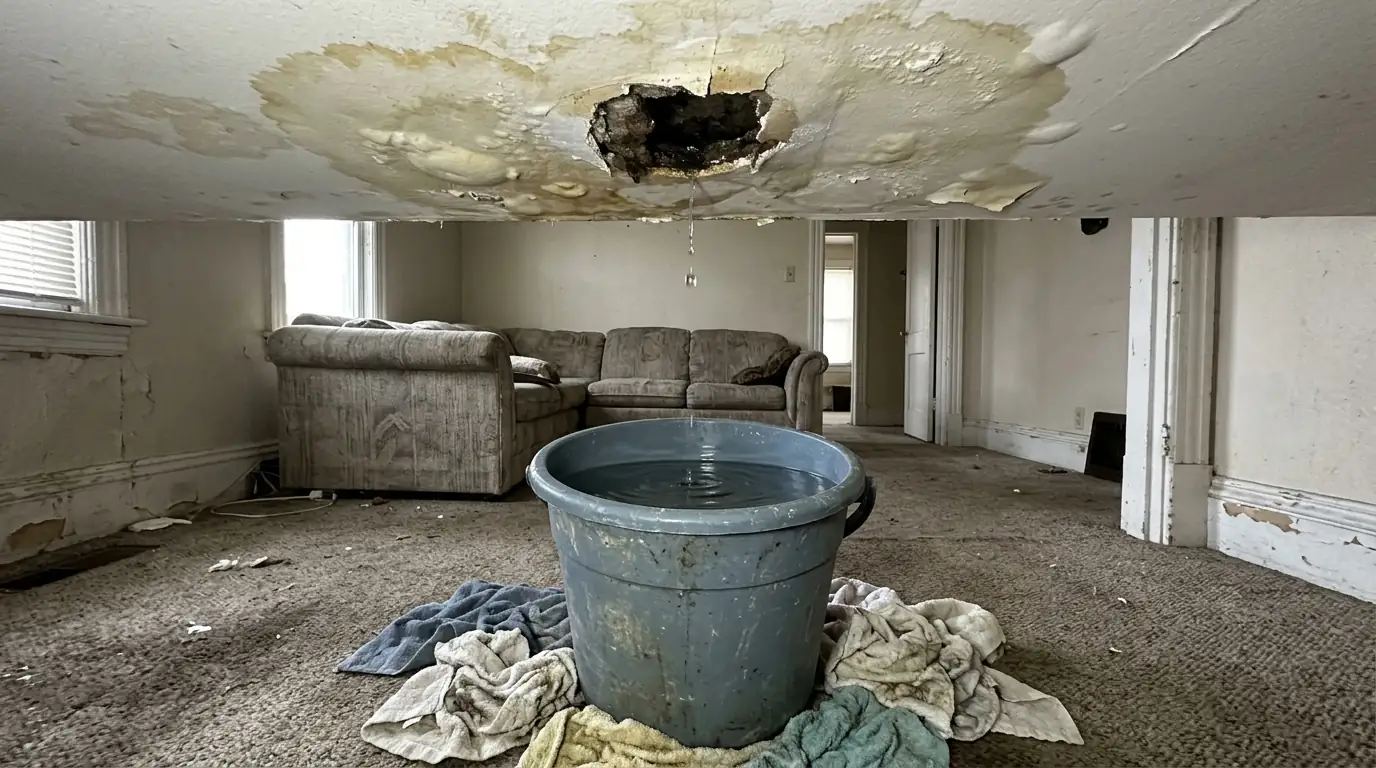
If water is coming through your ceiling from upstairs, keep everyone out from under any bulge, turn off power to fixtures in the wet area, and catch the water. Then call the super or managing agent to stop the source, knock on the upstairs door, photograph everything, and tell your insurer. Drying the ceiling and the floor below comes next.
The first ten minutes
Safety first, then the source. A ceiling that bulges is holding water and can come down in heavy pieces, especially old plaster.
- Move people, pets and valuables out from under the wet area.
- Turn off power to ceiling lights or outlets in the wet area at the breaker, if you can reach it from a dry spot.
- Put buckets or pots under the drips and towels around them.
- If a bulge is growing and you can stand to the side, not under it, a small hole at the lowest point lets the water drain into a bucket.
Who to call, and in what order
Call the super or managing agent first. They can get into the apartment above if nobody answers, and they can close a riser if the leak is in the building’s pipes. Knock on the upstairs door as well; often the neighbor has no idea.
Then call your insurer to open a claim, and call a restoration company if the water has soaked the ceiling, the walls or the floor. Photograph the ceiling, the floor and your belongings before you move or clean anything. Those photos are what every adjuster will ask for.
Why the stain is not where the leak is
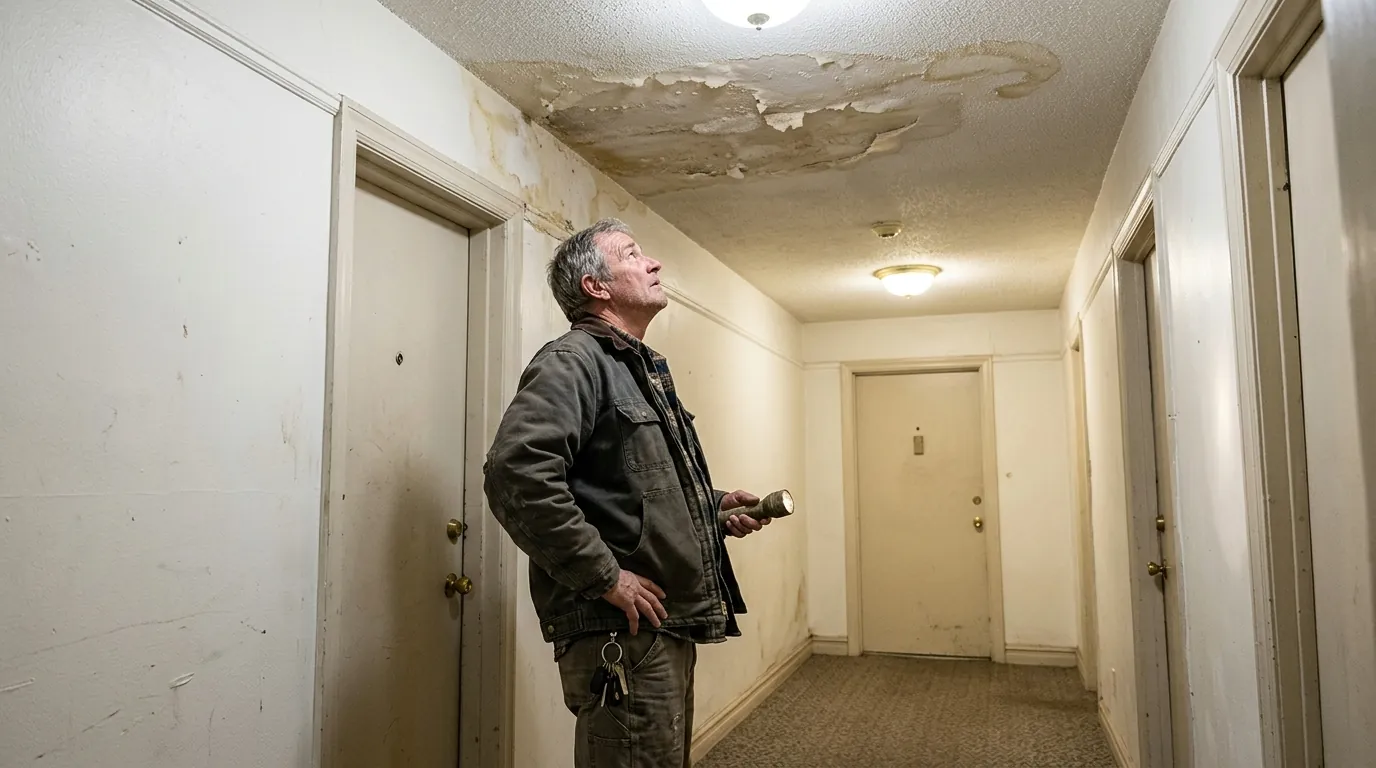
Water travels. It runs along joists and pipes and collects on top of the ceiling until it finds a low point, often a light fixture or a corner several feet from the source. A stain under a neighbor’s kitchen can come from their bathroom.
That matters for who pays. A moisture map with meter readings and a thermal image shows the wet path from the source to your ceiling, which settles most arguments between owners before they start.
Water coming through right now?
Call the super first, then call us. We answer day and night.Who usually pays
It depends on the source and on your building’s rules. In co-ops and condos, the proprietary lease or bylaws decide who covers pipes inside the walls and who covers finishes inside each unit. In rentals, the building generally handles the building’s pipes and the damage they cause.
Your own policy may pay for your belongings and your unit’s finishes and then pursue the responsible party. The simplest thing you can do is keep records: dates, photos, who you told and when.
What to tell your insurer
When you open the claim, give the date and time you noticed the water, where it came from if you know, and which rooms and belongings were affected. Mention that the source is in another unit; your insurer may want to contact the other owner’s carrier. Keep damaged items until the adjuster has seen them or agreed they can go.
Ask whether your policy covers additional living expenses if a room becomes unusable, and whether you need the insurer’s approval before drying starts. Most insurers expect you to prevent further damage, so starting extraction and drying quickly is usually what they want, as long as it is documented.
When the leak keeps coming back
A leak that returns after every shower or every rain means the source was patched, not fixed. Keep a simple log with dates and photos each time it happens, and send it to the super or managing agent in writing.
In a rental, tenants who cannot get a repair can report the condition to the city through 311, which passes housing complaints to HPD. In a co-op or condo, the managing agent and the board are the route. Either way, a written record with dates is what gets repeat leaks taken seriously.
What drying and repair look like
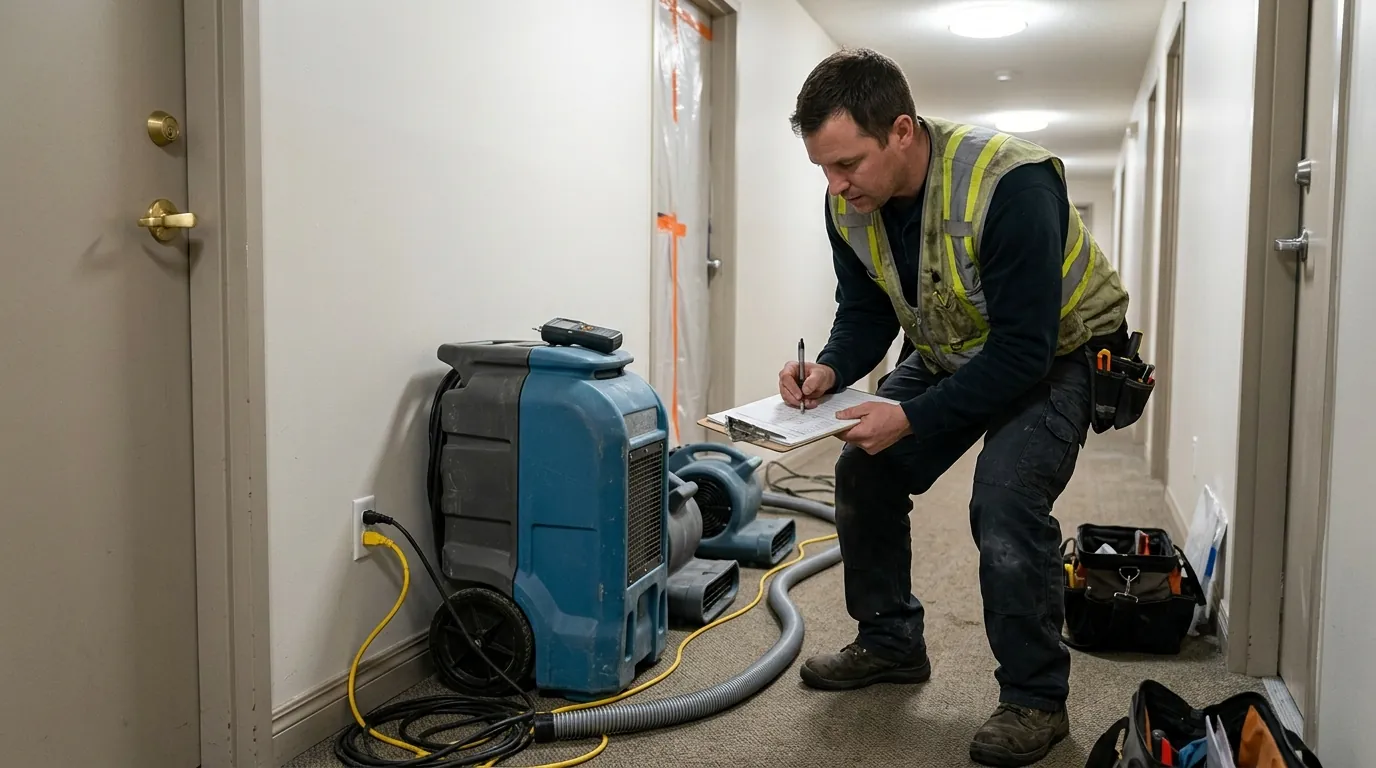
Once the source is stopped, the ceiling cavity has to dry before anything is patched. Drywall ceilings usually dry in three to five days; plaster on lath often takes a week or more. Air movers and a dehumidifier run in the room, and readings are taken daily.
Painting over a damp ceiling brings the stain back within weeks. When readings match the dry reference, the ceiling is repaired, primed with a stain blocker and painted.
Common questions
Only if you can stand to the side, with a bucket ready. Otherwise keep clear and let a crew do it.
Call the super or managing agent. They can get in or shut the water to that line.
Usually for your belongings. Building damage is typically the owner’s or the building’s to fix.
Drying takes days; the repair comes once readings are dry.
Only after the ceiling is dry and sealed with a stain-blocking primer.
Not if the cavity dries within a day or two of the leak stopping.
Services this article covers
Read next
Phyllis edits the articles on this site, writing from our crews’ job notes and the public sources linked in each piece.