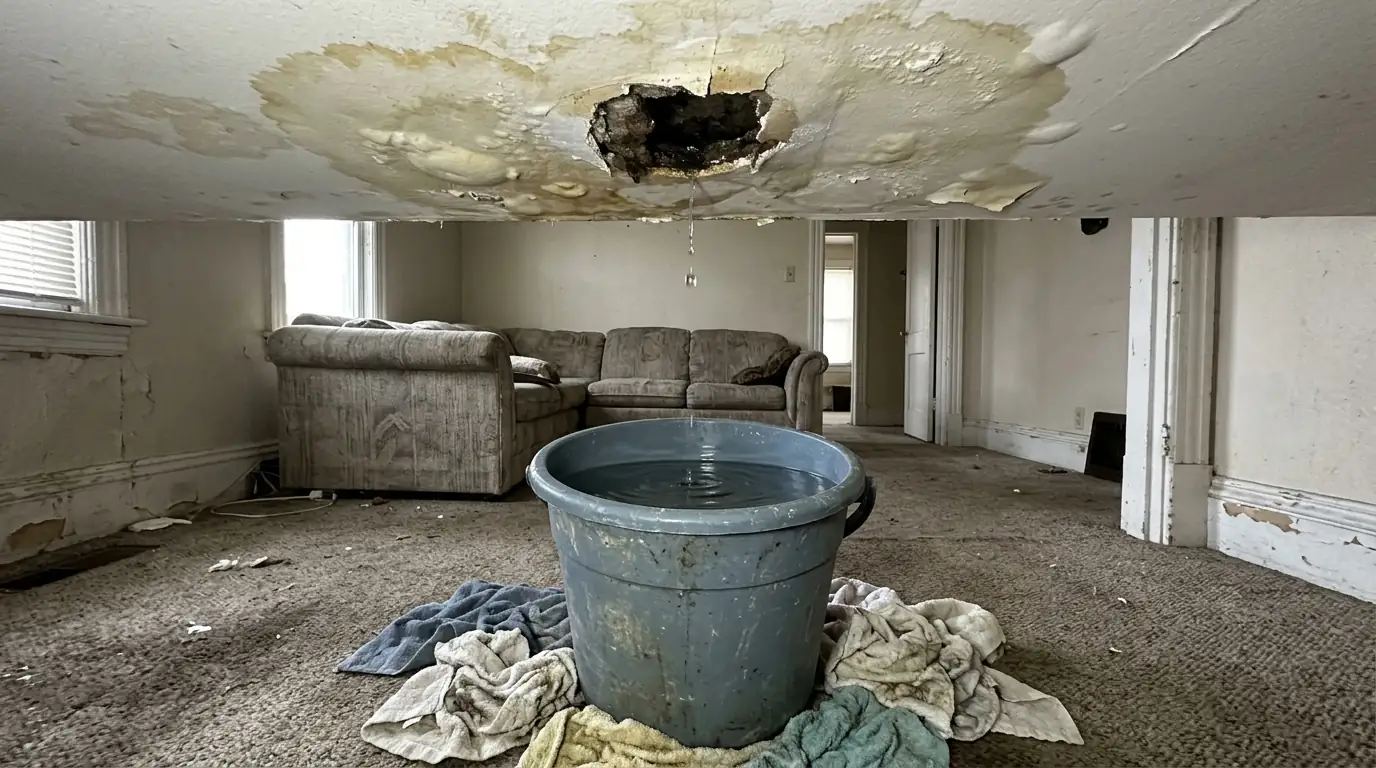
Short answer
Most rooms with drywall and carpet dry in three to five days once equipment is set. Plaster, hardwood floors and concrete slabs take longer, often a week or more. Drying is finished when wet materials read the same as dry reference readings taken in unaffected rooms, not on a set date. Pulling equipment early is the usual reason mold appears later.
Why drying takes days, not hours
Extraction removes the water you can see in a few hours. What is left is water inside materials: drywall, plaster, studs, subfloors and concrete. That water only leaves as vapor, and only when the surrounding air is drier than the material.
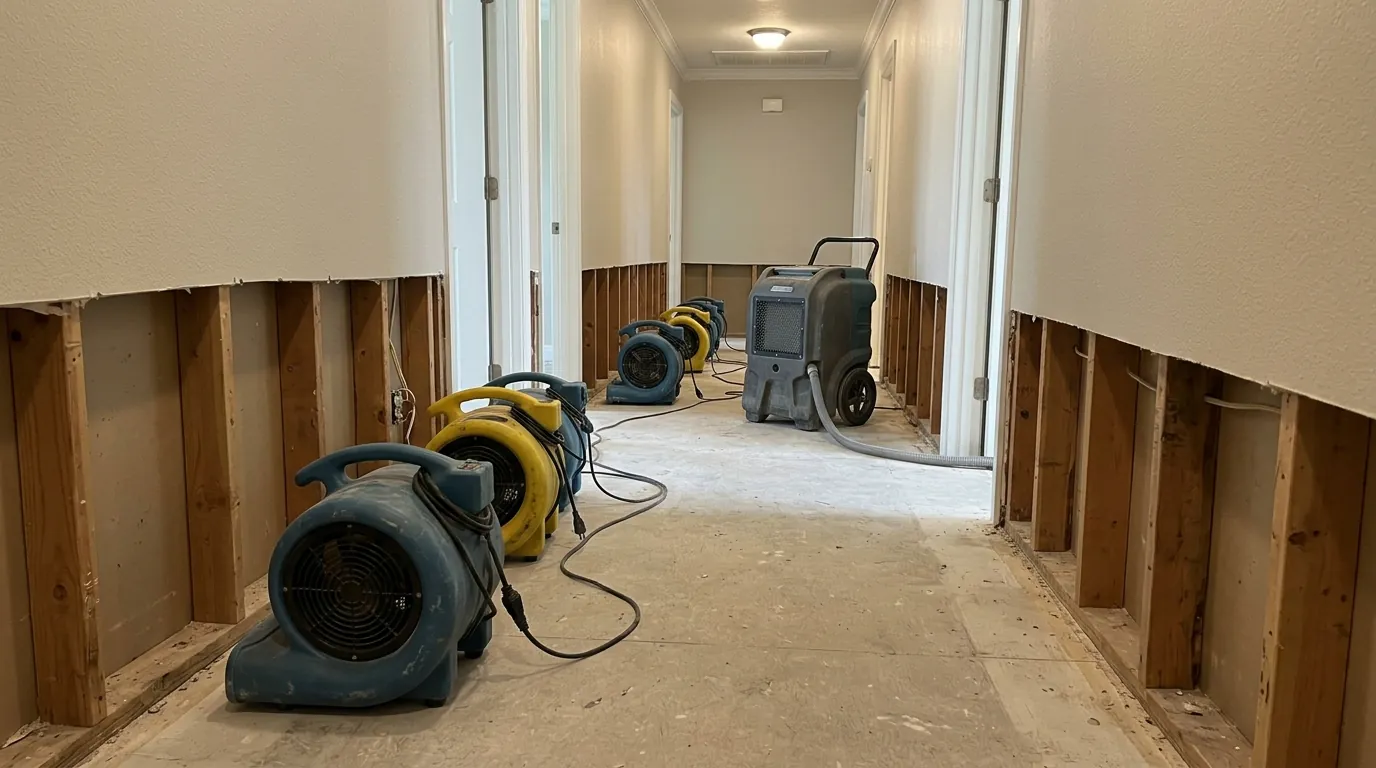
Drying equipment creates that difference. Dehumidifiers pull moisture from the air, air movers push dry air across wet surfaces, and in walls, small holes or a removed baseboard let dry air reach the cavity. The material gives up its water at its own pace, which is why plaster and concrete are slower than drywall.
Drywall and carpet: three to five days
A room with drywall walls and wall-to-wall carpet, wet from clean water and extracted within a day, usually dries in three to five days. Carpet is floated with air underneath or the pad is replaced, and the lower part of the walls dries with air injection if the cavity took water.
Water that sat longer before extraction, or water that soaked into insulation, pushes that toward a week, and wet insulation is usually removed rather than dried.
Plaster and older walls: a week or more
Three-coat plaster on lath is dense and thick. It absorbs water slowly and releases it slowly, and it can read dry on the surface while the brown coat and the lath behind it are still wet. Seven to ten days is common, and ceilings that held standing water can take longer.
Plaster is also why readings matter more than touch. A painted plaster wall can feel dry in two days and still be wet enough to blister new paint or grow mold behind it.

Wondering if your walls are still wet?
Call and we can read them with meters before anything is closed up.Hardwood floors: three days to two weeks
Strip oak and parquet dry on mat systems that pull moisture up through the boards under suction. Floors caught early often dry in three to seven days; heavy cupping, thick subfloors and older finishes can take up to two weeks.
Sanding waits until the boards read dry and have settled. A cupped floor sanded while still wet ends up crowned when it finishes drying, which is the most expensive mistake in floor drying.
Concrete slabs: the slowest of all
Basement and ground-floor slabs hold water deep inside, and they can take one to several weeks to dry, depending on thickness, how long the water sat, and whether groundwater is feeding them from below.
Heat and dehumidification speed it up. Before any new flooring goes down, the slab is tested; flooring or adhesive laid over a damp slab fails within months, and that failure is rarely covered by the original claim.
What slows drying down
A few things add days to almost any job.
- Water that sat before extraction and soaked deeper into materials.
- Humid summer air coming in through open windows; keep them closed while equipment runs.
- Turning equipment off at night to save power or quiet the room.
- Furniture, rugs and stored items left on wet floors.
- A leak that is still running somewhere inside the wall.
How you know it is really dry
On the first visit, we take readings in wet materials and in the same materials in a room that stayed dry. That dry reading is the target. Readings are taken every day, equipment is moved to where the water still is, and it comes out only when every material matches its dry reference.
The final readings are recorded with photos. They tell the painter or flooring installer that the room is ready, and they show your adjuster why the equipment ran as long as it did.
Common questions
Please do not. Drying stops when the equipment stops.
Surfaces dry first. The readings inside the material decide.
Often one to several weeks for the slab, after pump-out and removal.
Usually not in humid weather; outside air can be damper than what the dehumidifiers make.
Moisture left in walls and floors can grow mold behind the repairs.
The readings do, compared with dry reference readings, recorded for your file.
Services this article covers
Read next
Phyllis edits the articles on this site, writing from our crews’ job notes and the public sources linked in each piece.