Short answer
Call 911 first if anyone is in danger, there is fire or smoke, or water is rising in a living space. For a leak, call the super or shut the valve yourself to stop the water, then a plumber if the pipe needs repair, then a restoration crew to extract and dry. Call your insurer the same day. Each does a different job, and the order matters.
When to call 911 first
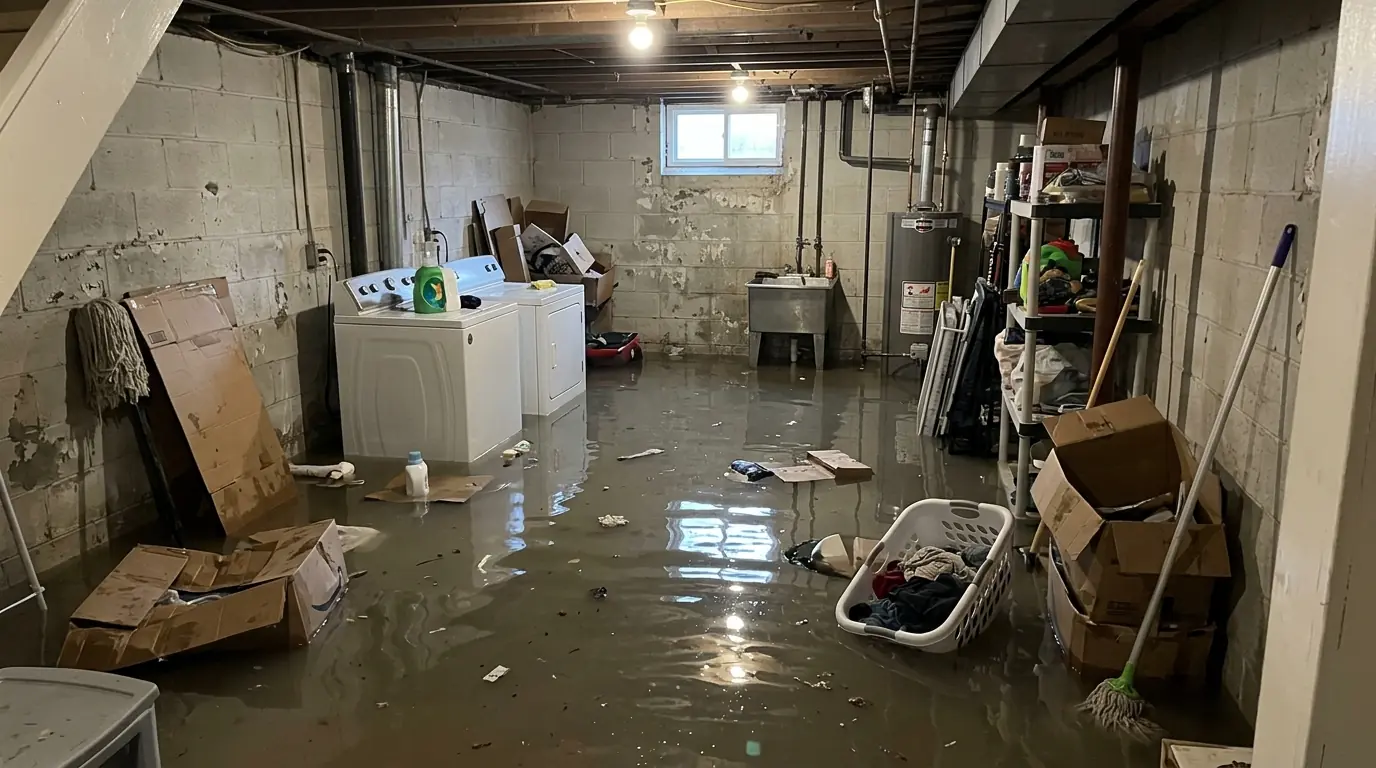
Some situations are emergencies before they are repairs. Call 911 if there is fire or smoke, if anyone is hurt or trapped, if water is rising in a basement or ground-floor room where people are, or if water is near live electrical equipment you cannot safely shut off.
Gas smells go to 911 or the utility right away, from outside the building.
Stopping the water: you or the super
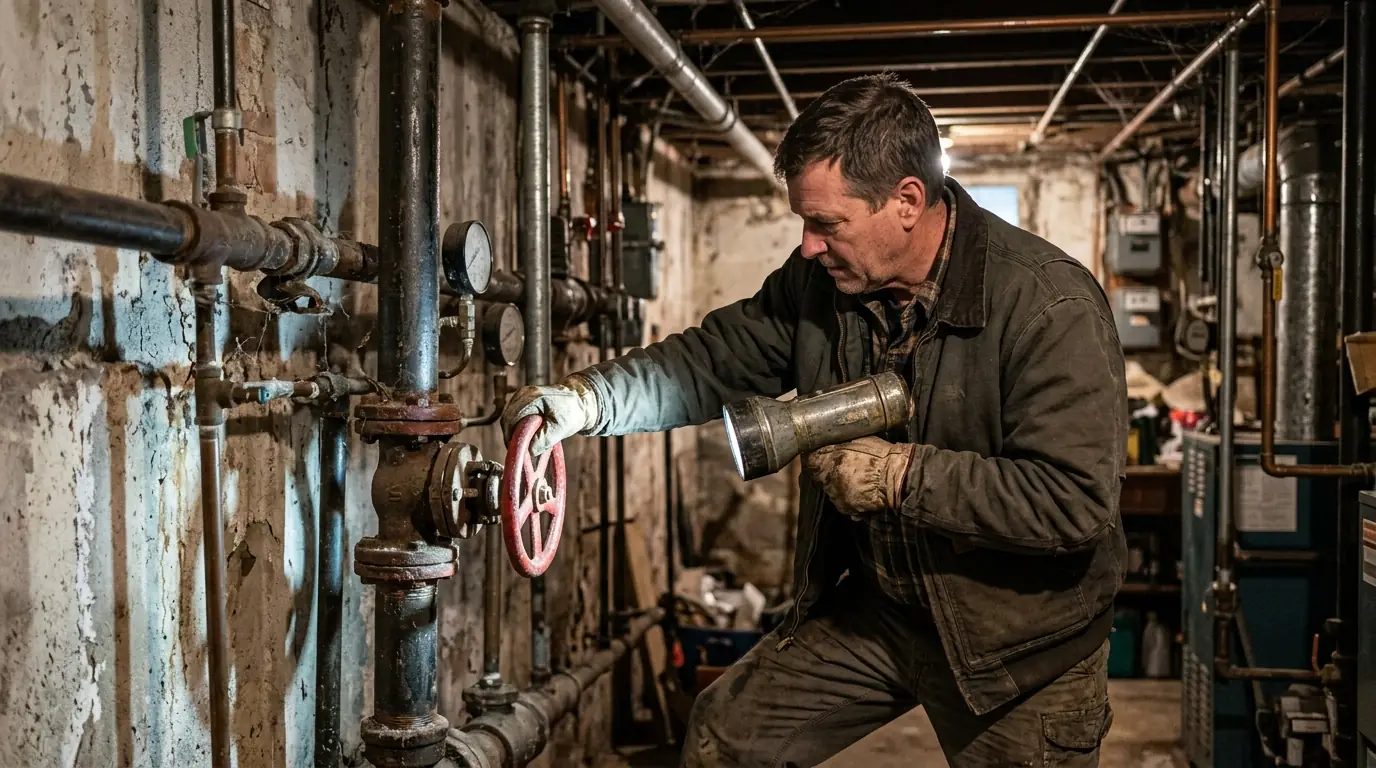
The fastest way to limit water damage is to stop the water, and you can often do it yourself. Most fixtures have a shutoff valve behind or under them, and many apartments have a valve for the whole unit.
If the leak is in the building’s pipes, a riser, or another apartment, the super is the person who can close the right valve and get into the unit above. Call the super even if you have stopped the water, so they can check whether other units are affected.
What the plumber does
A plumber repairs the source: the burst pipe, the failed valve, the cracked fitting, the blocked drain. That is essential, but it is only half the job. Plumbers generally do not extract water from floors, dry walls to a measured standard, or document the damage for an insurance claim.
In a building, the super may send the building’s own plumber for pipes that belong to the building. In a house or for fixtures inside your unit, you call your own.
Water coming in right now?
Stop the water if you can, then call. We tell you who else to call and when.What a restoration crew does
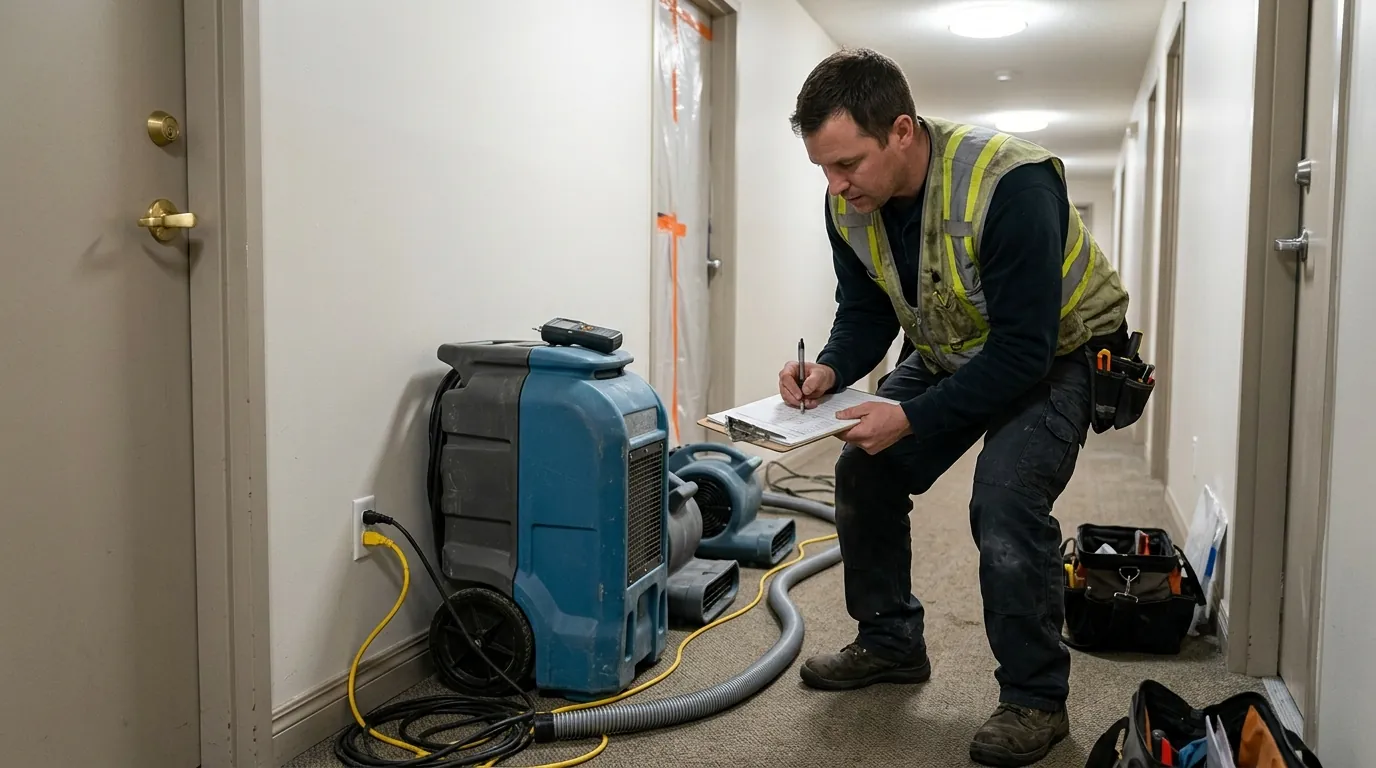
A restoration crew handles the water that already escaped: extraction, moisture mapping, removing what cannot be saved, drying walls and floors, and preventing mold. The crew also documents the damage for your insurer and, if you choose, rebuilds afterward.
Timing is the reason to call early. Water left in carpet, walls and subfloors for more than a day or two starts turning drying jobs into tear-out and mold jobs, even after the plumber has fixed the leak.
Your insurer and the managing agent
Call your insurer the same day to open a claim, and ask what they need from you. Most insurers expect you to prevent further damage, which means stopping the water and starting drying without waiting for the adjuster.
In a co-op, condo or rental building, send the managing agent written notice with photos. It creates a record of when the building was told, which matters if the damage involves the building’s pipes or other units.
The order, in short
For most leaks, this order limits the damage and the cost.
- 911 if anyone is in danger or there is fire, smoke or rising water.
- Stop the water yourself, or call the super to close the right valve.
- Restoration crew to extract and start drying.
- Plumber to repair the source, often while the crew is working.
- Your insurer the same day, and the managing agent in writing.
After a fire or a flood
After a fire, the fire department controls the building until it is released. Then the first calls are to your insurer and a restoration crew to board up openings and remove the firefighting water.
After a flood from outside or a sewer backup, stay out until the water stops rising and power to the area is off. Then call the restoration crew and your insurer; a plumber comes in later if the building needs a backwater valve or a drain repair.
Common questions
Stop the water first. Then call both; the crew extracts and dries while the plumber repairs the source.
The super can stop water and fix building pipes. Drying and documenting the damage is restoration work.
Usually not. Insurers expect you to prevent further damage, with photos and records.
A restoration crew for the cleanup; a plumber for the drain or backwater valve.
Fire, smoke, anyone hurt or trapped, or water rising where people are.
Services this article covers
Read next
Phyllis edits the articles on this site, writing from our crews’ job notes and the public sources linked in each piece.