Short answer
Hidden leaks show up as musty smells, bubbling paint, soft baseboards, warped floors, or stains that grow. Check under sinks, behind the toilet, around the tub and appliances, and listen for running water with every fixture off. In a house, watch the water meter with everything off. If the source is still unclear, moisture meters and a thermal camera can trace it without opening walls.
The signs
Hidden leaks rarely announce themselves with a puddle. They show up slowly.
- A musty or earthy smell in one room or cabinet.
- Paint bubbling or peeling in one spot, often low on a wall.
- Baseboards that swell, separate or feel soft.
- Floorboards that cup, or tile that loosens near a tub or toilet.
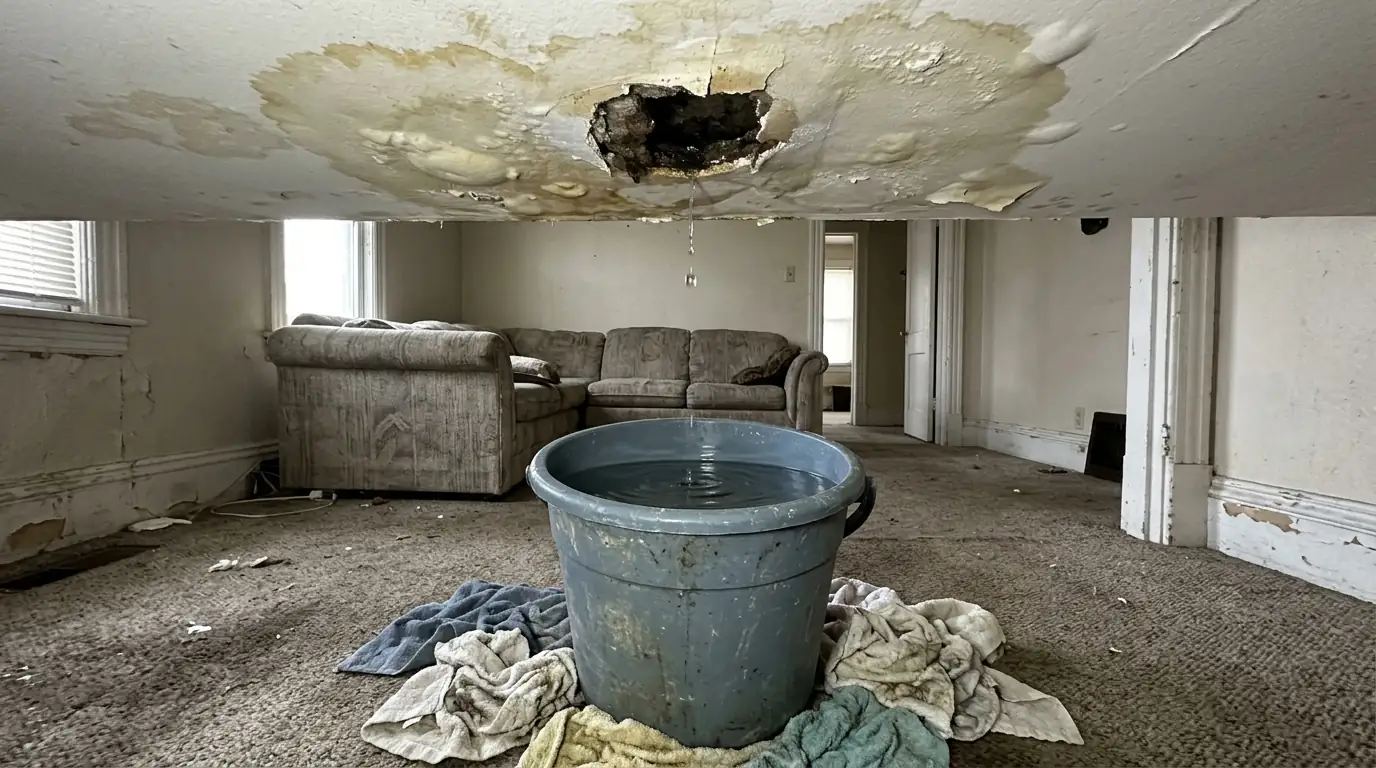
- A stain on the ceiling below that slowly grows.
- A higher water bill with no change in use, in a house with its own meter.
Checks you can do yourself
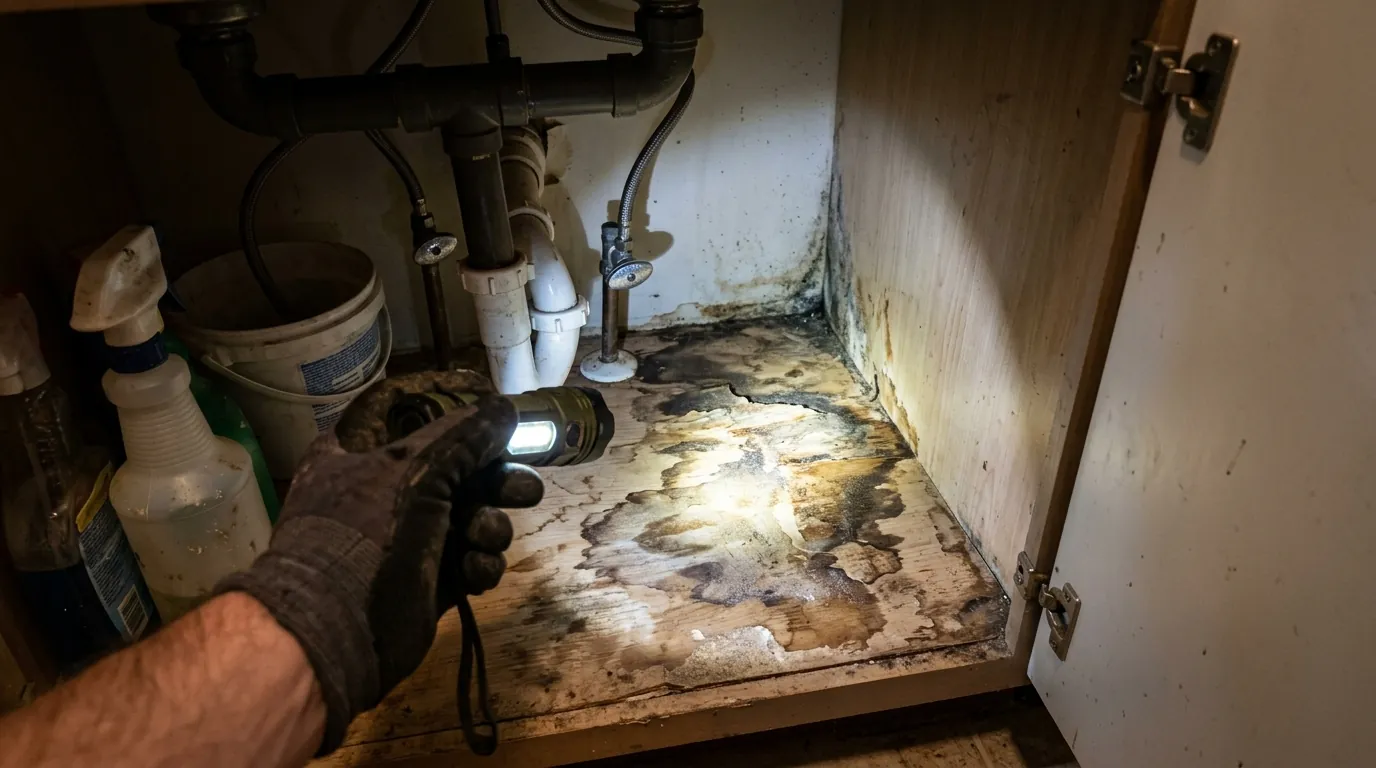
Start where the water lives. Open the cabinets under every sink and look at the cabinet floor for stains or swelling. Check the shutoff valves and connections for moisture. Look behind the toilet at the supply line and around the base for dampness.
Then check the appliances: the dishwasher toe kick, the back of the refrigerator if it has an ice maker, the washing machine hoses and the base of the water heater. A dry paper towel pressed against a suspect joint shows even a slow drip.
The meter test in a house
In a house with its own water meter, turn off every fixture and appliance that uses water, then look at the meter. If the dial or the low-flow indicator is moving with everything off, water is leaving the system somewhere.
In most apartment buildings there is no meter for each unit, so this test is not available. Listening helps instead: at night, with everything off, running water in a wall or ceiling can often be heard.

Smell or stain, but no idea where?
Call and we can trace it with meters and a thermal camera before anything is opened.Toilets and tubs
A toilet can leak in two ways. Water running from the tank into the bowl wastes water but does not damage the floor; a few drops of food coloring in the tank that show up in the bowl without flushing confirms it. A failed wax seal under the toilet is worse: it lets water into the subfloor every time you flush, often with no visible sign until the floor feels soft or the ceiling below stains.
Around tubs and showers, cracked grout and failed caulk let water behind the tile. Dark grout that never dries, or loose tiles, point to it.
When the leak is in someone else’s space
In a building, water often travels along pipes and joists before it shows. A stain on your ceiling can come from the apartment above, the one diagonally above, or a riser in the wall. Tell the super as soon as you see it, because they can check the units around you and the building’s pipes.
If the stain is growing and nobody can find the source, a moisture map with meter readings shows the wet path, which usually points back to where the water starts.
Meters and thermal cameras
Pin and pinless moisture meters measure water inside drywall, plaster and wood, and a thermal camera shows the cooler areas where water is evaporating. Used together, they find most hidden leaks without opening a wall, and when an opening is needed, it is small and in the right place.
A thermal image alone can mislead, because drafts and cold pipes also look cool. Every cool spot should be confirmed with a meter before anyone calls it wet.
After the leak is found
The plumber fixes the source. Then the wet materials have to dry, and a slow leak usually means some of them have been wet long enough to rot or grow mold. Readings show how far the damage reaches, and drying continues until the materials match a dry reference.
Closing up a wall that is still damp is how a hidden leak turns into a mold problem months later.
Common questions
Look for bubbling paint, soft baseboards, musty smells and stains that grow.
It shows surface temperature. Wet areas usually read cool, but a meter confirms it.
Often not. Readings narrow it down, and any opening is small.
Tell the super. They can check the units around you and the building’s pipes.
Often not, if it ran for a long time. Report it as soon as you find it.
Services this article covers
Read next
Phyllis edits the articles on this site, writing from our crews’ job notes and the public sources linked in each piece.