Short answer
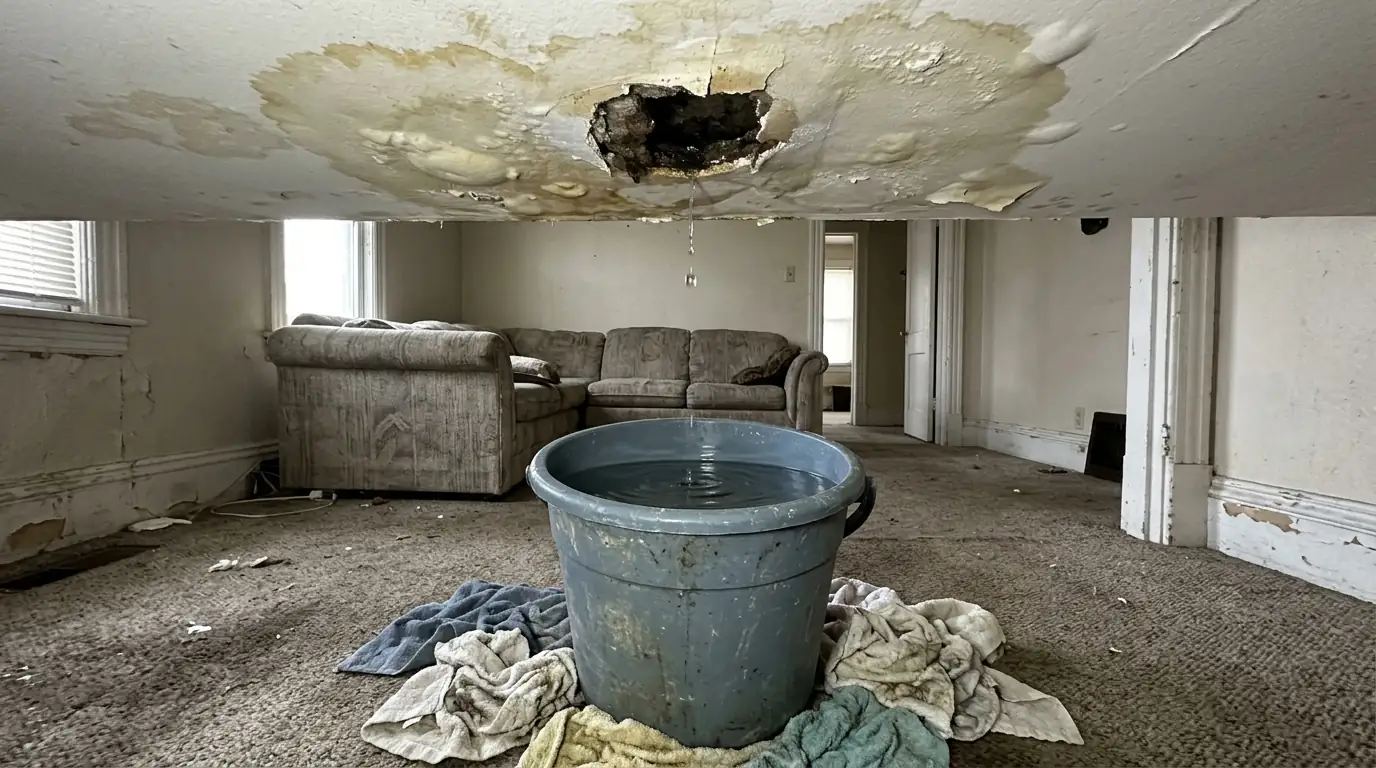
Most New York homeowners, condo and renters policies cover sudden, accidental water damage, such as a burst pipe or an overflow upstairs. They usually exclude slow leaks treated as maintenance, flood water from outside, and sewer backups unless you added an endorsement. In a building, your policy, the building’s policy and a neighbor’s policy may each cover part of the same loss.
Sudden versus gradual water
The first question most adjusters ask is how the water got there. Sudden and accidental water, like a supply line that bursts or a washing machine hose that splits, is what most policies are written to cover. Damage from a leak that dripped for months is usually treated as a maintenance problem and excluded.
That is why the timeline matters. Photos, the date you first noticed the water, and moisture readings that show how far it spread all help show the loss was sudden, not a slow problem that was ignored.
Renters policies
A renters policy covers your belongings and, usually, extra living costs if the apartment becomes unlivable. It does not cover the building itself: walls, floors, ceilings and fixtures belong to the owner and are the owner’s to insure and repair.
If water from a burst pipe ruins your sofa, your renters policy is where that claim goes. If the same water damages the ceiling, that is the landlord’s repair. Many renters policies also include liability coverage, which matters if water from your apartment damages the unit below.
Condo and co-op policies
In condos and co-ops, the building carries a master policy for the structure and common areas, and each owner carries a unit policy for belongings, improvements and their share of repairs. Where the line falls between the two depends on the bylaws or proprietary lease.
Commonly, pipes inside the walls and the building structure fall to the building, and finishes inside the unit, such as flooring, cabinets and paint, fall to the owner. The details vary from building to building, so ask your managing agent for the insurance requirements in your governing documents before you need them.

Not sure if your leak is covered?
Call and we will document it the way adjusters need, whatever policy it lands on.Houses and homeowners policies
A homeowners policy covers the structure and your belongings for sudden water losses, subject to the deductible and any water damage limits. In a two or three family house, check whether the policy covers the rental units and your tenants’ liability questions, because landlord coverage is sometimes a separate policy.
Many policies also cover the cost of tearing out and replacing the part of the wall needed to reach a burst pipe, while excluding the pipe repair itself.
Floods and sewer backups
Water from outside the building, such as storm surge, a rising river or water pouring down a basement stairwell, is flood. Standard policies exclude it; flood coverage comes from a separate flood policy. Water that comes up through a floor drain or toilet from the sewer is a sewer backup, usually excluded unless you added a sewer and drain backup endorsement.
Many basement losses in this city involve both, so document where the water came in: through the door, through the wall, or up the drain.
How to make the claim go smoothly
A few habits make most claims easier.
- Stop the water and prevent more damage; insurers expect it.
- Photograph everything before cleanup, including labels on damaged appliances.
- Report the loss promptly and ask about additional living expenses.
- Keep damaged items until the adjuster has seen them or agreed they can go.
- Ask for moisture readings and an itemized scope from whoever dries the home.
When several policies are involved
A leak from the apartment above can involve the upstairs owner’s policy, the building’s master policy and yours at once. Each insurer covers its part and may pursue the others afterward.
You do not have to settle that yourself. Report to your insurer, give the managing agent written notice, and make sure the drying company keeps separate records for each unit. That record is what lets each adjuster see their share.
Common questions
It usually covers your belongings and extra living costs from a sudden leak, not the building itself.
Often not. Long-running leaks are usually treated as maintenance.
Usually not. Flood coverage is a separate policy.
It depends on the source and your building’s rules; several policies may each cover part.
Often the water damage is covered but the pipe repair itself is not.
Usually yes. Insurers expect you to prevent further damage, as long as it is documented.
Services this article covers
Read next
Phyllis edits the articles on this site, writing from our crews’ job notes and the public sources linked in each piece.