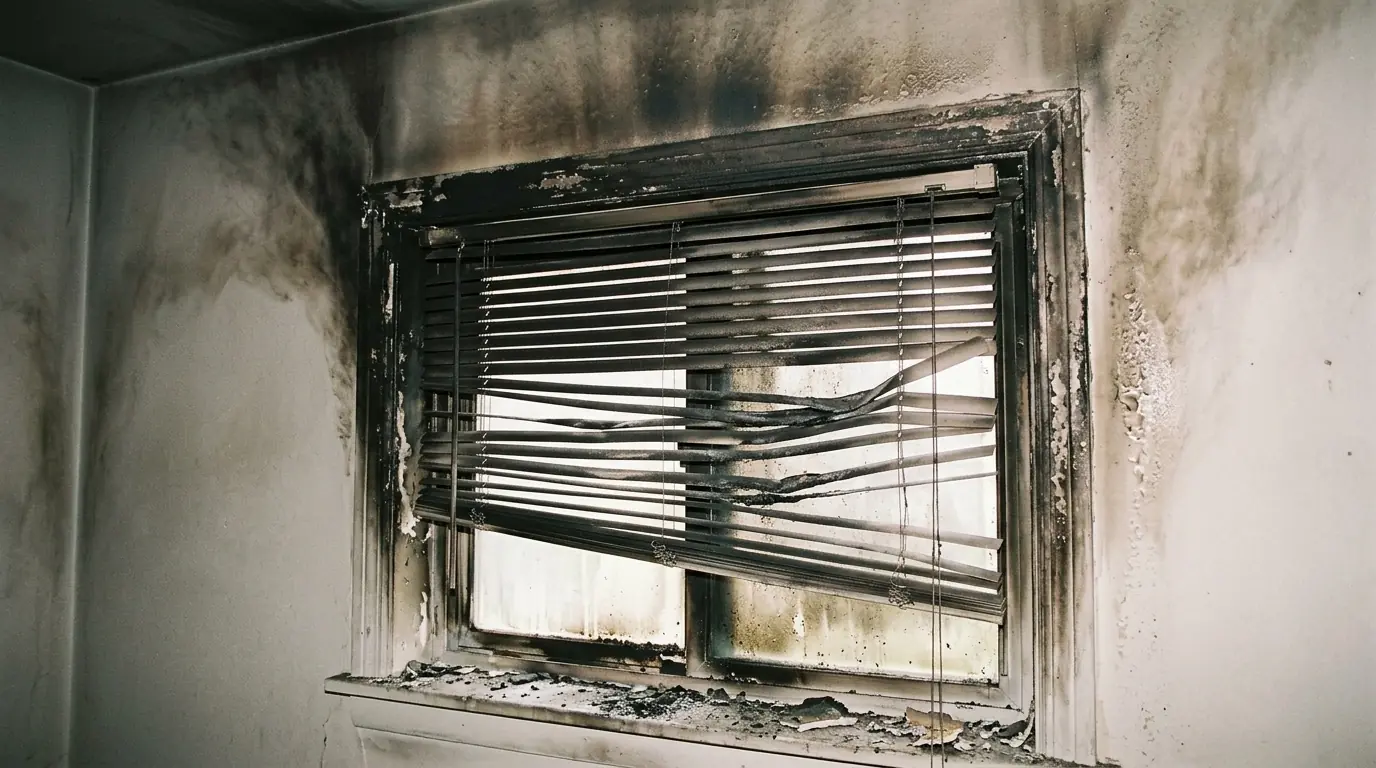
Short answer
A puff-back happens when an oil burner misfires and unburned fuel vapor ignites inside the combustion chamber, pushing soot out through the flue, radiators and ducts. Turn the heating system off and keep it off, call your heating company to repair the burner, and do not wipe the soot, which is oily and smears. Cleanup covers rooms, radiators, ducts and fabrics.
What actually happens
An oil burner sprays a fine mist of heating oil into the combustion chamber and lights it. If ignition is delayed, because of a dirty nozzle, a failing electrode or a pump problem, oil vapor builds up and then lights all at once. The small explosion forces soot and smoke back out of the burner.
Some goes up the chimney. The rest escapes through the path of least resistance: the burner door, the flue connections, and in a forced air home, the ducts. In a steam or hot water home, it drifts through the house and settles on everything.
The signs
People usually notice one of these first.
- A bang or thump from the boiler or furnace, often when the heat kicks on.
- Black streaks on the wall above radiators or around air registers.
- A fine, oily black film on window sills, furniture and floors.
- Soot collected in cobweb shapes in corners and on ceilings.
- A strong heating oil or burnt smell through the house.
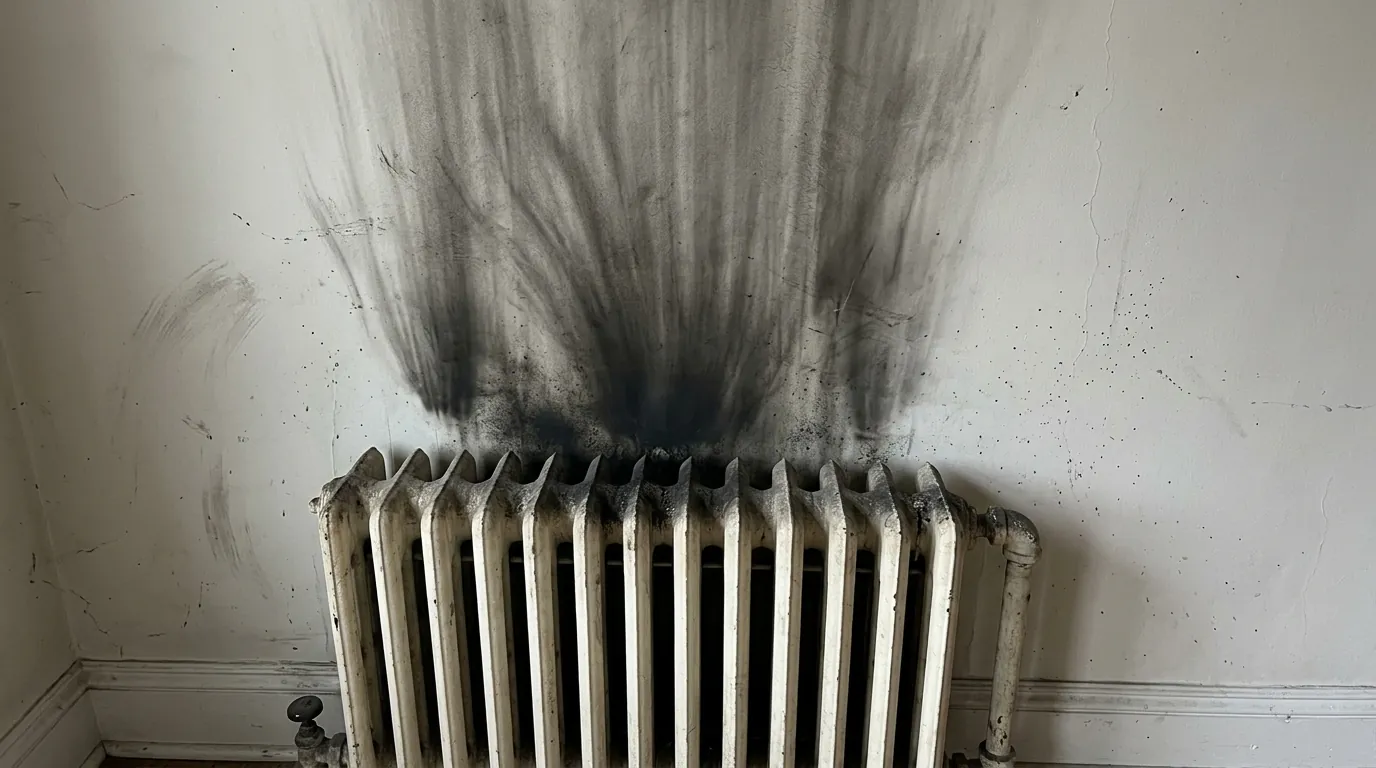
What to do first
Turn the heating system off at the emergency switch, usually a red switch plate at the top of the basement stairs or near the boiler, and leave it off. Running it again pushes more soot through a system that is already contaminated.
Call your heating oil company or heating contractor to inspect and repair the burner. Photograph the soot in every room before anyone cleans, including closets and the inside of cabinets. Keep windows closed so loose soot is not blown around, and keep pets and children away from sooty surfaces.
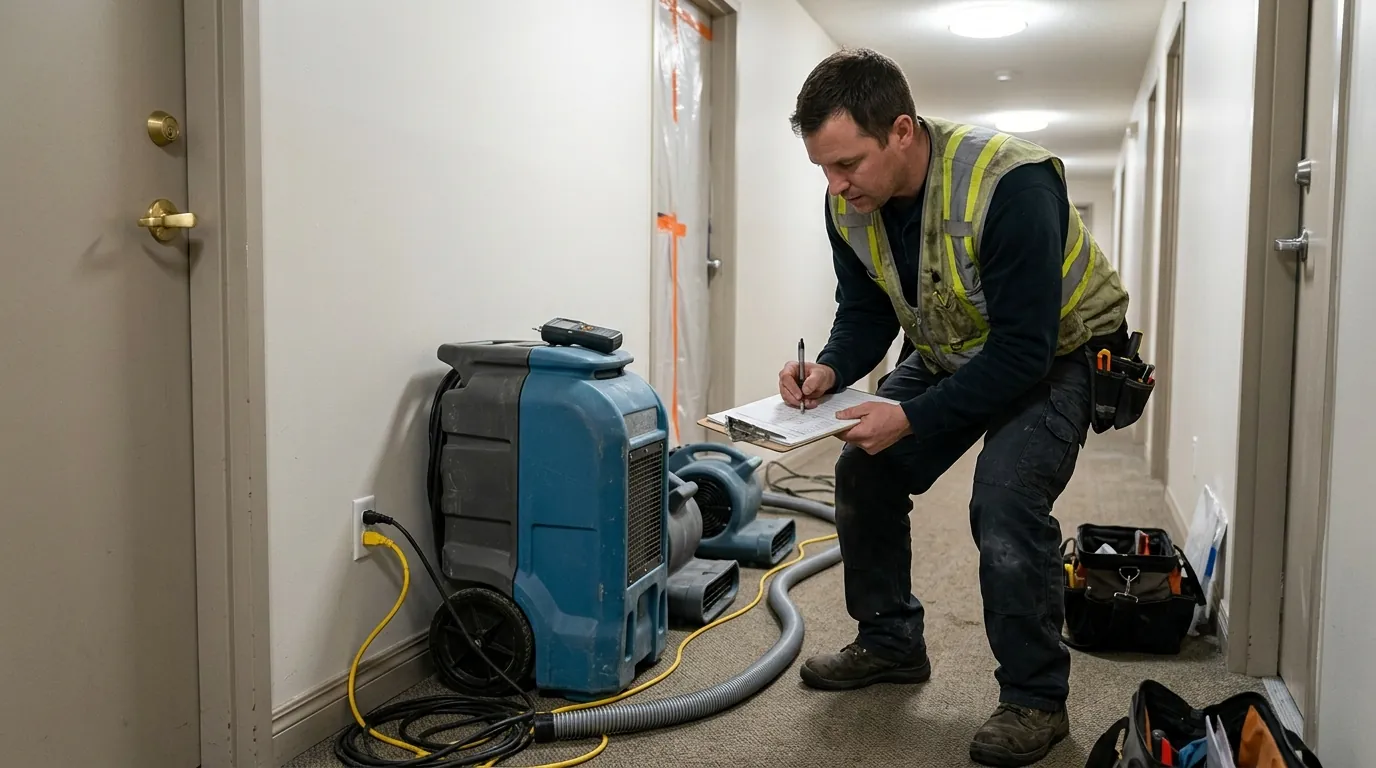
Black soot from the heating system?
Switch the burner off and leave it off. Then call us for the cleanup.Why you should not wipe it
Puff-back soot is oily. A damp cloth or a dry sponge smears it into paint, fabric and grout, and it sets. Household cleaners often make it worse by spreading the oil.
Professional cleanup starts with HEPA vacuuming loose soot, then solvent-based cleaners that cut the oil, working from the ceiling down in each room. Surfaces that still show shadows after cleaning are sealed with a stain-blocking primer and repainted.
Radiators, ducts and fabrics
The heating system itself has to be cleaned before it runs again. Radiator covers and fins, baseboard units, and in a forced air home every duct run and register, collect soot that will blow back into clean rooms the first time the heat comes on.
Curtains, upholstery, bedding and clothes in closets usually need specialist cleaning. Washing them at home first tends to set the soot and the smell. Filters are replaced last, once everything else is clean.
Who usually pays
Puff-back damage is usually treated as sudden and accidental, and homeowners policies often cover it. Because a puff-back is commonly linked to burner service, the heating company or its insurer may also be involved, and your insurer may pursue them after paying your claim.
Report it to your insurer promptly, keep the heating company’s service records, and do not throw away sooty items until the adjuster agrees. The soot itself, photographed in every room, is the evidence.
Preventing the next one
Most puff-backs trace back to maintenance. An annual burner cleaning and tune-up, with the nozzle and filter replaced and the electrodes and draft checked, prevents most of them. Schedule it before the heating season, not after the first cold morning.
If you hear a rumble or bang when the burner starts, or smell oil, shut the system off and call for service before it becomes a puff-back.
Common questions
The soot is an irritant and the burner has a fault. Turn the system off and have it serviced before using it.
Only after the burner is repaired and the radiators or ducts are cleaned.
Often, as sudden and accidental. The heating company’s insurer may also be involved.
A few days for most homes, longer if every room and the ducts are affected.
Better not. Oily soot sets in a home wash; specialist cleaning works better.
Services this article covers
Read next
Phyllis edits the articles on this site, writing from our crews’ job notes and the public sources linked in each piece.