Short answer
Under NYC Local Law 55, owners of buildings with ten or more units must use a mold assessor and a separate, independent remediator when mold covers more than 10 square feet, and the work must follow safe practices: fix the moisture source, isolate the area, and clean up afterward. HPD classes mold violations A, B or C, with 90, 30 and 21 days to correct.
What Local Law 55 covers
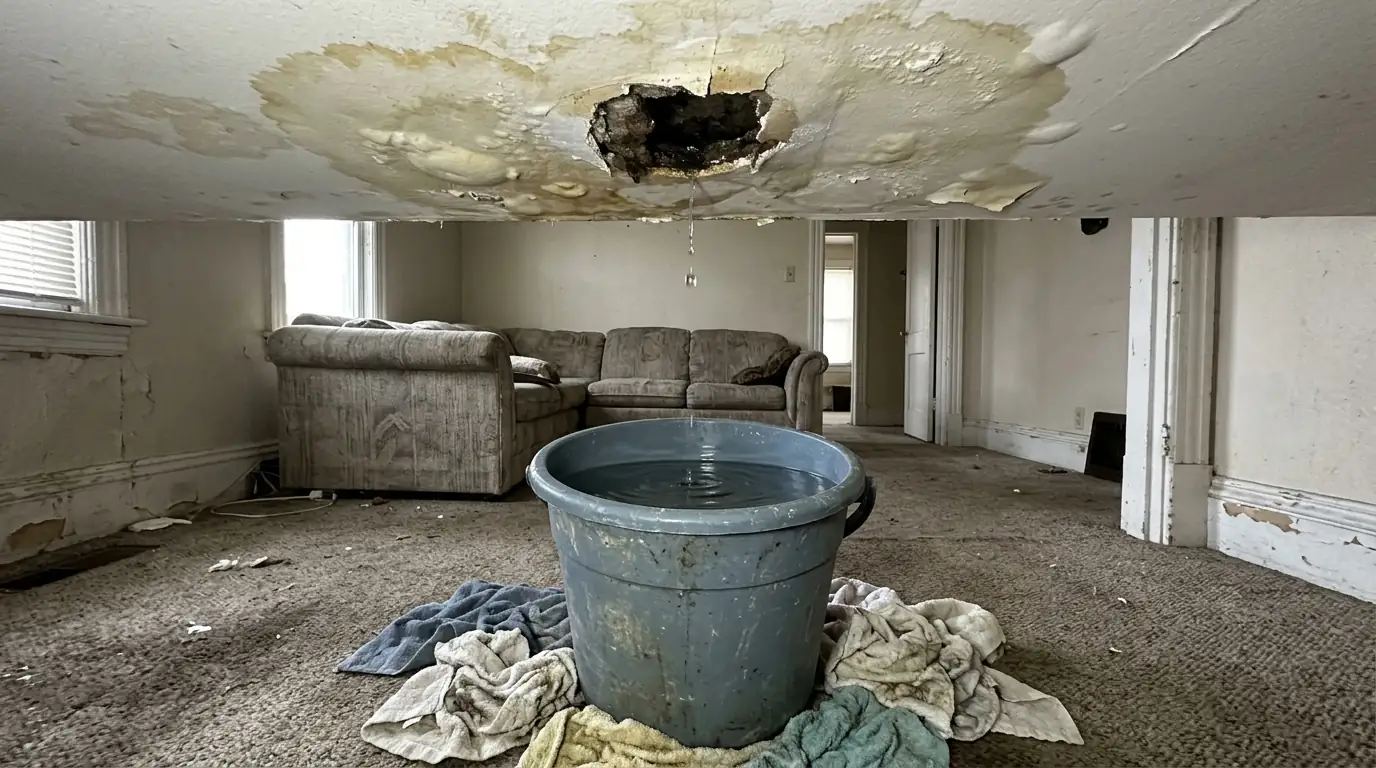
Local Law 55 of 2018, the Asthma-Free Housing Act, treats mold and pests as indoor allergen hazards in residential buildings. Owners are responsible for fixing the conditions that cause mold, not only the visible growth, and for doing the work in a way that does not spread it to the rest of the building.
HPD explains the owner duties on its indoor allergen hazards page, which is the best place to check the current requirements for your building.
The ten-unit, ten-square-foot rule
The rule most owners ask about is simple to state. In buildings with ten or more units, when mold covers more than 10 square feet, the owner must hire a mold assessor, qualified under New York State’s mold program, to write the scope, and a separate, independent company to do the removal. The assessor and the remediator cannot be the same company.
Smaller jobs still have to follow safe work practices. And the city rule is a floor, not a ceiling: in a house or a small building, an independent assessment on a large job is still the sensible way to set the scope.
How HPD classes mold violations
HPD issues mold violations in three classes. Class A is non-hazardous, with 90 days to correct. Class B is hazardous, with 30 days. Class C is immediately hazardous, with 21 days, according to The Habitat Group.
The class depends largely on how much mold there is and where. Once a violation is issued, the owner has to correct it and certify the correction within the period. Missing the deadline or certifying work that was not done properly brings reinspection and penalties.
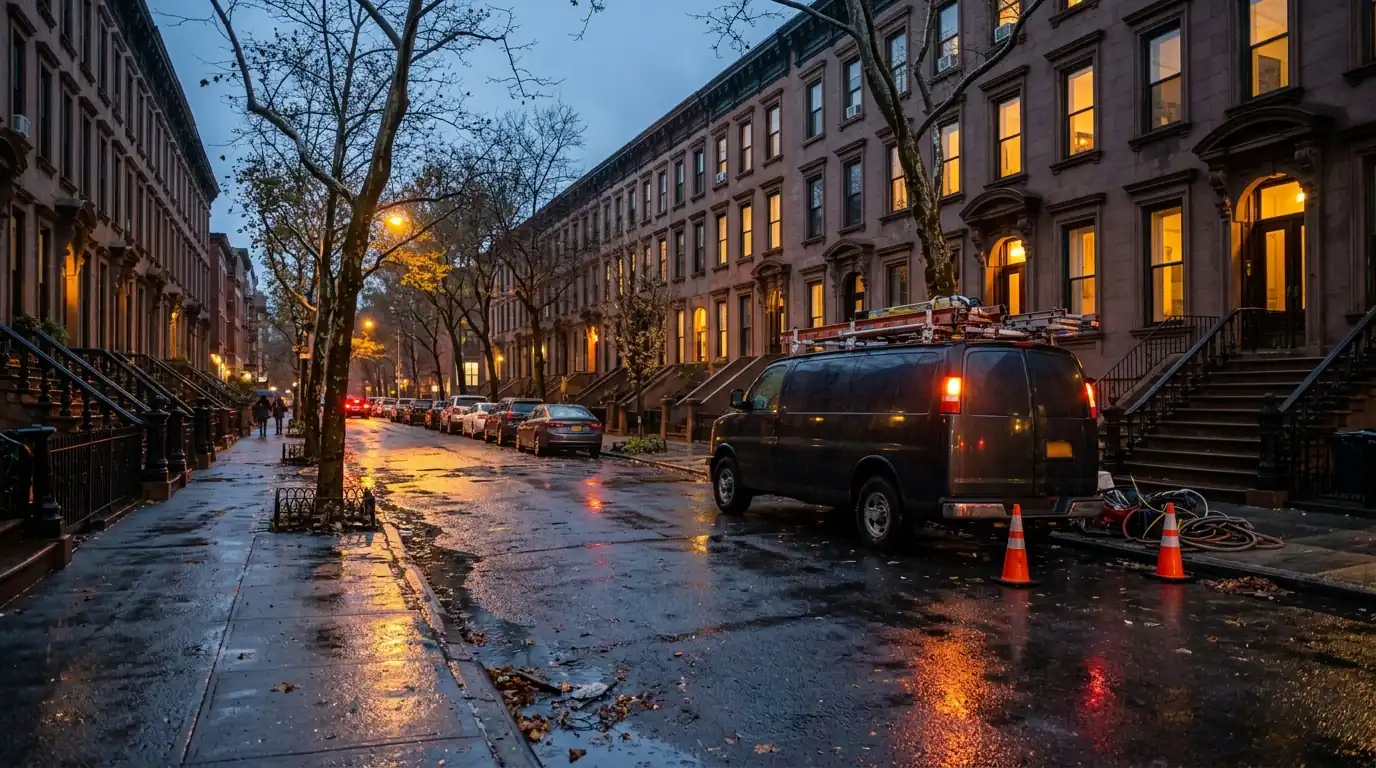
Mold violation with a deadline?
Call and we will schedule remediation inside the correction period.What safe work practices look like
The law’s work practices mirror what good remediation looks like anyway.
- Find and fix the moisture source first: a leak, a failed seal, condensation on a cold wall.
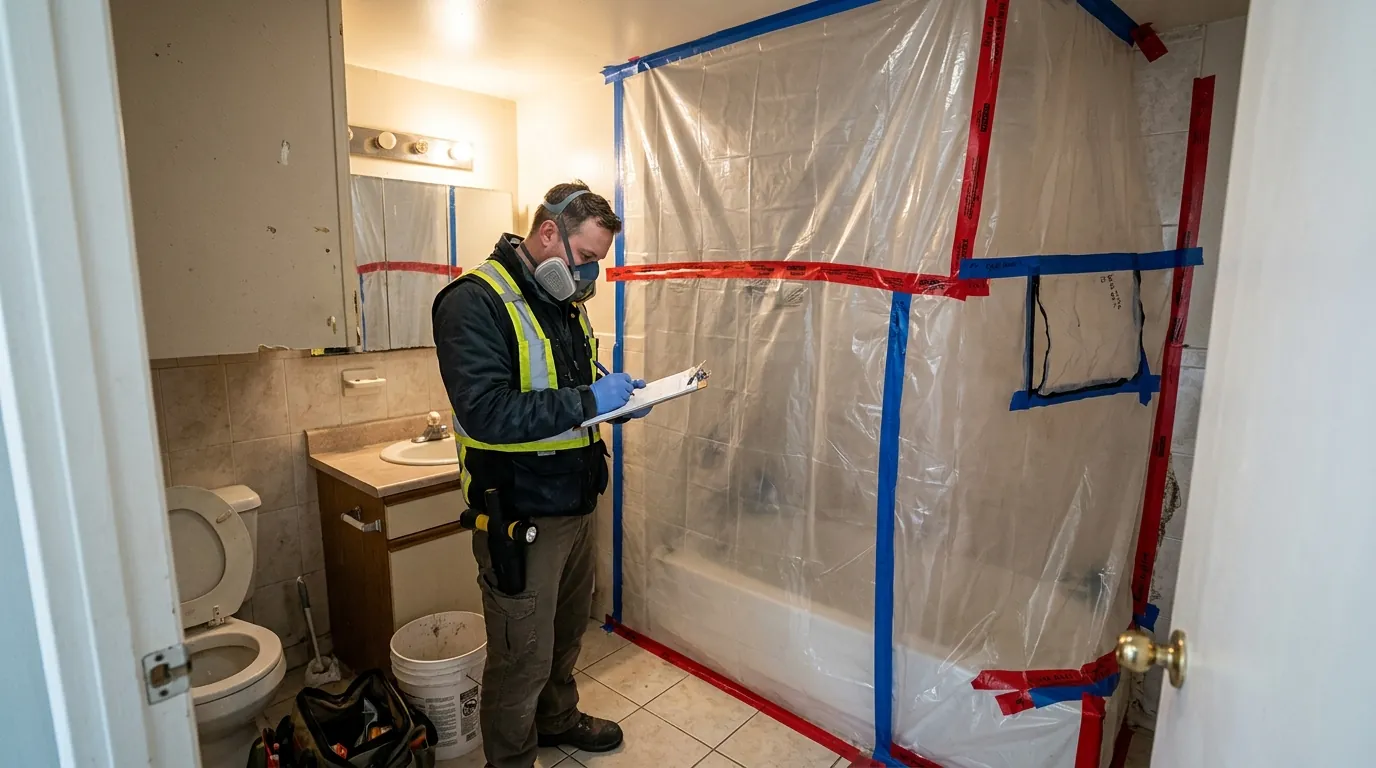
- Isolate the work area with plastic sheeting; on larger jobs, keep it under negative air pressure.
- Remove moldy porous materials such as drywall and insulation, and bag them before they leave the area.
- HEPA vacuum and clean hard surfaces, then dry them.
- Clean up the work area and leave it dry for the assessor’s clearance.
What tenants can expect
Tenants can report mold to the owner and, if it is not fixed, to the city through 311. During the work, tenants usually stay in the apartment outside the contained area, and they should be told in advance when crews will need access.
The work should end with the moisture source fixed, the damaged materials replaced, and the area clean and dry, not with a coat of paint over a stain. Paint over mold is how the same violation comes back.
Keeping the paperwork straight
For an owner, the records matter as much as the work. Keep the assessor’s scope, the remediator’s description of what was done, dated before and after photos, and a note of the moisture source and how it was fixed.
Those records support certifying a corrected violation, answer questions if a tenant complains again, and show that the work followed the law’s practices. In a building with several affected units, keep a separate record for each.
Preventing the next violation
Most mold in apartments comes from a handful of sources: bathroom exhaust fans that do not work, leaks from the unit above, radiator and riser leaks, and cold exterior walls behind furniture. Fixing those fixes most mold complaints.
After any leak, dry the area properly and confirm it with readings before closing walls or painting. A leak dried in the first day or two rarely becomes a mold violation.
Common questions
The 10 square foot assessor rule applies to buildings with ten or more units. Safe practices apply more widely; check HPD’s page for your building.
Not on covered jobs. The assessor and remediator must be separate, independent companies.
Class A 90 days, Class B 30 days, Class C 21 days.
Usually, outside the contained area.
No. The growth and the moisture source have to be dealt with, or it returns.
Services this article covers
Read next
Phyllis edits the articles on this site, writing from our crews’ job notes and the public sources linked in each piece.