Short answer
Pipes freeze in New York when they run along exterior walls, through unheated spaces, or near an open window during a cold snap. Central Park’s normal January low is 27.8°F. If a pipe freezes, open the faucet and thaw it slowly with warm air, never an open flame. If it bursts, shut the water, call the super or a plumber, and start extraction quickly.
How cold it gets, and for how long
Central Park’s normal January low is 27.8°F, based on 1991 to 2020 climate normals from the National Weather Service. That is an average; cold snaps go far lower, and a few nights in the teens with wind are what split pipes.
Most buildings stay warm inside, so the risk is concentrated in the places heat does not reach: outside walls, unheated entries, and anywhere cold air leaks in.
Where pipes usually freeze
In New York buildings, the same spots come up again and again.
- Kitchen and bathroom supply lines on exterior walls, especially inside closed cabinets.
- Pipes in unheated vestibules, garages, crawl spaces and basements near outside doors.
- Rooms with a window left open a crack while the radiator is off.
- Sprinkler lines in stair towers and unheated common areas.
- Hose bibs and outdoor lines that were not shut and drained for winter.
Heat rules for rentals
From October 1 to May 31, owners of New York City rentals must keep apartments at least 68°F between 6 a.m. and 10 p.m. when it is below 55°F outside, and at least 62°F overnight regardless of the temperature, according to HPD. Hot water must be at least 120°F year-round.
Those rules protect people first, but they also protect pipes. If your apartment is not getting heat, tell the super or owner, and if it is not fixed, report it to 311.
Pipe just burst?
Close the valve, then call. We answer every hour of the day.Preventing a freeze
A few habits prevent most frozen pipes. Keep the heat on, including in rooms you do not use and when you travel. In a cold snap, open the cabinet doors under sinks on outside walls so room air reaches the pipes. Keep windows near pipe runs closed.
Before winter, shut off and drain outdoor faucets from inside. In a house, insulate pipes in unheated spaces and seal gaps where cold air gets in. Letting a faucet on an outside wall drip overnight during a hard freeze keeps water moving, which makes it harder to freeze.
If a pipe freezes
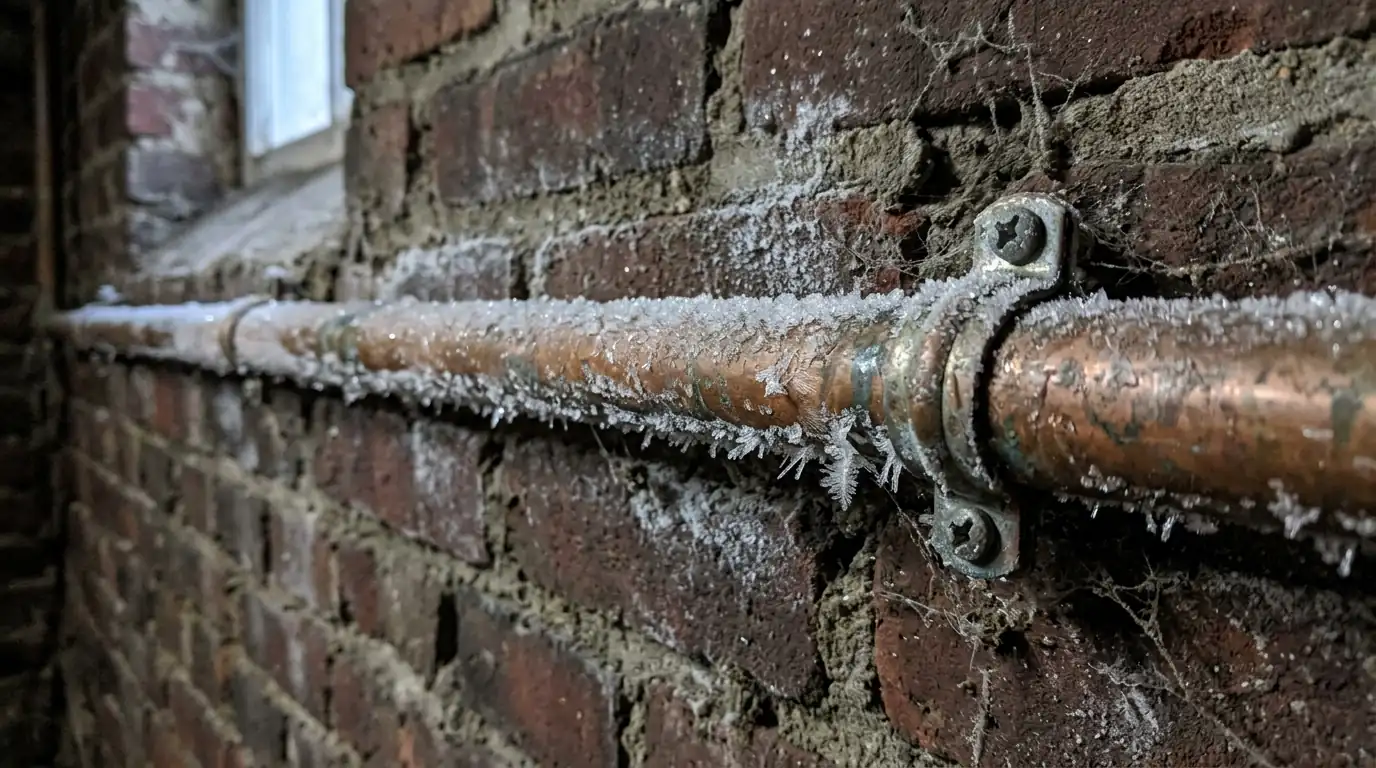
Signs are no water or a trickle from one faucet, frost on a visible pipe, or a bulge in the line. Open the faucet it feeds so melting water has somewhere to go, then warm the pipe slowly with a hair dryer, a space heater kept at a safe distance, or warm towels, starting nearest the faucet.
Never use an open flame, a torch or a heat gun on a pipe. Old pipes, insulation and wood framing catch fire, and a sudden thaw can split the pipe anyway. If you cannot reach the frozen section, or it is inside a wall, call the super or a plumber.
If it bursts
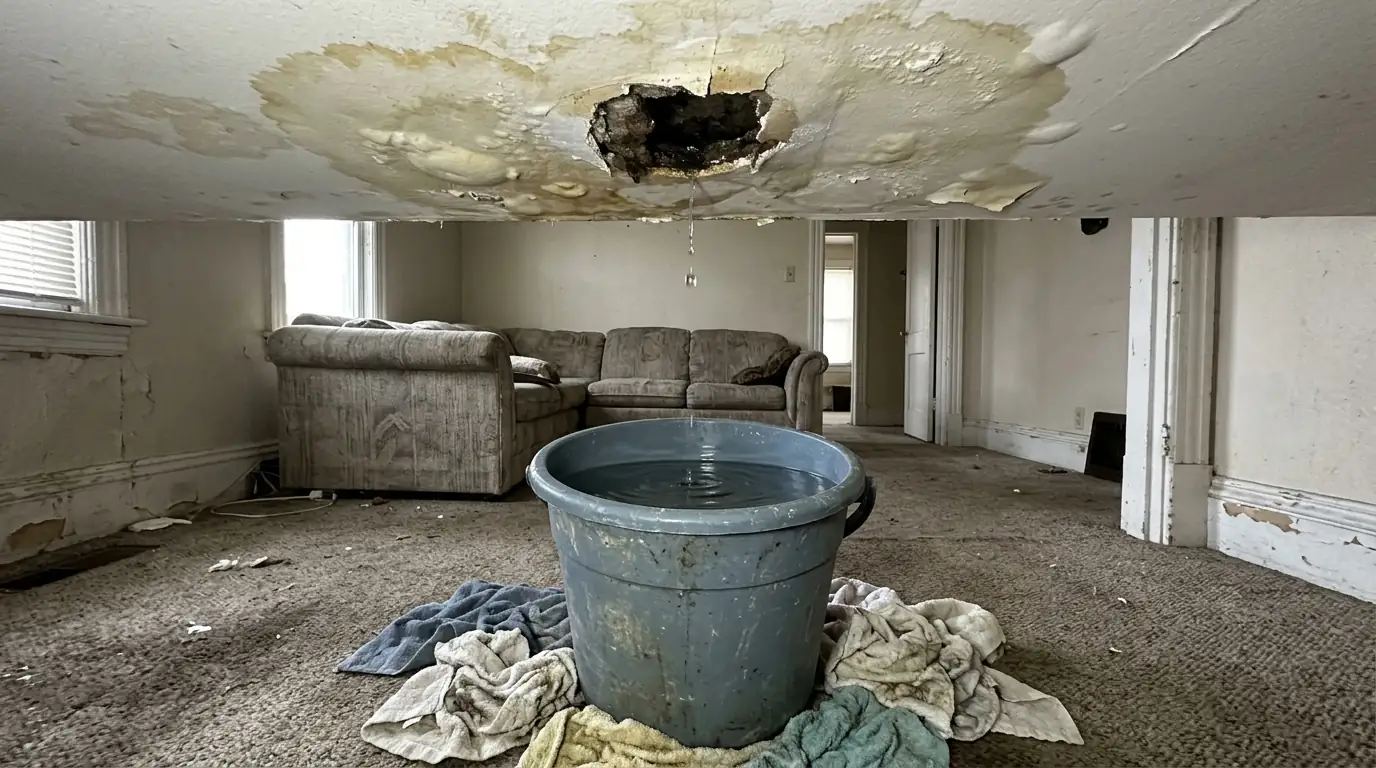
Frozen pipes often split when they thaw, because the ice was holding the crack closed. Shut the fixture or apartment valve, or have the super close the riser. Turn off power to wet rooms from a dry spot, move belongings out of the water, and photograph everything.
Then call for extraction. Water from a burst supply line is clean at the start, so fast drying usually saves most drywall, carpet and floors. Wait a few days, and the same loss becomes tear-out and possibly mold. The plumber repairs the pipe; the wall, floor and ceiling below are the restoration job.
Common questions
Water freezes at 32°F, but pipes in heated buildings usually freeze only in hard cold snaps where cold air reaches them.
On an outside wall during a hard freeze, a slow drip helps keep water moving.
No. Use warm air or towels. Open flames start fires.
Damage from a sudden burst usually is covered; the pipe repair itself often is not.
Tell the super or owner, then report it to 311 if it is not fixed.
Usually three to five days for drywall, longer for plaster and floors.
Services this article covers
Read next
Phyllis edits the articles on this site, writing from our crews’ job notes and the public sources linked in each piece.